
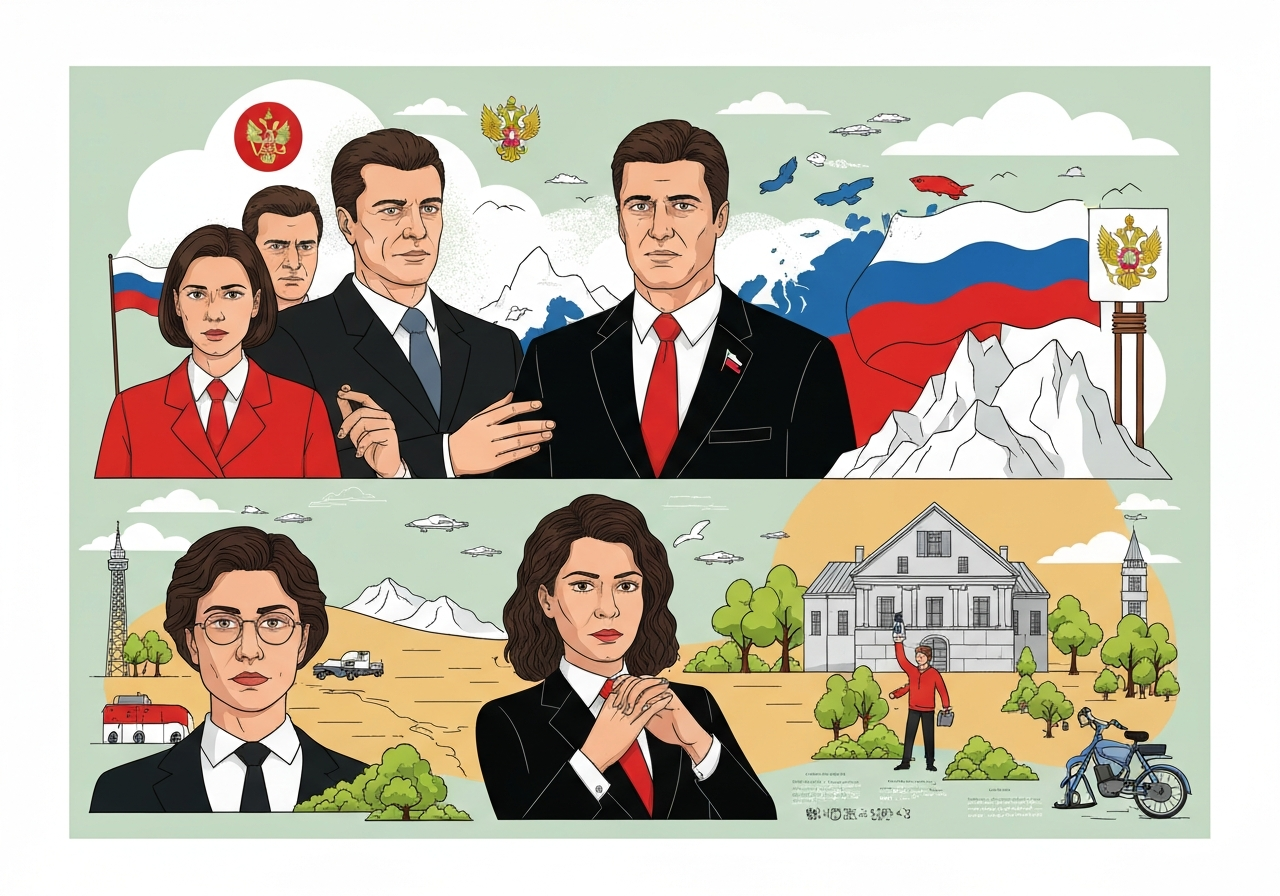
Four years after President Vladimir Putin announced a “special military operation” on 24 February 2022, the conflict with Ukraine has reshaped life inside Russia in multiple, tangible ways. Combat deaths verified by the BBC and independent Russian outlet MediaZona exceed 186,000, a toll that eclipses recent Soviet-era conflicts and has had domestic economic, social and political consequences. Front-line strikes have reached border regions, while major cities see rising prices, patched supply chains and growing media controls. Interviews with residents, servicemembers, deserters and émigrés show a country where daily routines coexist with深er fractures in public opinion, institutions and demographics.
Key takeaways
- Verified Russian combat deaths are over 186,000, a figure reported by the BBC and MediaZona and far higher than post-Soviet conflicts.
- The war has lasted longer than Russia’s participation in World War II (1941–1945) in some measures of continuous military engagement.
- Border regions such as Kursk and Belgorod have suffered repeated strikes and incursions; Fonar.tv reports at least 458 civilian deaths in Belgorod since 2022.
- Major cities including Moscow and St Petersburg have remained economically active but face higher consumer prices and limited brand availability; everyday life continues for many.
- The Kremlin’s tightened information laws and blocks on platforms like Instagram and Facebook have pushed users toward VPNs, domestic platforms and workarounds such as foreign bank accounts.
- Military recruitment increasingly relies on paid volunteers and incentives; some servicemembers have become disillusioned, with documented cases of AWOL and desertion.
- About two million Russians left in the first year of the war, driven by conscription fears and political opposition; some later returned amid integration and economic difficulties abroad.
Background
The operation launched on 24 February 2022 marked a sharp rupture in Russia’s post‑Soviet foreign policy and domestic governance. The Kremlin framed the intervention with the rhetoric of “denazification” and security concerns, while Kyiv and its Western backers characterised it as an unprovoked invasion. Western governments responded with sanctions that have reshaped trade flows and restricted access to many global services, prompting businesses and consumers to adapt.
Fighting has been concentrated in eastern and southern Ukraine but has affected Russian border regions as well. Areas such as Kursk and Belgorod have experienced artillery strikes, drone attacks and occasional ground actions, altering the security calculus for residents there. Meanwhile, metropolitan centres have continued functioning as hubs of commerce and services, mitigating some immediate economic shock despite higher prices and gaps in product choice.
Main event
On the battlefield, the conflict has proven attritional and protracted. Independent tallies assembled by outlets including the BBC and MediaZona put Russian combat deaths at more than 186,000, a human cost that has fuelled recruitment drives, incentives for volunteers and increasingly visible losses on both sides. Localities near Ukraine have alternated between periods of bombardment and uneasy calm, forcing residents to adopt new routines around sheltering and travel.
Inside cities, life has not stopped but has been modified. Consumers report higher supermarket bills — in some cases basic purchases totalling about 1,000 roubles (roughly $13) — and gaps in widely used foreign brands. Some companies that left early in the conflict have partially returned, while Chinese and other suppliers have filled niches at different quality and price points. To get around payment restrictions and blocked services, some Russians opened accounts abroad or adopted VPNs to access banned apps.
The state has dramatically tightened the domestic information environment. Since 2022, laws penalising what authorities deem “fake news” about the military operation have been enforced, and access to platforms such as Instagram and Facebook was restricted; messaging and video services including WhatsApp, Telegram and YouTube have also been made harder to use. The Kremlin has promoted domestic alternatives like RuTube and the messaging app Max as part of a broader information strategy.
Personal experiences vary widely. Some citizens say the conflict hardened their views in favour of the campaign; others have become deeply disillusioned. A number of servicemembers deployed to eastern Ukraine later deserted or sought help to leave, citing traumatic frontline experiences and moral objections. At the same time, tens of thousands of mainly young men left Russia in the first year to avoid mobilisations and conscription, reshaping labour markets and family plans for years to come.
Analysis & implications
Politically, the war has accelerated centralisation of power and state control over information and public space. Laws criminalising dissent, combined with platform restrictions, reduce the visibility and reach of opposition voices; that affects the ability of civil society and independent media to mobilise or provide alternative narratives. Over time this can harden public perceptions and limit the circulation of critical perspectives, making political pluralism more difficult.
Economically, sanctions and supply-chain shifts have produced noticeable but uneven effects. Urban consumption, especially in Moscow, has remained robust for many residents — local services, delivery and transport sectors continue to show activity — but real incomes and purchasing choices are constrained by rising prices and the disappearance of some Western brands. Firms have adapted by sourcing from Asia and expanding domestic production, yet technological and high-end industrial dependencies remain vulnerabilities for long-term growth.
Demographically and socially, the outflow of people — estimated at around two million in the first year — and increased casualties risk producing long-run consequences: skilled workers, entrepreneurs and dissidents left abroad or were displaced, while losses among combat-age men create persistent social costs in affected regions. The mix of patriotism, resignation and apathy that interviews reveal suggests a society where active support, passive acceptance and private opposition coexist uneasily.
Militarily, the scale of verified casualties and the length of the campaign signal a transformation in force structure and recruitment. The Kremlin has relied more on contracted recruits and incentives to fill ranks, shifting away from pure conscription models. That trend, combined with battlefield losses, affects unit cohesion, training cycles and long-term manpower planning.
Comparison & data
| Conflict | Approx. Russian combat deaths |
|---|---|
| Ukraine war (since Feb 24, 2022) | ~186,000 (verified tallies) |
| Soviet war in Afghanistan (1979–1989) | ~14,000–15,000 (Soviet military deaths) |
The verified figure of more than 186,000 Russian combat deaths is substantially higher than Soviet-era combat losses in Afghanistan; reporting has highlighted that the current toll is roughly 12–13 times those earlier figures. These comparisons underline the human scale of the current conflict and point to long-term demographic and social costs that will outlast active hostilities.
Reactions & quotes
Residents and public figures offer a range of responses to how the war has altered daily life and sentiment. Below are short excerpts with context.
In border regions where strikes were frequent, locals described learning to live with recurring alarms and shelling instead of rushing to shelters at every warning — a coping strategy born of necessity and exhaustion.
“You’d always be in there.”
Ben Higginbottom (YouTuber, resident in Kursk)
Many younger people voiced frustration with restrictions on foreign platforms and a sense that state measures intruded on private life, fuelling alienation from official narratives.
“Younger people perceive it as a violation of their personal life.”
Kirill F (Photographer, St Petersburg)
Some servicemembers who witnessed frontline realities later changed position, citing moral distress and the scale of civilian suffering as reasons to abandon their posts.
“I realised I was fighting a war that would only produce corpses and misery.”
Alexander Medvedev (Former conscript, later left Russia)
Unconfirmed
- Claims that the presence of Nazi insignia among some Ukrainian units is widespread and representative of national leadership remain contested and are not uniformly corroborated by independent observers.
- Public opinion poll results showing broad pro-war sentiment are difficult to interpret fully because laws criminalising antiwar speech may bias responses.
- Precise casualty figures for both sides remain politically sensitive and subject to revision as independent verification continues.
Bottom line
The fourth year of the Ukraine war has left deep and multifaceted marks on Russia: high battlefield losses, tighter information controls, altered supply chains and a sustained diaspora. For many Russians, daily routines persist even as long-term political, economic and demographic trends shift in ways that will matter for decades.
How these changes consolidate will depend on the conflict’s future trajectory and how domestic institutions adapt. If the war continues, expect further centralisation, incremental erosion of plural public discourse, and demographic consequences from both casualties and emigration. Conversely, a negotiated or abrupt end would leave complex legacies — reconstruction costs, veterans’ needs and unresolved social divisions — that the country will have to manage for years to come.