
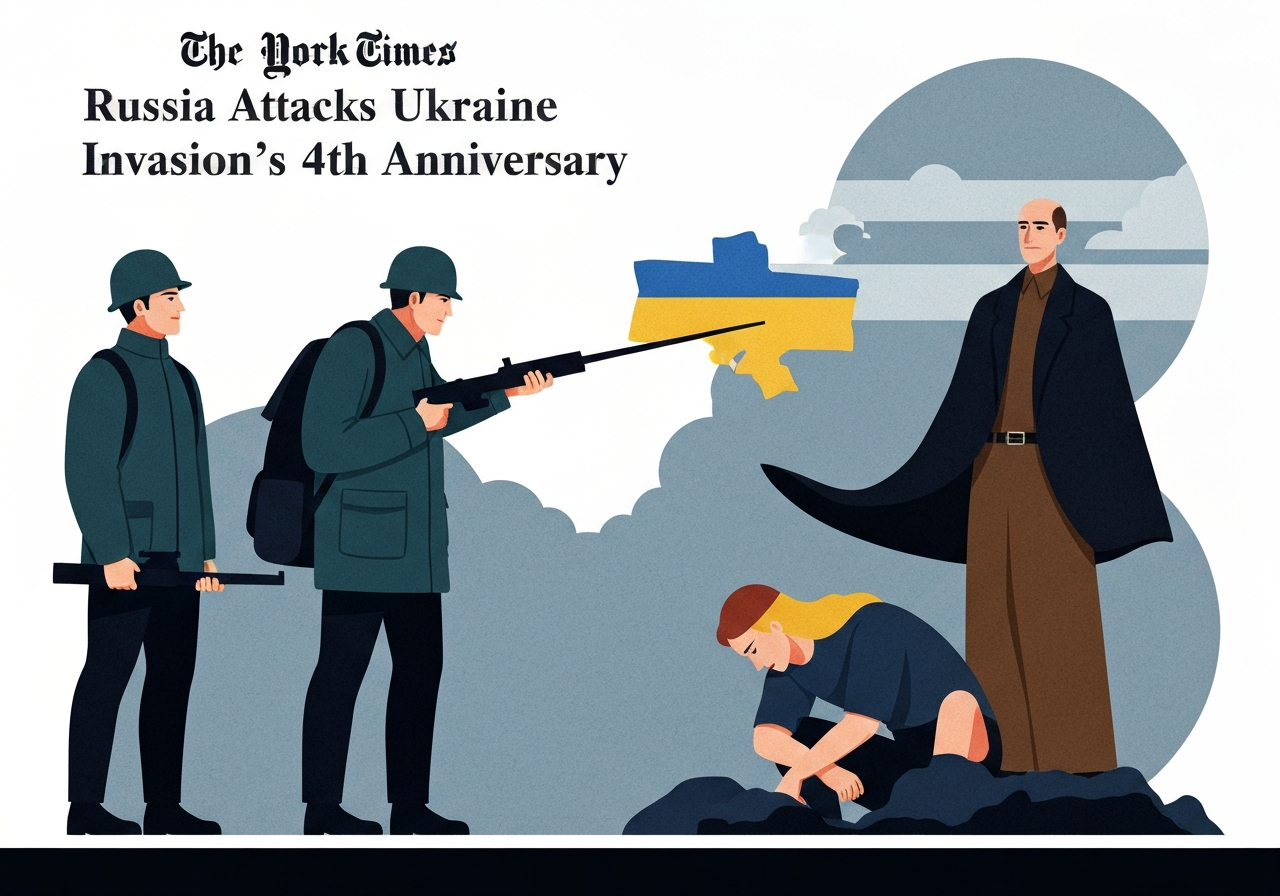
On Feb. 22, 2026, Russian forces launched a large wave of missiles and drones that struck Ukraine’s energy infrastructure and population centers just days before the fourth anniversary of Moscow’s full-scale invasion. Ukrainian authorities reported that the strikes killed a 49-year-old man in Kyiv and injured 15 others, including four children, while a separate explosion in Lviv killed a police officer though responsibility remained unclear. Kyiv’s air defenses reported intercepting the majority of incoming weapons, and both Kyiv and Moscow signaled another round of U.S.-mediated talks could take place in coming weeks. The attacks drew global attention as negotiators seek to resume diplomacy ahead of the Feb. 24 anniversary.
Key Takeaways
- Attack date and scope: On Feb. 22, 2026, Russia struck parts of central, southwestern and Kyiv regions with hundreds of drones and dozens of missiles.
- Casualties and damage: A 49-year-old man was killed in Kyiv; 15 people were injured, including four children; an officer died in Lviv after an explosion of uncertain origin.
- Air-defense figures: The Ukrainian Air Force reported shooting down 33 of 50 missiles and 274 of 297 drones reported in the strikes.
- Timing: The strikes came days before the fourth anniversary of the Feb. 24, 2022, invasion and shortly after U.S.-mediated talks in Geneva yielded minimal progress.
- Diplomatic timetable: Ukrainian President Volodymyr Zelensky said a subsequent negotiation round is expected by early March.
- Infrastructure impact: Russia’s stated aim focused on power and communications nodes; Kyiv and regional authorities reported outages in multiple districts.
- Attribution uncertainty: Officials confirmed the Lviv police officer’s death but said it was not yet established whether Russian forces were responsible.
Background
Since Feb. 24, 2022, Russia’s full-scale invasion of Ukraine has involved cycles of offensive operations, strikes on infrastructure, and intermittent diplomacy. Energy and power networks have been recurrent targets across multiple years, intended to degrade civilian resilience and military logistics as winter months approach or to pressure political will. Kyiv and its Western partners have invested heavily in integrated air defenses and power restoration efforts; those systems have mitigated damage in many but not all cases. Parallel to battlefield events, the United States has mediated rounds of talks aimed at finding a cease-fire or framework for negotiations, but prior sessions have produced limited, concrete agreements.
Political stakes rise around anniversaries: Feb. 24 has become a focal date for symbolism, public memory and military messaging on both sides. For Kyiv, the fourth anniversary represents a rallying point for international support and a reminder of sustained resistance; for Moscow, operations timed near the date may be intended to demonstrate continued capability and resolve. Civilian protection and humanitarian access remain central concerns for international observers, and repeated strikes on utilities compound population displacement and recovery costs. The diplomatic calendar shows planned or anticipated meetings in late February and early March that could shape the next phase of negotiations.
Main Event
On Feb. 22, early reports from Ukrainian authorities described a multi-axis series of strikes that targeted energy facilities and populated districts in Kyiv and elsewhere. Air-raid alerts spread across central and southwestern regions as both missiles and a large number of unmanned aerial vehicles (UAVs) approached. Local emergency services responded to fires and power outages; hospitals treated dozens of victims and several neighborhoods experienced temporary loss of electricity. Officials in Kyiv confirmed one death, a 49-year-old man, and 15 injuries, including four children, in incidents contemporaneous with the incoming strikes.
Separately, an explosion in the western city of Lviv killed a police officer at a scene that authorities were still investigating, and officials said it was not yet possible to attribute responsibility conclusively. Ukrainian air defenses, according to military briefings, intercepted the bulk of the assault: the Air Force reported shooting down 33 of 50 incoming missiles and 274 of 297 drones. Those interception numbers, if sustained, represent a high defensive success rate but do not eliminate civilian risk when debris or secondary effects occur on the ground.
The strikes occurred amid diplomatic movement: the latest U.S.-mediated talks in Geneva had concluded with limited progress days earlier, and Kyiv’s leadership indicated another meeting was expected by early March. President Volodymyr Zelensky characterized the Geneva session as showing U.S. awareness of Russian obstruction to meaningful outcomes, and both sides have publicly maintained their positions while signaling readiness for more talks. Military and civilian officials emphasized that damage assessments and casualty reports remain preliminary and subject to revision as investigators complete on-site work.
Analysis & Implications
Timing these strikes just before the invasion’s fourth anniversary carries both military and political implications. Militarily, pressure on Ukraine’s power grid and communications can slow logistics, complicate air-defense coordination and increase civilian hardship, potentially altering battlefield conditions in contested regions. Politically, such operations serve as leverage and messaging: they can harden negotiating positions, test Western responses, and affect domestic opinion in both capitals. The proximity to anniversary dates elevates symbolic impact and may influence international diplomatic urgency.
The high interception figures reported by Ukrainian forces indicate improved air-defense capacity, reflecting Western-supplied systems and tactical experience accumulated over four years. Still, even successful interceptions can cause collateral damage from falling debris and outages from near-misses at key substations. The persistence of drone swarms and missile salvos underscores a tactical shift toward saturating defenses — a dynamic that European and NATO planners have been tracking as they calibrate further support and force posture.
Diplomatically, the attacks complicate efforts to secure meaningful concessions in Geneva or follow-up talks: they may harden Kyiv’s demands for security guarantees and reparations while giving Moscow bargaining power through continued pressure. Western mediators face the dilemma of balancing immediate de-escalation with long-term deterrence: increasing defensive aid reduces civilian harm now, but decisions on offensive support and political recognition remain contentious. The coming weeks — especially any formal negotiations in early March — will be a critical test of whether battlefield pressure translates into diplomatic movement or escalates into renewed campaigning.
Comparison & Data
| Category | Reported Launched | Reported Shot Down |
|---|---|---|
| Missiles | 50 | 33 |
| Drones (UAVs) | 297 | 274 |
| Civilian fatalities (Kyiv) | — | 1 |
The table summarizes Ukrainian military and regional administration statements for the Feb. 22 attacks. Those figures imply interception rates above 60% for missiles and over 90% for drones in the incidents reported, signaling strong defensive performance in this engagement. However, interception success does not eliminate human costs: one fatality and multiple injuries were recorded, as well as infrastructure damage requiring repair and temporary power interruptions. Analysts caution that single-day statistics can fluctuate and should be interpreted alongside longer-term trends in strike frequency and system availability.
Reactions & Quotes
We expect another round of talks to occur by early March, as we continue to press for a pathway to cease-fire and security guarantees.
Volodymyr Zelensky, President of Ukraine (paraphrased)
Ukrainian air defenses intercepted the majority of inbound missiles and drones, limiting but not preventing civilian harm.
Ukrainian Air Force statement (military)
Investigations are ongoing in Lviv to determine the origin of the explosion that killed a police officer; attribution has not been established.
Kyiv Regional Military Administration (local authority)
Unconfirmed
- Attribution for the Lviv explosion remains unconfirmed; investigators have not publicly established whether the blast resulted from Russian strikes, munitions accidents, or another cause.
- Some regional damage and casualty figures are preliminary and may be revised as on-site assessments continue.
- Motives for timing the strikes relative to the anniversary and Geneva talks are inferred from messaging and past patterns but cannot be proven without internal decision records.
Bottom Line
The Feb. 22 attacks demonstrated both the continued threat posed by Russian long-range strikes and the enhanced defensive capabilities Ukraine has built since 2022. Despite high reported interception rates, civilians remain at risk and infrastructure continues to suffer, complicating humanitarian relief and long-term recovery. The proximity of the strikes to the fourth anniversary of the invasion magnifies their political symbolism and raises stakes for the diplomatic process, which now faces a narrow window to convert talks into tangible de-escalation.
Looking ahead, the outcomes of anticipated negotiations in early March and the international community’s decisions on further defensive and economic support will be decisive for Ukraine’s resilience and the conflict’s trajectory. Observers should watch three indicators closely: whether strike tempo changes after talks, the durability of power and repair capabilities, and any shifts in diplomatic positions that could enable a credible roadmap for reduction of hostilities.
Sources
- The New York Times — news report (media)