
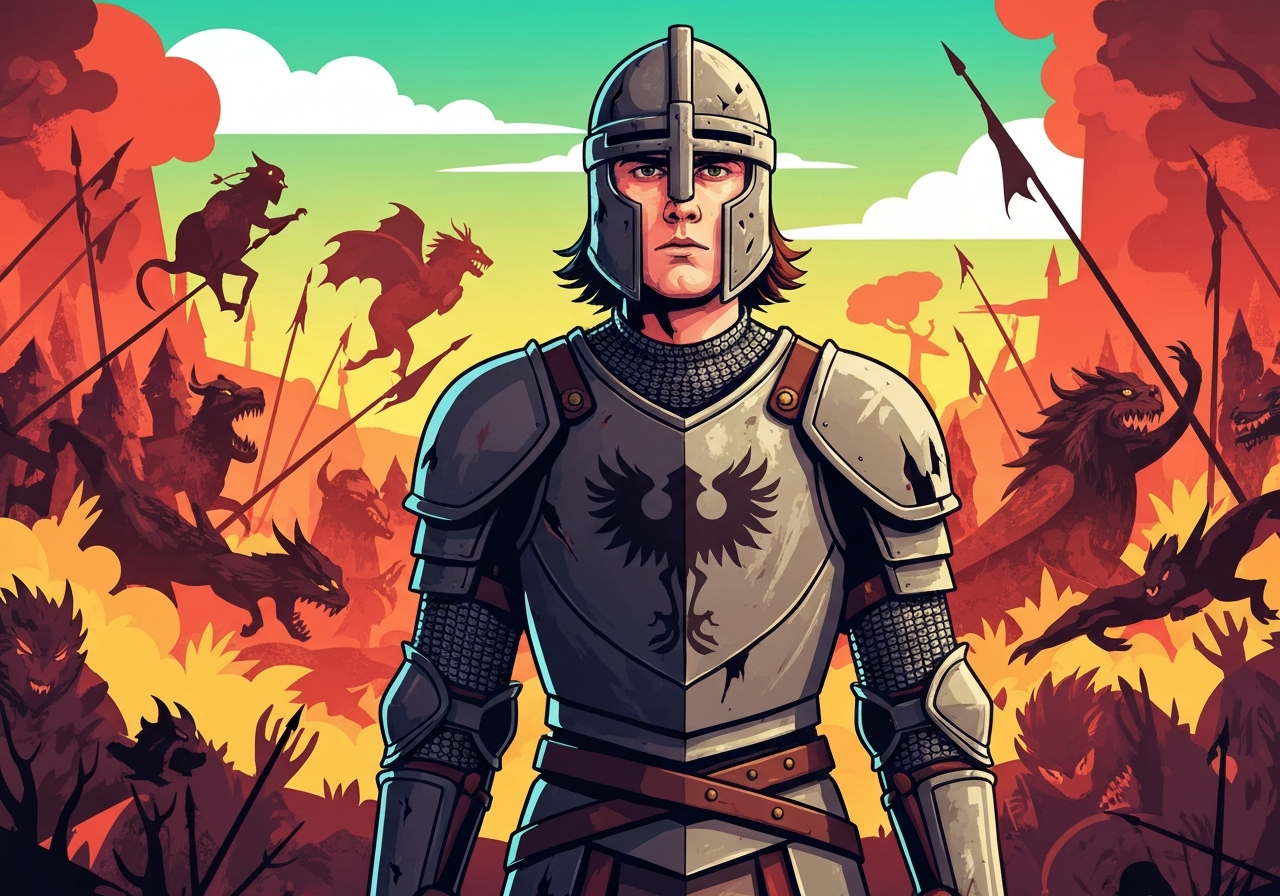
Tonight marks the close of A Knight of the Seven Kingdoms season 1 as HBO debuts the 29‑minute finale, “The Morrow,” at 10 p.m. ET. Across six half‑hour episodes the Dunk and Egg adaptation built a devoted fandom, stirred debate about its place in the wider Westeros saga and landed an emotional blow in last week’s Trial of Seven. The finale aims to wrap the season’s central arcs while pointing toward a second season currently in production for a 2027 return. This live recap and analysis collects the episode’s key beats, context from the source material and what the ending means for Dunk and Egg moving forward.
Key takeaways
- The season 1 finale, “The Morrow,” premieres on HBO/HBO Max at 10 p.m. ET and runs about 29 minutes, closing a six‑episode first season that averaged roughly half an hour per instalment.
- Last week’s Trial of Seven resulted in the on‑screen death of Baelor Targaryen, a moment that reshaped Dunk and Egg’s immediate prospects and dominated audience reaction.
- Season 2 is in production with a target return in 2027; HBO has signalled the next season will adapt the novella The Sworn Sword (Legends II) as its core story.
- George R.R. Martin has published three Dunk & Egg novellas to date and has mapped out more — up to a proposed 12 — but most remain unwritten, creating both narrative opportunity and risk for the showrunners.
- The finale opts for a low‑shock, tidy denouement rather than a cliffhanger; critics described it as serviceable and fitting after a powerful penultimate episode.
- Key dramatic beats include Egg’s return and a late reveal about royal permission, a quiet reconciliation for Dunk and the reaffirmation of several character dynamics (Maekar and his sons, Lyonel Baratheon’s offer, and Ser Raymun’s new station).
- Music choices — notably a closing needle drop of “Sixteen Tons” — and visual callbacks were widely discussed for their thematic resonance with Dunk’s evolving role.
Background
The television series adapts George R.R. Martin’s Tales of Dunk and Egg novellas, set roughly a century before the events of Game of Thrones. Those three published novellas sketch a roadbound, lower‑scale strand of Westeros politics focused on a hedge knight, Ser Duncan the Tall (Dunk), and the young Aegon Targaryen known as Egg. The stories emphasize small wars, feudal disputes and personal honor rather than continent‑spanning dynastic battles, which has allowed the show to cultivate a distinct tone from its larger franchise kin.
The show arrived on HBO and HBO Max as a compact six‑episode season with episodes averaging about 30 minutes; that format enabled tight storytelling and frequent tonal pivots between humor and sudden violence. Production and promotion positioned the series as both a faithful adaptation and a character‑driven spinoff; HBO greenlit season 2 before the first season’s premiere, but the studio has set audience expectations by confirming a multi‑year window for the follow‑up (year of return: 2027).
Main event
“The Morrow” opens with the immediate fallout from the Trial of Seven and spends its 29 minutes closing personal threads rather than manufacturing a single jaw‑dropping finale set piece. Baelor’s funeral and the scene of symbolic dragonfire serve as the episode’s somber anchor, and the episode uses quiet, domestic moments to show how communities and individuals process recent violence.
On a personal level, Dunk is confronted repeatedly with offers and obligations: Lyonel Baratheon extends a brotherly invitation to Storm’s End, Prince Daeron appeals for Dunk to accept Egg as his squire, and Prince Maekar reiterates the crown’s unwillingness to let a Targaryen live as a hedge knight. Those exchanges crystallize Dunk’s dilemma about service, honor and the cost of attachment.
Egg returns in the episode to deliver conflicting information — announcing permission to squire with Dunk while the later reveal shows Maekar withheld formal approval. The show closes on a note of departure: the pair ride out under a title card that cheekily reads “A Knight of the Nine Kingdoms,” signalling the next leg of their journey and a tonal wink about worldbuilding expansion.
Small human beats — Ser Raymun’s new knighthood and return of Sweetfoot, the emotional echoes of Ser Arlan’s story, and Dunk’s private reckonings — supply the episode’s emotional core. Rather than a spectacular finale moment, the episode privileges character closure and a workable launchpad for future stories.
Analysis & implications
Creatively, the series benefits from a concise source — the novellas are short, episodic and character‑forward — but that economy is a double‑edged sword. George R.R. Martin has completed three Dunk & Egg novellas; he has publicly mapped more but most are not yet written. That gives showrunners a clear early roadmap but also leaves longer‑term plotting dependent on adaptation choices and possible extrapolation beyond finished texts. Unlike Game of Thrones, which faced criticism when television leadership overtook the published canon, this series has the option to stay closely anchored to the extant novellas or to expand responsibly with authorial input.
From an audience and franchise perspective, the show has already reshaped expectations: critics and many viewers have argued that its smaller scale, stronger tonal control and brisk pacing make it a fresh high point in the broader Westeros catalogue. If the writers preserve the intimate focus that won praise this season, future seasons can continue to distinguish themselves from larger, battle‑driven spinoffs.
Economically, a compact, lower‑effects show with strong character work is attractive for HBO: it can sustain interest, generate merchandise and drive subscriptions without the heavy costs associated with a dragon‑heavy production. However, retaining top creative talent and expanding the narrative in a way that feels faithful — particularly once Martin’s unpublished outlines are exhausted — will be the central production challenge.
Comparison & data
| Metric | Season 1 | Finale |
|---|---|---|
| Episodes | 6 | — |
| Average length | ~30 minutes | 29 minutes |
| Key adapted novella(s) | Collected Dunk & Egg novellas (primary) | — |
The data underline how deliberately compact the show is compared with other franchise installments; season 1’s short runtime intensifies character moments and rewards tight plotting. That format also changes expectations for season finales: viewers accustomed to multi‑hour climaxes in larger fantasy series should expect quieter, more intimate closures here.
Reactions & quotes
The finale generated a mix of relief and appetite for more. Critics praised the season’s craft while noting the episode’s restraint, and social feeds reflected a split between fans who loved the low‑key ending and those who wanted a more dramatic cliffhanger.
The finale wraps the season neatly — it serves as a tidy cap rather than a huge, shocking close.
Malcolm McMillan, Tom’s Guide (critic)
HBO’s communications have been measured, emphasizing that production on season 2 is underway and that the next instalment will expand on The Sworn Sword era while remaining faithful to the novellas’ spirit.
HBO confirmed season 2 is in production with a planned return in 2027, positioning the show to move into the next novella‑based arc.
HBO (official)
Fan commentary has repeatedly pointed to episode four, “Seven,” as the emotional high point of the season; viewers compared its stakes and execution favorably to some of the franchise’s most memorable sequences.
Many viewers called episode four the season’s high water mark, praising its emotional risk and character clarity.
Audience reaction (social media)
Unconfirmed
- Whether season 2 will adapt The Sworn Sword scene‑for‑scene or add substantial new material beyond the novella is not officially confirmed.
- Any long‑term plan for the full run length of the TV series (how many seasons or which novellas will be adapted) remains unannounced and depends on production decisions and authorial material.
- Reports of a permanent series title change to “A Knight of the Nine Kingdoms” come from airing title cards and fan chatter; HBO has not announced an official renaming of the series.
Bottom line
“The Morrow” chooses a restrained endpoint instead of a sensational cliffhanger, giving season 1 a tidy emotional finish while maintaining momentum for Dunk and Egg’s roadbound adventures. For viewers who valued the season’s smaller scale, character focus and tonal consistency, the finale feels appropriate even if it lacks a single shock moment.
Looking ahead, the show’s biggest test will be balancing fidelity to Martin’s novellas with the need to sustain a television narrative over multiple seasons, some of which must be built before more source material exists. If the production team preserves the intimate strengths that won acclaim this season, A Knight of the Seven Kingdoms can continue to be a distinct, high‑quality entry in the Westeros catalogue without repeating the creative pitfalls that troubled other franchise entries.