
Lead
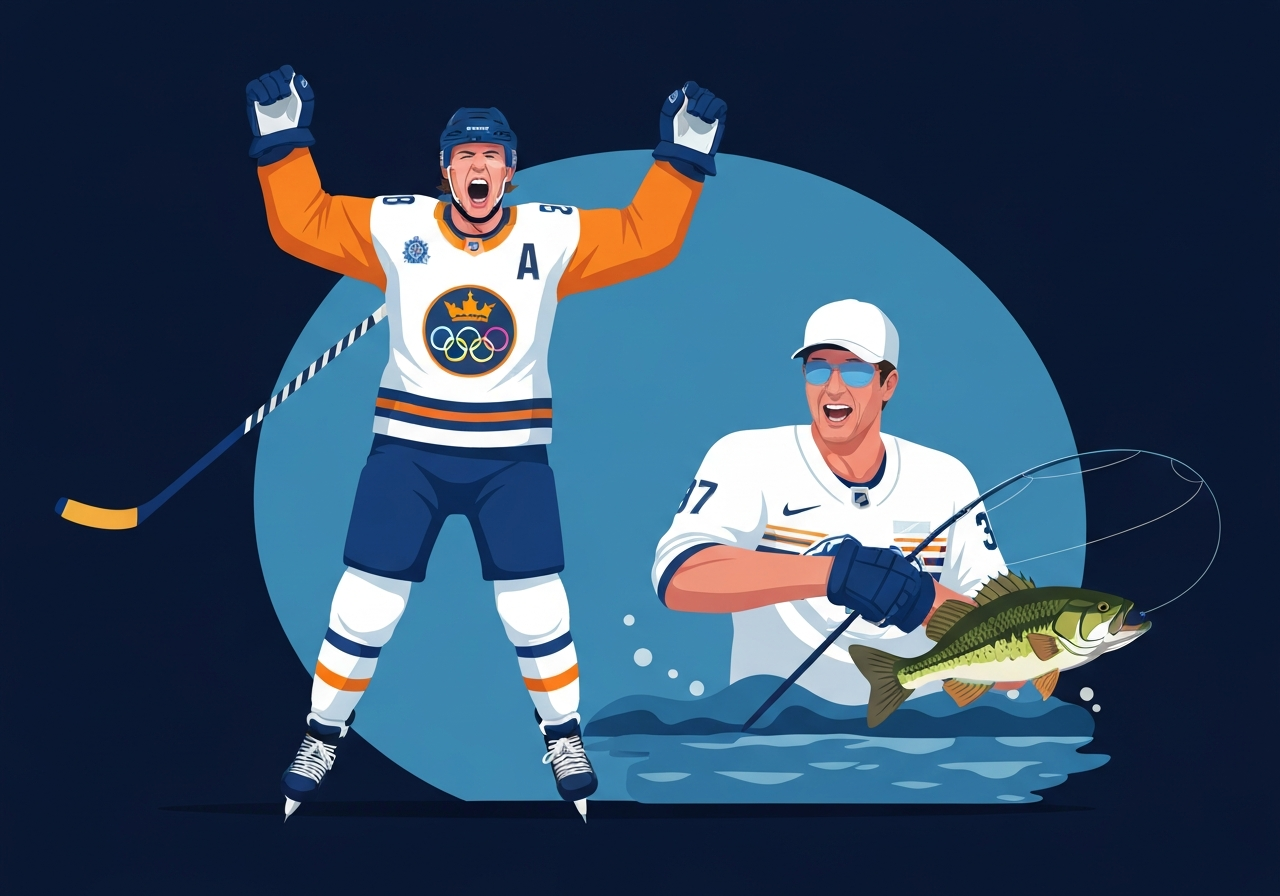
Connor Hellebuyck produced a 41-save performance on February 22, 2026 in Milan-Cortina, guiding Team USA to a 1–0 gold-medal victory over Canada at the Winter Olympics. The 32-year-old Winnipeg Jets goaltender not only stopped nearly every shot he faced but also celebrated his Michigan roots with a custom facemask featuring a largemouth bass. Teammates hailed the game as one of the era’s great goaltending displays, while Hellebuyck’s longtime hobby—bass fishing—became a headline in its own right. Off the ice he has signaled an interest in competitive angling once his hockey career allows for it.
Key Takeaways
- Hellebuyck made 41 saves and allowed one goal in the Olympic gold-medal game, a performance that secured Team USA the 2026 title in Milan-Cortina.
- The victory marked the United States men’s first Olympic hockey gold since 1980, a 46-year gap noted by players and media alike.
- Hellebuyck, 32, plays in the NHL for the Winnipeg Jets and highlighted his Michigan background by wearing a custom mask with Team USA imagery and a largemouth bass motif.
- The mask’s artwork includes the Team USA shield on the chin, Stars and Stripes across the crown, a swooping bald eagle on the right side, and a largemouth bass on the left side.
- Fishing is a lifelong pursuit: Hellebuyck grew up bass fishing with his grandfather and took up ice fishing in Winnipeg, where he reported catching a 29-inch walleye in a 2020 interview.
- His brother, Chris Hellebuyck, competes in Bassmaster events; Connor has said he would consider competitive angling after his hockey career.
- Teammates publicly lauded the performance: Matthew Tkachuk compared it to historic U.S. goaltending displays, while Dylan Larkin joked Hellebuyck owes the state of Michigan free drinks.
Background
Men’s Olympic hockey carries deep cultural weight in the United States after the 1980 Lake Placid gold became a national touchstone. The U.S. entry into the 2026 Milan-Cortina Games arrived with a younger core and several NHL-caliber goaltenders; selecting a starter who could handle international pressure was a priority for coaches. Hellebuyck’s NHL résumé with the Winnipeg Jets—marked by high-save workloads and consistent regular-season starts—made him a logical choice for the crease in a medal-deciding game.
Separately, Michigan has a long-standing bass-fishing tradition, and Hellebuyck’s personal story ties to that regional culture. He began fishing as a child with his grandfather and continued to nurture the hobby while living in Canada for his NHL career, adapting to ice fishing and local waters. The connection to teammates also fostered his winter angling pursuits: former Jets teammate Dustin Byfuglien encouraged him to try ice fishing on Lake Winnipeg, an experience Hellebuyck has described as formative.
Main Event
The gold-medal final was a defensive, low-scoring contest interrupted by few lapses—most notably the singular goal allowed by Hellebuyck. He stoned numerous high-danger chances while his teammates provided just enough offense to decide the outcome in the United States’ favor. Media-driven visuals from the game focused as much on his mask as on the saves themselves, with broadcasters and social feeds highlighting the largemouth bass art alongside Team USA iconography.
Hellebuyck’s mask fused personal and national symbols: the Team USA shield, Stars and Stripes, a bald eagle and a depiction of Michigan on the backplate, capped by the bass image left of the cage. The design underscored how athletes often use equipment as personal storytelling—Hellebuyck used his to signal heritage and hobbies simultaneously. The visual narrative resonated with fans who were drawn both to the performance and the human detail behind it.
After the game, teammates framed the performance in historical terms and praised Hellebuyck’s calm under pressure. The coaching staff credited his positioning and rebound control for keeping Canada to a single goal, while video analysis highlighted several sequence saves that shifted momentum. With the Olympics concluded, Hellebuyck’s next immediate obligation is a return to the NHL schedule with the Winnipeg Jets.
Analysis & Implications
Sporting legacy: this outing substantially bolsters Hellebuyck’s place in international hockey narratives. A 41-save gold-medal performance in an Olympic final is the kind of single-game showing that shapes public memory and will be cited in future comparisons of elite U.S. goaltenders. Teammates’ historical comparisons suggest Hellebuyck will be part of discussion lists for top American goalkeeping displays for years to come.
Personal branding and crossover appeal: the mask and its bass motif create a clear marketing opportunity. Hellebuyck’s authenticity—rooted in a documented childhood hobby and family connections to competitive angling—gives him natural credibility in outdoors and fishing markets. That authenticity tends to translate into durable partnerships if the athlete chooses to pursue them.
Mental and recovery considerations: many elite athletes cite outdoor pursuits such as fishing as restorative activities that aid concentration and stress management. For goaltenders, whose positions demand acute mental resilience, a hobby that promotes calm and focus can have measurable performance benefits over a long season. Teams and player development staff increasingly acknowledge the role of off-ice routines in sustaining peak form.
Comparison & Data
| Metric | Value |
|---|---|
| Saves in Olympic final | 41 |
| Goals allowed in final | 1 |
| Player age | 32 |
| Years since last U.S. men’s gold | 46 (1980→2026) |
Context: 41 saves in a championship game is a high-volume, high-impact total for an Olympic final. While single-game comparisons across decades must account for rule changes and opponent strengths, the combination of saves and a shutout-like result positions this performance among notable tournament-closing goaltending efforts. Analysts will continue to place the outing alongside other defining moments in U.S. Olympic hockey history.
Reactions & Quotes
Teammates and commentators quickly framed the game as one of the era’s standout goaltending displays; below are representative reactions with context.
“It’s going to go down as one of the best performances of all time — it has to. Right up there with Jimmy Craig [in 1980], all the great United States goaltenders.”
Matthew Tkachuk, teammate
Tkachuk’s comparison referenced a storied U.S. hockey moment and placed Hellebuyck’s game in an emotional, historical frame that resonated with fans and media.
“That guy should never buy a drink in the state of Michigan ever again.”
Dylan Larkin, teammate
Larkin’s quip underscored local pride in Hellebuyck’s Michigan roots and highlighted the affectionate locker-room reaction to a career-defining outing.
“There’s always that void of winter months and not being able to fish… So, finally, I decided to go with him, and when I went with him, I enjoyed myself a ton.”
Connor Hellebuyck, interview with Major League Fishing (2020)
This remark, from a 2020 interview, explains how ice fishing and lake angling helped shape Hellebuyck’s off-ice identity while living in Winnipeg.
Unconfirmed
- Hellebuyck’s precise timeline for attempting professional Bassmaster competition remains unscheduled; his stated interest is conditional on future free time after hockey.
- Any commercial or endorsement deals directly tied to the Olympic mask artwork have not been announced publicly as of publication.
Bottom Line
Connor Hellebuyck’s 41-save outing in the 2026 Olympic final delivered a rare combination of on-ice excellence and off-ice storytelling. The game itself advances his competitive legacy; the mask and angling narrative broaden his public profile in a way that is authentic to his personal history.
For Team USA, the win closes a 46-year gap and may catalyze sustained interest in U.S. men’s international hockey programs. For Hellebuyck, the immediate future returns him to NHL duty with the Jets, but the long-term horizon now plausibly includes competitive angling and expanded partnership opportunities tied to his outdoors persona.