
Lead
VERONA, Italy — On the final Sunday of the 2026 Winter Olympics, the nearly 2,000-year-old Arena di Verona hosted the closing ceremony for Milan Cortina 2026, combining sport and Italian culture beneath a starry sky. The program placed opera and historical motifs at center stage while honoring athletic stories that ranged from personal sacrifice to late-career triumphs. The result was a ceremonious, theatrical farewell that drew global attention and reframed how a Winter Games can conclude.
Key Takeaways
- The Arena di Verona, built in the first half of the first century, served as the closing-ceremony venue for Milan Cortina 2026, marking one of the oldest settings used by modern Olympics.
- The ceremony featured operatic works including La Traviata and Madame Butterfly and a reimagined La Marseillaise performed ahead of the 2030 French Alps handover.
- Several athlete narratives stood out: Ukrainian skeleton pilot Vladyslav Heraskevych, who paused his Olympic ambitions amid wartime loss; Elana Meyers Taylor and Francesca Lollobrigida each won landmark gold medals after becoming mothers.
- Andrea Bocelli did not perform; organizers instead relied on a mezzo-soprano and staged opera excerpts to anchor the program.
- The production emphasized Italy’s cultural heritage and staged the Games’ finale in a venue historically associated with gladiatorial spectacle and civic gatherings.
Background
The Arena di Verona has been a cultural landmark for nearly two millennia. Constructed in the first century, its open-air design and preserved stone tiers have hosted everything from Roman spectacles to contemporary opera festivals. For generations the site has carried inscriptions and memorials to celebrated performers and fighters; those layers of memory shaped the narrative choices for the closing ceremony.
Milan Cortina 2026 arrived after the splashy openers of recent Games, including Paris 2024, shifting the emphasis from urban stagecraft to heritage and storytelling for the finale. Organizers selected Verona to link Italy’s musical and architectural traditions with the global pageantry of the Olympics, creating an event intended to honor athletes while spotlighting national culture.
Main Event
The ceremony unfolded under the Arena’s rimstone as opera framed the program. Selections from La Traviata and Madame Butterfly gave the night a distinctly Italian tone, while a mezzo-soprano presented a new, solemn rendition of La Marseillaise to introduce the 2030 French Alps handover segment. Staging combined classical forms with contemporary lighting and projection to adapt the ancient amphitheater for a modern broadcast audience.
Organizers interwove athletic tributes amid the musical set pieces. Moments highlighting resilience and sacrifice were prominent, including a salute to athletes affected by the war in Ukraine and to competitors who returned to the field of play after parenthood. The amphitheater’s stone benches and carved inscriptions—evocative of a long history of public spectacle—served as a visual shorthand connecting modern athletes with past champions.
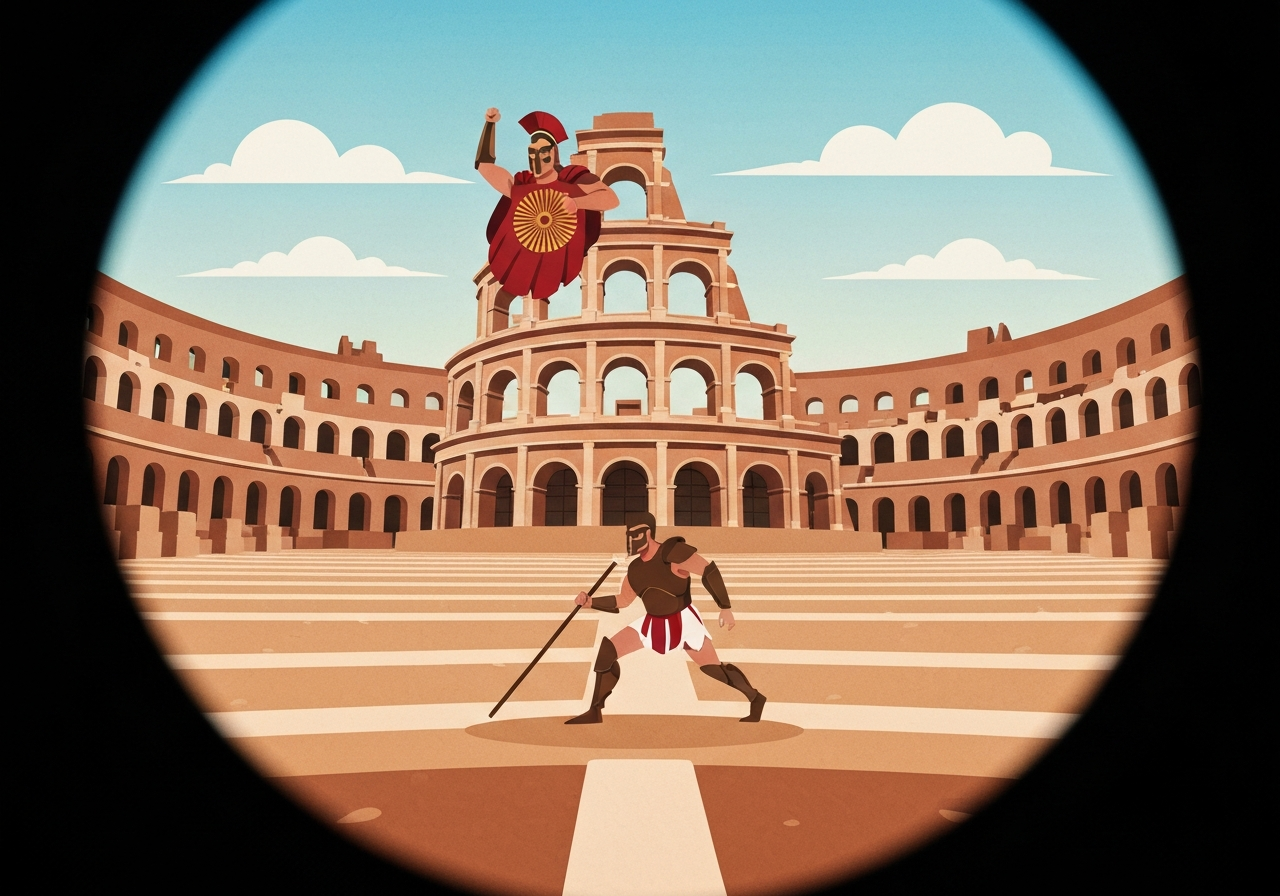
The program avoided fireworks-heavy spectacle in favor of theatrical tableaux and vocal performance, relying on the Arena’s acoustics and architecture to produce an intimate but grand finale. Visual motifs referenced gladiatorial memory—both literal, via inscriptions and historical references, and figurative, in language used to describe athletes’ courage and risk-taking.
Analysis & Implications
Choosing the Arena di Verona reframed the notion of a closing ceremony for winter sport: instead of an urban light show, Italy offered heritage and cultural continuity. That choice signals a broader strategy for host nations seeking to use the Olympics as a soft-power platform—emphasizing national identity, performing arts, and historical venues to create a distinctive imprint for their edition of the Games.
Sporting narratives emphasized in Verona illustrate how the modern Olympics function as both competition and storytelling device. Vladyslav Heraskevych’s decision to forego parts of a conventional competitive arc to commemorate lost colleagues turned an individual story into a geopolitical symbol; likewise, the golds won by mothers such as Elana Meyers Taylor and Francesca Lollobrigida underline changing expectations about career arcs in elite sport.
Economically and diplomatically, Milan Cortina’s final night may boost tourism and cultural interest in northern Italy. The ceremony gave Italy a global primetime showcase for opera and site-specific heritage, an outcome that may encourage future hosts to prioritize local cultural industries. For broadcasters and sponsors, the quieter, more classical approach showed there is appetite for ceremonies that favor narrative depth over pyrotechnic spectacle.
Comparison & Data
| Venue | Approx. Construction | Historic Role | Seating/Capacity (modern) |
|---|---|---|---|
| Arena di Verona | 1st century AD (early) | Roman amphitheater; centuries of opera festivals | ~22,000 (concert configuration) |
| Roman Colosseum (Flavian Amphitheatre) | 70–80 AD | Large-scale public spectacles, gladiatorial games | ~50,000–80,000 (historic estimates) |
The Arena di Verona predates or is roughly contemporaneous with the Colosseum and is notable for its continued use as an operatic venue. While the Colosseum is larger, Verona’s state of preservation and ongoing cultural programming make it uniquely suited to a broadcast ceremony that foregrounds music and architecture over scale.
Reactions & Quotes
Officials, critics and spectators offered a mix of praise and reflection after the ceremony. The statements below capture the range of public and institutional response; quoted lines are brief and provided with context.
“A ceremony that honored athletic achievement and Italy’s cultural heritage.”
International Olympic Committee (official statement, paraphrased)
IOC commentary framed the night as both a sporting and cultural handover, underlining the Games’ diplomatic role. The paraphrase reflects brief official remarks about ceremony themes rather than a verbatim transcript.
“I am sorry the African panthers you had bought in such quantities did not turn up on the appointed day.”
Pliny the Younger (historical account)
The Roman writer’s remark, cited in early records of the Arena, was used by organizers and commentators to evoke the site’s layered history; it underlines how ancient descriptions of spectacle still inform modern perceptions of the venue.
“Do not put more faith in the gods of fate than your own skill.”
Inscription attributed to Glauco (Arena epigraph, historical)
This epigraph—part of the Arena’s carved memory—was invoked metaphorically during the ceremony to connect contemporary competitors with historical ideals of skill and self-reliance.
Unconfirmed
- Exact reasons for Andrea Bocelli’s absence from the program have not been publicly detailed by organizers or the artist as of this report.
- Comparative claims that the Arena di Verona is objectively “better kept” than the Colosseum are subjective and depend on maintenance, conservation standards and intended use.
- Precise attendance figures for the ceremony and the demographic breakdown of international broadcast viewership have not been released by the organizing committee.
Bottom Line
Milan Cortina 2026 closed in a setting that deliberately fused antiquity and contemporary performance, offering a finale that favored cultural resonance over sheer pyrotechnic scale. By staging the ceremony in the Arena di Verona, organizers reframed the closing night as a meditation on continuity—linking athlete narratives to stories etched in stone across centuries.
The lasting takeaway is twofold: the Games can serve as a platform for national cultural expression, and athletes’ personal journeys—ranging from wartime sacrifice to parenthood and late-career triumph—remain central to how the public remembers a Games. For future hosts, Verona suggests that pairing strong local culture with Olympic drama yields a memorable, distinct closing.
Sources
- Sports Illustrated — media report and feature on Milan Cortina closing ceremony.
- Arena di Verona (official) — cultural institution and official venue information.
- Parco Archeologico del Colosseo (official) — historical and preservation information on the Colosseum.