
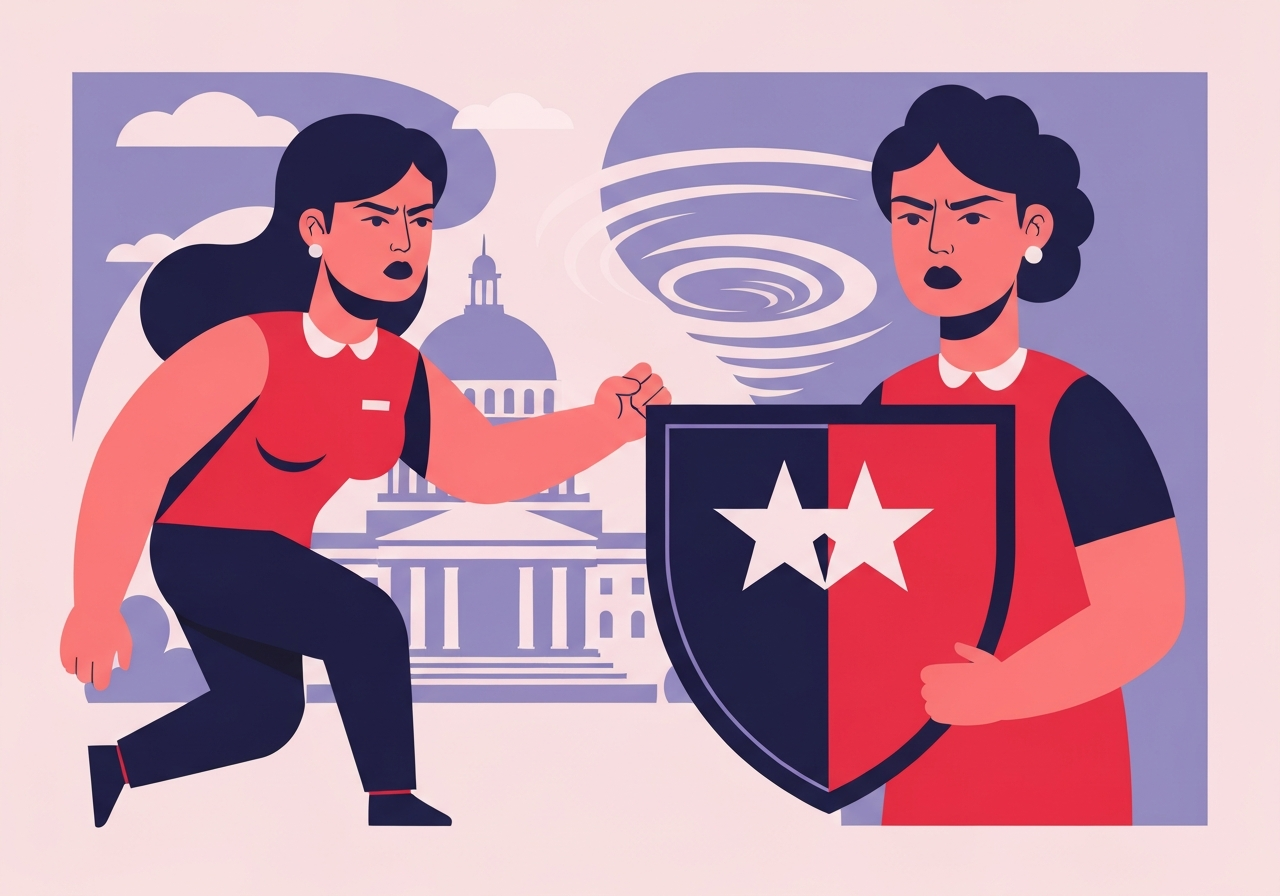
Thousands of California delegates, activists and elected officials converged at the Moscone Center in San Francisco on 22 February 2026, united by anger at President Donald Trump and confidence that the Golden State can blunt his influence in the November midterms. Speakers — from Nancy Pelosi to Gavin Newsom allies — framed the gathering as both a celebration of recent state wins, including Proposition 50, and a rehearsal for a national push. Delegates debated strategy for a June governor’s primary, while dramatic rhetoric and calls for accountability underlined the weekend’s mood. By the convention’s end, no single gubernatorial candidate had secured a clear endorsement, even as Democrats pledged to repel what they describe as renewed federal overreach.
Key Takeaways
- Event: A California Democratic convention at Moscone Center, San Francisco, on 22 February 2026 drew thousands of delegates, activists and elected officials.
- Political message: Nancy Pelosi declared “Trump’s reign of terror must end,” a rallying refrain echoed across speeches and floor chants.
- Delegate math: Results posted Saturday night showed Eric Swalwell with roughly 25% of delegates, Betty Yee at 17% and Xavier Becerra at 14%.
- State ballot victory: Delegates hailed Proposition 50 (redistricting reform) as a 2025/2026-era example of California’s influence on national strategy.
- Primary worries: California’s June jungle primary raises the risk that a fractured Democratic field could send two Republicans to the general election.
- Policy schisms: Delegates expressed growing unease with Silicon Valley’s political sway and urged the party to hold tech accountable.
- Rising figures: Representatives Robert Garcia and Ro Khanna were spotlighted for oversight work and progressive accountability campaigns, including pressure over the Jeffrey Epstein files.
Background
California has positioned itself as the chief state-level counterweight to President Trump, governed by high-profile Democrats including Governor Gavin Newsom and long-serving House leader Nancy Pelosi. The state has become both a laboratory for progressive policy and a target for conservative criticism; Trump frequently describes California as a liberal “hellscape” while deploying federal tools to contest state policies. Recent state victories, most notably a redistricting measure framed as a response to Republican gerrymanders elsewhere, have bolstered the party’s narrative that California can provide models for national campaigns.
Nationally, Democrats are reacting to a second Trump term marked by sweeping policy shifts cited by critics as cuts to health programs, stepped-up immigration enforcement and selective use of federal authority against political foes and blue jurisdictions. Within California, these national policy fights intersect with local priorities — environmental protections, immigrant rights and reproductive access — creating a particularly charged political climate. The Moscone convention therefore served both as a morale event and a practical forum to coordinate messaging ahead of the June primary and November midterms.
Main Event
The weekend’s program combined ceremonial tributes, candidate pitches and caucus strategy sessions. Nancy Pelosi — honored repeatedly as the party’s “forever speaker” — used her address to sharpen criticism of the administration’s trajectory, while other speakers emphasized the need to translate anger into organization and turnout. Delegates wore lanyards and carried materials linking the state’s leadership to a broader national effort; the atmosphere blended celebration with urgency.
Senator Adam Schiff used blunt language to warn the White House against continued confrontation, invoking the state bear as a symbol of California’s defensive posture. High-profile House members such as Robert Garcia and Ro Khanna drew attention for investigations and accountability campaigns, including demands related to the release of the Jeffrey Epstein files. Delegates repeatedly cited those investigations as evidence that oversight and prosecutorial pressure remain central to the party’s platform heading into midterms.
Gubernatorial hopefuls addressed the hall in turn, balancing anti-Trump rhetoric with policy promises. Eric Swalwell emphasized using the governor’s office to block federal immigration enforcement operations; Katie Porter led a loud chant from the floor. Voters remain undecided in polls, and the convention results left no single Democratic candidate with a decisive endorsement: Swalwell (≈25%), Betty Yee (17%) and Xavier Becerra (14%). Organizers and the DNC urged rapid unity to avoid a fractured June primary.
Analysis & Implications
California’s convention highlights a twin challenge for Democrats: channeling visceral opposition to Trump into disciplined electoral strategy, and reconciling internal divisions over ideology and tactics. The rhetoric of revenge or reckoning can mobilize the base, but it risks alienating undecided voters if not paired with clear policy proposals on costs voters care about, such as housing, healthcare and the state budget. Candidates like Betty Yee argue the next governor must be able to manage fiscal realities as well as lead a national resistance.
The party’s relationship with Silicon Valley surfaced as a critical fault line. As some prominent tech executives tilt right and fund candidates outside traditional Democratic circles, activists and labor leaders called for more confrontational regulation and labor protections. That tension matters in California because tech money can shape local and statewide races; if unchecked, it could hamper Democratic coordination against Republican gains in 2026 and beyond.
Electoral mechanics amplify the strategic stakes. California’s jungle primary, which advances the top two vote-getters regardless of party, raises the real possibility that two Republicans could reach the general election in a large statewide race if Democratic votes split among many contenders. For a party that sees California as both a policy laboratory and a strategic bulwark, losing the governor’s mansion would be a significant symbolic and operational setback ahead of November.
Comparison & Data
| Candidate | Convention Delegate Share |
|---|---|
| Eric Swalwell | ≈25% |
| Betty Yee | 17% |
| Xavier Becerra | 14% |
The table above shows delegate proportions reported during the convention; they signal relative momentum but are not final vote totals for the June primary. Convention delegates are an early indicator of organizational strength and messaging resonance, but broad voter preferences in a statewide primary can shift, especially with heavy advertising and outside spending. Polls showing Republican commentators like Steve Hilton and Chad Bianco leading in some surveys underline the unpredictability of the field heading into June.
Reactions & Quotes
Party leaders, activists and experts offered immediate reactions that reveal both unity against the White House and internal debates about tactics and priorities.
“Trump’s reign of terror must end.”
Nancy Pelosi, former House Speaker (speech at convention)
Pelosi’s line was repeated across the floor as a clarion call; delegates used it to frame the convention as a moral and political counterweight. Her remarks were positioned as both a farewell-era legacy and a mobilizing statement for midterm strategy.
“When you poke the bear, the bear rips your fucking head off.”
Senator Adam Schiff (speech at convention)
Schiff’s blunt warning framed the administration as the provoker; he used state imagery — the California bear — to emphasize the consequences of antagonizing a politically powerful state. His rhetoric underscored a willingness among some Democrats to return fire in kind.
“We do have to just make sure that we don’t shoot ourselves in the foot, so to speak.”
Ken Martin, DNC Chair (intervention at convention)
Ken Martin’s comment reflected the DNC’s neutral stance in the California governor’s race while urging party unity. His appeal highlighted concern that intra-party fragmentation ahead of the June primary could produce unfavorable electoral outcomes.
Unconfirmed
- The precise scale and long-term political impact of Silicon Valley donations to pro-Trump or centrist local candidates in 2026 remain under investigation.
- Whether the June jungle primary will in fact result in two Republicans reaching the general election in the governor’s race is uncertain and depends on how Democratic voters coalesce.
- The full scope and timetable for release of the Jeffrey Epstein document files referenced by speakers has not been publicly confirmed.
Bottom Line
The California convention made clear that the state’s Democratic establishment sees itself as both a defensive bulwark against the Trump White House and an offensive exemplar for national strategy. Delegates left energized by fiery rhetoric and state policy wins, yet confronted by real organizational and strategic challenges: an unsettled governor’s race, rising tensions with tech powerbrokers, and the mechanics of the jungle primary that could dilute Democratic advantages.
For November, success will require translating anger into disciplined turnout, clearer policy messaging on bread-and-butter issues, and faster coalescence behind the strongest statewide tickets. Observers should watch June’s primary results and the flow of independent spending from tech and other donors — those elements will shape whether California remains a national model or becomes a warning about the limits of symbolic resistance.
Sources
- The Guardian (news report on the convention)
- Democratic National Committee (official party organization)
- California Secretary of State (official election information)
- Associated Press (news agency)
- Reuters (news agency)