
Lead
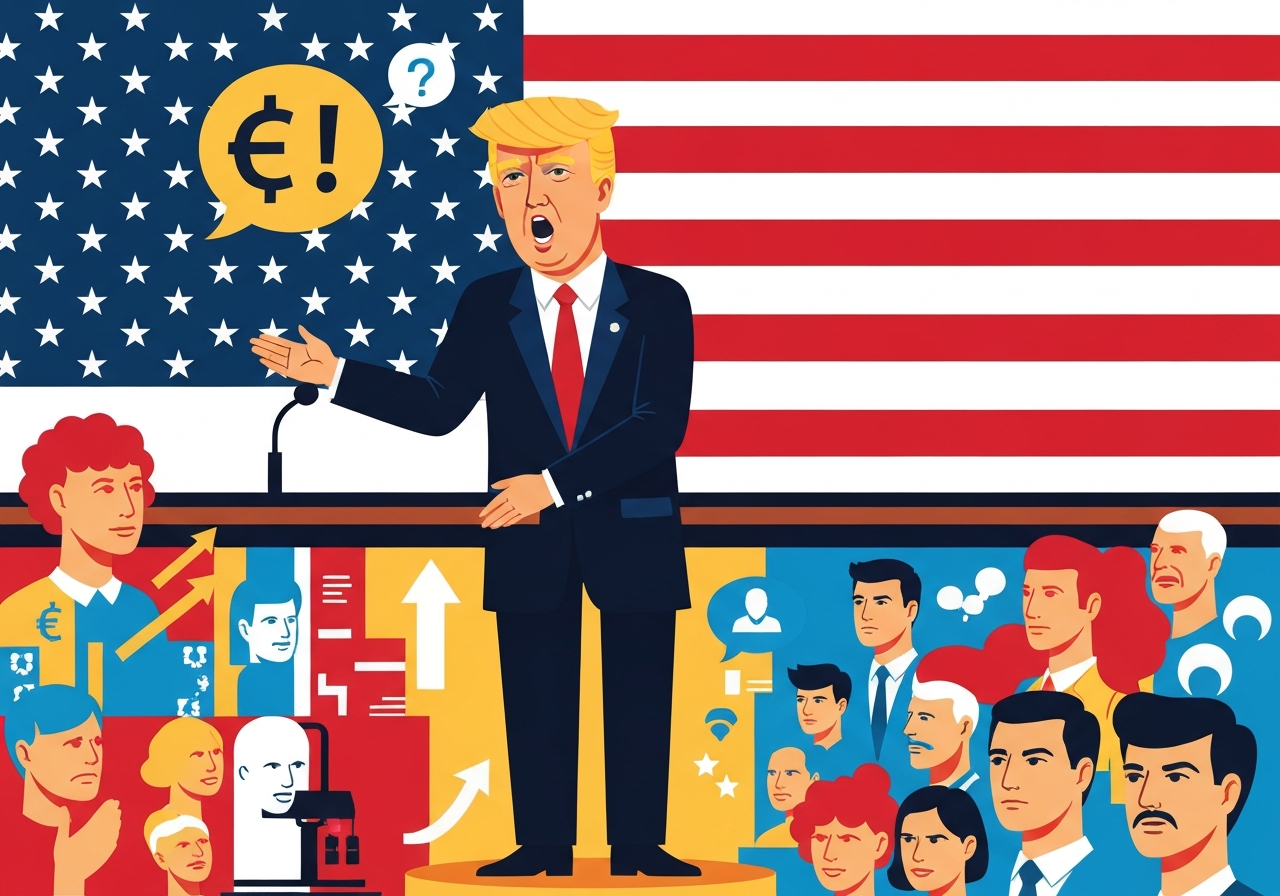
President Donald Trump’s State of the Union address on Tuesday is shaping up as a rehearsal of the Republican pitch ahead of November’s midterm elections, aimed at persuading voters who remain unconvinced after his first year back in office. He is expected to highlight jobs, prices and immigration while attributing lingering economic pain to decisions made by prior administrations. That message arrives as a recent Supreme Court ruling limited his tariff authority and as rising tensions with Iran and recent military actions overseas complicate his foreign-policy record. How the speech balances domestic promises with international flashpoints could influence voter attitudes and party strategy heading into the midterms.
Key Takeaways
- Trump will emphasize the economy—jobs, consumer costs and energy—to appeal to midterm voters, despite only 39% approval for his economic leadership in the latest AP-NORC poll.
- Public support on immigration is low at 38% per the AP-NORC survey, signaling vulnerability on a once-strong issue for Trump.
- The U.S. Supreme Court last week limited the president’s broad tariff powers, a legal setback that Republicans expect to address in messaging and alternative trade measures.
- Commerce Department data show U.S. economic growth slowed in the final three months of last year, a fact advisers say increases pressure to sharpen the economic pitch.
- Foreign-policy moves over the past year—strikes in Yemen, Nigeria and Iran, maritime actions near South America, and a January raid in Venezuela—have raised questions among some supporters about focus and priorities.
- Vice President J.D. Vance and other Republican surrogates expect the address to stress reshoring, factory growth and lower energy costs as central themes.
- Audience reactions in the House chamber—and possible protests or walkouts—could amplify or undercut the speech, echoing past State of the Union moments that became political theater.
Background
Trump returned to the White House pledging to lower prices and restore tighter immigration controls, themes that helped him win office. Over the past year, however, public sentiment has shifted: the AP-NORC Center for Public Affairs Research finds only 39% of adults approve of his handling of the economy and 38% approve of his immigration approach. Those numbers reflect enduring consumer worries about groceries, housing and utilities.
Trade policy has been a focal point: the administration’s use of sweeping tariffs aimed at reshaping global supply chains provoked legal challenges and market uncertainty. Last week’s Supreme Court decision that curtailed much of the president’s tariff authority represents a substantive blow to that approach and has forced advisers to consider alternative legal and administrative routes to maintain import restrictions.
At the same time, Trump’s foreign-policy posture—brisk use of military options and a high-profile raid in Venezuela in January—has complicated his claim that a muscular international stance translates into domestic political strength. Some Republicans worry the president’s global focus could distract from bread-and-butter issues voters care about most.
Main Event
On Tuesday night in the House chamber, Trump will deliver a speech that aides expect to foreground the economy. Republicans plan to cast the address as an outline of plans to lower costs and bring manufacturing jobs back to the U.S., while juxtaposing those goals against what they call the failures of past administrations. The administration previewed elements of that approach at a White House event this week, with Trump declaring, “We inherited a mess,” and promising renewed emphasis on affordability.
Despite the emphasis on domestic themes, recent developments will hover over the remarks. The Supreme Court ruling limiting tariffs means Trump may assert alternative authorities or executive measures to preserve trade leverage—an argument likely to be closely watched by lawmakers and legal scholars. A Commerce Department report showing slower growth in the final quarter of last year adds urgency to any pledge to revive growth.
Foreign-policy tensions also shape the stage. In the past year the administration has authorized strikes in Yemen, Nigeria and Iran, continued lethal maritime actions described as counter-narcotics operations near South America, and executed a high-profile capture-and-raid operation in Venezuela in January. Those actions have expanded the security footprint but left questions about how such operations translate into voter benefits at home.
The audience’s response will be consequential. House Democrats have signaled they will maintain a strong and dignified presence; some members may even abstain as a form of protest. Republican strategists say applause lines will be used to telegraph party unity and to single out GOP dissenters on issues like tariffs during the telecast.
Analysis & Implications
Strategically, the State of the Union offers Trump a concentrated platform to reframe the political narrative. With approval on core pocketbook issues low, his team needs to present fresh, tangible proposals or risk repeating last year’s talking points—tax cuts, mortgage-rate initiatives and a drug-pricing website—that critics say lack immediate impact. The Commerce Department’s slowdown in final-quarter growth increases the stakes for measurable promises tied to household bills.
The Supreme Court’s decision on tariffs undercuts one of the administration’s marquee economic instruments. Legally constrained from imposing the same broad duties, the president may pivot to targeted measures, executive actions, or diplomatic trade deals. Each alternative carries political and economic trade-offs: targeted tariffs can be less visible to voters, while negotiated agreements take time and may not produce quick price relief.
On foreign policy, aggressive use of force and high-profile operations have won attention but not consistently translated into public confidence. For some voters, overseas action may suggest decisive leadership; for others, it raises concerns about overstretch and distraction from domestic issues. The risk for the White House is that foreign-policy headlines—especially threats involving Iran—could eclipse the economic message the speech is intended to deliver.
Looking ahead to the midterms, Trump’s ability to translate a single address into sustained voter movement is uncertain. State of the Union speeches can shift impressions when the country faces acute trauma or crisis; absent that context, the impact often fades. The administration will need follow-up policy moves and targeted campaigning to sustain any short-term gains the speech might generate.
Comparison & Data
| Metric | Recent Value |
|---|---|
| Approval — economic leadership (AP-NORC) | 39% |
| Approval — immigration (AP-NORC) | 38% |
| U.S. growth (final quarter, Commerce Dept.) | Slowed (reported in recent Commerce data) |
Those figures illustrate the principal messaging challenge: low approval on two issues central to Trump’s base, and macroeconomic data that provide fodder for critics. The administration’s task is to show a credible path from headline policy to immediate household relief, while opponents will highlight legal setbacks and uneven economic indicators.
Reactions & Quotes
Republican strategists and White House allies say the address should center on tangible economic improvements and manufacturing gains.
“I think it makes it even more important that the speech really focus on the economy,”
Alex Conant, Republican strategist
Vice President J.D. Vance previewed themes the administration expects to emphasize, linking jobs and reshoring to lower costs.
“You’re going to hear a lot about the importance of bringing jobs back into our country, of reshoring manufacturing,”
Vice President J.D. Vance
Observers across the aisle warned the address may read like a campaign speech, deepening partisan divisions rather than building consensus.
“Expect some version of a campaign speech in which the Democrats are the villains and he is cast as the savior,”
Kathleen Hall Jamieson, communications professor, University of Pennsylvania
Unconfirmed
- Whether the president will announce new legally binding tariff measures or only propose administrative workarounds remains unclear and unconfirmed at the time of the speech.
- Reports of imminent, specific military strikes related to Iran have circulated in some briefings but have not been officially confirmed; details and timing remain uncertain.
Bottom Line
The State of the Union is intended as a concentrated argument: Trump will try to convert a skeptical electorate by foregrounding jobs, lower costs and immigration controls while assigning blame to predecessors. Yet legal limits on tariffs, mixed economic data and active foreign-policy flashpoints complicate that narrative and narrow the room for simple, immediate wins.
For the speech to have lasting electoral effect, the White House must follow the address with credible policy steps that deliver visible relief to households and clear legal footing for trade measures. Otherwise, any short-term boost in messaging may be undercut by courtroom rulings, economic indicators and headlines from abroad.