
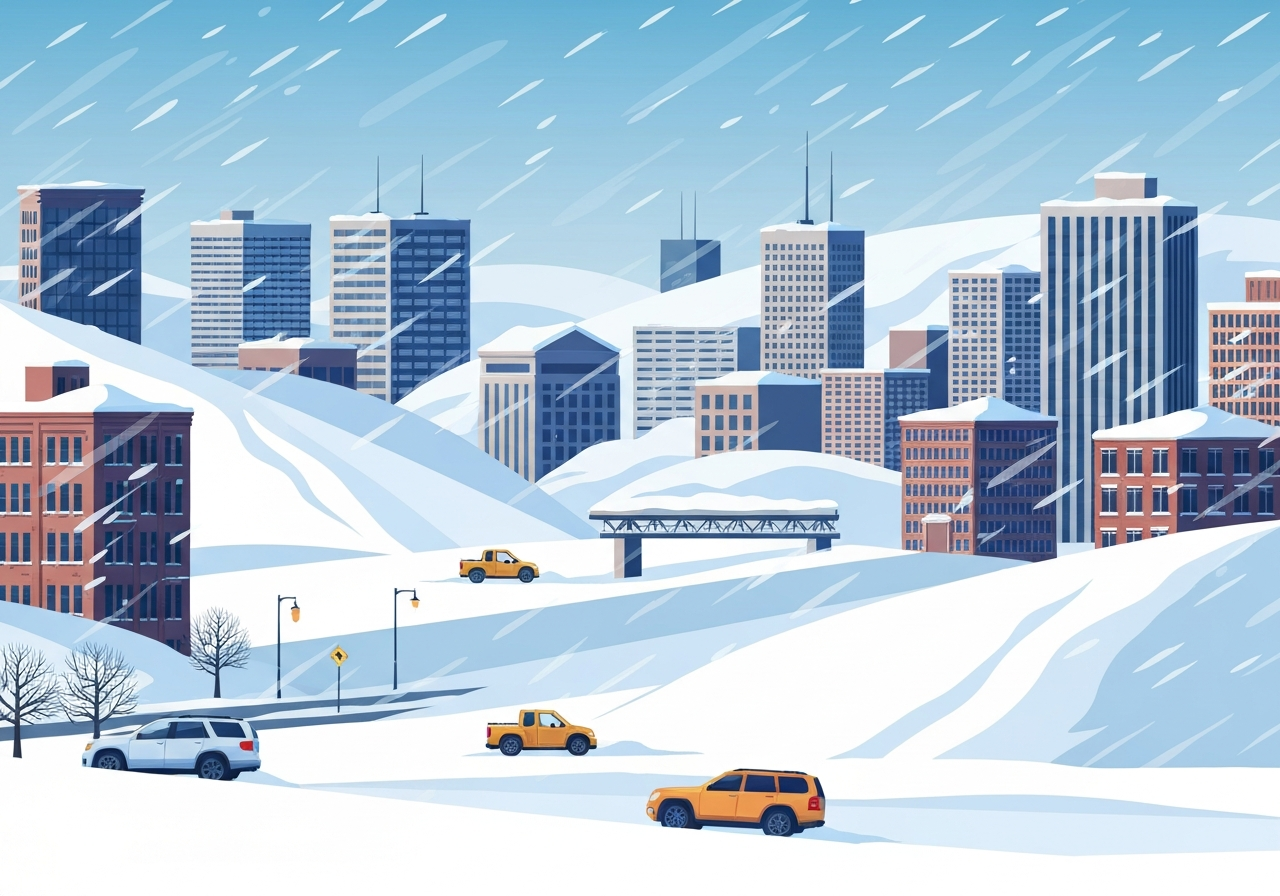
A powerful blizzard struck the U.S. Northeast on Monday, February 23, 2026, forcing cities from New Jersey to Long Island and Rhode Island to begin an arduous cleanup. The storm put more than 40 million people under weather warnings at its peak and produced localized accumulations of up to 3 feet of snow. State executives in New Jersey, Rhode Island, Pennsylvania and Connecticut declared emergencies and imposed travel limits as winds reached hurricane force in some areas. Utilities reported widespread outages, with PowerOutage.us tracking at least 500,000 customers without electricity by early Monday evening.
Key takeaways
- Snow totals: The National Weather Service reported up to 3 feet (36 inches) of snow in parts of New Jersey, Rhode Island and New York’s Long Island.
- Population affected: More than 40 million people were under winter warnings, advisories or watches across the Northeast at the storm’s height.
- States of emergency: New Jersey, Rhode Island, Pennsylvania and Connecticut issued state-level emergency declarations; 20 New York counties were also under emergency orders.
- Power impact: At least 500,000 electricity customers experienced outages in the region as of early Monday evening (PowerOutage.us).
- Transportation disruption: Thousands of flights nationwide were canceled and widespread school closures were recorded across affected states.
- Official concern: New York Governor Kathy Hochul warned the storm could rank among New York City’s top 10 worst in 150 years.
Background
Nor’easters and coastal winter storms regularly develop along the Eastern Seaboard when cold continental air clashes with Atlantic moisture. These systems can intensify rapidly, producing heavy snow, strong winds and coastal impacts over a short period. Over the past two decades the region has experienced several high-impact winter storms that exposed vulnerabilities in power distribution, transit resilience and emergency response capacity.
Municipalities and state agencies have updated response plans following those events, emphasizing pre-staged crews, travel restrictions and prioritized power restoration for critical facilities. Still, densely populated corridors such as the I-95 corridor and Long Island remain highly exposed to transportation paralysis and cascading infrastructure failures during major storms. Emergency declarations are intended to free resources and restrict nonessential movement as crews work to clear roads and restore services.
Main event
The blizzard intensified through Sunday night and into Monday, dropping heavy, wet snow while gusts at times approached hurricane strength along the coast. By midday Monday, the National Weather Service confirmed localized snow depths reaching as much as 36 inches in portions of New Jersey, Rhode Island and Long Island. Wind-driven snow reduced visibility to near zero in several corridors, prompting state travel bans and road closures.
State governments issued emergency declarations to mobilize resources and impose travel restrictions; New York additionally placed 20 counties under emergency orders. School systems across the region announced large-scale closures, and many municipal transit operators reduced or suspended services. Airports reported thousands of canceled flights nationwide as crews struggled to keep runways clear and safe for operations.
Utilities deployed crews for damage assessment and restoration, but heavy snow and downed trees complicated access to lines. PowerOutage.us reported at least 500,000 customers without electricity by early Monday evening, with the hardest-hit zones in coastal and suburban areas where tree loss is pronounced. Local shelters and warming centers were opened in several jurisdictions to support residents affected by outages or travel restrictions.
Analysis & implications
Immediate impacts include heightened risk to life and property from vehicle accidents, hypothermia and prolonged power loss, particularly for vulnerable populations reliant on electric heat or medical devices. The scale of outages — half a million customers reported early in the event — indicates that restoration timelines may stretch beyond 24–48 hours in some communities, depending on access and resource availability.
Economically, the storm will disrupt commerce, transportation and logistics across a densely interconnected region. Flight cancellations and road closures impose both direct costs for households and businesses and indirect costs through delayed deliveries and lost workdays. Insurers and municipal budgets will also face pressure from damaged infrastructure, cleanup and emergency operations.
Politically, emergency declarations test state and federal coordination for resource sharing and disaster assistance. Governor-level statements that characterize the storm as potentially among the worst in a century and a half can shape public expectations and the allocation of relief. Long-term, repeated extreme events sustain pressure on utilities and municipalities to invest in grid hardening, tree management and resilient transport systems.
Comparison & data
| Location | Reported peak snow |
|---|---|
| Parts of New Jersey | Up to 3 ft (36 in) |
| Rhode Island (selected sites) | Up to 3 ft (36 in) |
| Long Island, NY | Up to 3 ft (36 in) |
Those localized maxima place the event among the region’s larger single-storm accumulations, although full state-by-state damage and snowfall maps are still being compiled. Comparisons to historical storms will depend on finalized measurements at official COOP stations and post-storm damage assessments.
Reactions & quotes
“It could rank among New York City’s top 10 worst storms in 150 years.”
Governor Kathy Hochul (New York State)
“Just how massive the winter storm is”
National Weather Service — New York, posted video via X (official agency)
State and local officials described aggressive pre-storm preparations and urged residents to stay off roads except for emergencies. Utility companies said crews had been mobilized from neighboring states to assist with restoration; municipalities opened warming centers and asked the public to check on elderly neighbors.
Unconfirmed
- Comprehensive casualty totals and serious injury counts were not available at the time of reporting.
- Total economic losses from business interruption, property damage and cleanup had not been quantified as of early assessments.
- Precise peak wind gust measurements across all affected coastal stations were still being validated by authorities.
Bottom line
The February 23, 2026 blizzard delivered extreme snowfall and high winds across densely populated parts of the Northeast, triggering emergency declarations, widespread travel disruptions and substantial power outages. Immediate priorities are public safety, clearing primary transportation corridors and restoring power to critical facilities and large numbers of households.
Over the coming days officials will issue detailed impact assessments that determine restoration timelines, damage costs and possible federal assistance. Residents should follow local emergency guidance, expect delays and plan for prolonged outages in the hardest-hit communities.
Sources
- Yahoo News Canada (media — live coverage)
- PowerOutage.us (data aggregator for utility outages)
- National Weather Service — New York (official agency X profile and posted satellite/video)
- New Jersey Office of Emergency Management (official)
- State of Rhode Island official site (official)
- Commonwealth of Pennsylvania (official)
- State of Connecticut official portal (official)