
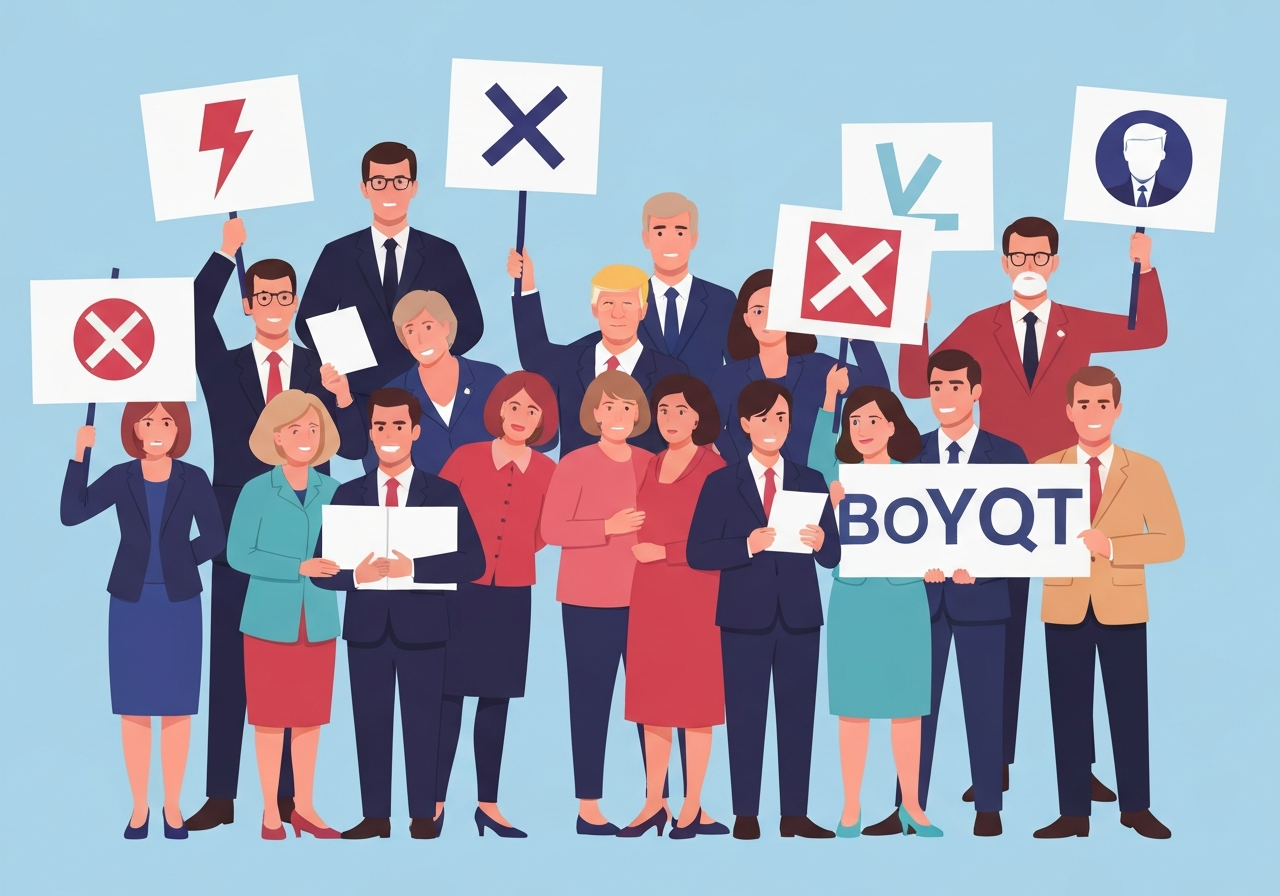
Dozens of Democrats to boycott Trump’s State of the Union address
Lead: On Feb. 24, 2026 in Washington, dozens of House and Senate Democrats announced they will skip President Trump’s State of the Union address and instead join or support nearby counterprogramming. The departures follow visible protests inside the chamber in prior years, including last year’s incident that led to Rep. Al Green being escorted out. Party leaders offered members two options: attend with silent defiance or stay away and organize competing events on the National Mall and at the National Press Club. Several high-profile senators and representatives are scheduled to participate in alternative programming labeled the ‘People’s State of the Union’ and the ‘State of the Swamp.’
Key Takeaways
- Dozens of Democrats declared plans to boycott the Feb. 24, 2026 State of the Union, with many opting for visible counterprogramming rather than protests inside the House chamber.
- House Minority Leader Hakeem Jeffries framed the choices as ‘attend with silent defiance’ or ‘not attend,’ and highlighted alternate events near the Capitol as options for members.
- Prominent lawmakers scheduled for the National Mall ‘People’s State of the Union’ include Sens. Ed Markey, Jeff Merkley, Chris Murphy, Tina Smith and Chris Van Hollen, and Reps. Pramila Jayapal, Becca Balint and Greg Casar.
- The National Press Club will host a separate event called the ‘State of the Swamp,’ with Sen. Ron Wyden and Reps. Seth Moulton, Dan Goldman and Eugene Vindman among those listed.
- Some Democrats will boycott without counterprogramming; Rep. Alexandria Ocasio-Cortez and Sen. Ruben Gallego announced they will not attend the address, with Gallego saying he will work for Arizona instead.
- Rep. Robert Garcia plans to attend counterprogramming while inviting Annie Farmer, an Epstein survivor, to attend the president’s address as his guest.
- Others, including Sen. Richard Blumenthal, said they will attend the address to confront the president directly, often by remaining in silent protest.
Background
The State of the Union is a traditional presidential address to a joint session of Congress that functions as both a policy speech and a political spectacle. In recent years the event has become a forum for visible demonstrations by lawmakers from both parties, including walkouts, signs and vocal interruptions. Last year Rep. Al Green of Texas was escorted from the chamber after shouting during the address, an incident that crystallized tensions about how opposition lawmakers should behave during the speech.
Democratic leadership has debated how to respond to President Trump’s remarks without ceding the main platform. The options laid out by House Minority Leader Hakeem Jeffries reflect a strategic choice between visible, in-chamber protest and organized alternative programming intended to present a competing narrative to the president’s message. Organizers of the counterprogramming aim to draw attention away from the chamber while giving lawmakers and outside groups a platform to outline policy priorities and critiques.
Main Event
At a news conference ahead of the address, Hakeem Jeffries presented what he described as two clear choices for House Democrats: attend and register silent opposition, or abstain and participate in outside events. Jeffries emphasized organized alternatives near the Capitol and framed those options as an effective way to communicate disagreement without repeating the disruptions seen in prior years.
The National Mall event, described by organizers as the People’s State of the Union, lists multiple senators and representatives who plan to attend. In a statement, Sen. Ed Markey said that if the president will not ‘honor the American people, then the people should turn off his remarks and turn toward each other,’ language used by organizers to justify a parallel program focused on community and policy priorities.
The National Press Club will host the ‘State of the Swamp’ earlier the same evening, with Sen. Ron Wyden among the scheduled participants. Some Democrats, including Rep. Alexandria Ocasio-Cortez and Sen. Ruben Gallego, announced there will be no attendance at the address and no public counterprogramming, citing a desire to prioritize other work and to avoid performing support that they do not intend to offer.
Not all Democrats will stay away. Sen. Richard Blumenthal said he will attend in person and intends to express dissent by maintaining a posture of silent defiance. Other members will use invited guests to make a point: Rep. Robert Garcia said he would attend counterprogramming while his invited guest, Annie Farmer, will be in the chamber for the president’s address.
Analysis & Implications
The coordinated boycott and parallel events signal a tactical shift in congressional opposition. By moving protests outside the chamber, Democratic leaders aim to avoid the optics of disorder while still denying the president the uncontested attention a televised address normally earns. This approach attempts to balance institutional norms with political messaging ahead of the 2026 campaign season.
For the White House, the absence of a sizable bloc of lawmakers in the chamber can undercut the visual image of bipartisan engagement that presidents often seek during the State of the Union. Yet a boycott also risks energizing the president’s base, which may interpret departures as disrespectful or politically calculated. The net effect on public opinion will depend largely on media framing and turnout at the alternative events.
Legislatively, the boycott is symbolic rather than procedural; the president’s ability to announce priorities and the administration’s policy agenda is unaffected in statutory terms. Still, the move could complicate near-term negotiations by reinforcing partisan distance and limiting informal interactions that sometimes take place on the day of a joint session.
Comparison & Data
| Lawmakers | Planned Location |
|---|---|
| Ed Markey, Jeff Merkley, Chris Murphy, Tina Smith, Chris Van Hollen, Pramila Jayapal, Becca Balint, Greg Casar | People’s State of the Union (National Mall) |
| Ron Wyden, Seth Moulton, Dan Goldman, Eugene Vindman | State of the Swamp (National Press Club) |
| Alexandria Ocasio-Cortez, Ruben Gallego | Boycott with no public counterprogramming |
| Robert Garcia (attends counterprogramming); Annie Farmer (invited guest attends address) | Split participation |
This table lists named participants and the events where they were reported to be appearing as of Feb. 24, 2026. It does not attempt to quantify total attendance because organizers’ head counts and last-minute changes were not confirmed at press time.
Reactions & Quotes
The leadership framing and individual responses drew immediate comment from lawmakers and organizers.
‘The two options that are in front of us in our House is to either attend with silent defiance or to not attend, and send a message to Donald Trump in that fashion.’
Hakeem Jeffries, House Minority Leader
Jeffries presented the two options as tactical choices, emphasizing alternate programming on the Mall as a constructive alternative to in-chamber disruptions.
‘If Trump will not honor the American people, then the people should turn off his remarks and turn toward each other — toward their neighbors, their communities, and the real power of this country.’
Ed Markey, U.S. Senator
Sen. Markey framed the National Mall event as a people-centered response aimed at shifting attention away from the president’s televised remarks.
‘I refuse to let him bully me out of the room, and I will be defiant in whatever way is appropriate, certainly by silence.’
Richard Blumenthal, U.S. Senator
Sen. Blumenthal said he would attend and use silent protest to register disagreement while remaining inside the chamber.
Unconfirmed
- The exact number of Democrats who will ultimately boycott the State of the Union remained unverified at press time; reports described ‘dozens’ but did not provide a precise count.
- Final attendance lists for the People’s State of the Union and State of the Swamp were subject to last-minute changes and have not been independently verified by official head counts.
- Media impact and public reaction to the counterprogramming remain speculative until viewership and turnout figures are published.
Bottom Line
The coordinated decision by many Democrats to boycott President Trump’s Feb. 24, 2026 State of the Union and to organize competing events reflects a deliberate strategic shift away from in-chamber protest. Leadership sought to avoid repeating high-profile disruptions while still denying the administration a fully attentive audience in the chamber.
Near term, the choice will shape the visual and media narrative around the address, with potential consequences for public perception and partisan messaging during a politically consequential year. Observers should watch turnout and media coverage of the alternative events, and whether this model becomes a recurring tactic for opposition parties in future joint sessions.
Sources
- CBS News (news media report)
- Office of Rep. Hakeem Jeffries (official House Democrat leader website)
- National Press Club (organization hosting ‘State of the Swamp’ event)