
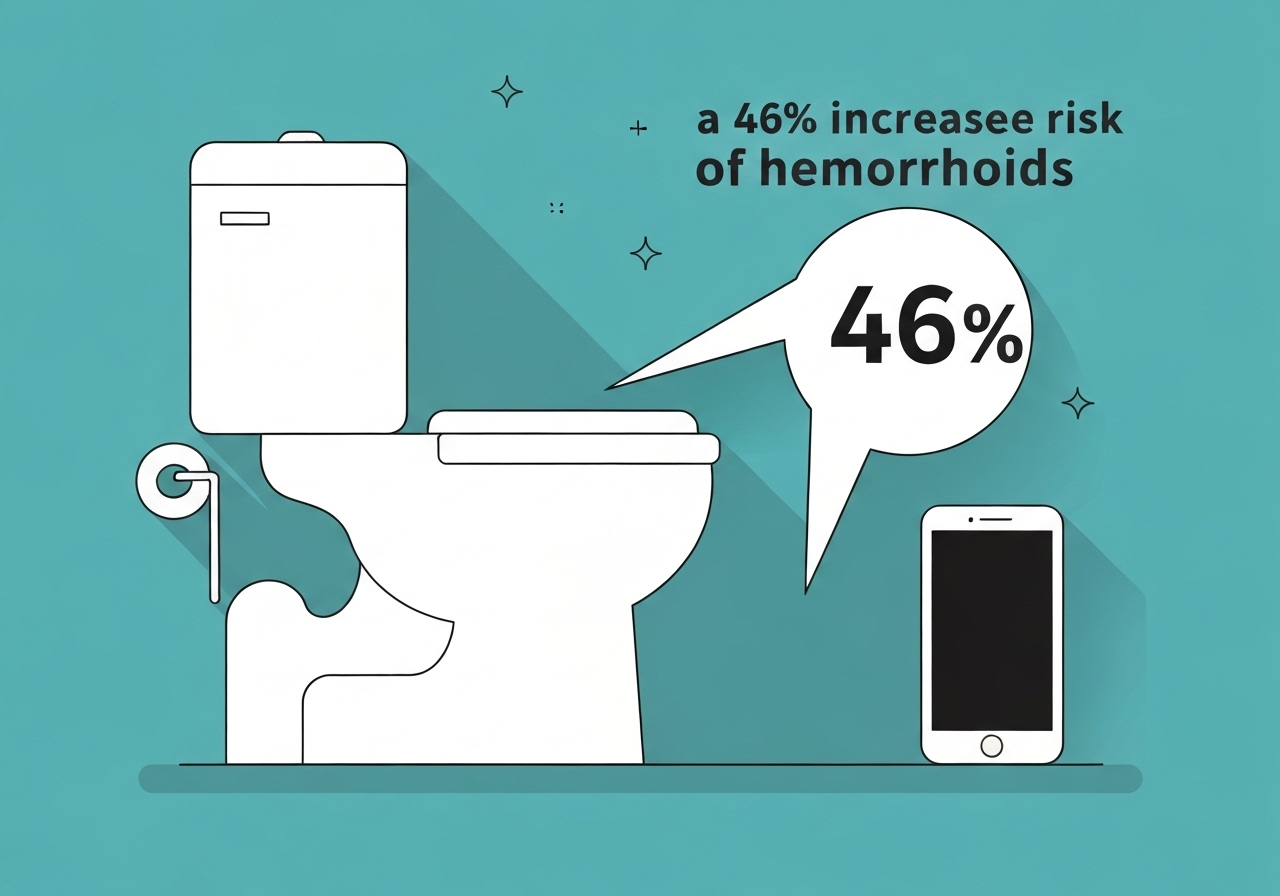
On Sept. 7, 2025, researchers reported in PLOS One that adults who use smartphones while seated on the toilet face a 46% higher risk of hemorrhoids; the study, conducted at Beth Israel Deaconess Medical Center (affiliated with Harvard Medical School), links extended sitting time on the toilet with rectal tissue swelling and an increased likelihood of hemorrhoids.
Key Takeaways
- Study of 125 adults undergoing screening colonoscopy found a 46% higher hemorrhoid risk for toilet smartphone users.
- 66% of participants brought phones into the restroom; common activities were reading news (54%) and social media (44%).
- Smartphone users spent longer on the toilet: 37% stayed over five minutes versus 7% of non-users.
- Risk correlated with time seated, not with reported constipation or straining in this sample.
- Experts recommend limiting toilet visits to about 3–5 minutes and avoiding phone use while seated.
- Delaying bowel movements and other behaviors (low-fiber diet, obesity) remain established risk factors.
Verified Facts
The PLOS One analysis involved 125 adult patients who completed questionnaires about bathroom habits, diet, exercise and straining. Hemorrhoids were identified by endoscopic exam during routine colonoscopy. Investigators found that bringing a smartphone into the restroom was associated with a significantly greater amount of time spent sitting on the toilet and a higher measured rate of hemorrhoids.
Two-thirds (66%) of respondents reported using their phones while on the toilet. Among those users, 37% reported visits lasting longer than five minutes, compared with 7% among non-phone users. The most frequent phone activities were reading news (54%) and browsing social media (44%), which the authors say promote passive, prolonged sitting.
Clinicians explain the likely mechanism: unlike a supportive chair, a toilet seat offers poor pelvic-floor support, allowing blood to pool in the rectal vessels. Prolonged sitting increases venous pressure in that area and can lead to swelling of rectal tissue that presents as hemorrhoids.
Context & Impact
While hemorrhoids are commonly associated with age, obesity and low dietary fiber, this study highlights a modern behavioral factor—toilet phone use—that may be raising incidence among younger cohorts who take phones everywhere. The research sample focused on adults 45 and older, but clinicians note the habit is widespread across age groups.
The finding adds a modifiable risk factor to public health guidance: reducing time spent seated on the toilet could lower the burden of hemorrhoidal disease. For gastroenterology and colorectal clinics, the study provides empirical support to counsel patients on simple behavioral changes.
Public-health messages that combine diet (more fiber), hydration, regular activity and shorter toilet sitting times may offer the most practical benefit. Employers and schools can also reduce barriers that lead people to delay bowel movements, which is another separate contributor to chronic constipation and related complications.
“Do not take your phone into the toilet. Once it’s in your hands, you end up staying longer, increasing hemorrhoid risk,”
Dr. Benjamin Person, senior colorectal surgeon and proctologist
Practical Advice
- Avoid bringing smartphones into the bathroom; set a simple timer if needed.
- Limit individual toilet visits to roughly 3–5 minutes.
- Maintain a fiber-rich diet, adequate hydration and regular exercise.
- Respond to natural urges rather than postponing bowel movements.
Unconfirmed
- Whether the 46% risk increase applies identically to younger adults: the study population was aged 45 and older.
- Long-term causal effect of occasional toilet phone use remains unproven; the study is observational and identifies association rather than definitive causation.
Bottom Line
Researchers found a clear association between toilet smartphone use and higher hemorrhoid risk driven by longer sitting times. Simple behavior changes—leaving phones outside the bathroom, limiting visit length, and following diet and hydration guidance—can reduce risk and improve bowel health.