
Lead
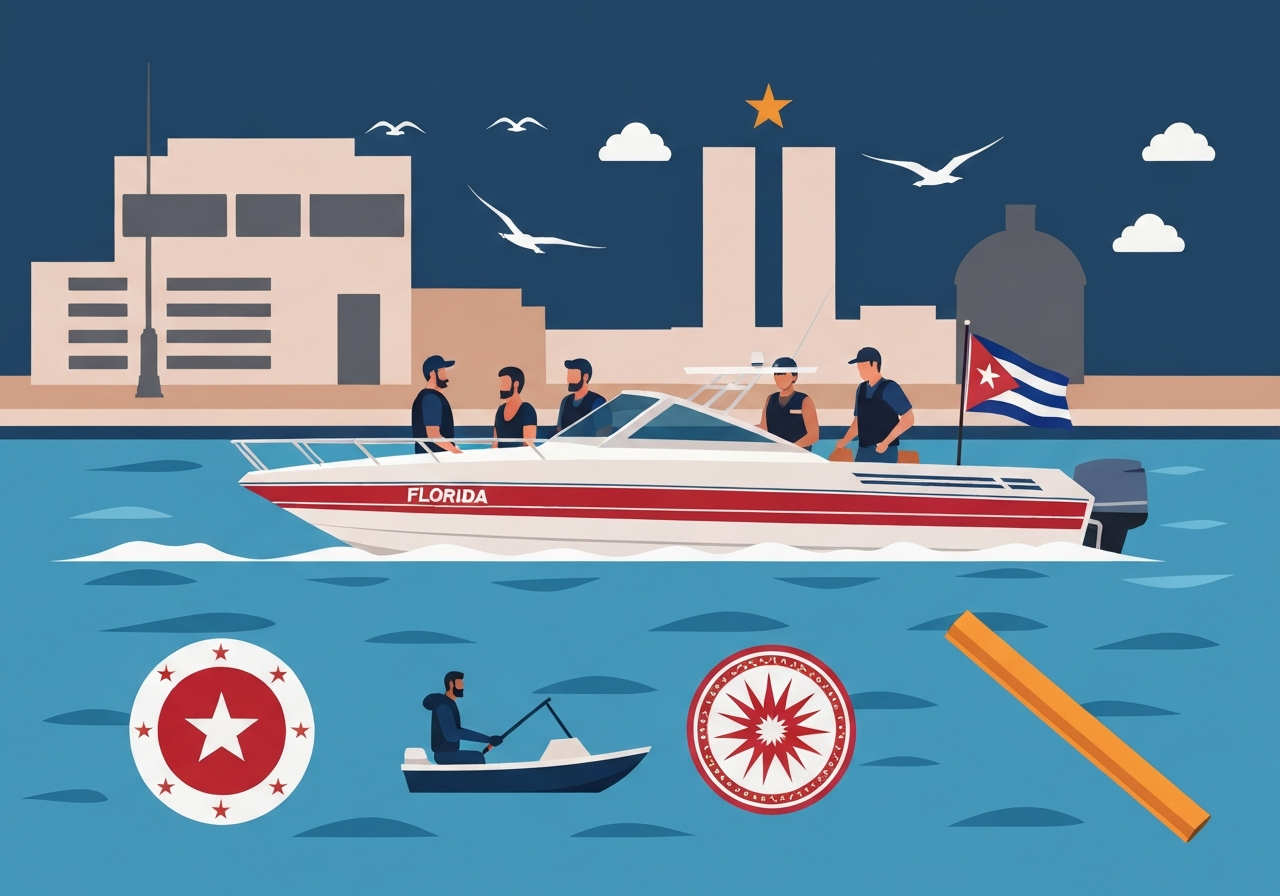
On Wednesday, Feb. 25, 2026, Cuban Interior Ministry officials said border guard personnel engaged in a firefight with occupants of a Florida-registered speedboat near Corralillo in Villa Clara province, leaving four people dead and six wounded. The ministry said five Cuban border troops on a government vessel had approached the speedboat about one nautical mile northeast of the El Pino channel when the occupants opened fire, wounding a Cuban commander. Cuban authorities published what they said was the boat registration, FL7726SH. U.S. officials have acknowledged initial confusion about the craft’s status and say inquiries are ongoing.
Key Takeaways
- Cuban authorities reported 4 people killed and 6 injured after a shooting on Feb. 25, 2026, involving a Florida-registered speedboat near El Pino channel, north of Corralillo, Villa Clara.
- Five Cuban border guards approached the vessel; the Interior Ministry says a commander was wounded in the exchange.
- The Cuban statement included the registration number FL7726SH; the U.S. Coast Guard referred queries to the U.S. Embassy in Havana.
- U.S. officials initially described the craft as part of a flotilla rescuing relatives but later said intelligence indicates a single boat was attacked.
- Reactions in the United States include calls for immediate investigations from Representative Carlos A. Gimenez and Florida Attorney General James Uthmeier.
- The incident falls a day after the 30th anniversary of the Brothers to the Rescue shootdown that killed four people in 1996.
- Cuba is experiencing acute fuel shortages—needing about 100,000 barrels a day, meeting roughly 40% of its energy needs—and international aid efforts from Canada and Mexico were announced days earlier.
Background
The clash comes amid heightened U.S.-Cuba tensions and acute economic strain on the island. Cuban officials and analysts say recent restrictions on oil shipments have squeezed the economy; ship-tracking data indicate oil deliveries from Venezuela have largely stopped since early January 2026. Cuba traditionally required roughly 100,000 barrels of oil per day at peak assistance from Caracas and now meets about 40 percent of its energy needs.
Those shortages have contributed to shortages of fuel and food and prompted urgent aid offers: Canada announced 8 million Canadian dollars in food assistance to be routed through the United Nations, and Mexico dispatched two navy vessels loaded with more than 1,100 tons of supplies. The shortages and sanctions have intensified political pressure inside Cuba and amplified migration flows from the island.
Historical memory shapes reactions. The shooting occurred a day after the 30th anniversary of the 1996 Brothers to the Rescue shootdown, when Cuban forces shot down two planes that had been operating from Florida, killing four people. That episode continues to inform political rhetoric in South Florida and Washington about actions taken by and against Cuban actors.
Main Event
Cuban state media and the Interior Ministry described the Feb. 25 confrontation as beginning when a government patrol boat with five border guards moved to verify the identity of a speedboat that had entered Cuban territorial waters about one nautical mile northeast of the El Pino channel. According to the official account, occupants of the speedboat opened fire on the Cuban personnel, wounding a patrol commander.
The Cuban statement said authorities returned fire. At the time of the ministry announcement, it reported four people aboard the speedboat were killed and six were wounded; the injured were evacuated and received medical attention, the ministry added. Cuban outlets republished the official statement with little additional context.
The Interior Ministry included what it said was the vessel’s Florida registration number, FL7726SH. U.S. officials told reporters there was initial confusion about whether multiple boats were involved; later intelligence assessments reportedly concluded that a single speedboat was attacked. The U.S. Coast Guard directed questions to the U.S. Embassy in Havana, which had not issued a statement at the time of the reports.
U.S. congressional and state-level officials in Florida reacted quickly. Representative Carlos A. Gimenez called for an immediate investigation into what he described as a “massacre,” and Florida’s attorney general, James Uthmeier, said he had ordered the state’s Office of Statewide Prosecution to open an inquiry. Cuban exile communities in Miami were reported to be on high alert following the news.
Analysis & Implications
The shooting has the potential to widen diplomatic strains between the United States and Cuba. If any of the victims are confirmed as U.S. citizens or legal residents, Washington may face domestic pressure to demand answers and potentially escalate diplomatic or legal responses. Conversely, Cuba frames the encounter as a border security action against an armed approach into its waters.
Domestically within Cuba, the clash arrives during an acute humanitarian and economic contraction tied to energy shortfalls and high food prices; political stability could be further tested if shortages deepen. Analysts warn that fuel scarcity—reported to potentially push Cuba toward running out of fuel by late March 2026—can intensify public discontent and migration outflows, changing the island’s domestic calculus.
Regionally, the incident could complicate cooperation with Caribbean governments and international agencies that are already stepping in with aid. Diplomatic messaging matters: Cuba’s formal account and the U.S. request for more information will shape whether regional partners press for transparent investigations or focus on immediate humanitarian assistance.
There are also legal and maritime implications. Questions about the use of lethal force in territorial waters, the identity and armament of the speedboat occupants, and whether proper engagement protocols were followed are likely to be focal points for any independent investigation and for international legal review.
Comparison & Data
| Metric | Reported figure |
|---|---|
| People killed in Feb. 25 incident | 4 |
| People wounded in Feb. 25 incident | 6 |
| Cuban patrol boat personnel | 5 (one commander wounded) |
| Speedboat registration | FL7726SH (reported) |
| Cuba oil need (daily) | ~100,000 barrels |
| Share of energy met domestically | ~40% |
| Known U.S. military small-boat strikes cited | 44 strikes, ~150 killed (reported) |
The table summarizes the figures cited by Cuban authorities and in media reporting. Numbers from official statements (kills, injuries, registration) come from the Cuban Interior Ministry release; broader regional figures (oil needs and previous strike counts) derive from public data and prior reporting cited by multiple outlets.
Reactions & Quotes
U.S. and Florida leaders rapidly demanded investigations and more information, framing the incident as a potential use of lethal force against a U.S.-registered vessel.
“I am calling for an immediate investigation into this massacre,”
Representative Carlos A. Gimenez (R-Fla.)
Gimenez urged federal agencies to determine whether any victims were U.S. citizens or legal residents and to establish the sequence of events that led to the exchange of fire.
“The Cuban government cannot be trusted, and we will do everything in our power to hold these communists accountable,”
Florida Attorney General James Uthmeier
Uthmeier said he had directed the state prosecutor’s office to open an investigation, signaling that Florida officials would pursue state-level inquiries in parallel to any federal review.
“Those people are acting in that fashion, going there to Cuba to pick up people, are risking their lives,”
Jose Basulto, leader, Brothers to the Rescue
Basulto invoked the 1996 shootdown anniversary and warned privately organized maritime runs toward Cuba could repeatedly produce deadly outcomes unless U.S. policy or enforcement changes.
Unconfirmed
- Whether any of the dead or injured were U.S. citizens or lawful U.S. residents remains unverified pending consular or investigative confirmation.
- The precise number of people aboard the speedboat at the moment of the exchange—beyond Cuba’s reported count of at least 10 people—has not been independently confirmed.
- Ownership and operator identity tied to the registration number FL7726SH have not been corroborated by independent maritime or U.S. registries in open reporting.
- Details about who fired first, whether the speedboat was armed, and the intended destination or mission of the craft are not independently verified.
Bottom Line
The Feb. 25 exchange off Villa Clara highlights the dangerous intersection of migration, irregular maritime operations and geopolitical pressure on Cuba. Immediate international attention will center on verifying identities of the dead and injured, the provenance of the vessel, and whether engagement rules were followed by Cuban forces.
Longer term, the incident risks escalating rhetoric and policy responses on both sides: U.S. demands for transparency and potential legal or diplomatic steps could collide with Cuban narratives stressing border defense and sovereignty. With Cuba under acute fuel and food stress and regional actors beginning aid deliveries, the episode could become a focal point for both humanitarian and security debates in the coming weeks.
Sources
- The New York Times (news, live updates; original reporting and ministry statements)