
Lead
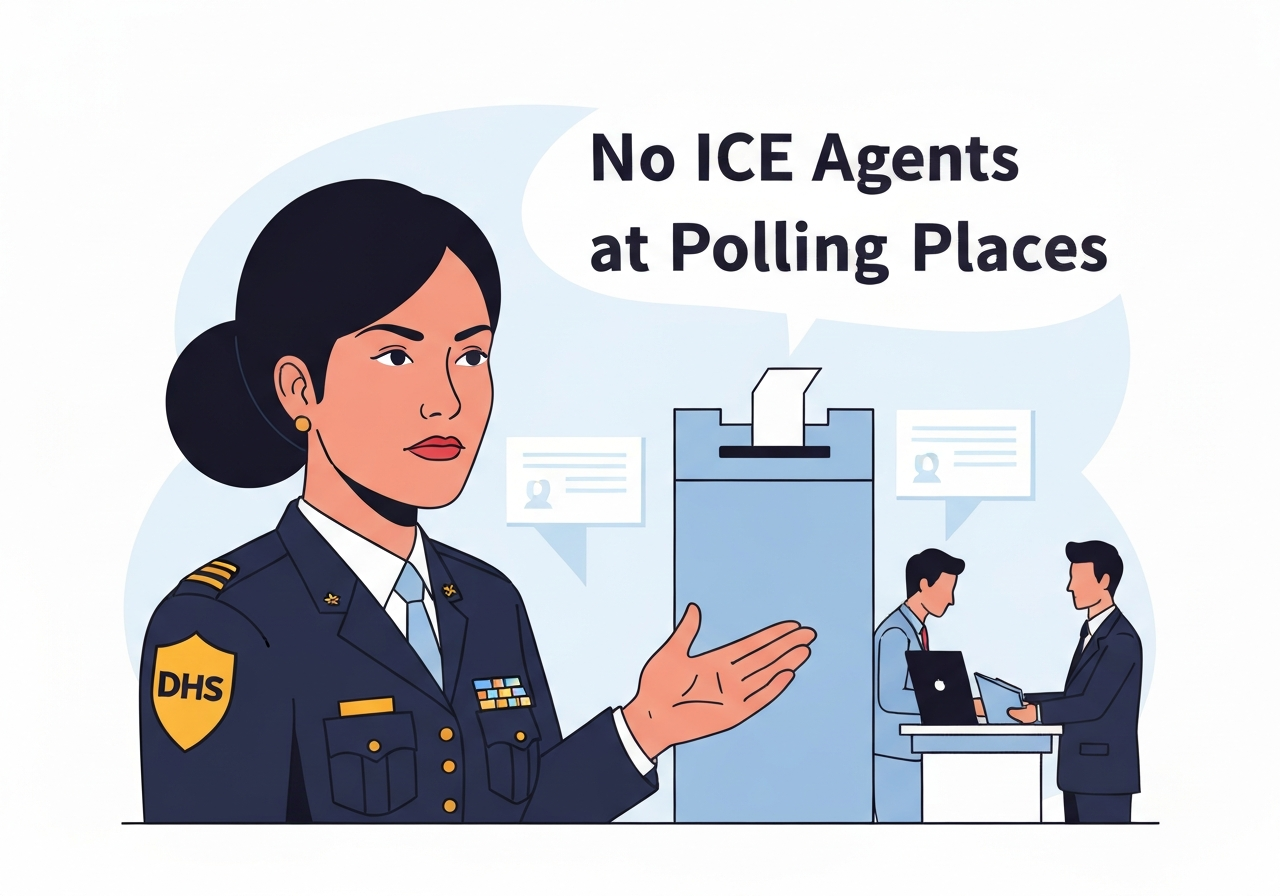
On Wednesday a senior Department of Homeland Security official told state election chiefs on a multiagency call that Immigration and Customs Enforcement (ICE) agents will not be deployed to polling places this year. The comment — attributed to Heather Honey, DHS deputy assistant secretary for election integrity — was confirmed by three people on the call. The discussion included representatives from the FBI, the Election Assistance Commission, the United States Postal Service and the Department of Justice. Some state officials said the reassurance was incomplete and left lingering concerns about future federal actions around the midterms.
Key Takeaways
- Heather Honey, a DHS deputy assistant secretary, told state election officials there will be no ICE presence at polling locations; three call participants confirmed the statement.
- Federal agencies on the call included the FBI, the Election Assistance Commission (EAC), the United States Postal Service (USPS) and the Department of Justice (DOJ).
- California Secretary of State Shirley Weber asked whether states would be notified about immigration operations at polling sites; Honey responded that claims of ICE at polls were disinformation.
- Arizona Secretary of State Adrian Fontes and Maine Secretary of State Shenna Bellows said Honey’s assurances did not fully reassure them about federal interference or respect for state authority.
- Honey previously subcontracted for Cyber Ninjas in the 2020 Maricopa County review, a widely criticized inquiry that did not demonstrate fraud.
- Federal law prohibits deploying “troops or armed men” to polling sites, a legal backdrop cited by election officials worried about enforcement activity near voters.
Background
Concerns about federal agents at polling places arise amid heightened political debate over immigration enforcement and the scope of federal involvement in administering elections. President Donald Trump has publicly suggested the idea of “nationalizing” aspects of voting, which has intensified state officials’ sensitivity to potential federal operations around election sites. State election administrators oversee in-person voting under constitutional and statutory authority, and many view any federal enforcement activity near polling places as a potential chilling factor for voters and poll workers.
Heather Honey’s role at DHS and her past association with the Cyber Ninjas review of Maricopa County’s 2020 results have been points of contention among election officials. That audit, undertaken by a private contractor at the behest of the Arizona state Senate, failed to produce evidence of widespread fraud according to outside election experts. Against that recent history, state officials pressed federal agencies for clear protocols and commitments about how immigration or law-enforcement operations would be coordinated to avoid disrupting voting.
Main Event
The multiagency call, convened by the FBI to discuss preparations for the midterm elections, included state election officials from across the country. On the call, California Secretary of State Shirley Weber asked explicitly whether states would be notified if immigration operations were planned at or near polling places. According to participants, Heather Honey responded by saying any suggestion that ICE would be present at polling locations was disinformation and that there would be no ICE presence at polling sites.
Three participants who spoke with reporters confirmed Honey’s remarks. Nevertheless, some state officials walked away unconvinced. Arizona Secretary of State Adrian Fontes criticized Honey’s credibility and noted her prior work with the Cyber Ninjas review; Fontes said he remained skeptical despite the statement. Maine Secretary of State Shenna Bellows said she left the meeting not reassured that federal actors would not interfere with state election sovereignty.
Meeting participants reported that administration officials offered limited new operational details and in some cases did not directly answer state officials’ questions about how federal and state roles would be coordinated during the midterms. Several state officials said the call was the first contact in months — or ever — with the second Trump administration on election-security matters, highlighting both the novelty and the tension of the engagement.
Analysis & Implications
Legally, deploying armed federal personnel into polling locations would raise clear constitutional and statutory concerns. Federal law bars the deployment of “troops or armed men” to polling places, and the explicit assurance that ICE will not be at polls seeks to align operational practice with that legal baseline. Still, statements from a single DHS official may not fully allay fears among state administrators, who worry about broader enforcement activity in the vicinity of voting sites and public statements that could affect turnout.
Politically, the episode underscores growing distrust between some state election officials and federal actors. Past disputes over the 2020 election, including privately commissioned audits and public allegations of fraud, have left some secretaries of state predisposed to skepticism about federal intervention. Even when federal agencies convene to provide coordination, the legacy of those disputes can blunt the impact of reassurances and complicate cooperative planning.
Operationally, ambiguity about notification and coordination protocols matters for election-day logistics. Poll workers and local election offices need clear lines of communication so that lawful enforcement activities do not impede access to ballots or create intimidation. If states and federal agencies fail to codify notification procedures, local officials could face ad hoc situations that are difficult to manage on short notice.
Comparison & Data
| Agency on Call | Typical Role in Elections |
|---|---|
| FBI | Investigates threats to election infrastructure and credible criminal activity. |
| Election Assistance Commission (EAC) | Provides guidance and resources to state election administrators. |
| USPS | Manages mail delivery, including ballots and election-related mail logistics. |
| DOJ | Enforces voting-rights laws and litigates on election-related legal matters. |
| DHS | Coordinates on infrastructure security and shares threat information with states. |
The table above lists agencies that joined the call and summarizes their typical election-related roles. While these federal entities perform distinct functions, effective election security requires clarity about who leads communication and who notifies state and local officials when enforcement or security operations might affect voters or polling locations.
Reactions & Quotes
California Secretary of State Shirley Weber posed a direct question about whether states would be alerted to immigration activity at polling sites, prompting the DHS response. State officials said their follow-up questions often went unanswered during the call.
“Any suggestion that ICE is going to be present at polling places is simply disinformation. There will be no ICE presence at polling locations.”
Heather Honey, DHS deputy assistant secretary for election integrity
Arizona Secretary of State Adrian Fontes rejected the force of that assurance, pointing to Honey’s past involvement with the Cyber Ninjas audit and expressing continued distrust.
“Heather Honey is an election denier with zero integrity… I’m just not convinced.”
Adrian Fontes, Arizona Secretary of State
Maine Secretary of State Shenna Bellows said she left the meeting still worried about federal interference with state election sovereignty.
“I did not walk away from this meeting reassured that the federal government wouldn’t try to interfere in state sovereignty over the election.”
Shenna Bellows, Maine Secretary of State
Unconfirmed
- Whether DHS will adopt binding, written protocols ensuring states receive advance notice about any immigration enforcement activities near polling locations remains unconfirmed.
- Any future operational decisions by ICE or other agencies that could affect areas adjacent to polling places have not been publicly disclosed and therefore cannot be ruled out.
Bottom Line
The DHS assurance that ICE will not be deployed inside polling places is a significant, if narrow, statement intended to reduce alarm among state election officials. However, skepticism among several secretaries of state highlights a trust gap rooted in recent election disputes and past contested audits. That gap means verbal assurances may not be sufficient for many election administrators.
To stabilize confidence and avoid potential disruptions on election day, federal and state officials should work to convert verbal commitments into clear, written notification and coordination procedures. Absent that, local election offices will likely continue preparing for contingency scenarios, which could divert resources and complicate voter outreach ahead of the midterms.