
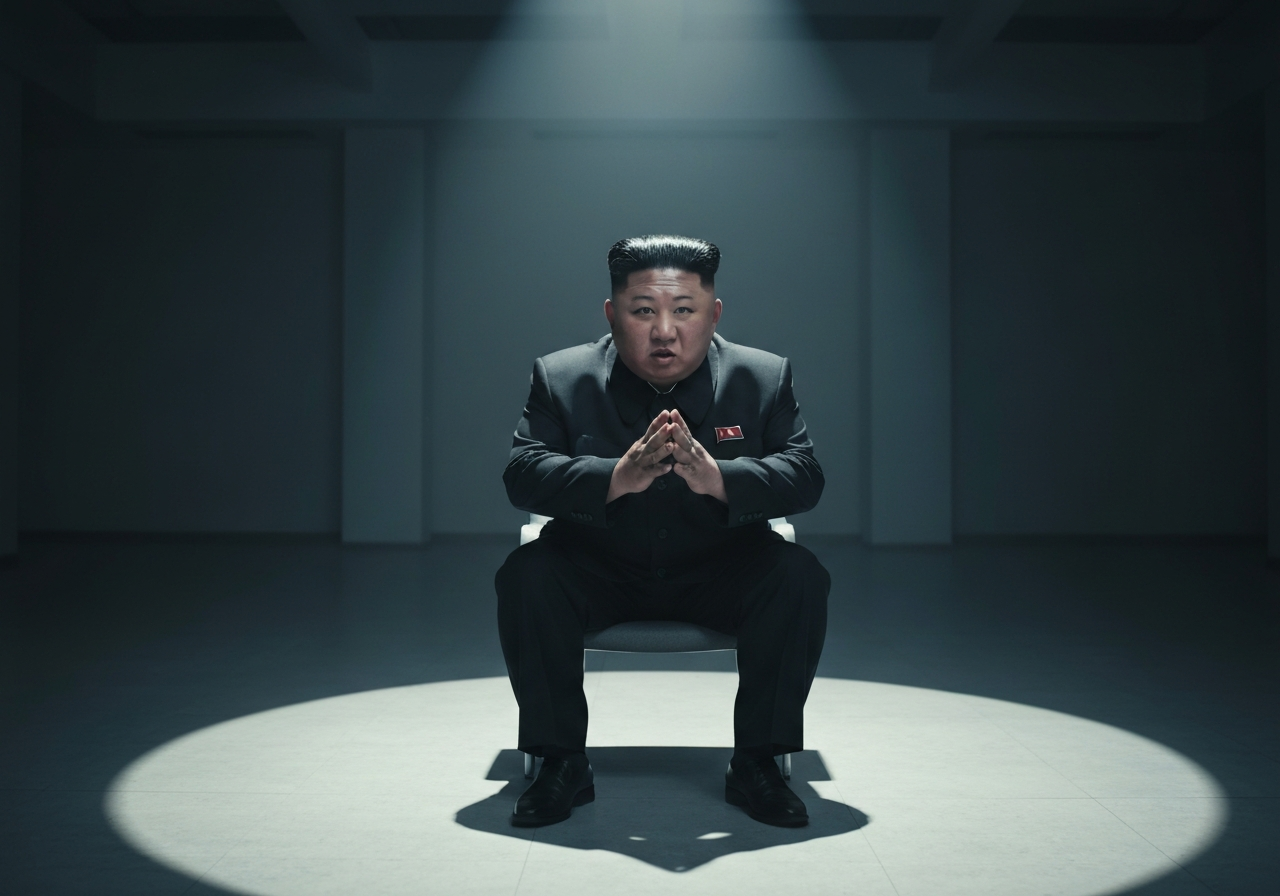
Lead: North Korean leader Kim Jong Un told delegates at the ruling party congress this week that his nuclear-armed state could “completely destroy” South Korea if its security were threatened, while reiterating a refusal to negotiate with Seoul. The speech, carried by state media, also signaled a conditional willingness to talk with Washington if the United States abandons what Pyongyang calls a “hostile” policy. The congress wrapped up in Pyongyang after a military parade, and Kim outlined five-year defence and weapons priorities that emphasize nuclear and delivery-system expansion. Seoul called the posture regrettable and said it will continue patient efforts to stabilize the peninsula.
Key takeaways
- Kim Jong Un told the party congress that North Korea could “completely destroy” the South if threatened, reaffirming a hard line toward Seoul while keeping a conditional opening to the U.S.
- The Workers’ Party congress—held this week in Pyongyang and previously convened in 2016 and 2021—included a military parade as it concluded, according to KCNA.
- Kim called for accelerated development of nuclear warheads, underwater-launched intercontinental ballistic missiles (ICBMs), tactical nuclear artillery and short-range missiles aimed at South Korea.
- He described recent nuclear and missile advances as having “permanently cemented” North Korea’s status as a nuclear weapons state and demanded the U.S. drop its so-called hostile policy to resume talks.
- Analysts cited by the reporting say the rhetoric is likely intended to strengthen bargaining leverage and regional influence—backed by ties with Moscow and Beijing—rather than signal immediate large-scale conflict.
Background
Inter-Korean diplomacy has been strained since 2019, when talks between Kim and then-U.S. President Donald Trump faltered and denuclearization negotiations stalled. In 2024 Kim publicly removed the long-stated goal of peaceful reunification, naming South Korea a permanent enemy and stepping up rhetorical and policy measures against Seoul. North Korea’s posture is shaped by decades of sanctions, security competition on the peninsula, and Pyongyang’s drive for international recognition as a nuclear power.
Since the 2021 party congress, Pyongyang has reported a series of weapons and space milestones: claims of solid-fuel ICBMs, tests of tactical nuclear-capable systems, assertions of hypersonic capability, and a reported first military satellite launch in 2023. Outside analysts say North Korea has also deepened ties with Russia—reportedly sending troops and equipment to support Moscow in Ukraine in recent years—which may alter the regime’s external options and bargaining calculations.
Main event
The Workers’ Party congress, Pyongyang’s marquee political gathering, concluded this week with Kim’s address outlining goals for the next five years. State media said the assembly finished after a large-scale military parade on Wednesday; KCNA did not immediately confirm whether the biggest strategic systems, such as long-range ICBMs, were displayed. Kim spoke alongside family members, including his daughter Kim Ju Ae, reported to be about 13 years old, who appeared increasingly at official events.
In his remarks Kim said North Korea’s accelerated nuclear and missile programs have secured the country’s status as a nuclear weapons power and ordered expedited production of warheads and a wider set of delivery systems. He specifically called for ICBMs capable of being launched from underwater platforms, expansion of tactical nuclear artillery aimed at South Korea, development of artificial intelligence-enabled attack drones, enhanced electronic warfare, and improved reconnaissance satellites.
Kim used the congress to reiterate that there is “absolutely nothing to discuss” with South Korea while it is treated as an enemy by Pyongyang, accusing Seoul’s leadership of seeking the North’s collapse. At the same time he said there is “no reason we cannot get along” with the United States if Washington drops the policies Pyongyang deems hostile, framing the choice of future relations as contingent on U.S. actions.
Analysis & implications
Kim’s dual message—aggressive posture toward Seoul combined with conditional openness to Washington—serves multiple strategic objectives. Domestically, it reinforces regime legitimacy by framing threats from outside and showcasing strength; internationally, it seeks to pressure the U.S. and South Korea for concessions while retaining diplomatic options. By pairing saber-rattling with the promise of talks, Pyongyang increases its bargaining leverage without necessarily forcing an immediate military confrontation.
Expanded calls for diverse delivery systems raise the regional security stakes. Underwater-launched ICBMs and nuclear-capable tactical artillery would complicate alliance deterrence calculations and targeting priorities for Seoul and Washington. Even if technical hurdles remain, public planning and development efforts can alter neighbors’ threat assessments and military postures, possibly prompting more frequent exercises or countermeasures.
Kim’s emphasis on ties with Moscow and Beijing suggests a hedging strategy: deepen relationships that can provide material or diplomatic support while keeping lines to the United States open for possible sanction relief or recognition. Analysts caution, however, that reliance on partners may be limited by the trajectory of external conflicts (notably Russia’s war in Ukraine) and the strategic calculus of each patron, meaning Pyongyang may continue to seek multiple routes to sustain its programs.
Comparison & data
| Year | Event or priority highlighted |
|---|---|
| 2016 | Previous Workers’ Party congress (major national policy forum) |
| 2021 | Congress priorities included solid-fuel ICBMs, tactical nuclear systems and hypersonic claims |
| 2023 | North Korea reported first military satellite launch |
| 2024 (this congress) | Calls for underwater-launched ICBMs, tactical nuclear artillery, AI drones and stronger electronic warfare |
The table summarizes milestones and declared priorities reported by state and independent observers. While Pyongyang announces capabilities and roadmaps at party congresses, independent verification of operational status and production rates lags behind those claims; this gap is a key factor in assessing near-term risks.
Reactions & quotes
“It is regrettable that the North continues to define inter-Korean relations as hostile,”
South Korea Unification Ministry (official statement)
The ministry said Seoul will continue patient efforts to stabilize peace and pursue diplomatic channels despite Pyongyang’s declination to engage.
“There is no reason we cannot get along” if the U.S. drops its hostile policy,
Kim Jong Un (as reported by KCNA)
Kim framed future U.S.-North Korea relations as conditional on a shift in Washington’s approach, reiterating Pyongyang’s longstanding demand to remove denuclearization preconditions.
“Most likely this rhetoric is meant to enhance Kim’s regional leverage rather than signal imminent large-scale conflict,”
Analysts (as cited in reporting)
Experts noted that while rhetoric and weapons development raise tensions, analysts do not generally interpret the current posture as an immediate harbinger of all-out war.
Unconfirmed
- It is not verified whether the parade publicly displayed the largest strategic systems, including ICBMs capable of reaching the U.S. mainland.
- Claims that North Korea has a fully operational nuclear-propelled submarine or that underwater-launched ICBMs are field-ready remain unconfirmed by independent sources.
- Precise numbers and types of personnel or equipment reportedly sent to Russia in support of Moscow’s war in Ukraine are not independently verified.
- Pyongyang’s stated timelines for accelerated warhead production and deployment rates lack externally confirmed evidence.
Bottom line
Kim’s speech at the party congress combines bellicose language toward Seoul with a conditional offer of talks to Washington, a mix designed to maximize leverage while minimizing immediate military risk. The declared push to broaden nuclear and delivery options—especially naval and tactical systems—could complicate deterrence and raise the cost of routine military exercises for the U.S.-ROK alliance.
For policymakers and regional observers, the crucial indicators to watch are independent verification of new capabilities, changes in deployment patterns near the inter-Korean border, and whether Washington or Seoul alter deterrence or diplomatic postures in response. Until independent evidence emerges, many of Pyongyang’s strategic claims should be treated as assertions intended for bargaining and domestic legitimation.