
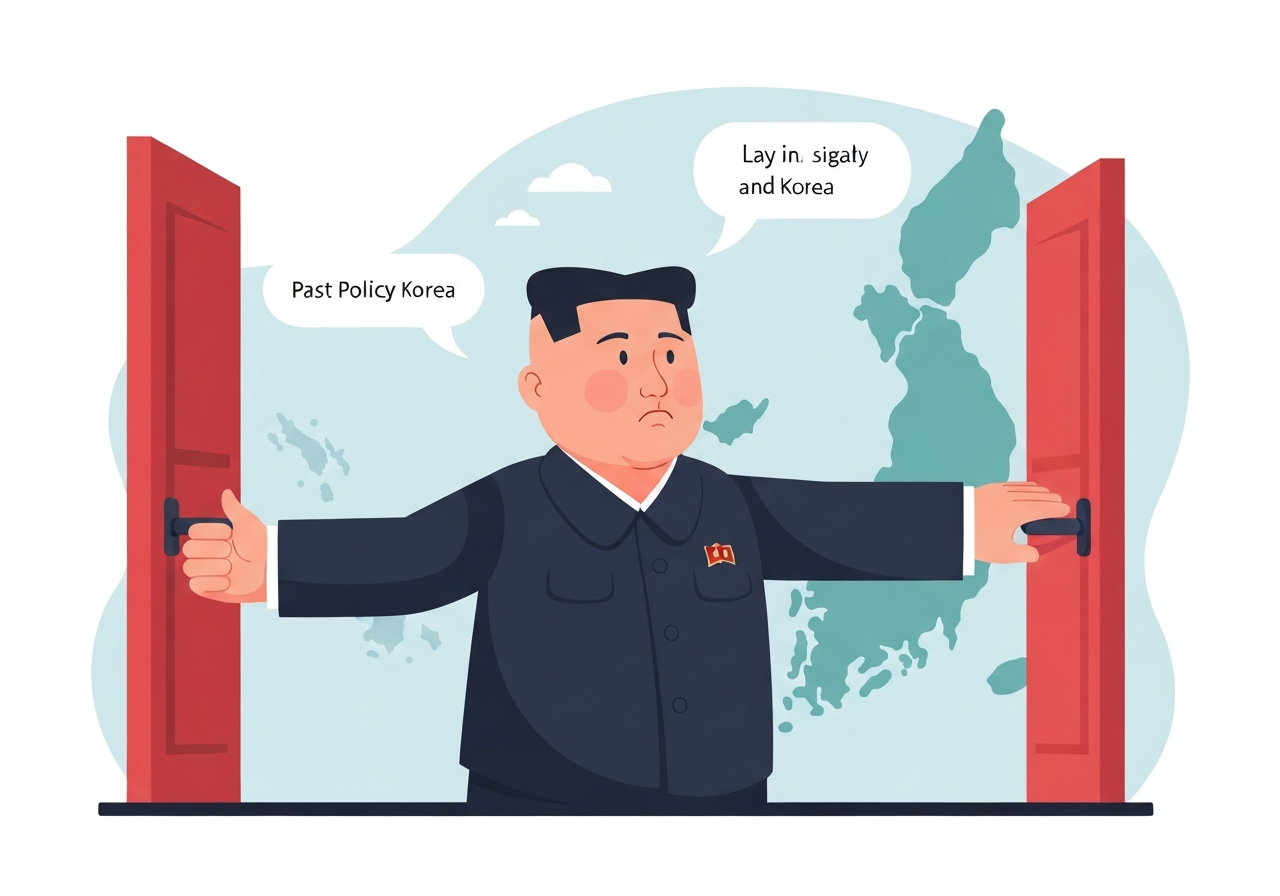
— North Korean leader Kim Jong-un used the closing session of the Workers’ Party congress in Pyongyang to rule out engagement with South Korea while warning it could be destroyed if threatened. He declared Seoul a hostile actor and said Pyongyang would permanently exclude South Korea from the category of compatriots. At the same time, Kim left conditional space for diplomacy with Washington if the United States recognises North Korea’s constitutional status and abandons a hostile policy. State media also reported calls for new weapons development, including underwater-launched intercontinental ballistic missiles and an expanded tactical nuclear arsenal.
Key takeaways
- At the Workers’ Party congress on 26 February 2026, Kim Jong-un stated North Korea could “completely destroy” South Korea if its security was threatened, according to KCNA.
- Kim announced that North Korea will have “absolutely no business dealing with South Korea” and said Seoul would be permanently excluded from the category of compatriots.
- He signalled conditional willingness to engage the United States only if Washington recognises North Korea’s status as set out in its constitution and removes hostile policies.
- KCNA said Kim ordered development of new weapons, naming underwater-launched ICBMs and more tactical nuclear options such as artillery-delivered or short-range warheads.
- The congress, which began the previous Thursday, ended with a military parade in Pyongyang on Wednesday; Kim observed the parade with his daughter Kim Ju-ae, reported to be about 13 years old.
- Analysts interpret the rhetoric as strategic signalling—intended to bolster deterrence and regional standing with nuclear and diplomatic leverage rather than an immediate declaration of offensive military intent.
- North Korea has deepened ties with Russia recently, allegedly sending thousands of troops and equipment—moves experts say may secure aid and technology but also reflect hedging if the Ukraine war winds down.
Background
The Workers’ Party congress is North Korea’s premier political event; the state press said the meeting wrapped up on 26 February 2026 after opening the previous Thursday. The congresses prior to this were held in 2016 and 2021, each used by Pyongyang to set long-term political and military priorities. Over the past decade Kim’s regime has accelerated missile and nuclear programmes and tightened internal control, framing weapons development as essential to regime survival and deterrence.
Inter-Korean diplomacy has ebbed and flowed since the 2018 summits with the United States, and talks collapsed after the last substantive negotiations broke down in 2019. Pyongyang has repeatedly refused Seoul’s and Washington’s calls to resume denuclearisation negotiations, framing external pressure as hostile. At the same time, North Korea has been cultivating closer ties with Moscow and maintaining contact with Beijing, seeking economic, political and military options beyond the Korean Peninsula.
Main event
State media KCNA quoted Kim making stark statements about South Korea’s status and about the regime’s readiness to use overwhelming force if threatened. The account said Pyongyang will “permanently exclude South Korea from the category of compatriots” and urged South Koreans to sever ties if they want to avoid conflict. The rhetoric marks a further hardening from previous years, in which occasional engagement and family reunions were at least rhetorically permitted.
KCNA also reported that Kim ordered accelerated development of weapons including intercontinental ballistic missiles that could be launched from underwater and a larger inventory of tactical nuclear systems. Those comments were framed domestically as modernising the country’s deterrent and diversifying delivery options to evade defences.
The congress closed with a military parade in Pyongyang on Wednesday; state images showed Kim watching the event alongside his daughter, Kim Ju-ae, who has appeared increasingly in public roles. Delegates used the gathering to showcase new hardware and to underline continuity in the leadership’s strategic priorities ahead of an uncertain regional security environment.
Outside Pyongyang, speculation has surfaced that US President Donald Trump could seek a meeting with Kim during a planned trip to China later in 2026, although no official contact has been announced. Analysts say any bilateral encounter would hinge on preconditions from both capitals and on how Washington frames North Korea’s nuclear status.
Analysis & implications
Kim’s dual message—absolute rejection of Seoul paired with a conditional openness to Washington—appears designed to recalibrate Pyongyang’s diplomatic options. By demanding recognition of its nuclear status, North Korea shifts the conversation from denuclearisation to status and deterrence, raising the diplomatic bar for any future talks. That posture can be interpreted as a bid to secure concessions or acceptance of a long-term security arrangement without giving up nuclear capabilities.
Regionally, the rhetoric raises pressure on South Korea and the US–South Korea alliance to respond with deterrent measures and coordinated diplomacy. Seoul may face domestic pressure to strengthen conventional defences and deepen operational planning with US forces, while Washington will have to weigh sanctions, extended deterrence commitments, and the risks and rewards of dialogue under Pyongyang’s preconditions.
Kim’s emphasis on new systems—particularly tactical nuclear options and undersea ICBMs—signals an interest in both survivability and flexible escalation. If realised, those capabilities would complicate missile defence calculations in Northeast Asia and lower the threshold for battlefield nuclear use in a crisis, a dynamic that alarms regional security planners.
Finally, Pyongyang’s closer ties with Moscow and ongoing outreach to Beijing complicate multilateral responses. Experts note North Korea may be diversifying dependence so it can extract technology, materiel or political backing while retaining freedom to negotiate bilaterally with Washington on its own terms.
Comparison & data
| Year | Workers’ Party Congress | Notable outcomes |
|---|---|---|
| 2016 | Congress | Declared new strategic direction; emphasis on nuclear arms |
| 2021 | Congress | Five-year economic and military plan; continued sanctions era |
| 2026 | Congress (26 Feb) | Hardline stance on South Korea; conditional outreach to US; weapons development orders |
The table above situates the 2026 congress alongside previous gatherings. Each congress has been used to announce political and military priorities; 2026 continues that pattern but with sharper language toward Seoul and explicit mention of new delivery concepts. Analysts tracking North Korean tests and deployments will watch missile flight test patterns, parade disclosures, and procurement chains for evidence of capability shifts.
Reactions & quotes
North Korea’s official agency released Kim’s statements as a central feature of the congress close, framing them as defensive and constitutionally grounded. International and regional actors responded with concern and calls for close monitoring.
“There is absolutely no business dealing with South Korea, its most hostile entity, and we will permanently exclude South Korea from the category of compatriots.”
KCNA (official state media)
Observers outside North Korea emphasised that the rhetoric is likely strategic signalling rather than an immediate operational shift toward large-scale attack.
“Most analysts see this as signalling aimed at strengthening deterrence and bargaining leverage, not an immediate move to launch a full-scale offensive.”
AP/AFP reporting (media analysis)
Unconfirmed
- Precise scale and destinations of alleged troop and equipment transfers to Russia remain unverified by independent on-the-ground evidence.
- Reports that a meeting between President Donald Trump and Kim Jong-un will occur during a 2026 China trip are speculative and have not been confirmed by either government.
- Technical feasibility, timelines and deployment plans for the specific weapons Kim mentioned (underwater ICBMs, expanded tactical nukes) have not been independently verified.
Bottom line
Kim Jong-un’s speech at the 26 February 2026 Workers’ Party congress both hardens Pyongyang’s stance toward Seoul and reframes Pyongyang’s diplomatic ambitions toward Washington. By demanding recognition of North Korea’s constitutional status and signalling accelerated weapons development, the leadership is prioritising deterrence and bargaining leverage over rapprochement with Seoul.
For policymakers and analysts, the near-term priority is monitoring for tests, procurement flows and diplomatic moves that would confirm capability changes or shifts in alliance responses. The prospects for dialogue remain conditional: Pyongyang has left a narrow diplomatic opening to Washington, but any engagement will depend on whether the United States and its partners accept the preconditions Pyongyang has outlined.
Sources
- Euronews (media report)
- KCNA (official state news agency)
- Associated Press (news agency)
- Agence France-Presse (news agency)