
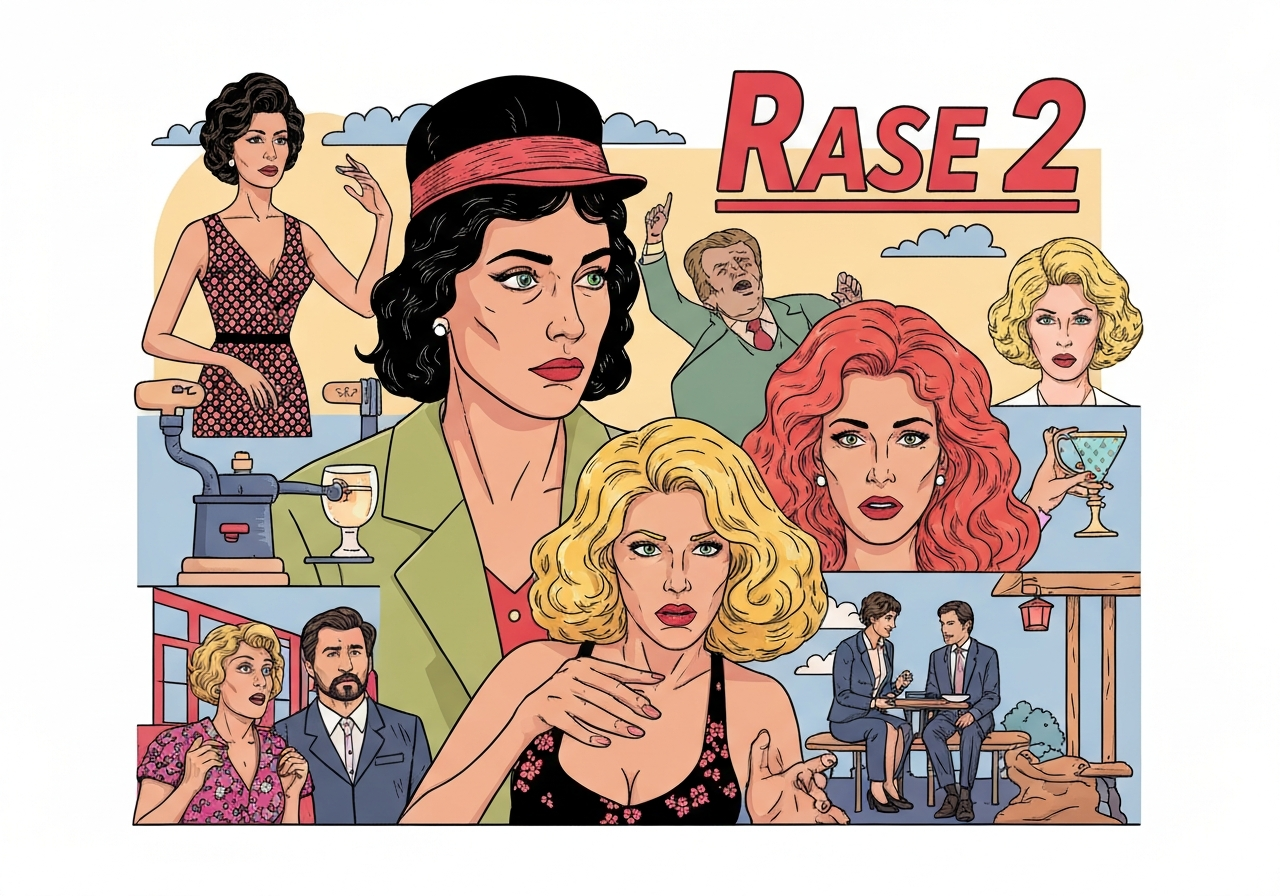
Lead
In June 1982, the high-energy musical sequel Grease 2 opened alongside Steven Spielberg’s E.T. and failed to match the cultural and commercial triumph of the 1978 original. Despite a production budget reportedly roughly twice that of Grease, the follow-up stumbled at the box office but has since been reassessed by audiences and critics as a campy cult favorite. The film is notable for giving Michelle Pfeiffer her first lead role—about a year and a half before her breakout in Scarface—and for its ambitious dance sequences and relentlessly catchy songs. Over time, viewers have come to admire its audacious tone and the early glimpse it provides of Pfeiffer’s screen presence.
Key Takeaways
- Release timing: Grease 2 opened in June 1982, the same month and marketplace as E.T., which dominated summer ticket sales.
- Budget and expectations: The sequel was made with roughly twice the budget of the 1978 original, raising commercial expectations it did not meet.
- Box-office reception: The film underperformed at release, quickly labeled a flop by contemporary trade coverage and critics.
- Star-making role: Michelle Pfeiffer earned her first leading credit as Stephanie Zinone, which helped propel her toward her breakout in Scarface about 18 months later.
- Artistic notes: Audiences highlight the movie’s ambitious choreography, pop-forward soundtrack, and unabashedly giddy, sometimes raunchy tone.
- Legacy shift: Over decades Grease 2 moved from critical dismissal to cult admiration, driven by midnight screenings, streaming rediscovery, and fan enthusiasm.
- Character dynamics: Maxwell Caulfield plays Michael Carrington, written as a bookish newcomer and presented as Sandy Olsson’s cousin; contemporary viewers often find the intended nerd trope unconvincing.
Background
Grease (1978) arrived as a cultural phenomenon: a jukebox musical that cracked mainstream pop culture and built a lucrative template for studio musicals. That success created both appetite and pressure for a sequel, with studios in the early 1980s more willing to reinvest in established IP. Producers approached Grease 2 with larger production resources and an eye toward recapturing the original’s teen-movie spectacle.
The early 1980s film market was unusually competitive that summer. E.T., a summer juggernaut, sucked up attention and box-office share; sequels and follow-ups faced the twin challenges of meeting high audience expectations and standing out in a crowded release calendar. For Grease 2, those industry dynamics combined with creative choices—new leads, fresh songs, and a different director—to produce an outcome distinct from the 1978 hit.
Main Event
Grease 2 centers on Stephanie Zinone (Michelle Pfeiffer), the glamorously sullen leader of the Pink Ladies, and Michael Carrington (Maxwell Caulfield), a new student portrayed as socially awkward despite his obvious appeal. The film flips several familiar beats of the original while doubling down on dance numbers, cheeky lyrics, and a more overtly risqué sense of humor. Visually and musically, the production leans into energetic choreography and pop hooks designed to create immediate memorability.
Critical response at opening skewed negative: reviewers questioned the sequel’s tone, its comparisons to the original, and some casting decisions. Trade observers also highlighted the film’s commercial vulnerability given its release window. Audiences, initially less enthusiastic at the box office, soon found alternative ways to engage with the movie—through rentals, late-night screenings and, later, streaming—allowing a reassessment outside the pressure of opening-week expectations.
Michelle Pfeiffer’s performance drew particular retrospective attention. In this early starring turn she projects a mix of sulk and style that reviewers and fans now cite as an early indicator of her range. The film’s choreography and production numbers—while criticized as uneven at the time—are often pointed to by later fans as evidence of the sequel’s sincere ambition and entertainment value.
Analysis & Implications
The Grease 2 case illustrates how a film’s initial commercial failure does not determine its long-term cultural footprint. Sequels inherit expectations from their predecessors; when those expectations are unmet, films can be quickly dismissed. Yet the subsequent emergence of niche fandoms, cable and home-video channels, and eventually streaming platforms creates pathways for reappraisal. Grease 2’s transition from flop to cult favorite is a textbook example of that lifecycle.
For Michelle Pfeiffer, the movie functioned as a springboard. Her performance gave casting directors and audiences an early look at her screen magnetism, which helped lay the groundwork for larger, more acclaimed roles. From an industry perspective, the film’s failure also sent a cautionary message about sequel economics: bigger budgets and brand recognition do not guarantee commercial success, particularly when release timing pits a title against a dominant blockbuster.
Culturally, Grease 2’s unabashed tone—wry, flirtatious, and occasionally crude—resonates differently across generations. Younger viewers discovering the film in the streaming era often respond to its camp value and pop-culture specificity, while older viewers carry the imprint of original reviews and box-office context. That split underscores how mode of discovery shapes reception more than intrinsic quality alone.
Comparison & Data
| Title | Release Year | Relative Budget | Initial Reception |
|---|---|---|---|
| Grease (original) | 1978 | Baseline | Blockbuster hit, broad critical and commercial acclaim |
| Grease 2 | 1982 | ~Twice the original | Box-office underperformance; mixed-to-negative reviews |
The table highlights two clear differences: Grease 2 was produced at a larger scale but met with far weaker commercial and critical returns at release. Its later resurgence is not reflected in opening-week metrics but appears in measures of long-tail popularity—fan events, soundtrack interest and streaming viewership.
Reactions & Quotes
Paraphrased contemporary reviewers noted that the sequel’s more risqué humor and tonal departures made it a difficult successor to the original.
Contemporary critics (paraphrase)
Paraphrased modern commentators and fans emphasize Michelle Pfeiffer’s magnetic early performance and the film’s irresistible musical moments as reasons for its cult status.
Modern critics and viewers (paraphrase)
Paraphrased industry observers point to the film’s release against E.T. and the inflated production budget as key commercial challenges rather than any single artistic failing.
Film industry analysts (paraphrase)
Unconfirmed
- Exact budget totals: contemporary reporting describes Grease 2’s budget as roughly double the original’s, but precise studio accounting is not consistently published for verification.
- Box-office causality: while E.T.’s dominance is widely cited as a factor, direct studio memos attributing Grease 2’s failure specifically to that competition are not publicly available.
- Casting intentions: internal studio discussions about casting decisions and their expected commercial impact have not been fully disclosed for independent confirmation.
Bottom Line
Grease 2 began as a high-profile sequel that failed to recapture the magic of its predecessor in the summer marketplace of 1982, hindered by timing, tonal shifts and inflated expectations. Yet the film’s long-term story is not one of simple failure: it stands as an example of how audience tastes and discovery platforms can rehabilitate a movie’s reputation over time.
For pop-culture historians and casual viewers alike, Grease 2 is worth revisiting: it offers an early glimpse of Michelle Pfeiffer’s star quality, bold musical staging, and a distinctively brash tone that helped it find a devoted following. Its trajectory—from flop to cult favorite—illuminates broader changes in how films are judged outside their opening-week snapshots.
Sources
- The New York Times (news)