
Lead
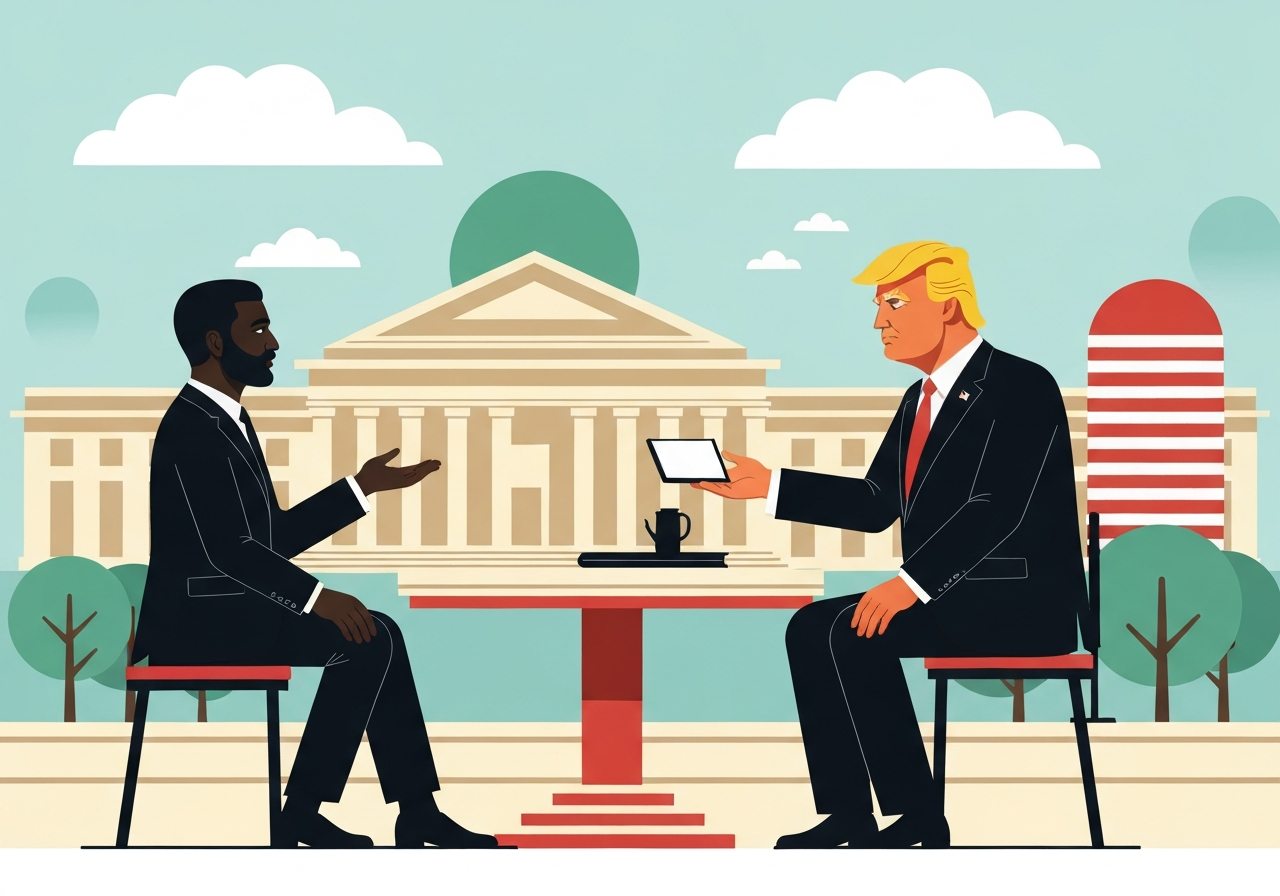
Mayor Zohran Mamdani travelled to Washington, D.C., on Thursday, Feb. 26, 2026, for an unannounced meeting with President Donald J. Trump. Multiple people familiar with the plans said the session was scheduled for 1 p.m.; a mayoral spokeswoman confirmed the meeting after initial reporting. The precise agenda was not fully disclosed, but several sources indicated housing and land-use issues in New York City would be among topics discussed. The White House did not immediately issue a statement when the trip first became public.
Key Takeaways
- Mamdani made an unpublicized round-trip to Washington on Feb. 26, 2026; four people familiar with the plans disclosed the travel.
- The meeting was set for 1 p.m. local time, according to two informed sources, and included the mayor and several senior advisers.
- Officials and advisers said housing and land-use in New York City — areas where Trump has prior business ties — were expected to be discussed.
- The New York Post first reported Mamdani’s travel; a mayoral spokeswoman later confirmed the meeting.
- Mr. Mamdani and Mr. Trump first met in November 2025 after Mamdani’s election, and have maintained an unusually cordial rapport despite sharp ideological differences.
- During his Feb. 25, 2026 State of the Union address, Mr. Trump described Mamdani as a “nice guy” while criticizing some of his policies.
- Mamdani has largely avoided public attacks on the president, a stance observers link to New York’s reliance on federal funds and permits.
Background
Zohran Mamdani, a democratic socialist who won the New York mayoralty in 2025, entered office with a platform prioritizing affordable housing and changes to land-use rules. Donald Trump, the sitting president, built his reputation in real estate and retains a strong interest in urban development and regulatory decisions that affect property and construction. Those overlapping policy concerns create opportunities for practical collaboration even as the two leaders diverge sharply on most ideological questions.
Federal control over grants, disaster relief, and permitting gives the White House tangible leverage over city projects — a dynamic that can temper local criticism. The two men’s first public meeting in November 2025 established a tentative working relationship: officials from both sides described cordial exchanges and a willingness to discuss shared technical problems. That uncommon tone has persisted in public comments, including Mr. Trump’s remarks during the Feb. 25 State of the Union.
Main Event
On the morning of Feb. 26, the mayor and several senior aides flew to Washington; those planning details were disclosed to reporters by people briefed on the trip. The meeting was slated for 1 p.m. and focused, at least in part, on housing and land-use policy in New York City — subjects that cut across municipal, state and federal jurisdiction. A spokeswoman for Mayor Mamdani confirmed the engagement after initial reporting identified the travel but before an official White House response was available.
People familiar with the preparations said the agenda was not entirely set in public, leaving open whether specific federal programs or permitting matters would be negotiated. The New York Post first reported Mamdani’s travel; two other sources confirmed the timing and purpose to reporters. The White House did not immediately comment the first time the trip was reported.
The meeting follows a period of public conciliation: Mr. Trump told the nation the day before, in his State of the Union, that he had spoken with Mamdani frequently and called him a “nice guy,” even while criticizing some of the mayor’s policy choices. City officials noted that Mamdani has largely refrained from open confrontation with the president, a posture they attribute to pragmatic concerns about federal funding and oversight that affect city operations.
Analysis & Implications
Aone-off meeting between a major-city mayor and the president can yield immediate administrative outcomes when it concerns permitting, disaster aid or specific grant programs; it can also serve as a staging ground for longer policy negotiations. If housing and land-use were central, the White House could influence zoning approvals, environmental reviews or federal financing that affect large-scale housing projects in the city. Such leverage would be notable because it ties national political capital directly to local development outcomes.
Politically, the encounter presents trade-offs for Mamdani. Constructive engagement could speed housing approvals or secure federal support — tangible gains for constituents. At the same time, working closely with a president from the opposite ideological camp risks alienating parts of his progressive base that favor confrontational approaches to federal officials perceived as ideological rivals.
For the Trump administration, the meeting offers optics of bipartisan problem-solving in a high-profile jurisdiction and the chance to shape urban policy consistent with its priorities. It also underlines the administration’s continued interest in the governance of major cities where federal regulatory and funding decisions have outsized local effects. Observers will watch whether any follow-up actions — memos, funding announcements or regulatory shifts — materialize in the weeks after the meeting.
Comparison & Data
| Date | Event | Location |
|---|---|---|
| Nov. 2025 | First public meeting between Mamdani and Trump after the mayoral election | Washington, D.C. |
| Jan. 2026 | Mamdani criticized the U.S. military’s capture of Nicolás Maduro as “an act of war” | New York City (public comment) |
| Feb. 25, 2026 | State of the Union: Trump references regular contact with Mamdani | Washington, D.C. |
| Feb. 26, 2026 | Unannounced Mamdani trip; scheduled 1 p.m. meeting with the president | Washington, D.C. |
The table above summarizes key touchpoints in the brief public record between the two leaders. While the dates and events are factual, the table does not capture private conversations or the specific content of any agreements, which were not publicly released. Analysts will compare any outcomes from Feb. 26 to prior interactions to judge continuity or change in the working relationship.
Reactions & Quotes
Public and private responses have been mixed: some federal and city officials framed the meeting as pragmatic outreach, while progressive activists urged caution. The comments below indicate the tone in public remarks and past communications.
“He’s a nice guy,”
President Donald J. Trump, State of the Union (Feb. 25, 2026)
Mr. Trump used that phrase during his Feb. 25 address to describe Mamdani, while also disparaging some of the mayor’s policy choices. The remark highlighted a surprisingly congenial rhetorical posture that has accompanied their interactions.
“An act of war,”
Zohran Mamdani (January 2026 public comment)
In January, Mr. Mamdani called the U.S. military’s capture of Nicolás Maduro “an act of war” and said it violated federal and international law; that statement prompted a separate phone call between the two men that aides said unsettled the president.
Unconfirmed
- Whether the meeting produced any specific, binding commitments on federal funding or permitting has not been confirmed publicly.
- Exact attendee list beyond the mayor and his senior advisers has not been independently verified.
- Reports that housing projects would receive expedited federal action were not corroborated by official documents at the time of reporting.
Bottom Line
The Feb. 26, 2026 meeting between Mayor Zohran Mamdani and President Trump is notable primarily for its subject matter and optics: two political opposites engaging directly on practical urban governance. The focus on housing and land-use — areas where federal influence can be decisive — makes the encounter more than a photo opportunity; it could lead to concrete administrative outcomes if followed by specific federal actions.
Readers should watch for formal announcements, grant approvals, or permitting decisions in the coming weeks as signals that the meeting yielded policy results. Equally important will be how local constituencies react: pragmatic gains for housing might reassure some voters, but close cooperation with the White House could provoke friction among the mayor’s progressive supporters.
Sources
- The New York Times — news outlet reporting the initial account and confirmation from the mayor’s office.