
Lead
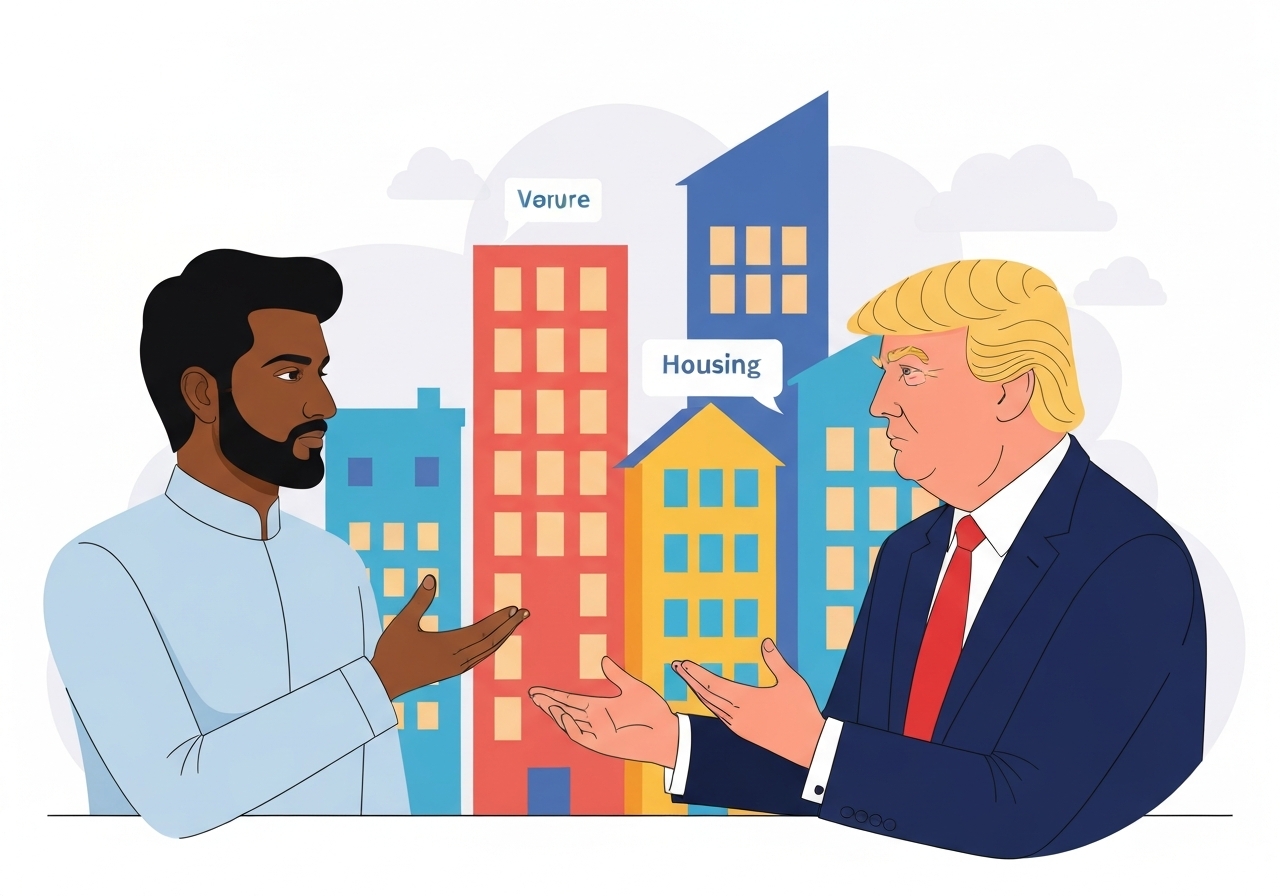
New York City Mayor Zohran Mamdani met with President Donald Trump at the White House on Thursday to press a major housing proposal centered on Sunnyside Yard in Queens. During the meeting Mamdani presented a mock newspaper front page to illustrate public reaction and to appeal to a president known for attention to media. The mayor proposed using more than 21 billion dollars in federal grants to build a deck over the rail yard and deliver roughly 12,000 affordable homes, a project the mayor estimates could create about 30,000 jobs. The one hour meeting followed an earlier November encounter in which Trump encouraged Mamdani to bring big ideas forward for New York City.
Key Takeaways
- Mamdani met President Trump at the White House on Thursday for about one hour to discuss housing and student detentions.
- The mayor showed a mock front page headlined with a pro building message to illustrate political and media payoff.
- The Sunnyside Yard plan would add approximately 12,000 affordable homes on a deck over the rail yard, according to the mayor’s office.
- The proposal seeks more than 21 billion dollars in federal grants and is projected to generate about 30,000 jobs.
- The mayor raised the recent detention of Columbia student Ellie Aghayeva and urged the White House to intervene; Trump later told Mamdani by phone that Aghayeva would be released.
- Mamdani provided a list of four additional students detained after pro Palestinian protests; only Leqaa Kordia remains in custody, the mayor’s office said.
- The meeting continued a cordial posture between the Republican president and the Democratic mayor despite campaign-era barbs from Trump.
Background
Sunnyside Yard is a large rail property in Queens that city officials and developers have eyed for decades as a rare opportunity for large scale development and transit-related upgrades. Building a deck over active railyards is a complex and costly engineering undertaking that requires federal coordination, significant upfront capital, and long term planning for infrastructure and affordable housing commitments. Federal grants and discretionary funding have in the past enabled major urban projects, but securing more than 21 billion dollars in grants would be unprecedented for a single local development. Politically, the meeting comes after both leaders sought to maintain a working relationship; Trump and Mamdani first met in November when the president encouraged the mayor to return with big ideas for New York.
At the same time the White House has faced heightened scrutiny over enforcement actions around campus protests and immigration detentions. Columbia University and attorneys for detained students flagged the tactics used by federal agents in the Aghayeva case, saying agents entered a residence by asserting a missing person search. City officials, university leaders, and advocates have pressed for transparency and due process amid a wave of arrests tied to demonstrations. The context makes Mamdani’s visit a hybrid policy pitch and urgent advocacy opportunity for constituents affected by federal enforcement.
Main Event
The meeting on Thursday was described by the mayor’s communications director as previously unannounced and lasting about an hour. Mamdani presented a mock New York Daily News style front page with a headline intended to show how a federal investment might be portrayed in local media and to appeal to a president attentive to coverage. The mayor told Trump that a Sunnyside Yard deck could host 12,000 affordable units and that federal grant support of more than 21 billion dollars would unlock the project, per the mayor’s office estimates.
According to Mamdani’s communications director, Trump reacted positively and was very enthusiastic about the housing proposal. Mamdani also used the meeting to press the administration on the immediate case of Columbia student Ellie Aghayeva, who was detained earlier that day by federal immigration agents. The mayor asked for Aghayeva’s release and raised a separate list of four students detained in connection with pro Palestinian protests.
In a phone call following the White House meeting, Trump told Mamdani that Aghayeva would be released, the mayor’s office said. Mamdani also handed White House chief of staff Susie Wiles a list of four other students: Mahmoud Khalil, Yunseo Chung, Mohsen Mahdawi and Leqaa Kordia. Of those four, only Leqaa Kordia remained in custody at the time of the mayor’s announcement, and all cases were moving through the courts.
Analysis & Implications
If federal grant funding on the scale described were attainable, the Sunnyside Yard deck would be among the largest housing and infrastructure investments in New York City in more than 50 years and would reshape capacity for affordability in the outer boroughs. A 21 billion dollar grant package would not only finance construction but also set a federal benchmark for future urban deck over rail projects, potentially driving similar proposals in other cities with constrained land markets. The potential to create 30,000 jobs is significant for local employment and supply chains, but job creation projections depend on project phasing, procurement practices, and contractor selection.
Practically, winning sustained federal support would require clearance across multiple agencies, detailed environmental and engineering studies, and coordination with Amtrak, the MTA, and labor stakeholders to avoid service disruption. Political dynamics matter: securing large discretionary grants typically involves congressional support, White House backing, and alignment with federal program rules. The meeting signals a pragmatic approach by Mamdani to engage the administration directly and to frame the project in terms that resonate with Trump, including media optics and job creation.
On immigration and campus enforcement, Mamdani’s request highlights local officials using direct access to press for individual relief and broader policy review. The immediate release of a detained student, if confirmed, shows how urgent advocacy can produce outcomes, but it does not resolve wider questions about enforcement practices, campus rights, and due process for protesters. The incident underscores how municipal leaders may combine infrastructure pitches with constituent advocacy when meeting federal leaders.
Comparison & Data
| Item | Mayor’s Estimate |
|---|---|
| Affordable homes proposed | 12,000 units |
| Federal grants sought | More than 21 billion dollars |
| Estimated jobs created | About 30,000 jobs |
| Comparative timeframe | Largest housing and infrastructure investment in over 50 years |
The figures above come from the mayor’s office estimates as reported by AP. Delivering on them would require multiagency approvals, secure construction financing beyond initial grants, and a multi decade governance plan for affordability rules and infrastructure maintenance. Past large urban federal investments have taken years of planning and bipartisan negotiation to materialize.
Reactions & Quotes
The president was described as very enthusiastic about the Sunnyside proposal during the meeting, according to the mayor’s communications director.
Mamdani communications director
For nearly a year Leqaa Kordia has been held in ICE detention and her family has endured significant hardship, an advocate said, calling for her release.
Hamzah Abushaban, family relative
The mayor framed the mock front page as a simple way to show the potential political and community response to federal investment in housing.
Mayor’s office statement
Unconfirmed
- Whether the White House will commit or authorize the more than 21 billion dollars in federal grants is unconfirmed and would require multiagency and congressional processes.
- The precise timetable for building a deck at Sunnyside Yard and the sequence of approvals and environmental reviews remain unspecified by officials.
- The mayor’s account that Trump told him Aghayeva would be released is reported by the mayor’s office and awaits independent confirmation from federal authorities or court records.
Bottom Line
The meeting combined a bold urban development pitch with urgent constituent advocacy, illustrating how local leaders can use high level access to press multiple agendas at once. The Sunnyside Yard proposal, if realized, could deliver thousands of affordable homes and tens of thousands of jobs, but it faces steep technical, financial, and political hurdles before it can move from concept to construction.
In the near term, watch for follow up from federal agencies on grant feasibility, any formal White House or agency announcements, and court or agency updates on detained students. The episode also signals a tactical shift by city leadership to package large scale projects in media friendly ways when appealing to federal decision makers.
Sources
- AP News — news report