
Lead
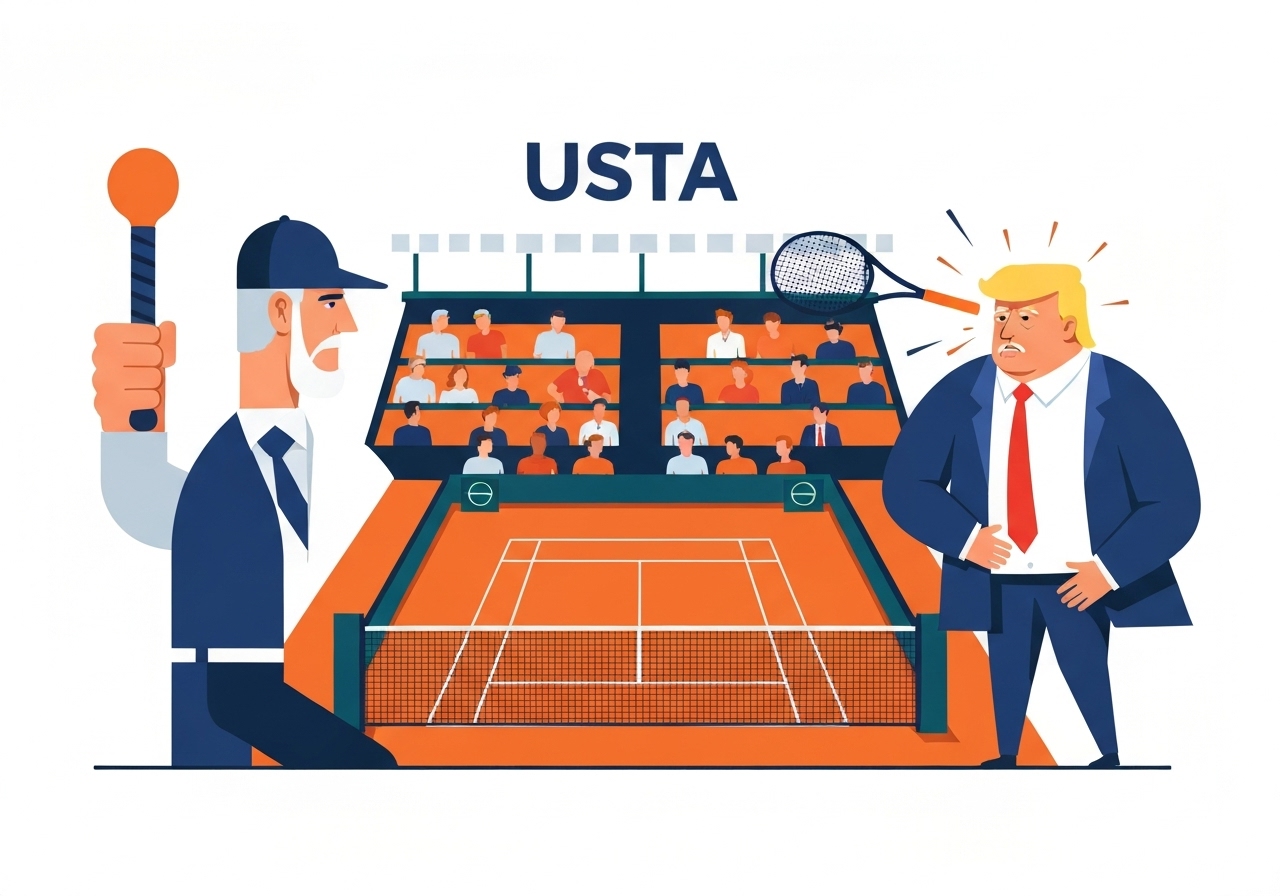
On 7 September 2025 at Flushing Meadows, the United States Tennis Association asked television partners to avoid showing crowd reactions when Donald Trump appears during the US Open men’s final. Internal emails reported by news outlets said the instruction aimed to limit on-screen disruptions; the USTA characterized it as part of a routine policy on off‑court disruptions. The request has prompted criticism that the governing body prioritized optics over the tournament’s long‑standing reputation for lively, unfiltered crowds. The decision could leave millions of broadcast viewers with a sanitized picture of fan sentiment during one of the sport’s biggest events.
Key takeaways
- The USTA told broadcasters ahead of the 7 Sept 2025 men’s final to “refrain from showcasing any disruptions or reactions” when Donald Trump is shown, according to internal emails reported by news agencies.
- The USTA issued a short statement saying it regularly asks partners to avoid highlighting off‑court disruptions; outlets reported Trump will be seated as a Rolex suite guest.
- The Open has televised high‑profile disturbances in recent years, including a climate protester who glued himself to a seat during Coco Gauff’s semi‑final (reported in 2023), underscoring apparent inconsistency in editorial choices.
- Trump was loudly booed at the tournament in 2015, three months after he announced his first presidential campaign; that reception is part of the historical context for broadcast sensitivity.
- The 2025 tournament marks the Open’s 75th anniversary theme of “breaking barriers,” and the USTA promotes milestones such as prize‑money equality and Pride events while positioning the Open as a cultural showcase.
Background
The US Open, staged at Flushing Meadows, has long been framed as New York’s loud, eclectic major: a site where fans, celebrities and spectacle regularly intersect with the competition. The USTA markets the event as both a sports championship and a pop‑culture moment, citing attendance figures, social‑media engagement and commercial growth in its annual summaries.
Historically the Open has taken progressive public positions on issues inside tennis: it was early among the majors in awarding equal prize money and has highlighted LGBTQ+ athletes and diversity initiatives. The 2025 festival theme commemorates Althea Gibson’s trailblazing role in the 1950s and features art by Melissa Koby, noted as the first Black artist to design the Open’s theme visuals.
At the same time, sporting events worldwide have long been arenas for political expression and public dissent. Examples cited by commentators include boos directed at public officials at high‑profile ceremonies — incidents that have been captured and circulated in live broadcasts without similar institutional intervention.
Main event
In the run‑up to the 7 September men’s final, multiple outlets reported that USTA staff emailed broadcast partners asking them to avoid showing on‑screen crowd reactions when Trump is visible. The instruction was framed as a general practice about off‑court disruptions, but reporting emphasized the timing and subject given Trump’s presence as a suite guest.
Organizers defended the request as a routine production guideline intended to keep focus on play and player safety, while critics called it a pre‑emptive censorship that shields a public figure from legitimate public reaction. Rolex, named in coverage as the suite host, did not publicly comment in the immediate aftermath of the reporting.
Observers pointed to past telecast choices — notably the decision to show a climate protester who glued himself to a seat during a 2023 semi‑final — as evidence that the Open has not consistently excluded disruptive moments from coverage. That perceived inconsistency intensified scrutiny of the USTA’s rationale.
Broadcasters must balance contractual obligations to rights holders, advertisers and sponsors with editorial standards and newsroom independence. The USTA’s instruction placed networks in the uncomfortable position of choosing whether to follow tournament guidance or assert independent editorial control during a globally televised match.
Analysis & implications
The USTA’s request raises questions about where sports organizations draw the line between managing a public spectacle and policing political expression. Live sports broadcasts are a principal channel through which viewers experience both play and crowd atmosphere; limiting one element risks altering the event’s character. From a democratic‑speech perspective, crowd reactions — including boos — are a form of civic expression, not a production defect.
Commercial pressures help explain the decision. Sponsors and premium hospitality clients prize predictable, brand‑safe environments; teams or rights holders sometimes pressure media partners to mute or avoid politically charged visuals. Still, consistently suppressing visible dissent can set a precedent that sports bodies treat contentious figures differently, inviting accusations of favoritism or political shielding.
For broadcasters, acquiescing to such guidance could erode trust with audiences who expect an authentic representation of events. For the USTA, the move risks reputational harm: critics argue it contradicts the Open’s self‑portrayal as a brash, democratic New York tournament and its historical record on inclusion and social milestones.
Looking ahead, the incident could prompt policy clarifications: leagues and rights holders may need transparent, publicly available guidance on how production decisions about crowd reaction are made and disclosed. It may also lead to intensified public scrutiny of guest lists in premium suites and the editorial independence of broadcast partners during high‑profile political moments.
Comparison & data
| Incident | Year | Televised |
|---|---|---|
| Trump booed at US Open visit | 2015 | Widely viewed (news and broadcast footage) |
| Climate protester glued to seat during Coco Gauff semi‑final vs Karolína Muchová | 2023 | Televised live during coverage |
| Theresa May booed at Paralympics appearance | 2012 | Captured and reported in live coverage |
| Emmanuel Macron whistled at Rugby World Cup opening | 2023 | Broadcast and widely circulated |
These examples show a pattern of historic sporting broadcasts capturing politically charged crowd behavior. The USTA’s direction to avoid showing audience reactions in 2025 appears to depart from that pattern, at least in explicit instruction to broadcasters. That departure has driven questions about consistency and editorial transparency.
Reactions & quotes
Advocates for open coverage argued that live sport is inevitably political when public figures attend and that viewers deserve an unfiltered experience. News reporting highlighted internal emails as the principal source for the USTA instruction; organizers defended the guidance as part of routine broadcast management.
“We regularly ask our broadcasters to refrain from showcasing off‑court disruptions,”
USTA spokesperson (official statement)
The following reaction was offered by a media‑law commentator who reviewed the reporting: broadcasters who comply with rights‑holder requests risk blurring the line between editorial judgment and contractual obedience, potentially reducing audience trust in live coverage.
“When rights holders dictate on‑air crowd framing, editorial independence can be compromised,”
Media law scholar (summarized comment)
Unconfirmed
- Whether every broadcaster will uniformly comply with the USTA’s guidance remains unconfirmed; networks could exercise editorial discretion in real time.
- The extent to which suite hosts, including Rolex, directly requested any editorial guidance was not confirmed by the companies cited in initial reporting.
- No formal policy document from the USTA detailing a permanent ban on showing political reactions has been published; available reporting refers to specific email instructions.
Bottom line
The USTA’s pre‑emptive request to limit broadcast exposure of boos aimed to manage a delicate commercial and reputational moment for the Open, but it also generated immediate questions about consistency, editorial independence and the role of sport as a public forum. By asking television partners to mute visible dissent when a high‑profile political guest appears, the governing body traded a messy, democratic facet of live sport for a controlled, curated feed.
If sports institutions wish to preserve trust, they should adopt transparent rules that explain when and why production choices are made, and ensure those rules are applied evenly. Viewers and fans expect authenticity; when organizers pre‑filter the crowd, they risk eroding that expectation and altering the nature of the public spectacle on which major sports events are built.
Sources
- The Guardian (press/analysis reporting on internal USTA emails and tournament context)
- United States Tennis Association (USTA) (official organization site and statements)
- Press Association (PA) (news agency reporting referenced for internal email disclosures)
- Reuters (international news reporting on sporting event precedents)