
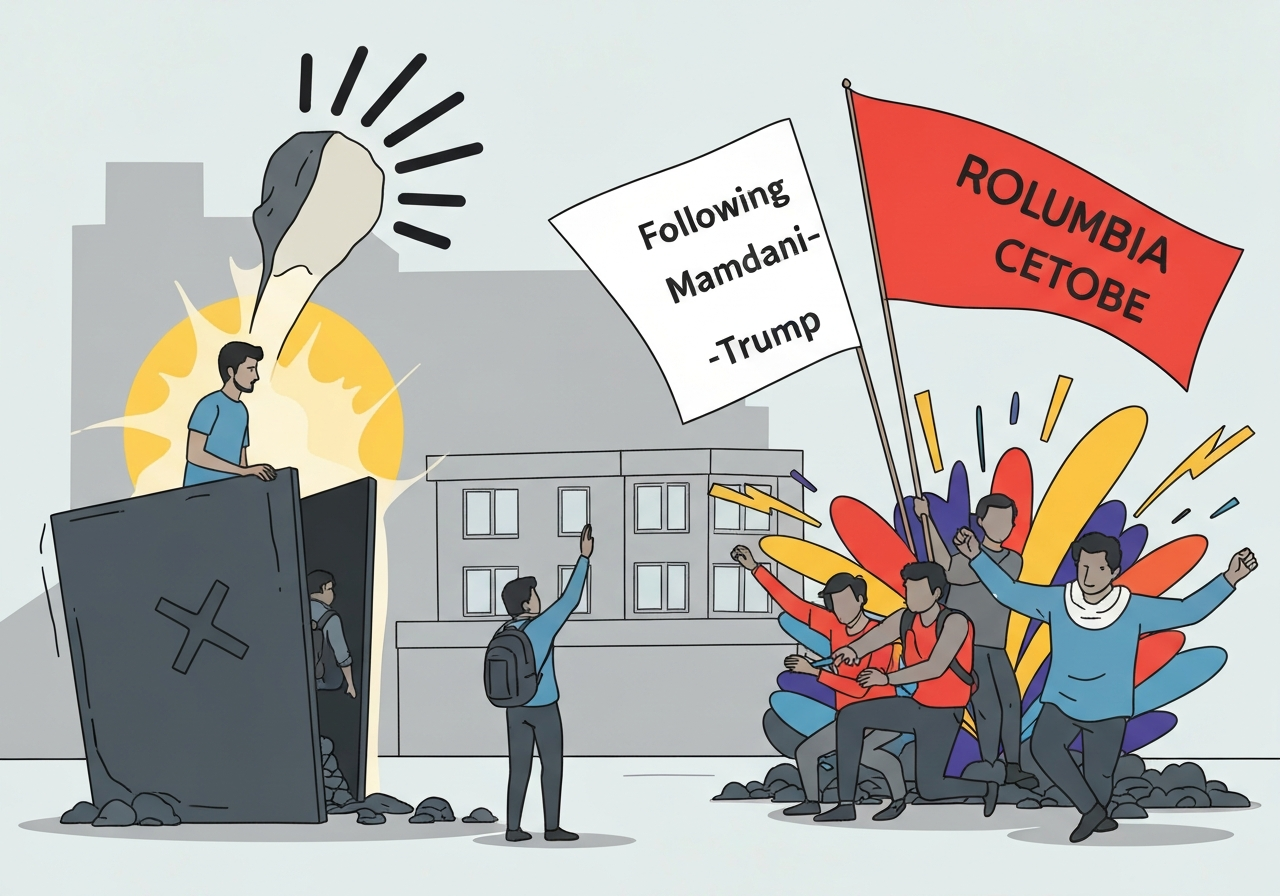
A Columbia University student detained earlier Thursday was released after Mayor Zohran Mamdani told reporters he had raised the case with President Donald Trump during an unscheduled meeting and Trump said she would be freed “imminently.” Ellie Aghayeva posted that afternoon she was in a car heading home and that she was “safe and OK” but in shock. The detention and a rapid campus protest unfolded within hours, prompting competing accounts from Columbia leadership and the Department of Homeland Security (DHS) about how federal agents entered an off‑campus residential building. Acting Columbia President Claire Shipman said campus video shows officers misrepresenting their purpose; DHS confirmed the detention and said Aghayeva’s student visa was terminated in 2016 for failing to attend classes.
Key Takeaways
- Ellie Aghayeva, a School of General Studies student studying neuroscience and political science, was detained by federal agents and later released on Thursday; she reported she was en route home and unharmed.
- Mayor Zohran Mamdani said he spoke by phone with President Trump during an unscheduled meeting; Trump told him Aghayeva would be released “imminently.”
- Columbia alleges five DHS agents entered an off‑campus apartment without producing a warrant and used a missing‑person pretext to gain entry.
- DHS says Aghayeva’s student visa was terminated in 2016 and that ICE officers identified themselves verbally and displayed badges; it also says she has no pending appeals and was placed in removal proceedings but released pending a hearing.
- Students and faculty rallied midday outside West 116th Street chanting “ICE off campus,” and protesters criticized university leadership for cooperating with federal authorities.
- Columbia’s administration reiterated that a judicial warrant or subpoena is required to access nonpublic campus areas and advised community members to notify Public Safety before allowing entry.
Background
The case sits at the intersection of campus jurisdiction, immigration enforcement, and local politics. Columbia’s Manhattan campus includes public and private spaces; university officials have long emphasized that nonpublic areas such as residences and classrooms require judicial process for entry. Federal immigration enforcement in city neighborhoods has been a flashpoint in recent years, drawing routine pushback from students, faculty and municipal officials who view campus housing as privileged community space.
Ellie Aghayeva is enrolled in Columbia’s School of General Studies pursuing neuroscience and political science, according to legal filings. DHS says her student visa was administratively terminated in 2016 for failure to attend classes; university filings contend agents did not present a warrant and entered after representing they were searching for a missing person. The procedural conflict — whether officers used a pretext to enter and whether appropriate warrants were produced — quickly became central to public debate.
Main Event
Shortly before midday, five Department of Homeland Security agents went to an off‑campus apartment where Aghayeva was staying. Acting Columbia President Claire Shipman said those agents identified themselves as police and displayed photos of a missing child before taking the student into custody. Shipman added that campus security footage and on‑site staff indicate no warrant was produced when agents entered the nonpublic residential space.
In contrast, a DHS spokesperson later said Immigration and Customs Enforcement officers verbally identified themselves, wore badges on lanyards, and were admitted by the building manager and Aghayeva’s roommate. The spokesperson said Aghayeva had no pending appeals or applications with ICE, was placed in removal proceedings and was released while she awaits an immigration hearing.
The incident drew an immediate campus response: students and faculty gathered outside the gates on West 116th Street, chanting and criticizing Columbia leadership. Protesters demanded accountability and accused the university of facilitating federal access to student housing. Columbia officials posted guidance to the community emphasizing that administrative warrants are insufficient to enter nonpublic university spaces and advising residents to contact Public Safety.
Analysis & Implications
The clash between Columbia and DHS underscores recurring questions about how federal immigration enforcement intersects with university autonomy and student safety. If agents entered without a judicial warrant and used a pretext, that would raise constitutional and contractual concerns about unlawful entry into private residences. For students — especially those on visas — the prospect of unexpected enforcement actions can chill campus life and deter engagement with academic activities.
Politically, the episode became a rapid test of influence: Mayor Mamdani’s disclosure that he raised the case with President Trump — and that Trump promised imminent release — amplified scrutiny of federal priorities and local advocacy channels. Whether that phone call was decisive in securing release is not independently verified; it does, however, illustrate how high‑level interventions can move quickly in politicized immigration matters.
For Columbia, the incident exposes institutional tensions: the university must protect community members’ legal rights while cooperating with lawful public‑safety processes. Shipman’s public email reiterating the need for judicial warrants seeks to codify a strict boundary, but practical enforcement often turns on how quickly campus and legal counsel can respond when federal agents arrive.
Comparison & Data
| Claim | Columbia Account | DHS Account |
|---|---|---|
| Number of agents | Five agents entered apartment | DHS confirms federal agents present |
| Entry method | Alleged misrepresentation; displayed missing‑child photos | Officers say they identified verbally and showed badges; building manager and roommate permitted entry |
| Warrant | Columbia says no warrant produced | Spokesperson did not confirm presentation of a warrant |
| Immigration status | University filing notes detention | Says visa terminated in 2016; Aghayeva in removal proceedings but released pending hearing |
The table highlights the core factual divergences: number of agents is consistently reported, but the accounts differ sharply on whether a warrant was presented and how entry was obtained. Those discrepancies shape potential legal remedies and community responses, and they will be central if the case proceeds to litigation or administrative review.
Reactions & Quotes
Campus and civic leaders reacted quickly, with public statements emphasizing due process and student safety.
“Once inside the apartment, it became clear they had misrepresented themselves,”
Acting Columbia President Claire Shipman
Shipman’s message framed the university’s contention that agents used a false pretext. Her office also told community members to insist on a judicial warrant for nonpublic areas and to notify Public Safety before allowing entry.
“I am safe and OK, but am in complete shock over what happened,”
Ellie Aghayeva (social media)
Aghayeva’s brief public posts conveyed relief at release and emotional distress from the encounter. Her legal filing and public statements have become focal points in calls for greater campus protections.
“They told me she would be released ‘imminently,'”
Mayor Zohran Mamdani (on call with President Trump)
Mamdani said he raised Aghayeva’s case with the president and that Trump indicated a prompt release; the mayor also reported raising concerns about four other students with active immigration cases.
Unconfirmed
- Whether statements by agents to the building manager and roommate included misrepresentations; DHS did not address the precise representations made to those individuals.
- The degree to which Mayor Mamdani’s phone call with President Trump directly influenced the timing of Aghayeva’s release remains unverified.
- Whether a written judicial warrant existed but was not shown on scene has not been independently corroborated in available accounts.
Bottom Line
The episode left unresolved legal questions about how federal immigration agents gain access to student housing and how universities should respond. Columbia’s public guidance aims to harden procedural safeguards by insisting on judicial warrants for nonpublic areas, but practical protection depends on rapid coordination between residents, Public Safety and legal counsel.
Watch for several near‑term developments: the administrative record in Aghayeva’s immigration case, any internal review or legal action seeking clarification of the entry, and policy responses from Columbia and municipal officials about campus protections. The incident may also prompt renewed scrutiny of how administrative visa terminations from years earlier translate into present‑day enforcement actions against students.
Sources
- Gothamist (news report)
- Zohran Mamdani (Twitter) (official/public statement)
- Department of Homeland Security (official agency statements)
- Columbia University News (institutional statement and community guidance)