
Lead
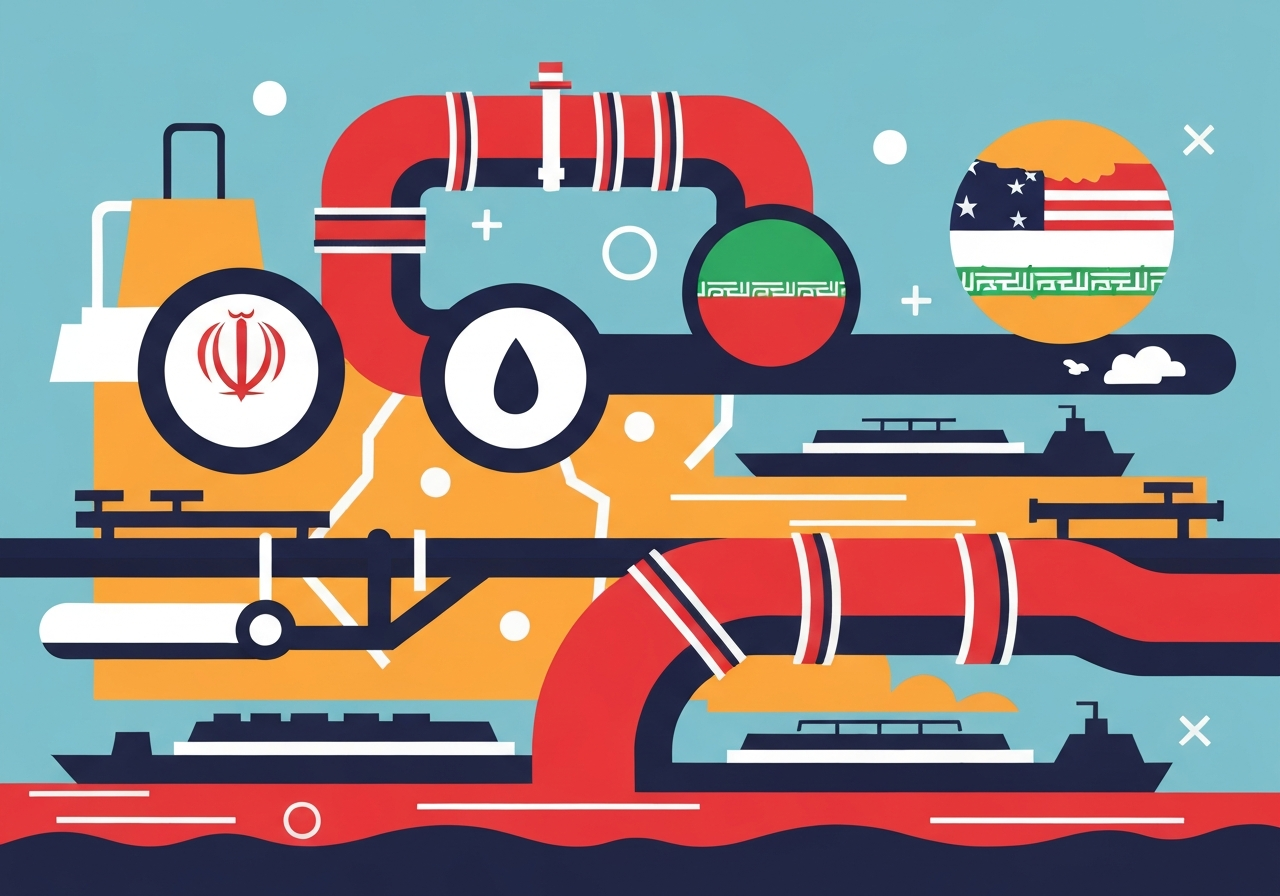
On February 28, 2026 President Donald Trump ordered strikes on targets in Iran, a move that immediately raised fresh risks for global oil supplies. Iran currently produces about 3.3 million barrels per day, roughly 3% of world output, and ranks as the fourth-largest OPEC producer. Because much seaborne crude transits nearby chokepoints, events in Tehran can amplify market disruption beyond Iran’s direct output. Traders and policymakers are now weighing how supply routes, spare capacity and regional escalation could affect crude availability.
Key Takeaways
- President Trump authorized strikes on Iran on February 28, 2026; the action was publicly reported and updated at 13:20 UTC the same day.
- Iran produces about 3.3 million barrels per day, roughly 3% of global oil output, and is the fourth-largest producer in OPEC.
- Iran’s geographic position near the Strait of Hormuz gives it influence over seaborne flows far larger than its production share alone.
- Immediate market risks include higher freight and insurance premiums, shipping route changes, and a geopolitical risk premium on crude prices.
- Available spare capacity among other producers and U.S. shale responsiveness will be central to limiting sustained supply disruption.
- Energy firms, insurers and shipping interests are monitoring maritime passages and insurance notices for potential rerouting or delays.
Background
Iran has long punched above its production weight because of geography and infrastructure. The country pumps about 3.3 million barrels per day but sits astride major export corridors used by other Gulf producers; disruptions near Iran therefore can affect seaborne flows that service distant refineries and storage hubs. Over the last decade sanctions, cyclical output adjustments and domestic constraints have limited Tehran’s export flexibility even as it retained significant crude processing and transportation assets.
Previous regional flare-ups have shown how the market responds to threats around the Gulf: short-term price spikes, temporary cargo rerouting, and insurance cost increases are common. At the same time, spare production capacity elsewhere — principally in Saudi Arabia and other OPEC members, plus flexible U.S. shale output — has historically helped calm longer-term shortages. Still, the interaction of military strikes, retaliatory risks and commercial shipping behavior can change that dynamic quickly.
Main Event
On February 28, 2026, U.S. forces conducted strikes aimed at targets in Iran following a White House decision; public reporting of the action was updated at 13:20 UTC. The immediate official rationale framed the strikes as measured, with authorities stressing military objectives rather than civilian infrastructure. Tehran’s proximity to major shipping lanes means the action triggered rapid attention from energy market participants and maritime operators.
Financial markets and commodity desks moved to reassess risk exposure as trading opened after the reports. Brokers and shipping agents began checking transit schedules, and several insurers signaled they were reviewing coverage terms for voyages through the Gulf and adjacent waters. Market participants flagged heightened uncertainty over both physical cargo delivery and market psychology.
Regional capitals and international organizations issued statements calling for restraint while warning of potential spillovers. Energy companies with assets or personnel in the region increased monitoring and contingency planning. Traders re-priced risk premia into forward crude curves to reflect a greater chance of supply interruptions if hostilities intensified.
Analysis & Implications
Even though Iran’s direct production accounts for only about 3% of global output, the country’s location magnifies its potential to disrupt shipments from other exporters. A substantial portion of seaborne crude transits waterways adjacent to Iran; any sustained threat to safe passage can create bottlenecks, temporary cargo diversions and insurance-driven cost increases that ripple through refining and retail markets.
How quickly other producers can compensate will determine whether price moves are transitory or persistent. Producers with spare capacity can increase flows to offset lost barrels, but that depends on political willingness, logistical lead times and market coordination. U.S. shale has shown rapid responsiveness in the past, yet it is not a guaranteed backstop for sudden, large-scale export interruptions in the short term.
Beyond immediate supply mechanics, the strike increases geopolitical risk in energy-scarce regions and may accelerate hedging behavior among importers. Utilities, refiners and sovereign buyers tend to increase forward purchases or draw from strategic reserves when perceived tail risks rise. Those actions can amplify near-term price pressure even if physical infrastructure remains intact.
Comparison & Data
| Entity | Daily Production (mb/d) | Share of Global Output |
|---|---|---|
| Iran | 3.3 | ~3% |
| Implied global output (calculated) | ~110 | 100% |
The table above isolates the known, reported figure for Iran (3.3 million barrels per day) and the implied global baseline (around 110 million barrels per day, derived from Iran’s 3% share). The comparison shows that—even with a relatively modest direct share—Iran’s role near major export routes can amplify market sensitivity to regional conflict. Market response will depend on whether the strikes affect exportably infrastructure, ports or tanker operations directly.
Reactions & Quotes
“The operation focused on military targets, not civilian energy infrastructure,”
U.S. official (statement)
The U.S. framing emphasized a limited military objective to reduce the chance of direct disruption to oil facilities; analysts noted that such assurances do not eliminate commercial caution among shippers and insurers.
“Iran views this as an act of aggression and has vowed a response,”
Iranian state media (report)
State outlets in Tehran framed the strikes as provocative. Officials’ subsequent actions and tone will be closely watched for signs of escalation that could affect regional maritime safety.
“Markets will likely price in a higher geopolitical premium until clarity on shipping routes and spare capacity arrives,”
Independent energy analyst
Market strategists highlighted that even a temporary rise in risk perception tends to push near-term prices higher as participants reallocate and hedge. The duration and magnitude of any premium will reflect both physical disruptions and policy responses.
Unconfirmed
- Whether any Iranian oil export infrastructure (export terminals or major pipelines) sustained damage in the strikes remains unconfirmed.
- The extent to which commercial shipping operations have been rerouted or delayed on a sustained basis has not been independently verified.
- Whether other regional actors will take direct actions that further threaten seaborne oil flows is not yet confirmed.
Bottom Line
The February 28, 2026 strikes raise acute short-term risks for oil markets even though Iran’s direct production share is modest. Geography and the concentration of seaborne trade near Iran mean that market effects can substantially exceed the country’s 3% production share if shipping or export infrastructure is threatened.
Key variables to watch in the coming days are (1) any confirmed damage to export facilities or ports, (2) changes in shipping routes and insurance notices, and (3) decisions by other producers to deploy spare capacity. Those factors will determine whether market moves are a short-lived risk premium or the start of a more protracted supply disruption.
Sources
- Bloomberg — media (news report on Feb 28, 2026)