
Lead
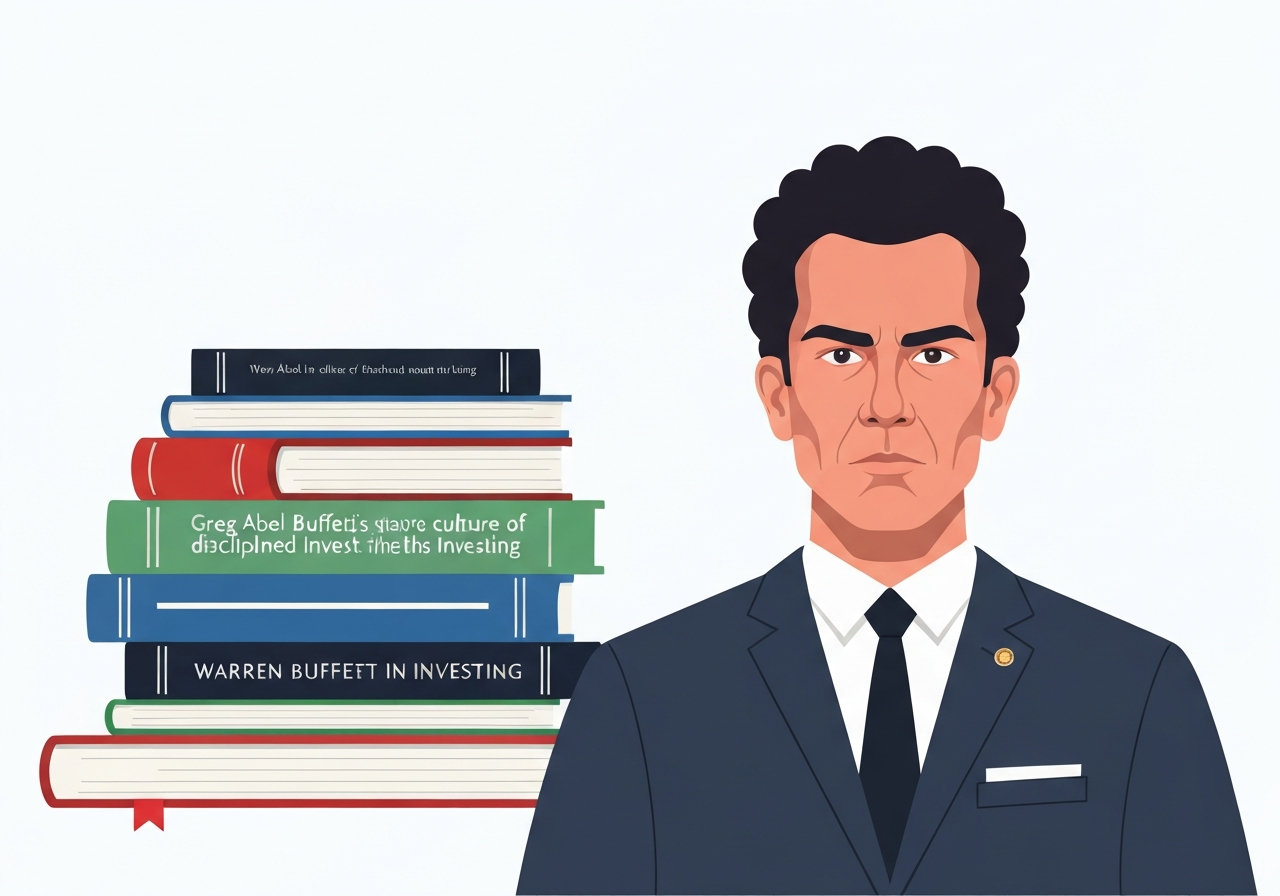
In his first annual shareholder letter as Berkshire Hathaway’s chief executive, Greg Abel on Saturday reassured investors that the conglomerate will continue the conservative, long-term investment approach established under Warren Buffett. Abel, 63, framed his message around preserving financial strength, strict capital discipline and a decentralized operating model. He emphasized a large cash buffer — $373.3 billion at year-end 2025 — as strategic dry powder rather than retreat from investing. The letter follows Buffett’s step down as CEO at the start of 2026; Buffett, 95, remains chairman and continues to participate in the business.
Key Takeaways
- Greg Abel used his first annual CEO letter to signal continuity with Buffett’s investing philosophy and to set a governance framework for the company going forward.
- Berkshire held $373.3 billion in cash at the end of 2025; Abel described this as strategic liquidity to act on opportunities without eroding resilience.
- The company will continue to avoid dividends so long as retained earnings can reasonably create more than $1 of market value per $1 retained; the board reviews this policy annually.
- Abel said Berkshire will maintain a concentrated equity portfolio focused on a small group of U.S. companies, citing Apple, American Express, Coca‑Cola and Moody’s as core holdings.
- Ted Weschler will continue to manage roughly 6% of the equity portfolio; Abel confirmed he will have ultimate responsibility for equity allocations as CEO.
- Abel reaffirmed a decentralized management model and an emphasis on reputation and integrity across subsidiaries.
- The company will continue to use debt sparingly and preserve a “fortress-like” balance sheet to meet obligations in adverse conditions.
Background
Berkshire Hathaway has built its identity over decades on disciplined capital allocation, low leverage and a patient approach to both whole-business acquisitions and public-equity positions. Warren Buffett’s stewardship made concentrated, long-duration bets and a high cash reserve hallmarks of the group, practices that underpin shareholder expectations and corporate governance. The transition at the top — Buffett stepping down as CEO at the start of 2026 while remaining chairman — triggered investor questions about whether Berkshire’s capital-allocation habits would shift under new leadership.
Greg Abel joined Berkshire in 2000 when the company acquired MidAmerican Energy and rose to become MidAmerican’s CEO in 2008; his 25-year tenure gives him institutional credibility among subsidiary executives. Internally he is known as a hands-on operator who emphasizes decentralized authority to operating CEOs while maintaining group-level financial constraints. The board’s selection of Abel, and his public reassurance in the annual letter, aimed to signal continuity for investors concerned about cultural drift during the leadership handover.
Main Event
In the letter released alongside Berkshire’s quarterly filings on Saturday, Abel opened by expressing humility at succeeding Buffett and affirmed the board’s confidence in his appointment. He set out three foundational commitments: preserve financial strength, maintain strict capital discipline, and run the company with decentralized management and a reputation for integrity. Abel used concrete language to describe the cash balance as “strategic dry powder,” arguing the liquidity provides optionality without compromising resilience.
Abel addressed the perennial question of dividends directly, restating the company’s longstanding test: Berkshire will not initiate dividends so long as the board believes retained earnings can create at least one dollar of market value for each dollar retained. He also underscored a conservative approach to leverage, saying Berkshire will use debt sparingly and prudently. On share repurchases and public-equity holdings, he reiterated that Berkshire will assess value carefully, act patiently and prefer to hold investments for the long term.
The letter clarified operational responsibilities: Abel will directly oversee the equity portfolio, with Ted Weschler continuing to manage roughly 6% of holdings — including assets previously overseen by Todd Combs, who recently left to join JPMorgan. Abel emphasized Berkshire’s practice of maintaining concentrated positions in a limited number of U.S. companies and acknowledged the board would make significant adjustments only if long-term economic prospects for a holding changed materially.
Analysis & Implications
Abel’s message is calibrated to reduce transition risk for investors: by committing to Buffett-era principles, he aims to protect Berkshire’s valuation multiple that rests heavily on trust in management’s capital-allocation decisions. The explicit preservation of a large cash cushion signals a preference for optionality over yield-chasing, a posture likely to reassure risk-averse shareholders but frustrate those seeking more immediate returns. Maintaining a no-dividend policy formalizes the tradeoff between current payouts and potential long-term value creation.
Operationally, centralizing ultimate equity responsibility with the CEO balances decentralized operating autonomy with group-level accountability for capital allocation. That arrangement could streamline decisive action on large purchases or portfolio shifts, while preserving the autonomy of subsidiary CEOs to run businesses day-to-day. Investors should monitor how frequently Abel intervenes in portfolio decisions and whether the concentrated equity mix changes meaningfully over the next few years.
On a market level, Berkshire’s $373.3 billion cash position is large enough to influence transaction dynamics for sizeable private deals and public takeovers; Abel’s emphasis on patience and strict valuation thresholds suggests Berkshire will remain a disciplined buyer rather than an aggressive consolidator. Internationally, Berkshire’s focus on U.S. companies and conservative leverage reduces direct exposure to geopolitical risk, but also limits diversification if U.S. economic growth underperforms peers.
Comparison & Data
| Metric | Year-end 2025 | Notes |
|---|---|---|
| Cash & equivalents | $373.3 billion | Company-reported liquidity |
| CEO age | Greg Abel, 63 | Born in Edmonton; 25 years at Berkshire |
| Chairman age | Warren Buffett, 95 | Remains chairman; stepped down as CEO start of 2026 |
| Portfolio oversight | CEO (Abel) + Ted Weschler (~6%) | Combs left for JPMorgan; Weschler retains ~6% management |
The table highlights the cash buffer and leadership arrangement that define Berkshire’s near-term strategic posture. Comparing the cash position to peers underscores Berkshire’s unique scale of optionality: few public companies maintain a war chest of this magnitude while preserving conservative leverage. Stakeholders should track any material changes in these metrics in quarterly filings and annual reports.
Reactions & Quotes
Executives and market commentators responded to Abel’s letter with cautious approval, noting the value of clarity on capital-allocation authority. Below are representative, concise remarks with context.
“We maintain a fortress-like balance sheet, ensuring Berkshire’s foundation is never compromised.”
Greg Abel, CEO, Berkshire Hathaway (annual letter)
This statement was used by Abel to explain the rationale for the $373.3 billion cash balance and the company’s conservative leverage stance. He framed liquidity as necessary to withstand adverse conditions and to enable opportunistic deployment of capital.
“We will assess value carefully, act patiently, and hold for the long term — preferably forever.”
Greg Abel, CEO, Berkshire Hathaway (annual letter)
Abel used this line to signal continuity in Berkshire’s investment horizon and to emphasize a preference for concentrated, long-duration positions in companies he expects to compound value over decades.
“Our owners’ time horizon extends beyond the tenure of any individual CEO.”
Greg Abel, CEO, Berkshire Hathaway (annual letter)
Abel offered a long-term framing of stewardship, acknowledging he will not have Buffett’s tenure while committing to strengthen the company for future generations of shareholders.
Unconfirmed
- Any specific large acquisition target Abel might pursue in the near term has not been disclosed; market speculation is unverified.
- Reports about the precise split of responsibilities among investment deputies beyond the stated ~6% managed by Ted Weschler lack full public confirmation.
- Predictions about how quickly the equity portfolio will be rebalanced under Abel’s direct oversight are speculative and not confirmed by company guidance.
Bottom Line
Greg Abel’s inaugural annual letter as CEO was explicitly designed to reassure investors that Berkshire Hathaway will retain the conservative capital-allocation ethos shaped by Warren Buffett. By committing to a fortress-like balance sheet, no routine dividends, and a concentrated, long-term equity posture, Abel signaled continuity and sought to reduce uncertainty tied to the leadership transition. His assumption of direct responsibility for the equity portfolio centralizes accountability while preserving the decentralized operations model across subsidiaries.
For investors and counterparties, the immediate implication is predictability: Berkshire is positioning itself as a disciplined, patient buyer with substantial firepower but strict valuation standards. The market should watch for any material departures from the stated policy — changes in dividend stance, meaningful leverage shifts, or a sustained increase in trading activity — as the clearest indicators that the company’s strategic posture is evolving.
Sources
- CNBC — Media report covering Abel’s letter and Berkshire filings (journalism)
- Berkshire Hathaway — Official company website with investor relations materials and annual reports (company/official)