
Lead
On Feb. 28, 2026, Iran’s ruling clerical system confronted an immediate succession challenge after Supreme Leader Ayatollah Ali Khamenei was killed in joint US–Israeli strikes. There is no officially designated heir; the 88-member Assembly of Experts must select his replacement under constitutional criteria. Authorities face pressure to show continuity and control rapidly, even as external military threats and political fault lines complicate any public deliberation. The choice will shape Iran’s domestic direction and regional posture for years to come.
Key Takeaways
- The Assembly of Experts, an elected body of 88 senior clerics, is constitutionally responsible for naming the next supreme leader.
- Khamenei led for nearly four decades; the Assembly has formally chosen a leader only once before, after Ayatollah Ruhollah Khomeini’s 1989 death.
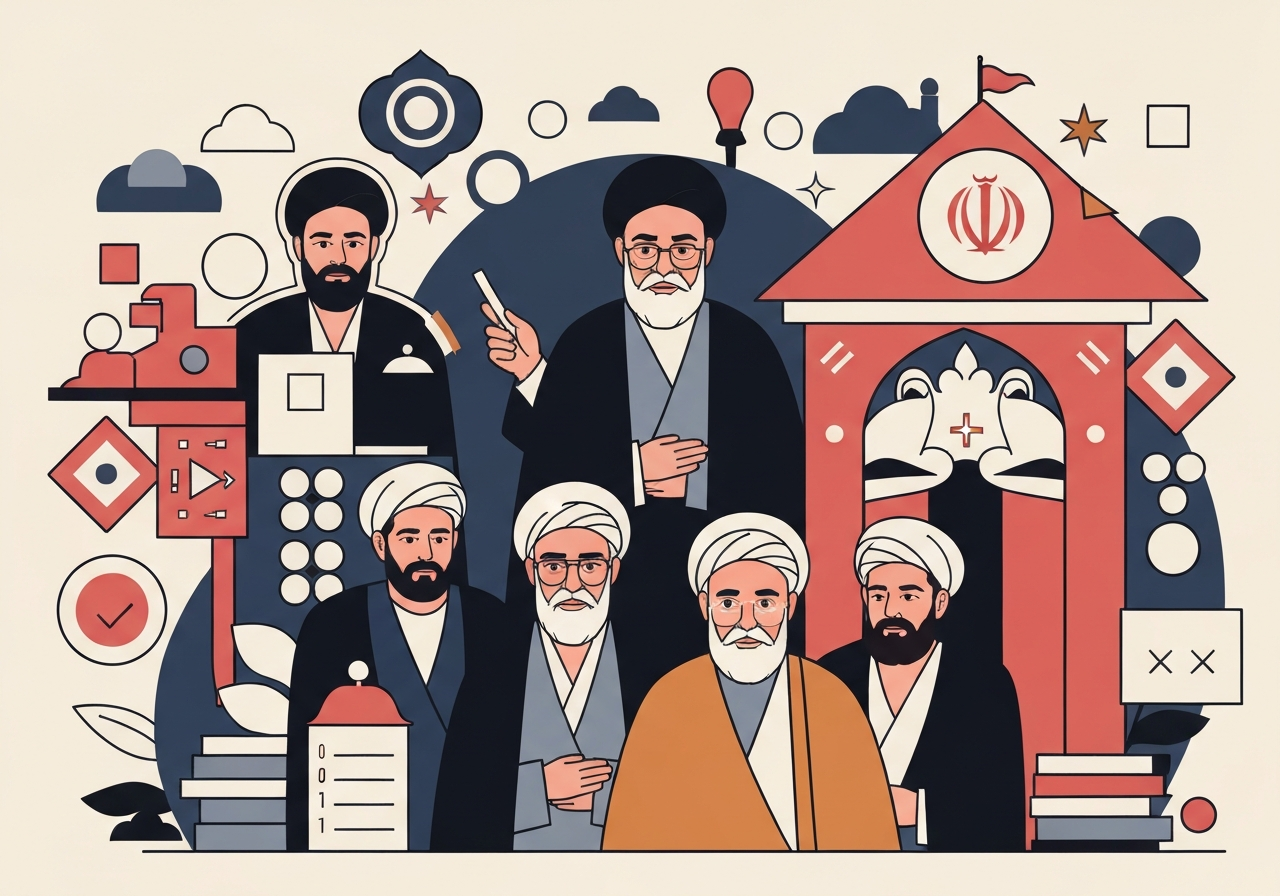
- Potential contenders include Mojtaba Khamenei, Mohammad Reyshahri Arafi, Mohammad Mirbagheri, Hassan Khomeini and Ahmad Jannati/Abdolnabi Bushehri–figures with varying clerical rank and security ties.
- Mojtaba Khamenei is widely reported to hold informal influence and ties to the IRGC and Basij but lacks senior clerical rank and was sanctioned by the US in 2019.
- Arafi serves as deputy chairman of the Assembly of Experts, has been on the Guardian Council and heads Iran’s seminary system; analysts note administrative experience but limited security links.
- Hardline figures such as Mirbagheri are influential in conservative clerical circles; some reported statements linking large-scale violence to religious aims have drawn scrutiny (reported by activist outlets).
- The assembly must pick a male cleric with political competence, moral authority and loyalty to the Islamic Republic as defined in the constitution.
- Ongoing US and Israeli strikes — and a stated US vow to continue operations — create acute security constraints that could affect whether and how the Assembly convenes.
Background
Since the Islamic Republic’s founding in 1979, Iran’s theocratic structure has vested ultimate authority in a supreme leader. The constitution tasks the Assembly of Experts — an elected cadre of senior clerics — with choosing that post. In practice, succession planning has been opaque: the Assembly has formally exercised this authority only once, in 1989, when it named Ali Khamenei after the death of Ayatollah Ruhollah Khomeini.
Khamenei’s near four-decade rule built a network of institutional patrons across the presidency, judiciary, Revolutionary Guards (IRGC) and seminary establishments. That web shapes who is realistically viable as a successor: clerical credibility, support from security organs, and acceptance by conservative powerbrokers all matter. At the same time, political reformists and more moderate clerics have been marginalized in recent years, narrowing the field of plausible nominees.
Main Event
Following the Feb. 28, 2026 strikes that killed Khamenei, the immediate constitutional mechanism points to the Assembly of Experts convening to deliberate on a successor. Members are expected to meet quickly to signal continuity, though logistics and security concerns complicate public gatherings. Officials have emphasized the need for stability while keeping deliberations within clerical channels.
Among names discussed in expert analysis and reporting are Mojtaba Khamenei, the supreme leader’s second son; Mohammad Reyshahri Arafi, a senior cleric and deputy chair of the Assembly; Mohammad Mirbagheri, a conservative Assembly member and hardline figure; Hassan Khomeini, a grandson of the republic’s founder; and Abdolnabi Bushehri, who serves as first deputy chairman of the Assembly. Each candidate brings different strengths and liabilities related to religious rank, political experience and ties to the IRGC.
Security dynamics complicate the timeline. US President Donald Trump has publicly vowed that the joint US–Israeli strikes will continue, raising the prospect that convening the Assembly in a large, visible session could expose clerics to further attacks. That threat shapes both the pace and format of any selection process, and may push the establishment to consider less public or expedited procedures.
Analysis & Implications
Succession will be a test of the clerical establishment’s cohesion. If the Assembly coalesces around a single candidate quickly, it can project continuity and limit internal contestation. Conversely, a protracted or visibly divided process could deepen political instability and embolden rivals within the state, including hardline factions in the IRGC that already operate with significant autonomy.
Mojtaba Khamenei’s reported informal influence and alleged IRGC connections make him a politically significant figure, but his lack of high clerical rank and formal office presents constitutional and legitimacy questions. Father-to-son succession would also risk popular and clerical backlash given the revolution’s anti-monarchical origins; the Assembly may therefore be reluctant to openly endorse dynastic continuity.
Arafi’s bureaucratic experience, role within key institutions and multilingual scholarly profile offer administrative competence and a degree of technocratic legitimacy. Yet analysts note his comparatively weak security ties, which could limit his ability to command the IRGC and other coercive organs if they perceive their interests threatened.
A choice favoring an uncompromising hardliner such as Mirbagheri would likely deepen Iran’s confrontation with the West and harden domestic social controls, while a more moderate cleric could open modest space for restrained foreign engagement. Internationally, the successor’s stance toward the region and toward nuclear and proxy policies will determine near-term diplomatic and security trajectories.
Comparison & Data
| Candidate | Clerical Rank / Role | Security Ties | Perceived Strengths |
|---|---|---|---|
| Mojtaba Khamenei | Not a senior cleric / informal powerbroker | Reported IRGC, Basij links | Informal influence; perceived insider control |
| Mohammad Reyshahri Arafi | Deputy chair, Assembly of Experts; seminary head | Limited reported security ties | Bureaucratic experience; scholarly credentials |
| Mohammad Mirbagheri | Assembly member; hardline cleric | Aligned with conservative clergy | Ideological clarity; conservative base |
| Hassan Khomeini | Custodian, Khomeini mausoleum; low office | Minimal security ties | Revolutionary lineage; symbolic legitimacy |
| Abdolnabi Bushehri | First deputy chairman, Assembly of Experts | Weak IRGC links reported | Institutional role in succession apparatus |
The table summarizes readily reported attributes; it does not assert definitive power balances inside closed security circles. Observers stress that declared roles and informal influence can diverge sharply in Iran’s political ecology.
Reactions & Quotes
Officials, analysts and local outlets reacted quickly, offering contrasting frames of the succession and its risks.
The United States will continue targeted operations against Iranian leadership and infrastructure, according to public statements from the administration, complicating any large-scale public gathering of regime officials.
US administration statement (as reported)
Commentary from regional analysts emphasized the structural difficulty of consolidating authority absent a clear successor.
Khamenei’s choice of senior appointments over decades created multiple competing centers of power; the Assembly will face a practical question of who can actually command institutions like the IRGC.
Alex Vatanka, Middle East Institute (analysis)
Domestic activists and independent outlets highlighted statements by conservative clerics that underscore a hardline ideological current among some contenders.
Some clerics have reportedly framed large-scale conflict in religious terms, a posture that would signal a more confrontational regional policy if such figures prevail.
IranWire (reporting)
Unconfirmed
- Whether the Assembly of Experts will convene publicly in the days following the strikes remains unclear and may depend on security assessments.
- The extent and nature of Mojtaba Khamenei’s operational ties to the IRGC are reported in multiple sources but are not independently verifiable in open records.
- Attributions of specific extreme statements to individual clerics stem from activist or independent outlets and require additional corroboration from primary transcripts or broader reporting.
Bottom Line
The immediate constitutional path for replacing Iran’s supreme leader is clear on paper: the 88-member Assembly of Experts must choose a male cleric who meets constitutional tests. In practice, the selection will be determined by a mix of clerical legitimacy, institutional backing (especially from the IRGC), and the Assembly’s appetite for stability versus ideological purity.
Given competing claims to influence, the absence of an obvious heir and an active external military campaign that the US administration says will continue, Iran’s leadership transition is likely to be compact, opaque and heavily managed by senior conservatives. International observers should watch which institutions exert the most visible control over the process — that will indicate the republic’s trajectory on both domestic governance and regional policy.