
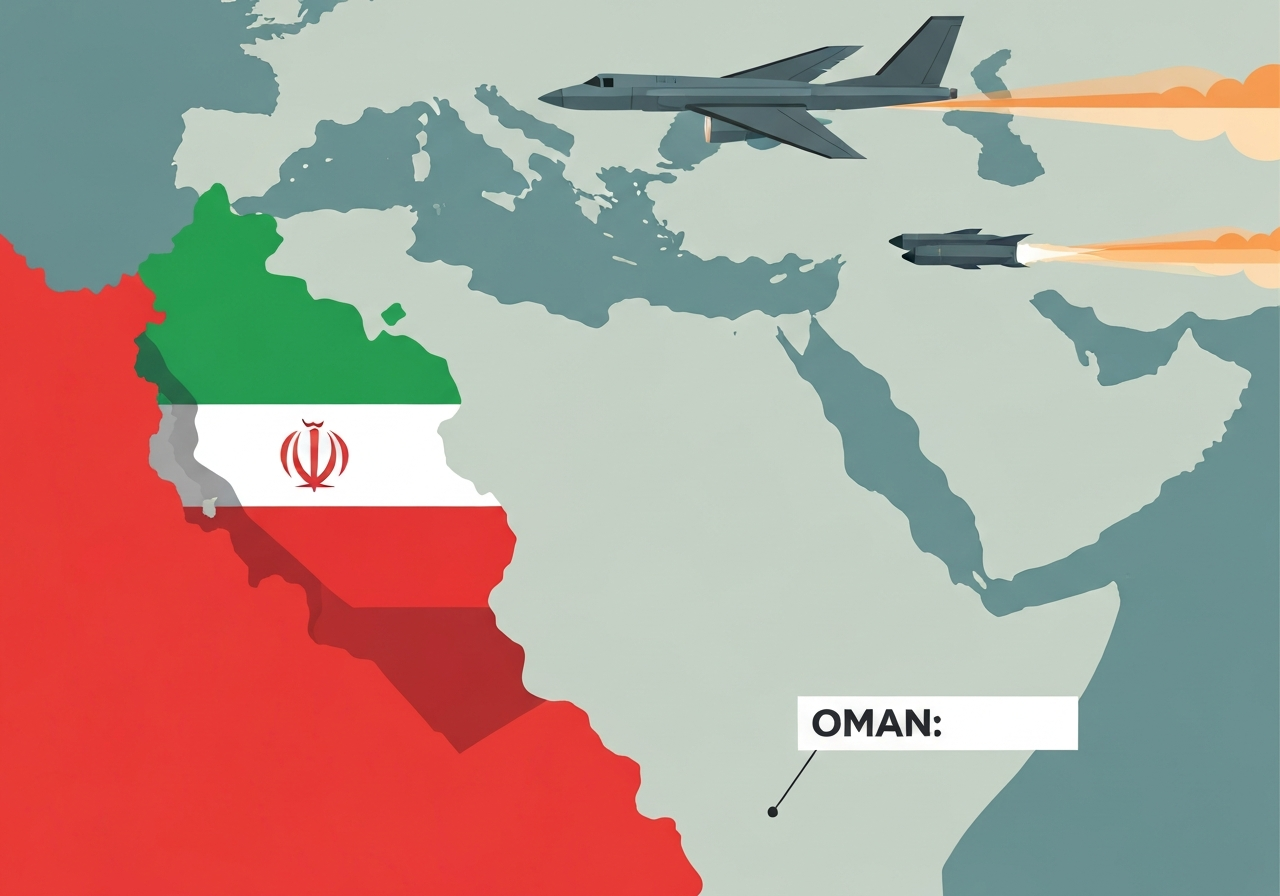
Lead: Hours before President Donald Trump announced U.S. strikes on Iran and signaled intentions toward regime change, Oman’s foreign minister, Badr Albusaidi, told CBS’s Face the Nation that a diplomatic agreement was attainable. Albusaidi said negotiators had secured commitments from Tehran on limits that would make weaponization far less likely. He urged parties to continue talks; those negotiations were due to resume the following week. Within hours, U.S.-led military action began, complicating or possibly halting the emerging agreement.
Key takeaways
- Badr Albusaidi, Oman’s foreign minister and mediator in recent U.S.-Iran discussions, told CBS on Friday a deal was “within our reach.”
- Albusaidi said Iran had agreed in talks to forgo accumulating nuclear material that could be used to build a bomb and accepted robust verification by the IAEA.
- He described the proposal as going beyond the 2015 deal by seeking zero stockpiling rather than merely limits on enrichment.
- Additional U.S.-Iran talks were scheduled for the week after the interview; those sessions were disrupted by U.S.-led strikes announced the next day.
- A public opinion survey cited in reporting found only 21% of Americans endorsed initiating an attack on Iran under then-current circumstances.
- Commentators, including Trita Parsi of the Quincy Institute, argued the public disclosure by Oman suggested a significant breakthrough that military action may have preempted.
Background
The United States withdrew from the 2015 Iran nuclear agreement during President Trump’s first term and reimposed sanctions, a move that heightened tensions and reduced formal diplomatic channels. Oman has long played a discreet mediation role between Tehran and Washington; its foreign ministry has hosted and facilitated prior exchanges that both sides have used to test possible compromise language. Negotiators in recent rounds reportedly focused on mechanisms to prevent accumulation of fissile material and to strengthen International Atomic Energy Agency oversight. The claim of a new commitment to “zero stockpiling” represents a shift in emphasis from the 2015 accord, which set numerical limits and monitoring regimes rather than an explicit zero-accumulation pledge. Scheduling of further talks signaled continuing diplomatic momentum before the subsequent military escalation.
Regional actors, including Israel and Gulf states, have watched U.S.-Iran contacts closely; any perceived move toward a restrictive agreement that constrains Iran’s nuclear options could alter regional security calculations. In Washington, domestic politics and assessments of credibility have influenced administration decisions about whether to pursue or undercut negotiations. The role of intermediaries such as Oman is to bridge trust gaps, but their efforts depend on sustained political support from the principal parties. The rapid sequence of a public interview, planned follow-up talks, and then strikes illustrates how quickly diplomatic openings can be overtaken by kinetic actions.
Main event
On Friday, Albusaidi appeared on Face the Nation and told host Margaret Brennan that the negotiating teams had made what he described as “substantial progress” toward a deal. He emphasized that the negotiations had produced a commitment he said would prevent the stockpiling of nuclear material that could be turned into a weapon. After the broadcast, he used social media to reiterate that a deal was “now within reach” and to urge backing for the negotiators tasked with finalizing terms.
Albusaidi stated that the core of the proposed accord included measures to eliminate accumulations of enriched material and to provide “full and comprehensive verification” by the International Atomic Energy Agency. He framed the proposal as distinct from the 2015 Joint Comprehensive Plan of Action by focusing on preventing any stockpile that could shorten the timeline to a bomb. The mediating role of Oman was highlighted as unusually public in this case, drawing attention from analysts who said the disclosure signaled negotiators believed they had substantive concessions to show.
Within hours of the interview, the Trump administration announced strikes on Iranian targets and language indicating a pursuit of more aggressive policy toward Tehran. The timing prompted critics to say the military action could have been intended to preempt or derail the diplomatic outcome described by Albusaidi. Organizers of further talks had planned to reconvene the following week; those plans were rendered uncertain by the sudden escalation to armed strikes.
Analysis & implications
If the mediator’s account is accurate, the reported Iranian willingness to accept zero stockpiling would be a significant technical and political concession. Zero accumulation, coupled with continuous IAEA verification, would aim to extend any breakout time and reduce near-term weaponization risk. Still, operationalizing and verifying a zero-stockpile standard would require intrusive monitoring, clear definitions of permissible materials, and mechanisms for rapid inspections—matters that historically have been contentious.
Military strikes immediately after claims of diplomatic progress raise perennial questions about the interaction of force and diplomacy. Strikes can close negotiating windows by hardening positions, fostering domestic nationalist responses, or removing incentives for compromise. At the same time, proponents of military pressure often argue it can produce leverage; determining which dynamic dominates depends on timing, scale, and the parties’ domestic constraints.
For the region, a collapsed negotiation could prompt new rounds of escalation: reciprocal strikes, proxy confrontations, or accelerated nuclear work if Tehran perceives diplomacy no longer viable. Internationally, allies and institutions such as the IAEA would face the task of preserving verification regimes under strained conditions. Domestically in the United States, the timing of action relative to reported bargaining gains may influence public and congressional opinion about the administration’s strategy.
Comparison & data
| Framework | Character |
|---|---|
| 2015 JCPOA | Set limits on enrichment levels, centrifuge numbers, and stockpiles with phased terms and IAEA monitoring. |
| Reported new proposal | Emphasized zero stockpiling of weapon-relevant material and continuous IAEA verification, according to the Omani mediator. |
The table above contrasts the public attributes of the 2015 deal with the mediator’s description of the newer proposal. Precise technical differences matter: numerical caps allow measured accumulation under surveillance, whereas a zero-stockpile standard would require distinct inspection regimes and legal definitions. Implementing either approach requires political buy-in from multiple stakeholders and durable technical arrangements with the IAEA.
Reactions & quotes
Officials and analysts offered swift interpretations of the sequence. Supporters of diplomacy pointed to the mediator’s televised remarks as evidence of genuine progress; others portrayed the strikes as a counterweight or alternative to negotiation. Public opinion data cited in reporting indicated low U.S. support for initiating an attack on Iran, complicating the political calculus for sustained military action.
“I can see that the peace deal is within our reach,”
Badr Albusaidi, Omani foreign minister (on Face the Nation)
Albusaidi’s on-air statement intended to convey tangible progress to a U.S. audience and to pressure stakeholders to let negotiators continue. Making the mediator’s view public is an uncommon step that commentators said suggested negotiators believed they had reached substantive concessions.
“There is no accumulation, so there would be zero accumulation, zero stockpiling, and full verification,”
Badr Albusaidi, Omani foreign minister
This technical formulation was the core of the mediator’s claim. If implemented, it would shift verification priorities and require IAEA access arrangements beyond those in the 2015 agreement. Experts caution that such terms hinge on clear definitions and rigorous enforcement mechanisms.
“Trump can indeed declare victory. Listen to this segment—it goes way beyond what Obama achieved,”
Trita Parsi, Quincy Institute for Responsible Statecraft
Parsi and others suggested that the mediator’s disclosure signaled a meaningful breakthrough that military escalation may have preempted. Analysts differ on whether force or diplomacy is likelier to produce long-term restraint.
Unconfirmed
- Whether the Iranian commitments described by the Omani mediator would have fully eliminated all pathways to a weapon is not independently verified in open reporting.
- Claims that the U.S.-led strikes were timed specifically to prevent a diplomatic agreement remain disputed and lack conclusive public evidence.
Bottom line
The Omani foreign minister’s public account portrayed an unexpectedly close diplomatic opening with substantive Iranian concessions on stockpiling and verification. If accurate and implementable, the reported terms would represent a notable shift in nonproliferation bargaining posture beyond the 2015 framework. However, the immediate move to military strikes created uncertainty about whether the window for agreement remains viable.
Observers should watch whether negotiators can reconvene, whether the IAEA can secure the verification posture needed for any new terms, and how regional actors respond. The episode underscores how fragile diplomatic advances can be when they collide with decisions to use force, and how transparency by mediators can shape public and political pressure at decisive moments.
Sources
- Common Dreams — reporting (independent news outlet)
- Face the Nation (CBS) — program transcript/segment (broadcast journalism)
- Quincy Institute for Responsible Statecraft — analysis and commentary (think tank)
- International Atomic Energy Agency (IAEA) — international organization and verification authority