
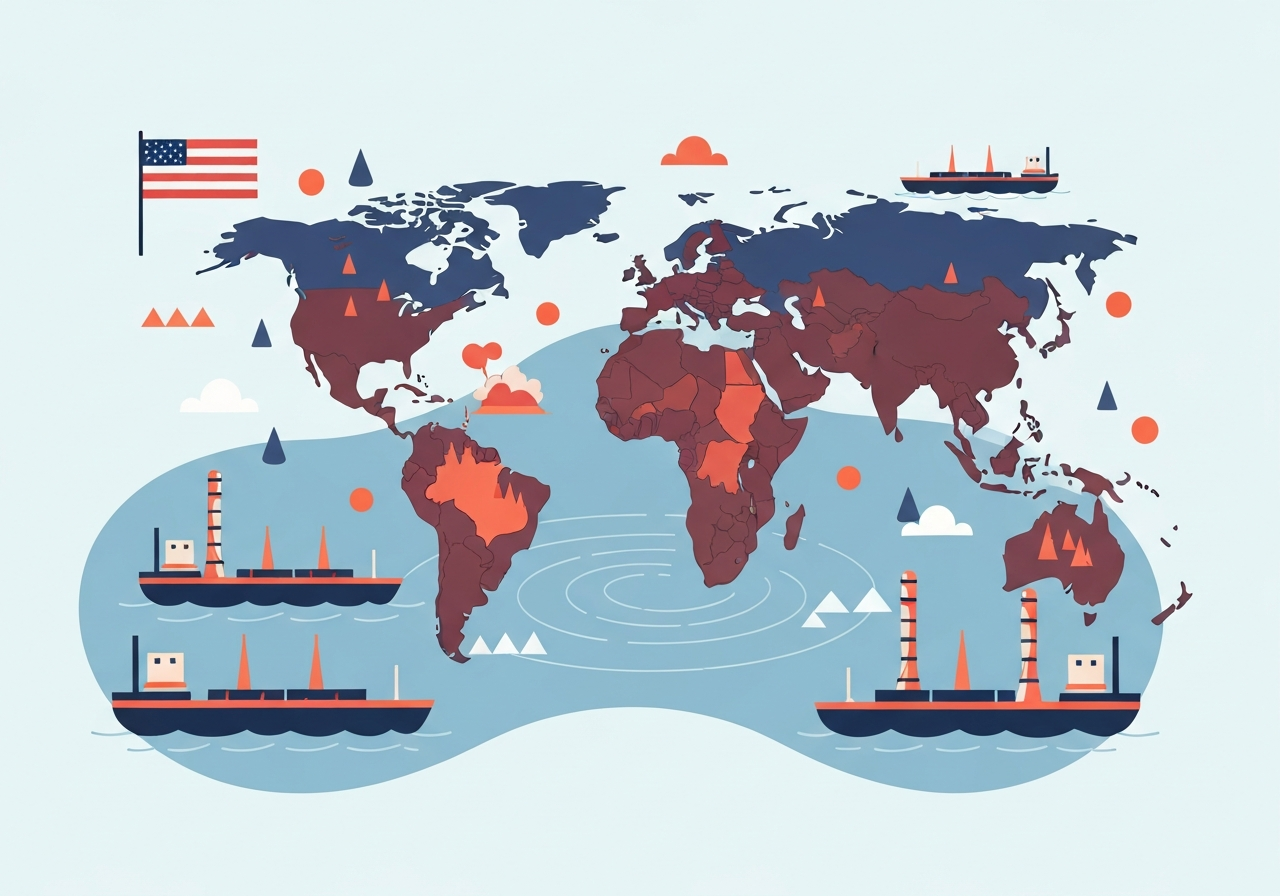
Lead: The US launched “major combat operations” in Iran on Saturday morning shortly after Israel struck Tehran, prompting immediate concerns about disruption to global oil flows and higher fuel costs. Iranian Revolutionary Guard warnings and an attack off Oman led many tankers to anchor outside the Strait of Hormuz, the world’s most critical oil chokepoint. Analysts say a sustained halt or heightened risk could push Brent well above current levels and deepen inflationary pressure in import-dependent economies. Markets reacted swiftly, pricing in a sharp near-term rise unless rapid de‑escalation follows.
Key Takeaways
- US and Israeli strikes on Iran began early Saturday; Iran’s guards warned commercial vessels near the Strait of Hormuz within hours.
- At least 150 tankers carrying crude, LNG and oil products reportedly anchored outside the strait on Sunday, delaying deliveries and routing decisions.
- A sustained closure or effective blockage of the strait could imperil up to 15 million barrels per day of oil shipments, analysts warn.
- Before the strikes, Brent was about $67 a barrel; markets factored in scenarios pushing prices to $90–$100 per barrel in severe disruptions.
- Iran holds an estimated 170 billion barrels of proven oil reserves and roughly 3.5 million barrels per day of current production, making it the fourth-largest proven holder of oil.
- About 20% of seaborne oil and gas shipments transit the Strait of Hormuz, a 33 km-wide corridor with two narrow shipping lanes just 3 km each way.
- Even partial disruptions (mines, detentions, jamming) would raise freight, insurance and replacement‑supply costs, amplifying price moves beyond direct physical losses.
Background
The Middle East has long been the world’s energy fulcrum; the Strait of Hormuz links Gulf producers to Asian and global buyers and carries roughly one‑fifth of seaborne oil and gas shipments. Iran’s hydrocarbon significance rests not only on its 170 billion barrels of proven reserves but also on its geographic control of critical transit routes. Decades of sanctions, war and unrest pared Iranian output from a 1974 peak near 6 million barrels per day to around 3.5 million b/d, though recent months have seen production and exports rise despite sanctions due to closer ties with large buyers such as China.
Tehran has periodically threatened to close the strait in retaliation to foreign military action, but full closures are historically rare because of the economic cost to Iran itself and the global backlash. Still, smaller asymmetric tactics—mines, harassment of ships, signal jamming—have in the past interrupted flows and lifted prices. Oil markets now price both the immediate supply risk and the risk premium tied to insurance, rerouting and replacement cargoes.
Main Event
On Saturday the US announced “major combat operations” against facilities in Iran following a separate Israeli strike on Tehran. Within hours, Iran’s Islamic Revolutionary Guard Corps reportedly warned tankers that passage through the Strait of Hormuz would not be permitted; Tehran has not issued a formal, sustained closure order. An attack on a vessel off Oman prompted many ship operators to hold position or anchor outside the strait, creating a queue of commercial tankers.
By Sunday, reports indicated roughly 150 tankers carrying crude, liquefied natural gas and refined products had dropped anchor in open waters beyond the strait. Shipowners cited safety concerns and crew welfare as reasons to wait for clearer guidance rather than proceed through a potentially contested corridor. Operators of chartered cargoes, including a Centrica‑chartered LNG cargo, faced uncertainty about destinations and delivery timing.
Market reaction was immediate: analysts and traders priced in a material near‑term premium. Futures contracts for Brent rose sharply in early trading, reflecting both the volume at risk and the potential for escalation to wider regional attacks on infrastructure. OPEC and other producers signaled production adjustments in the hours after the strikes, but analysts warned that spare capacity and planned output boosts may not fully offset a blocked Hormuz scenario.
Analysis & Implications
Supply shock mechanics: Oil prices respond to both physical supply losses and risk premiums. A closure or effective shutdown of Hormuz — whether by force or by risk avoidance — would remove a substantial share of seaborne flows, forcing buyers to compete for alternative cargoes and driving up spot and futures prices. Even short delays increase freight and insurance costs, raising delivered fuel prices beyond the headline crude move.
Macro impact: Analysts suggest that a surge toward $90–$100 per barrel would amplify inflationary pressure in advanced economies still recovering from prior price shocks. Higher energy costs reduce disposable income, slow consumer spending and can erode growth in countries without large fiscal buffers. For the US and Europe, more expensive oil ahead of elections or policy cycles heightens political risk and complicates central bank inflation objectives.
Geopolitical ripple effects: Iran’s leverage over Hormuz magnifies its strategic influence: the country supplies only about 3–4% of global crude exports directly, but its ability to threaten transit raises global exposure well beyond its production share. Regional partners and rival states may respond with naval deployments, insurance subsidies or temporary production increases, but those tools take time and may not persuade markets in the first days of a crisis.
Buyer dynamics: China’s role matters. Beijing imports roughly 90% of Iran’s crude under current arrangements; disruptions would push China to bid in open markets or accelerate alternative sourcing, contributing to upward pressure on global prices. Lower‑income importers with limited fiscal room would face the sharpest near‑term strain from higher fuel and transport costs.
Comparison & Data
| Metric | Figure | Notes |
|---|---|---|
| Iran proven oil reserves | ~170 billion barrels | Fourth largest globally |
| Iran current production (recent) | ~3.5 million b/d | Down from ~6 million b/d peak in 1974 |
| Share of seaborne oil via Hormuz | ~20% | Critical choke point between Gulf and Arabian Sea |
| Tankers reportedly anchored (Sunday) | ~150 vessels | Includes crude, LNG and refined product cargoes |
| Potential daily flow at risk | up to 15 million barrels/day | Worst‑case assessment if multiple routes blocked |
The table sets the scale: relatively modest national production can have outsized market effects if crucial transit corridors are threatened. Markets will weigh immediate flow disruptions against spare capacity, OPEC decisions and the speed of any diplomatic de‑escalation when setting prices.
Reactions & Quotes
Officials and analysts responded rapidly; statements often emphasized both the gravity and the risk of miscalculation.
Market analyst view: SEB criticised the handling and warned of reputational costs and political constraints on de‑escalation.
“It has become quite clear now that this is the biggest bluff in history and it has gone horribly wrong.”
Bjarne Schieldrop, SEB (chief commodities analyst)
Geopolitical framing: Energy intelligence specialists emphasised that Iran’s strategic position, not just its output, drives the market response.
“Iran’s leverage stems from location and its capacity to disrupt key transit routes.”
Jorge León, Rystad Energy (head of geopolitical analysis)
Security consultancy perspective: Observers warned that Iran might avoid full closure but use tactics that still raise costs and delays.
“Even partial measures—mines, detentions, jamming—would have outsized effects on costs and timetables.”
Tamsin Hunt, S‑RM (senior analyst)
Unconfirmed
- Formal closure: Iran has not issued an official, sustained closure order for the Strait of Hormuz; claims of a complete blockade remain unconfirmed.
- Duration and intent: The intended duration of Iran’s response and whether disruptions are strategic or tactical is not independently verified.
- Exact cargo list: The precise manifest and destinations of all anchored tankers, including the Centrica‑chartered LNG cargo’s final receiver, are not publicly confirmed.
Bottom Line
The immediate market reaction reflects two forces: real physical risk to flows through the Strait of Hormuz and a risk premium for escalation. If vessels remain sidelined only briefly and diplomatic or operational steps reduce hazards, prices may retrace some gains. But even short disruptions raise freight and insurance costs that feed through to consumer prices.
In a prolonged or widened conflict, analysts see Brent moving toward $90–$100 per barrel and beyond, with outsized effects on inflation, growth and political dynamics in fuel‑importing economies. Close monitoring of tanker movements, official statements about the strait, and OPEC or spare‑capacity responses will determine whether markets stabilize or enter a higher‑price regime.
Sources
- The Guardian — UK newspaper report on strikes and market impact
- Reuters — international news agency; reported tanker anchorings and shipping developments
- Rystad Energy — energy intelligence firm; geopolitical analysis cited
- SEB — financial services group; commodities research and quote
- ICIS — energy and chemical markets specialist; market commentary
- S‑RM — global intelligence and security consultancy; risk analysis