
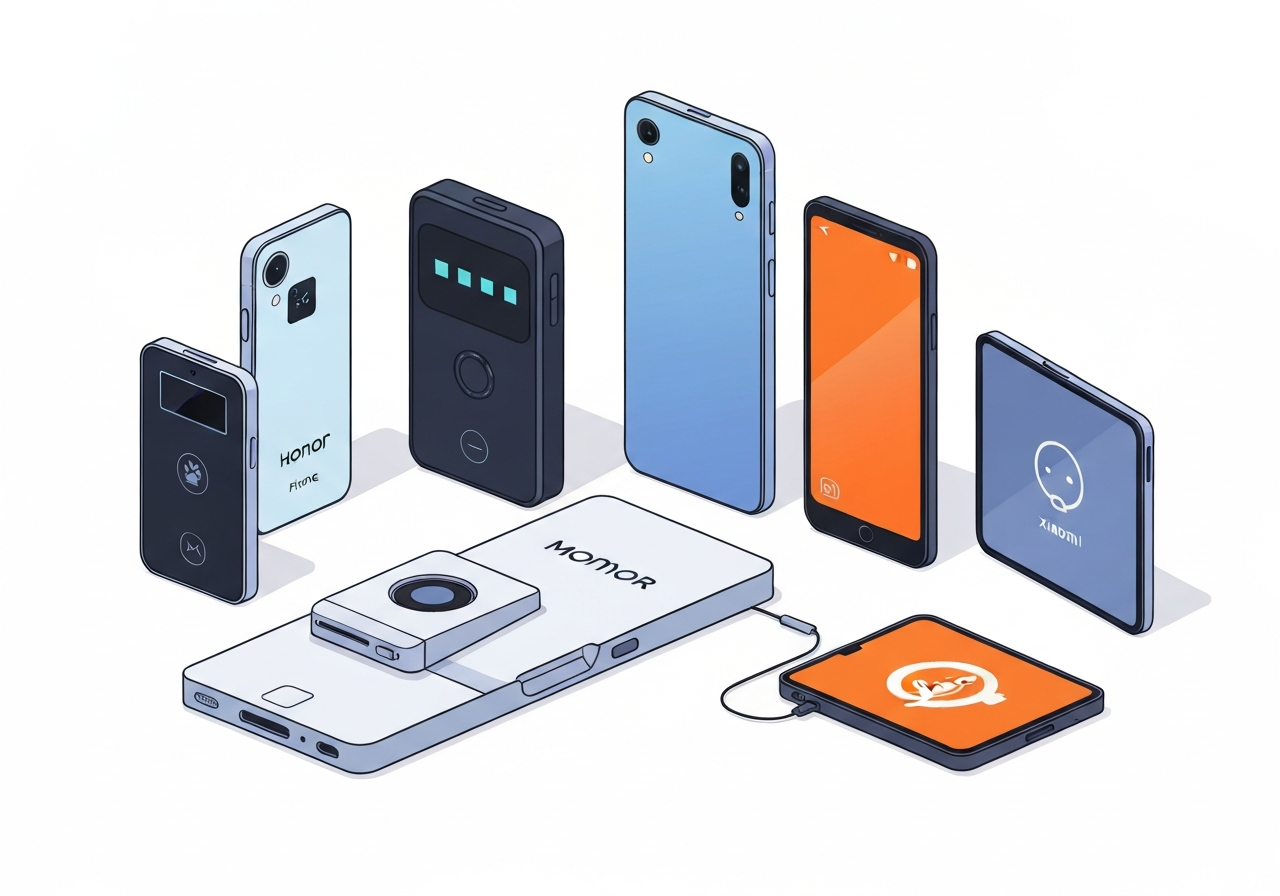
Lead: Mobile World Congress (MWC) 2026 opened its program on March 2 in Barcelona and runs through March 5, and manufacturers wasted no time unveiling hardware and concepts. Highlights so far include Honor’s teased Robot Phone and a humanoid robot, Xiaomi’s global rollout of the 17 Ultra plus a Leica‑branded Leitzphone, and a string of new tablets and accessories. Many of the devices emphasize camera innovation, battery chemistry and even integrated robotics, with prices and regional availability varying by model.
Key Takeaways
- MWC 2026 runs March 2–5 in Barcelona; early product reveals preceded the official start.
- Honor showed a Robot Phone with a 200MP primary sensor and a retractable camera module on a 4‑degree‑of‑freedom gimbal; company says the gimbal supports three‑axis stabilization and the phone will ship later in 2026.
- Honor also presented a humanoid Honor Robot intended for industrial and domestic roles, plus the Magic V6 foldable (Snapdragon 8 Elite Gen 5, up to 16GB RAM, 512GB storage) and the 12.3″ MagicPad 4 (4.8mm thin, 10100mAh battery).
- Xiaomi announced the global launch of the 17 Ultra (1″ 50MP main sensor, 200MP tele module, 6,000mAh battery) starting at £1,299 (~$1,750) in Europe, and revealed a Leica Leitzphone by Xiaomi priced at €1,999 (~$2,362).
- Xiaomi added two tablets (Pad 8 and Pad 8 Pro, both 5.75mm and 485g, 9,200mAh), a 5,000mAh UltraThin magnetic power bank (6mm), and the Xiaomi Tag tracker with Apple Find My and Google support.
- Tecno previewed a modular smartphone concept that can be as thin as 4.9mm using magnetic modules (10 module types announced), dubbed Modular Magnetic Interconnection Technology.
Background
MWC in Barcelona has long been the industry’s premier platform for mobile launches, concept devices and carrier announcements; manufacturers frequently time international reveals for the show to reach press and partners in one concentrated week. In recent years MWC has also become a venue for companies to showcase AI integrations, battery advancements and camera systems that aim to differentiate flagships beyond raw processor performance. The 2026 event continues that pattern, with multiple firms emphasizing computational photography and new form factors, including robotics that blur the line between consumer electronics and service hardware.
Trade shows like MWC serve multiple audiences: carriers and distributors evaluate devices for regional launches, reviewers get hands‑on time to assess real‑world behavior, and vendors use the spotlight to frame product narratives for the year ahead. That context matters for what gets shown: some devices debut as prototypes or region‑limited models, while others signal broader strategy—Xiaomi’s continued partnership with Leica, for example, indicates a sustained push into premium camera phones.
Main Event
Honor’s most talked‑about reveal is the Robot Phone, which combines a conventional smartphone with a mechanically mobile camera module. The unit houses a camera on a 4‑degree‑of‑freedom gimbal that can tuck into a rear compartment when unused; in demonstrations the module moved expressively to music and tracked gestures. Honor confirmed the phone’s primary camera uses a 200‑megapixel sensor and that software modes will include AI object tracking and a Super Steady Video mode leveraging the gimbal and electronic stabilization.
Alongside the Robot Phone, Honor staged a choreographed introduction of an actual humanoid robot intended for both industrial and household scenarios. The company framed the robot as a platform that can perform tasks across sectors, though it did not disclose broad commercial deployment timelines during the early reveal. Honor also refreshed its foldable line with the Magic V6: the white variant measures 8.75mm folded and 4.0mm open (other colors slightly thicker), and the spec sheet includes Snapdragon 8 Elite Gen 5, 16GB RAM, 512GB storage, and a multi‑camera array with two 50MP sensors plus a 64MP telephoto.
Xiaomi used MWC to push the 17 Ultra onto the global stage after a December China debut. The 17 Ultra centers on a 1‑inch 50MP main sensor paired with a f/1.67 lens, a 200MP 1/1.4″ telephoto module and a 50MP ultrawide, plus a manual zoom ring. The model carries a 6.9‑inch 120Hz OLED display with a 3,500‑nit peak and a 6,000mAh silicon‑carbon battery; European pricing starts at £1,299. In parallel Xiaomi launched the Leica Leitzphone by Xiaomi, which shares core hardware with the 17 Ultra but adds Leica styling, a Leica camera UI and dedicated controls, with launch price set at €1,999.
Beyond phones, Xiaomi revealed two thin tablets—the Pad 8 and Pad 8 Pro—both 5.75mm thick and 485g with 9,200mAh batteries; the Pro uses a Snapdragon 8 Elite while the standard Pad uses a Snapdragon 8s Gen 4. The company also showed accessories including a 5,000mAh UltraThin Magnetic Power Bank (6mm) and a Xiaomi Tag tracker designed to integrate with Apple and Google locating services.
Analysis & Implications
Robotics and mobile convergence: Honor’s Robot Phone and the companion humanoid spotlights indicate a strategic bet on physical motion and tangible interaction as product differentiators. If the Robot Phone’s gimbal and AI tracking work robustly in consumer hands, such mechanical creativity could spur rival designs blending sensors with actuation. However, mechanical complexity adds cost, repair considerations and potential reliability tradeoffs compared with purely software‑driven solutions.
Camera differentiation remains a major premium lever. Xiaomi’s continued Leica collaboration and large‑sensor flagships reflect manufacturers’ push to justify higher price points through imaging capability rather than only silicon upgrades. The Leitzphone’s Leica UI and physical controls target enthusiasts willing to pay a substantial premium—€1,999 positions it more as a photography tool than a mass‑market handset.
Battery chemistry and design tradeoffs are emerging as marketing points. Honor’s dual battery specifications (6660mAh international vs. >7,000mAh China) and silicon content percentages, plus Xiaomi’s silicon‑carbon pack on the 17 Ultra, show vendors experimenting with materials and capacity to extend life without dramatically increasing size. These choices will matter for regional buyers and for carriers that value device longevity for enterprise and consumer programs.
Concept modularity from Tecno suggests a continued appetite for physical customization, but modular systems have historically struggled with mainstream adoption. Magnet‑based module ecosystems can reduce friction versus mechanical latches, yet developers must make compelling modular accessories and a long‑term roadmap to avoid fragmenting support and manufacturing complexity.
Comparison & Data
| Device | Main camera | Battery | Chip | Price (launch) |
|---|---|---|---|---|
| Honor Robot Phone | 200MP primary, 4‑DOF gimbal, 3‑axis stabilization | Not disclosed | Not disclosed | Planned 2026 launch (TBD) |
| Honor Magic V6 | Two 50MP + 64MP tele, 20MP cover selfie | International 6660mAh; China >7000mAh | Snapdragon 8 Elite Gen 5 | Not yet announced |
| Xiaomi 17 Ultra | 1″ 50MP main, 200MP tele (1/1.4″), 50MP ultrawide | 6,000mAh (silicon‑carbon) | Snapdragon 8 Elite Gen 5 | £1,299 (~$1,750) |
| Leica Leitzphone by Xiaomi | 1″ 50MP main, Leica UI & controls | 6,000mAh (shared platform) | Snapdragon 8 Elite Gen 5 | €1,999 (~$2,362) |
| Xiaomi Pad 8 / Pad 8 Pro | Tablet cameras (13MP rear typical) | 9,200mAh | Pad 8: Snapdragon 8s Gen 4; Pad 8 Pro: Snapdragon 8 Elite | Not specified |
The quick table above highlights how manufacturers are differentiating across optics, battery chemistry and pricing tiers. While absolute performance will depend on software optimization and regional variants, the data shows a split between photography‑led premium pricing (Leitzphone) and more broadly balanced flagship hardware (17 Ultra).
Reactions & Quotes
“We aimed to marry mechanical mobility with smartphone imaging to offer new expressive possibilities,”
Honor (company statement at MWC)
Honor framed the Robot Phone as an experiment in combining movement and computational photography; the company emphasized AI tracking and stabilization as core features but left commercial details sparse.
“The Leica collaboration focuses on user controls and a simplified camera UI for photographers,”
Xiaomi / Leica (press release)
Xiaomi and Leica presented the Leitzphone as a niche, photography‑first product, selling the interface and tactile controls as part of the premium experience that justifies the higher price point.
Unconfirmed
- Exact global release dates and pricing for the Honor Robot Phone and Honor MagicPad 4 beyond “later in 2026” have not been confirmed by Honor.
- Xiaomi’s announcement left U.S. availability of the 17 Ultra and the Leitzphone unclear; European launch windows were specified but U.S. retail plans were not.
- Long‑term reliability and repairability of the Robot Phone’s moving camera module remain unproven outside demo units.
Bottom Line
MWC 2026’s early slate reinforces two clear threads: imaging is still a primary battleground for premium phones, and vendors are experimenting with mechanical innovation to stand out. Honor’s Robot Phone brings a novel, physical approach to camera interaction that could create new use cases if it ships reliably at scale, while Xiaomi’s Leica partnership doubles down on camera‑centric premium pricing and user experience polish.
For buyers, the takeaway is that 2026 flagships will increasingly sell on features beyond raw chipset performance—sensor size, mechanical controls, battery chemistry and ecosystem positioning will shape value. Reviewers and carriers will be watching real‑world durability, software processing quality and regional availability as the week of MWC unfolds and hands‑on units reach reviewers.
Sources
- Engadget — press coverage and on‑the‑ground reporting (Mat Smith)
- MWC / GSMA — official event information (organizer)