
Lead
In late February–early March 2026, Netflix CEO Ted Sarandos walked away from a proposed $73 billion purchase of major Warner Bros. Discovery assets after months of competition and political scrutiny in Washington, D.C. Negotiations included high-stakes bids from Paramount Skydance, a collapse in Netflix’s market value and targeted hearings on antitrust and content bias. One unexpected episode — widely reported on Capitol Hill as the “Tampon Incident” at Netflix’s Los Angeles campus — became a touchpoint for Republican skepticism and is now cited as one factor in the deal’s political resistance. The deal’s end combined economics, regulatory risk and heightened partisan concerns about corporate culture and content.
Key Takeaways
- Netflix announced it abandoned the approximately $73 billion bid for large portions of Warner Bros. Discovery in early March 2026 after an extended bidding war and political pushback.
- Paramount Skydance, backed by David Ellison and family wealth tied to Larry Ellison, raised a competing offer to roughly $80.5 billion, increasing pressure on Netflix.
- During the takeover effort Netflix’s market capitalization slid by about $200 billion, a loss investors found unacceptable as the company is publicly traded.
- Senate and House Republican scrutiny — including a Senate Judiciary antitrust subcommittee session led by Sen. Mike Lee — intensified concerns about market concentration.
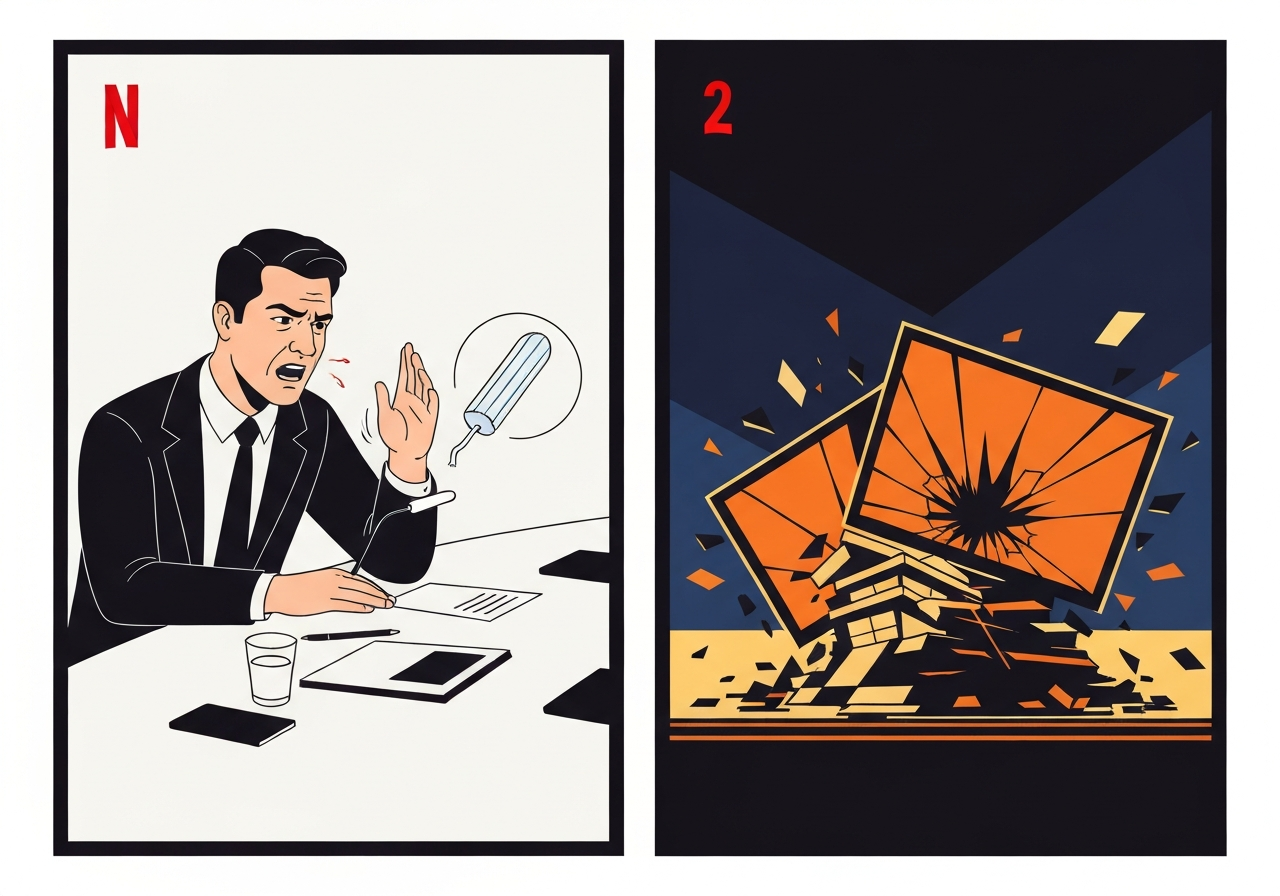
- A congressional visit to Netflix’s headquarters, during which a GOP lawmaker reported seeing tampons available in a men’s restroom, became a widely circulated anecdote cited by conservatives questioning Netflix’s cultural stance.
- Netflix and CEO Ted Sarandos argued the acquisition was optional at the right price and emphasized competitive pressures from varied platforms, while critics focused on perceived political and cultural bias in programming.
Background
The proposed transaction to move large parts of Warner Bros. Discovery into Netflix ownership followed months of aggressive outreach, hearings and private negotiations. Netflix’s initial plan was described publicly as a $73 billion purchase that would combine a major legacy studio and streaming assets with one of the world’s largest subscription platforms. Throughout the talks, Paramount Skydance — financially backed by David Ellison and linked to his father Larry Ellison’s substantial wealth — signaled willingness to outbid Netflix, eventually offering about $80.5 billion.
As the bidding escalated, Netflix faced mounting regulatory and political attention. Lawmakers and state attorneys general raised antitrust questions over potential concentration in streaming, while cultural critics and conservative groups argued that Netflix’s content lineup skews toward progressive social themes. Those concerns were amplified by public-facing affiliations and donations associated with some of Netflix’s leadership and board members, which opponents said reinforced perceptions about the company’s political orientation.
Main Event
In the months leading to the collapse of the deal, hearings and one-on-one meetings framed the narrative on Capitol Hill. In late February 2026 Ted Sarandos testified before a Senate Judiciary antitrust subcommittee chaired by Republican Sen. Mike Lee, where members probed whether the deal would lessen competition in streaming and concentrated influence over cultural content. Following that hearing, Sarandos and other Netflix executives launched a targeted outreach effort to Republican lawmakers and administration officials seeking to allay concerns.
During one congressional delegation visit to Netflix’s Los Angeles headquarters — an annual trip when lawmakers tour Hollywood firms around the Grammy season — a GOP lawmaker reported encountering tampons made available in a men’s restroom. That discovery, reported to several staffers and subsequently publicized on Capitol Hill, was cited by some Republicans as evidence of Netflix’s cultural priorities and corporate inclusivity practices. People close to the events said the anecdote resonated with skeptical lawmakers and became shorthand in internal conversations.
Simultaneously, Netflix continued to weigh financial considerations. The company’s stock and overall market valuation suffered during the drawn-out takeover process, with reports indicating an approximate $200 billion decline in market value since the talks began. Executives told investors and the board that an escalating bidding war — particularly against a well-capitalized bidder like Paramount Skydance — would not justify further value erosion for Netflix’s public shareholders.
On the day Netflix announced it would not proceed, company statements emphasized that the agreement was not a must-have at any price. Observers say the decision reflected a complex mix of rising acquisition cost, intensifying regulatory and political scrutiny, and internal judgment calls by Netflix leadership about shareholder interests.
Analysis & Implications
The deal’s breakdown illustrates how corporate M&A, public policy and cultural politics can intersect in the 2020s. Purely financial metrics — competing offers and Netflix’s market-cap losses — provided a clear commercial rationale to step back. But in this case, political dynamics added a distinct layer of execution risk that could have complicated regulatory approval and prolonged litigation or enforcement scrutiny.
For Republicans and conservative advocacy groups, the tampon anecdote offered a tangible example to connect broader complaints about programming bias, corporate governance and inclusivity policies. Whether the small, symbolic incident would have been decisive on its own is doubtful; nonetheless, in a polarized confirmation and antitrust environment, symbolic events can crystallize opposition and harden political rhetoric that influences administrative decisions.
On the other hand, Netflix framed its position as a defensive commercial move: acceding to a much higher bidding level would have further damaged shareholder value. The company also stressed that streaming competes with a range of digital platforms, including social media and ad-supported video, complicating simple monopoly claims. Regulators, however, tend to assess market power within defined markets — here, subscription streaming and studio content — meaning the political narrative and economic analysis both mattered.
Internationally and across the media industry, the episode may have three consequences: heightened caution among buyers when cultural or diversity practices could be framed politically, increased attention by investors to regulatory and reputational risk in content deals, and potential incentive for rivals to exploit political cleavages during competitive bidding processes.
Comparison & Data
| Party | Public Offer (approx.) | Notes |
|---|---|---|
| Netflix | $73.0 billion | Initial principal offer for large WBD assets; CEO cited shareholder limits |
| Paramount Skydance (David Ellison) | $80.5 billion | Raised competing bid backed by Ellison family financial backing |
| Netflix market value change | ~$200 billion (decline) | Reported cumulative loss in market capitalization during takeover process |
The table summarizes public figures cited in reporting: Netflix’s proposed $73 billion offer, Paramount Skydance’s roughly $80.5 billion counter, and an estimated $200 billion reduction in Netflix’s market capitalization during the process. These headline numbers framed boardroom decisions and investor scrutiny as much as the political disagreements did.
Reactions & Quotes
Lawmakers and aides described the congressional outreach and site visit as pivotal in shaping their impressions of Netflix’s corporate culture.
“This is 2026, not 2020.”
GOP staffer (reported to NYPost)
The remark, made by a Republican staffer with direct knowledge of the outreach, was used by aides to underscore frustration that certain corporate practices felt out of step with conservative expectations.
“This transaction was always a ‘nice to have’ at the right price, not a ‘must have’ at any price.”
Ted Sarandos (statement to investors, reported)
Sarandos’ comment, echoed in Netflix communications, framed the decision as financial and strategic rather than solely political. Company officials emphasized shareholder interests and the escalating cost of the takeover.
“Let’s just say the chairman was pretty disturbed.”
Source close to Rep. Jason Smith (reported)
That observation described Rep. Jason Smith’s reaction after visiting Netflix’s offices; the anecdote spread among staffers and lawmakers and became known informally as the “Tampon Incident.” Netflix declined to comment to reporters on the visit.
Unconfirmed
- The precise degree to which the restroom incident alone altered specific White House or Justice Department calculations is not independently verified; it functioned as one anecdote within a broader political conversation.
- Attribution that Susan Rice’s podcast comments were a decisive factor in losing White House support is reported but not independently corroborated in public regulatory filings.
- The internal deliberations and votes among Netflix’s board and Paramount Skydance’s financing arrangements beyond public reporting remain incompletely documented in available accounts.
Bottom Line
The collapse of Netflix’s bid for Warner Bros. Discovery reflected a tangled mix of commercial reality and political risk. Price dynamics and a competing $80.5 billion offer were central economic drivers, while the reported $200 billion decline in market value constrained Netflix’s appetite to escalate the auction.
At the same time, the “Tampon Incident” became a vivid example of how small workplace signals can be amplified in a partisan environment and folded into antitrust and cultural arguments. Future mergers in media and technology will likely be judged not only on price and market structure but also on how corporate practices are perceived in Washington and by the public.
Sources
- New York Post (news report)