
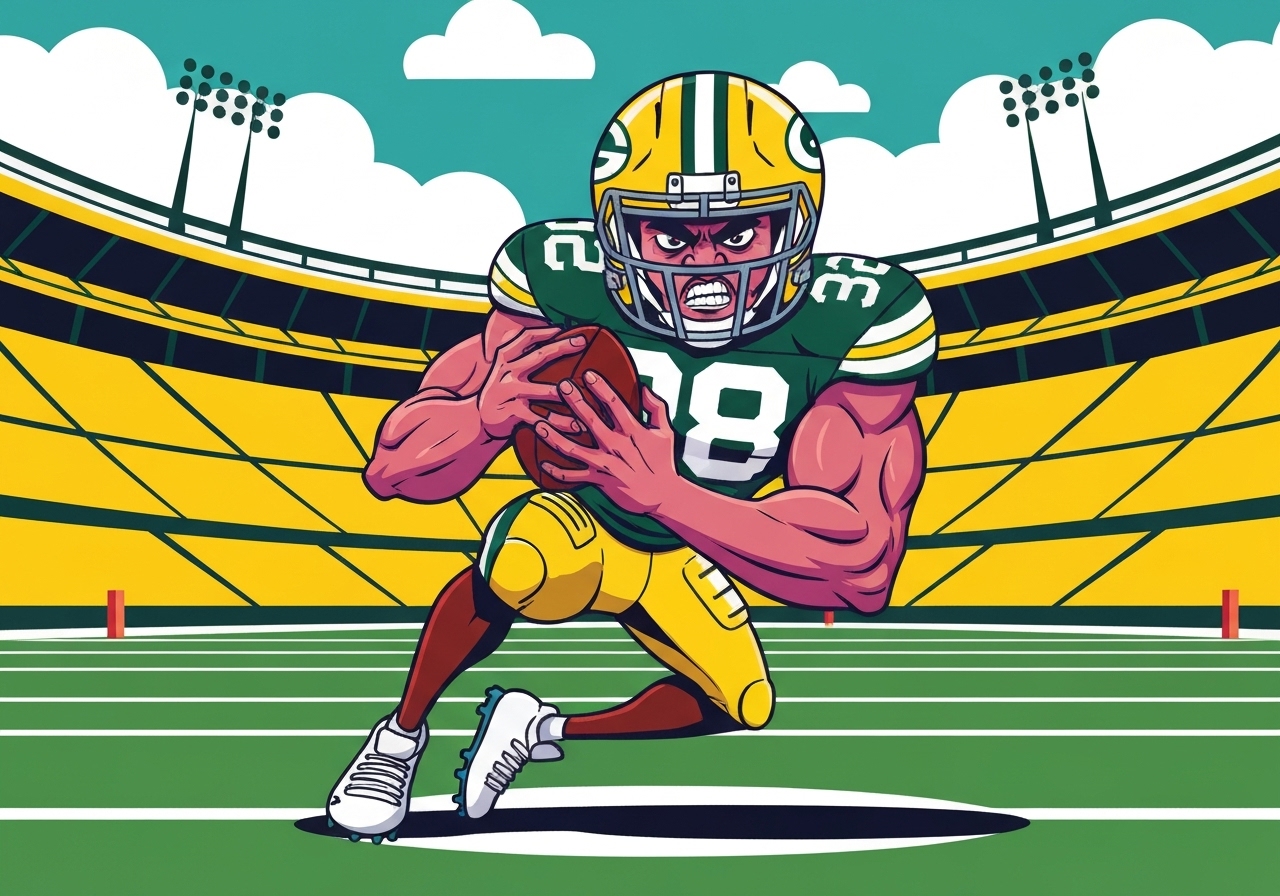
Lead
On Sept. 7, 2025 at Lambeau Field, Micah Parsons made his Green Bay debut and helped the Packers beat the Detroit Lions 27-13. Traded less than 10 days before the matchup, Parsons played 29 of 65 defensive snaps while recovering from a back issue and logged three pressures and a fourth-quarter sack. His presence altered Detroit’s protection plans and contributed to a turnover that shifted momentum. The result: Green Bay opened the season 1-0 and showcased a pass rush upgrade that could change divisional dynamics.
Key Takeaways
- Micah Parsons played 29 of 65 defensive snaps (about 44.6%) in his Packers debut while working back from a back injury.
- Next Gen Stats recorded three pressures and one sack for Parsons; his final sack was tracked at 18.47 mph on the clock.
- Parsons’ pressure on Jared Goff late in the second quarter helped force a quick throw that safety Evan Williams intercepted.
- Green Bay defeated Detroit 27-13 at Lambeau Field, handing the Packers a statement home opener and a 1-0 start.
- Packers defensive coordinator Jeff Hafley used Parsons in packages that created mismatches, including a look that freed up Lukas Van Ness and Rashan Gary for a shared sack.
- GM Brian Gutekunst and coach Matt LaFleur signaled the trade addressed an inconsistent pass rush from last season.
- Coach LaFleur and teammates noted Parsons’ immediate on-field influence despite limited snaps and a short acclimation window.
Background
Micah Parsons entered the NFL in 2021 and developed into one of the league’s most disruptive defensive players. Less than one and a half weeks before Green Bay’s first Week 1 home game in seven years, the Packers completed a trade to add Parsons to a defense that ranked sixth in scoring defense and sixth in yards allowed per game, while placing fourth in takeaways the prior season. The move was aimed at correcting a pass rush the front office described as uneven, and it came alongside a coaching staff tweak that replaced the defensive line coach last offseason with former Patriots coordinator DeMarcus Covington.
The acquisition required rapid onboarding: Parsons missed Packers training camp after the trade, arrived with a recent back issue, and needed to learn Jeff Hafley’s terminology and packages quickly. Lambeau’s presentation of Parsons as the final player introduced before the tunnel was both a cultural moment and an immediate signal that Green Bay intended to build its defense around his disruption. For opponents, the short-term question was how teams would allocate extra protection chips and slide schemes; for Green Bay, it was how to use Parsons’ talent without overtaxing a player returning to game shape.
Main Event
Packers coach Matt LaFleur arranged for Parsons to be announced as the last defensive player during pregame introductions, producing a loud response from the Lambeau crowd. Parsons’ first snap came on Detroit’s first third down — third-and-7 at their 27 — where he initially attacked wide before clearing inside and pressuring Jared Goff, forcing a short completion for a two-yard loss and a punt. That opening sequence set a tone: even in limited reps, Parsons demanded attention from Detroit’s line calls and slide protections.
Late in the second quarter on a third-and-7 from Green Bay’s 16, Parsons beat Penei Sewell inside on a one-on-one rush while teammate Colby Wooden attacked the right guard. Parsons’ pressure sped Goff’s release and allowed safety Evan Williams to intercept the throw. The play illustrated how Parsons’ one-on-one win creation created coverage advantages behind him and directly produced a takeaway.
Parsons recorded his lone sack in the fourth quarter, working through traffic from the right side to chase and bring down Goff. Next Gen Stats timed that close-down at 18.47 mph while Parsons estimated roughly 21 mph. Beyond the three pressures and a sack on the box score, Parsons frequently occupied blocks, opened lanes for teammates (including a tackle-for-loss by Wooden), and altered opposing game plans.
Despite the splash plays, Parsons’ snap count was limited because of conditioning and recovery from his back issue; LaFleur said the 29 snaps were more than expected. Parsons left the game noticeably winded late and acknowledged he felt physically taxed, but he said he expects his role to expand and aimed to be at full capability by the end of September.
Analysis & Implications
Strategically, Parsons’ arrival converts Green Bay’s front into a classic pick-your-poison problem. Opponents must decide whether to chip or slide protection toward Parsons and accept free rushers elsewhere, or to leave Parsons one-on-one and risk his speed and slant moves. That choice should free up Rashan Gary, Devonte Wyatt, Colby Wooden and others — increasing the unit’s collective effectiveness beyond Parsons’ individual snaps.
From a longer-term lens, Parsons shortens the gap between Green Bay and playoff-caliber pass rush units around the league. Opposing offensive coordinators will need to prepare new game plans for Lambeau and on the road; the Packers may leverage Parsons’ presence situationally early in games as he rebuilds endurance and playbook familiarity. If Parsons reaches full snaps by late September as he projects, Green Bay’s defensive metrics could improve further from an already-top-10 base.
There are also roster and schematic consequences. Parsons’ skill set enables hybrid alignments — stand-up edge, interior stunts, and situational blitzes — that give Hafley more schematic flexibility. That flexibility could create mismatches throughout the NFC North and make Green Bay harder to attack on third downs and in short-yardage passing situations. Conversely, overplaying Parsons while he regains health risks injury setbacks or late-game fatigue, so the staff must balance usage and recovery.
Comparison & Data
| Metric | Packers (previous season) | Parsons in Week 1 |
|---|---|---|
| Defensive snaps (Parsons) | — | 29 of 65 (44.6%) |
| Pressures (Parsons) | — | 3 (Next Gen Stats) |
| Recorded sack speed | — | 18.47 mph (NGS) |
| Team defensive ranks | 6th scoring, 6th yards allowed, 4th takeaways | Season opener win, 27-13 vs. DET |
The table highlights the immediate, measurable contributions Parsons provided in limited action and places them beside the unit’s pre-existing strengths. Those contextual numbers show the Packers were already strong in standard defensive metrics; Parsons’ addition is likely to amplify those results by creating more pressure and forcing simpler starts for coverage players.
Reactions & Quotes
Teammates and coaches framed Parsons’ debut as both a spectacle and a functional upgrade. Matt LaFleur emphasized the on-field effect in short form and praised the crowd’s response.
He definitely has an aura about him.
Matt LaFleur, Packers head coach
Safety Xavier McKinney, who shifted spot in the pregame introductions, downplayed any lineup theatrics and highlighted Parsons’ impact on the unit’s confidence and coverage play.
I ain’t trippin — as long as we play like we did today, I’m good.
Xavier McKinney, Packers safety
After the pressure that led to the interception, Evan Williams described how Parsons’ presence shortened quarterbacks’ decision windows and helped create turnover opportunities.
Seeing No. 1 run on the field kind of gave me confidence — it’s time to guard for not that long because the ball’s going to come out.
Evan Williams, Packers safety
Unconfirmed
- Projected timeline for Parsons being “full go” by the end of September is the player’s assessment and is not independently verified.
- Long-term snap allocation across the season and exact package frequency for Parsons remain subject to coaching decisions and in-game health management.
- The full cap and roster ripple effects from the trade over the season are still being evaluated and will depend on future transactions and injury developments.
Bottom Line
Micah Parsons’ first game in Green Bay was a high‑impact sample rather than a full audition: limited snaps produced tangible returns in pressures, a sack, and a turnover-inducing rush that altered Detroit’s play-calling. His presence already forces opponents to alter protection schemes and creates opportunities for teammates — a multiplier effect that matters more than raw snap totals.
For the Packers, the trade addresses a targeted weakness from last year and immediately elevates both schematic flexibility and late-down pass-rush potency. The coaching staff will need to manage his workload carefully while he regains full conditioning, but if Parsons reaches his projected availability, Green Bay’s defense could be measurably better by the end of September and difficult to gameplan against in the NFC North.
Sources
- The Athletic — sports journalism reporting and game coverage
- Green Bay Packers — official team site and press releases
- Next Gen Stats (NFL) — play-by-play speed and pressure data
- CBS Sports / CBS broadcast — game broadcast and sideline reporting