
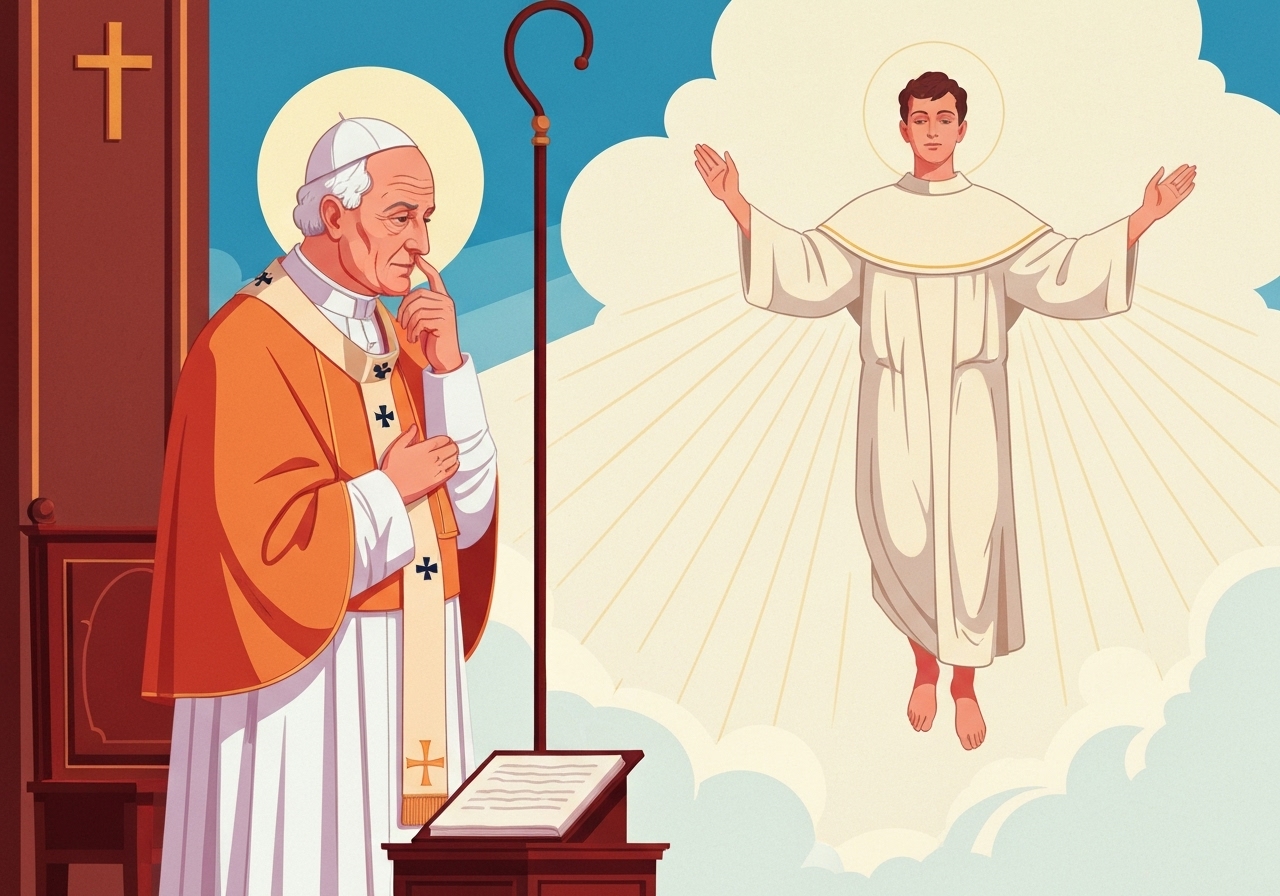
— Pope Leo XIV on Sunday canonized Carlo Acutis, a 15-year-old computer enthusiast who died in 2006, in an open-air Mass at St. Peter’s Square before an estimated 80,000 people. The Vatican presented Acutis — known for a multilingual website cataloguing Eucharistic miracles and nicknamed “God’s influencer” — as the first saint of the millennial generation, a figure meant to connect younger Catholics with traditional piety in the digital age. The pope also canonized Pier Giorgio Frassati (1901–1925), another youthful Italian figure celebrated for charity and faith. The ceremonies, delayed after Pope Francis’ death in April 2025, underscore a Vatican effort to showcase relatable role models for contemporary believers.
Key Takeaways
- Canonization date and place: Carlo Acutis was declared a saint by Pope Leo XIV on Sept. 7, 2025, in St. Peter’s Square before roughly 80,000 attendees.
- Acutis’ profile: Born May 3, 1991, in London and raised in Milan, he died of acute leukemia in October 2006 at age 15 and is entombed in Assisi.
- Digital legacy: He created a professional-grade, multilingual website documenting Eucharistic miracles—earning the popular label “God’s influencer.”
- Institutional support: The Mass included about 36 cardinals, 270 bishops and hundreds of priests, signaling strong hierarchical endorsement.
- Popular devotion: Millions of pilgrims have visited Acutis’ tomb in Assisi; parts of his heart have circulated as relics in pilgrimage displays.
- Parallel canonization: Pier Giorgio Frassati (1901–1925), noted for service to the poor and youthful evangelization, was canonized the same day.
- Vatican aim: Church leaders frame Acutis as a model for disciplined use of technology combined with Eucharistic devotion amid declining belief in the real presence among some Catholics.
Background
Carlo Acutis was born May 3, 1991, in London to an affluent but not particularly observant Catholic family and was raised in Milan after infancy. By early adolescence he immersed himself in computer science, studying advanced programming texts and building a sophisticated, multilingual website that catalogued Eucharistic miracles recognized by the Church. His deep personal devotion was visible in daily prayer and Eucharistic adoration; contemporaries also noted strict personal limits on screen time, reportedly allowing himself roughly one hour of video games per week. After a sudden diagnosis of acute leukemia in October 2006, he died within days at 15 and was laid to rest in Assisi, a city long associated with St. Francis.
In the years since his death, Acutis’ tomb in Assisi has become a major pilgrimage site for young Catholics, many drawn to the image of an ordinary teenager who combined technological skill with traditional devotion. Church officials and grassroots organizers have promoted his story as a practical model — someone who used the internet to foster devotion rather than as an end in itself. The campaign to advance his cause accelerated under Pope Francis, who argued that the contemporary Church needed accessible examples to engage younger generations living in a digital environment. The canonization process that culminated on Sept. 7 was briefly postponed after Pope Francis’ death in April 2025 and resumed under Pope Leo XIV.
Main Event
The canonization Mass took place in St. Peter’s Square and drew an estimated 80,000 people, including many millennials and families with young children. Vatican organizers said roughly 36 cardinals and 270 bishops concelebrated along with hundreds of priests, reflecting widespread institutional backing for both Acutis and Pier Giorgio Frassati. Pope Leo XIV praised the new saints as people who had turned their lives into “masterpieces” by dedicating them to God, urging especially young people not to waste their lives outside God’s plan.
Observers noted the visual contrast between traditional liturgy and modern devotional imagery: Acutis’ tomb in Assisi — where he is displayed in casual clothes and sneakers — has already shaped popular piety, and his online project is cited as a key element of his spiritual legacy. Pilgrims lined the square early and many spoke of seeing in Acutis a figure who navigated the promises and perils of digital life with simplicity and devotion. The pope used the occasion to highlight Eucharistic adoration at a moment when surveys indicate many Catholics do not affirm belief in the real presence in the Eucharist.
Also canonized that day, Pier Giorgio Frassati (1901–1925) was remembered for his energetic charity, his work with the poor, and his outreach to friends and peers. Frassati’s sainthood provides a complementary model: vigorous social engagement rooted in faith, reached in youth and cut short by his death from polio at 24. Together, the two canonizations were presented as part of a pastoral strategy to offer contemporary Catholics several youthful exemplars of holiness.
Analysis & Implications
The Vatican’s decision to elevate Acutis signals a deliberate pastoral pivot: presenting a tech-fluent, media-aware youth as a model aims to close the cultural gap between institutional Catholicism and younger generations. Church authorities appear to be emphasizing how disciplined personal practice — Eucharistic devotion, prayer and measured online engagement — can coexist with digital competence. That framing speaks to broader concerns inside the Church about retention and the cultivation of belief among people raised with ubiquitous screens.
Canonizing a figure associated with an internet project is also a symbolic reclamation of digital space for religious practice. Acutis’ website documenting Eucharistic miracles both codified devotion and demonstrated that well-executed online initiatives can amplify traditional doctrine to global audiences. For dioceses and youth ministers, the saint’s example may inform catechetical strategies and digital outreach programs aimed at shaping how faith is presented on social platforms.
There are political and institutional dimensions as well. The presence of dozens of cardinals and hundreds of bishops at the Mass is a public sign that the hierarchy supports these contemporary models of sanctity. That backing can translate into parish-level priorities — more promotion of Eucharistic adoration, curated digital content, and pilgrim programs — potentially reshaping pastoral budgets and training. Internationally, the canonizations may boost Italy’s pilgrimage economy in places like Assisi and draw renewed attention to Italy’s capacity to supply globally resonant Catholic figures.
Comparison & Data
| Person | Born | Died | Age at death | Known for |
|---|---|---|---|---|
| Carlo Acutis | May 3, 1991 | Oct. 2006 | 15 | Website documenting Eucharistic miracles; youthful devotion |
| Pier Giorgio Frassati | 1901 | 1925 | 24 | Service to poor; charity; evangelization among peers |
The table highlights contrasts: Acutis is known for a digital project and a very short life shaped by modern schooling and technology, while Frassati’s ministry was rooted in early 20th-century charity work. Both were elevated as accessible examples for young Catholics, but each addresses different cultural challenges — digital engagement versus direct social action. Pilgrimage numbers to Assisi and related relic tours have swelled since Acutis’ beatification, signaling strong popular interest that often outpaces institutional metrics of youth participation in parish life.
Reactions & Quotes
Before and after the Mass, pilgrims and clergy offered rapid, sometimes emotional responses linking Acutis’ example to contemporary life.
“They made masterpieces of their lives by dedicating them to God,”
Pope Leo XIV (homily)
Pope Leo used the phrase to frame the day’s saints as invitations to live deliberately toward spiritual ends.
“He shows how a young person could use technology to point to God rather than away from him,”
Matthew Schmalz, Professor of Religious Studies, College of the Holy Cross (academic)
Schmalz’s comment positions Acutis as a template for Catholic engagement with digital culture, stressing intentionality over mere presence online.
“It is important to have him as an influencer on social networks,”
Leopoldo Antimi, pilgrim from Rome (lay Catholic)
Many pilgrims framed the canonization in social-media terms, adopting the language of influence to describe spiritual inspiration in a digital era.
Unconfirmed
- Precise cause of Acutis’ apparent bodily preservation: scientific explanations for the state of his remains have not been publicly verified in peer-reviewed research.
- Exact attendance figures: the estimate of 80,000 people in St. Peter’s Square comes from crowd estimates provided by organizers and media and may vary between sources.
- Long-term impact on youth retention: whether Acutis’ canonization will measurably increase long-term Church engagement among millennials and Gen Z remains to be demonstrated with systematic data.
Bottom Line
Pope Leo XIV’s canonization of Carlo Acutis presents a deliberate pastoral message: the Church can recognize sanctity expressed through modern tools while reaffirming perennial practices such as Eucharistic devotion. By elevating a tech-savvy youth alongside a classic model of youthful charity in Pier Giorgio Frassati, the Vatican offered diverse pathways for young people to see holiness as achievable and relevant.
Practical effects are likely to be twofold: a surge in popular devotion and pilgrimage, especially to Assisi, and renewed institutional emphasis on digital catechesis and Eucharistic programming. Whether this strategy will translate into sustained increases in belief or participation among younger cohorts will require follow-up measurement and local pastoral adjustments.
Sources
- Associated Press (international news agency reporting on the canonization)
- PBS NewsHour (public media news organization summarizing coverage)
- Vatican Press Office (official statements and liturgical texts from the Holy See)
- College of the Holy Cross, Department of Religious Studies (academic commentary on contemporary Catholicism)