
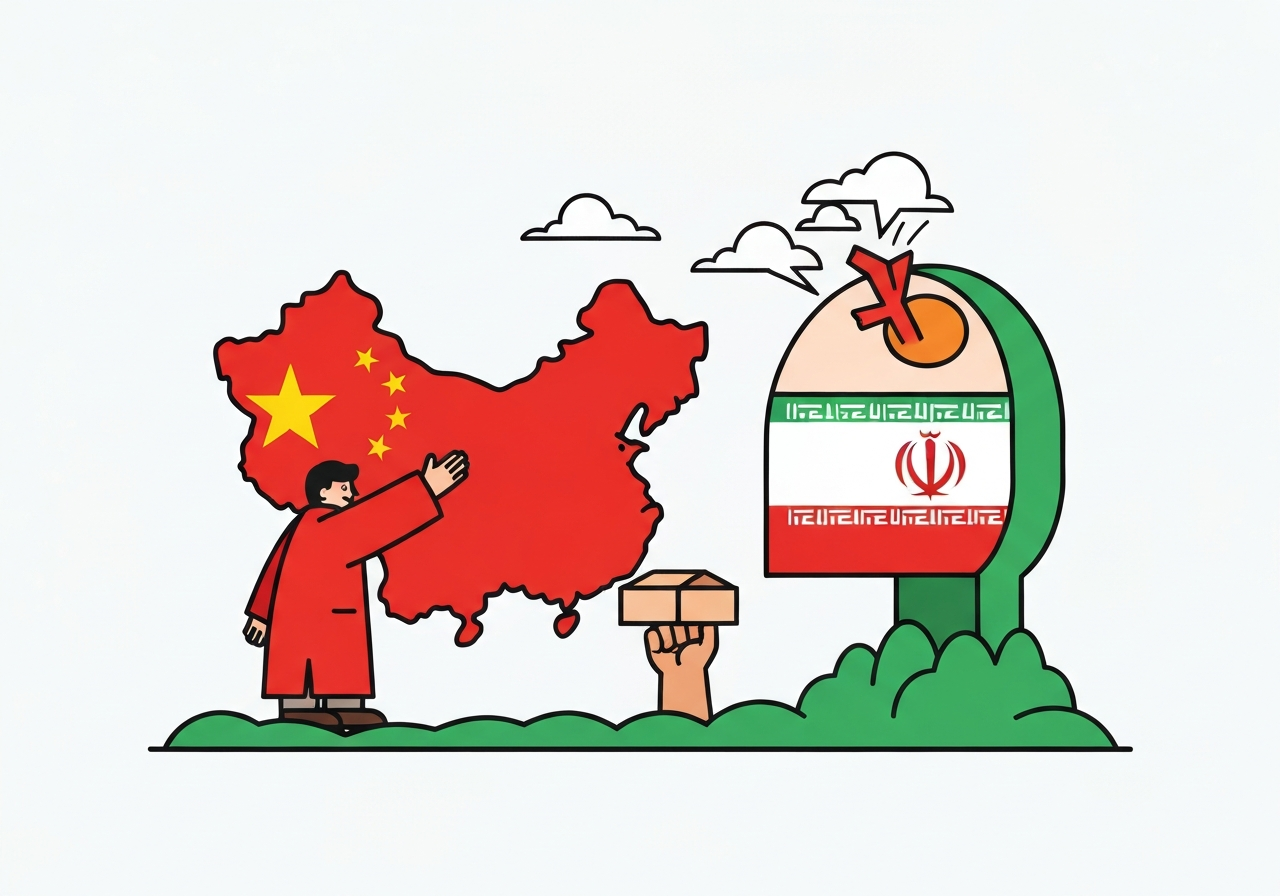
China has so far kept its distance as the United States and Israel launched heavy strikes on Iran in mid-2025, even though Tehran is one of Beijing’s most important partners. Beijing’s calculus balances historical ties and shared opposition to a Western-led order against immediate economic and strategic priorities—above all, energy security tied to Gulf oil shipments. More than 55 percent of China’s oil imports in 2025 came from the Middle East, about 13 percent from Iran, a vulnerability that places the Strait of Hormuz at the center of Beijing’s risk calculus. Despite speculation that China might provide military or matériel support to Tehran, Beijing’s public posture has been cautious and principally diplomatic.
Key Takeaways
- China has adopted a restrained public stance amid U.S.–Israeli strikes on Iran in mid-2025, urging de-escalation rather than taking sides.
- Energy exposure is central: in 2025, over 55% of China’s oil imports originated in the Middle East and roughly 13% from Iran, much of it transiting the Strait of Hormuz.
- Beijing’s 2021 25-year cooperation pact with Tehran (valued at about $400 billion) has delivered fewer projects than planned, reflecting mutual mistrust and implementation problems.
- Chinese analysts judge Iran’s regional power and resolve to be overstated, citing uneven proxy control, muted retaliation in past crises, and governance weaknesses.
- China holds strategic flexibility: it is not ideologically committed to preserving Iran’s current leadership and would prioritize uninterrupted oil flows over regime defense.
- Key triggers that could force Chinese action are a prolonged closure of the Strait of Hormuz or a drawn-out war that threatens Beijing’s energy supplies.
Background
China and Iran deepened ties in recent years on the basis of shared historical narratives and a mutual desire to challenge a Western-dominated international order. In 2021 the two governments signed a much-publicized 25-year strategic cooperation agreement, reportedly worth around $400 billion, intended to expand economic and security collaboration. Yet implementation has lagged: many envisioned infrastructure and investment projects remain unrealized, in part because Iranian officials and constituencies worry that deep economic integration would compromise Tehran’s sovereignty.
Energy considerations have long driven Beijing’s Middle East policy. Despite major investments in domestic coal, renewables, and nuclear, China remained heavily dependent on imported oil in 2025; over half of its oil imports came from the Gulf region and a significant share must pass through the Strait of Hormuz. That strategic geography makes Beijing sensitive to any military campaign that risks disrupting shipping lanes. At the same time, Chinese policymakers fear overreliance on any single supplier and have diversified supplies, including purchases from Russia which supplied more than 17% of China’s oil imports in 2025.
Main Event
As U.S. and Israeli forces escalated strikes on Iranian targets in mid-2025, Beijing issued diplomatic statements calling for restraint and respect for sovereignty while stopping short of direct condemnation of the campaign’s overall aims. Chinese foreign ministry remarks emphasized concerns about regional stability and explicitly urged all parties, including Iran, to halt military operations. That language reflected a desire to preserve ties with Gulf states as well as with Tehran.
Public and elite Chinese commentary revealed growing frustration with Iran’s behavior as a partner. Analysts cited examples from the past—muted Iranian reprisals after the killing of Qasem Soleimani in 2020 and restrained responses during an earlier 12-day conflict in June 2025—that, in Beijing’s view, exposed Tehran’s limits as a reliable strategic actor. Chinese observers also pointed to Tehran’s pattern of negotiating with Washington despite rhetorical opposition, interpreting it as inconsistency between revolutionary rhetoric and pragmatic survival.
Beijing has watched Iran’s proxy relationships with skepticism. Over the past two years, proxy formations allegedly linked to Tehran have been degraded, and Chinese commentators noted Tehran’s apparent reluctance or inability to defend allied groups effectively. Reports that Iranian officials publicly denied control over some proxies in late 2024 and the evacuation of Iranian personnel from Yemen in April 2025 reinforced Chinese doubts about Iran’s regional management and commitments.
Energy officials and strategists in Beijing stressed the overriding priority of keeping the Strait of Hormuz open. Chinese leaders privately and publicly pressed Tehran to avoid any action that would close or seriously disrupt the strait, reasoning that a prolonged choke point would threaten China’s oil supplies and force Beijing into difficult choices about intervention or deeper alignment with alternative suppliers.
Analysis & Implications
China’s reluctance to intervene militarily reflects a pragmatic calculation that balances interests, capabilities, and risks. Beijing values a stable flow of Gulf oil and a workable relationship with Gulf Arab states, while also desiring to maintain strategic distance from direct confrontation with the United States. That combination pushes China toward diplomatic activism rather than military involvement.
Beijing’s assessment of Iran as an overextended but brittle power reduces its incentive to commit: if Iran is unlikely to endure or to project credible deterrence, then costly Chinese support may produce limited returns. Chinese analysts argue that Iran’s revolutionary posture is constrained by sanctions-induced economic weakness and by internal governance problems—factors that make Tehran both unreliable as a partner and potentially open to accommodation or replacement.
Conversely, a protracted, high-intensity conflict that shuts the Strait of Hormuz or otherwise threatens Beijing’s energy imports would force a strategic reorientation. Under that scenario, China might escalate support short of deploying combat forces—through increased purchases of Iranian oil, provision of dual-use components, or technology transfers that shore up Iran’s defensive capacity—mirroring patterns observed in other theaters where Beijing sought to avoid overt confrontation while protecting core interests.
Finally, China’s calculus is affected by great-power diplomacy. A U.S.–China summit slated for late March 2026 between President Donald Trump and Xi Jinping (as reported) could offer Beijing incentive to avoid actions that might sabotage a broader detente. That diplomatic horizon acts as a restraint on impulsive regional adventures, reinforcing a preference for hedging and issue-specific diplomacy.
Comparison & Data
| Metric | Figure (2025) |
|---|---|
| Share of China’s oil imports from Middle East | >55% |
| Share of China’s oil imports from Iran | ~13% |
| China’s oil reserves (estimated) | 1.3–1.4 billion barrels (~30% of 2025 imports) |
| Russia’s share of China oil imports | >17% |
| 2021 China–Iran pact value | $400 billion (25-year strategic framework) |
These figures underscore why the Strait of Hormuz is a strategic pressure point for Beijing. While China has increased renewable capacity and diversified suppliers, the scale of oil that still depends on Gulf routes means short-term disruptions would have immediate economic and military logistics effects. The data also help explain why Beijing’s default posture is hedging—it can tolerate limited instability but not sustained blockage of shipping lanes.
Reactions & Quotes
“Relevant parties should stop military operations and avoid further escalation,”
Chinese Ministry of Foreign Affairs (official statement)
This succinct appeal framed Beijing’s public messaging: calls for de-escalation and respect for sovereignty without explicit condemnation of any single belligerent. The phrasing also signaled Beijing’s effort to maintain relationships across the Gulf.
“Iran’s combination of revolutionary rhetoric and economic weakness constrains its strategic choices,”
Niu Xinchun, China-Arab Research Institute (academic commentary)
Analysts like Niu were cited in Chinese-language commentary to explain why Beijing views Tehran as constrained by sanctions and internal pressures, making long-term military backing less attractive.
“The people of Iran are paying the price for leadership choices that led to a quagmire,”
Hu Xijin, commentator (opinion)
Prominent Chinese opinion leaders expressed pessimism about Iran’s trajectory, framing the crisis as a consequence of Tehran’s own strategic choices rather than solely external aggression.
Unconfirmed
- Reports of an assassination of Iran’s supreme leader, Ayatollah Ali Khamenei, have circulated in some summaries; those reports remain unverified and should not be treated as established fact until confirmed by multiple independent sources.
- Precise figures for how much each disrupted project from the 2021 pact would have contributed to China’s strategic position are not publicly documented and remain estimates.
Bottom Line
China’s behavior toward Iran during the 2025 strikes reflects a pragmatic hedging strategy: Beijing values its relationship with Tehran but prioritizes uninterrupted energy flows, regional stability, and the flexibility to work with future Iranian leaders. Public diplomacy has emphasized de-escalation and protection of Gulf sovereignty while avoiding commitments that might provoke direct conflict with the United States.
That posture could change if the conflict threatens global oil shipments—especially via the Strait of Hormuz—or evolves into a prolonged war that demonstrates Iranian resilience and resolve. Under those conditions, Beijing would face stark choices between protecting its energy lifelines and avoiding a deeper entanglement in a volatile regional war.
Sources
- Foreign Affairs: Why China Won’t Help Iran — longform analysis/journalism