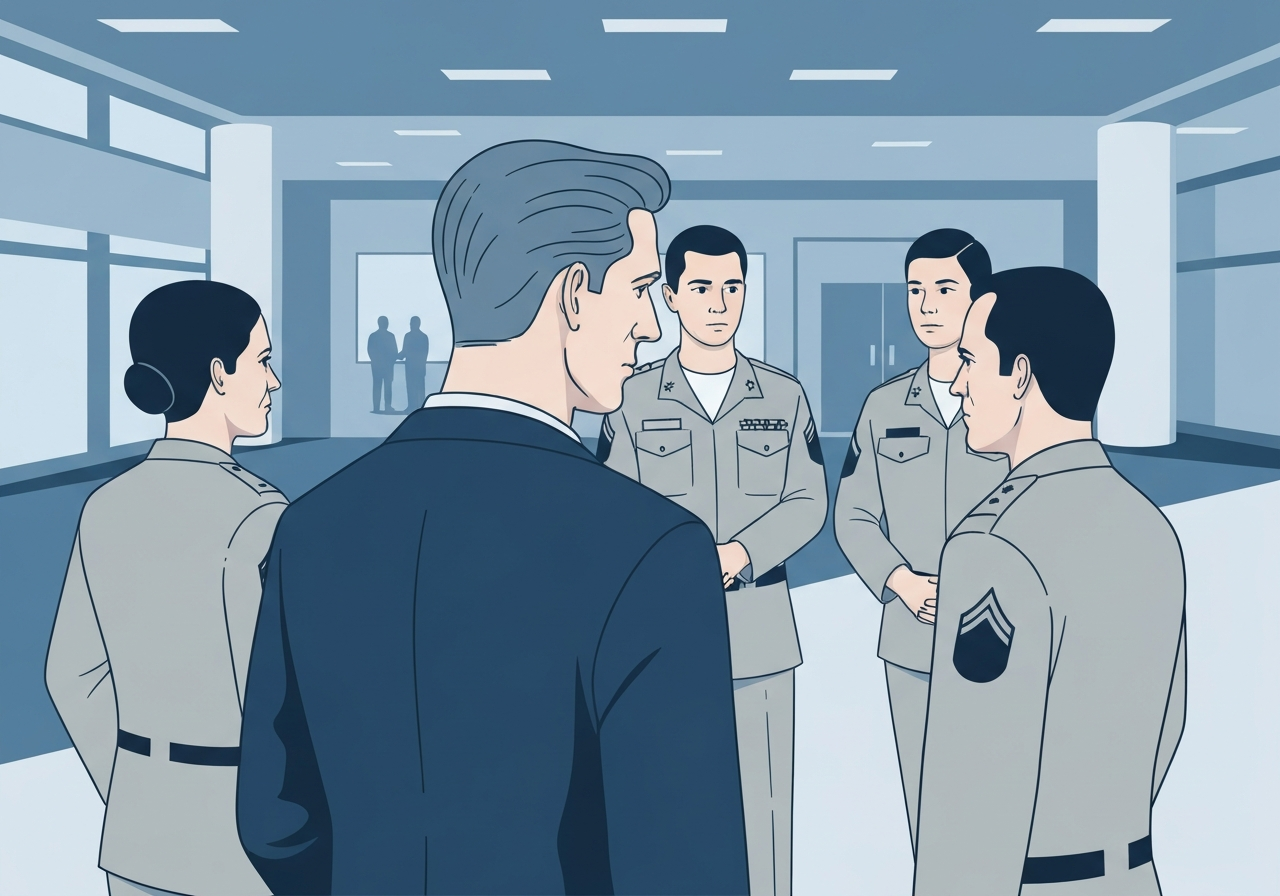
Financial Times reports that Anthropic’s chief has resumed discussions with the U.S. Department of Defense over a potential artificial intelligence contract. The renewed talks follow earlier, publicized hesitation within parts of the AI industry about working with military customers. Details on scope, timeline and any formal agreement have not been disclosed publicly. The development underscores growing government interest in procuring advanced large-language and safety-focused models.
Key Takeaways
Financial Times reported that Anthropic’s chief has re-engaged the Pentagon in talks about an AI deal; the report is the primary public source for this development.
Anthropic is a U.S.-based AI company founded in 2021 and known for the Claude family of models focused on safety and alignment.
The DoD has expanded its AI procurement and partnership efforts since 2018, increasing demand for commercial models that meet security and trust requirements.
Public details about the proposed contract — including value, deliverables and classification level — have not been released.
Some AI firms have publicly resisted defense work on ethical or reputational grounds; renewed talks suggest companies and the Pentagon are seeking compromise or clearer guardrails.
If concluded, a deal could set precedents for procurement terms, red-team testing, and operational controls for commercial AI systems used by government.
Background
Anthropic was founded in 2021 by former research leaders from large language model groups and quickly attracted investor attention for its emphasis on safety and interpretability. The company has released multiple iterations of the Claude model family and positioned itself as a commercial alternative to other major cloud and AI providers.
At the same time, the U.S. Department of Defense and other government agencies have accelerated efforts to integrate AI capabilities into operations, procurement and analysis. Those efforts have included creating internal AI offices and publishing policy guidance for ethical use and acquisition of AI technologies.
The intersection of civilian AI firms and defense customers has been politically sensitive. Several high-profile technology companies and some staff at AI labs have expressed internal and external reservations about direct involvement with military projects, prompting public debates about the proper boundaries for commercial AI collaboration with the state.
Main Event
According to the Financial Times report, Anthropic’s chief has returned to discussions with Pentagon officials about a prospective AI arrangement. The report does not include a formal announcement or contract text, and both parties have offered limited public comment based on available reporting.
Sources cited by media accounts indicate the talks are at the negotiation or exploratory stage rather than at contract signature. The precise aims under discussion — whether for cloud-hosted models, on-premises deployments, specialized model training or advisory services — remain unspecified in public reporting.
Officials within the Pentagon have in recent years sought access to advanced AI models while also emphasizing requirements around security reviews, red-team testing and operational constraints. For a commercial supplier like Anthropic, meeting those requirements would likely entail technical, legal and compliance adjustments to standard commercial offerings.
Industry observers note that a cleared procurement could involve multi-layered assessments: security vetting, export-control reviews, and contractual language on permissible use cases. The Financial Times story frames the renewed talks as part of a broader trend of maturing engagement between defense buyers and AI vendors.
Analysis & Implications
If talks progress to a formal agreement, the deal would be a test case for how companies that emphasize safety and ethical design reconcile those priorities with defense applications. Anthropic’s public brand emphasizes alignment research; a government contract would probe how that research is operationalized under classified or sensitive conditions.
On the policy side, a successful contract could accelerate the DoD’s adoption of more capable models while also forcing clearer rules on model governance, auditing and access control. This could in turn influence procurement specifications across allied militaries and federal agencies that look to the U.S. as a standards-setter.
Economically, a defense contract can offer predictable revenue and close collaboration with large institutional customers, but it can also expose firms to reputational and workforce tensions. Employee pushback and public scrutiny have led some companies to set internal limits on the types of defense work they will undertake.
Finally, the technical implications include potential hardening of models for secure environments, bespoke evaluation for adversarial robustness, and integration with classified data pipelines. Those engineering efforts can raise costs and extend delivery timelines compared with commercial deployments.
Reactions & Quotes
“The Financial Times reports that Anthropic’s chief has resumed discussions with the Pentagon about a potential agreement,”
Financial Times (media reporting)
“Pentagon acquisition teams are increasingly seeking commercial AI capabilities while defining stricter security and performance conditions,”
Defense procurement analysts (context)
“Companies balancing safety-focused missions with government work face complex trade-offs between commercial growth and public scrutiny,”
Industry analyst commentary
Comparison & Data
Item
Anthropic
Typical DoD AI Contract
Founding / Context
Founded 2021, safety-focused LLM developer
Procurements span research to operational systems
Public stance
Emphasizes safety and alignment
Requires security reviews and permitted use cases
Public detail (this report)
Engaged in talks per FT
Scope and value not publicly disclosed
The simple comparison above highlights where public information is clear and where details remain opaque. It also shows why technical and contractual work would be substantial if a procurement moves forward.
Unconfirmed
Exact contractual terms, monetary value, or timeline of any agreement between Anthropic and the Pentagon have not been publicly verified.
Specific operational uses the Pentagon might intend for an Anthropic model — for example, intelligence analysis, logistics optimization, or other tasks — are not confirmed.
Whether Anthropic will supply a commercial instance, a tailored on-premises model, or advisory services remains unclear.
Bottom Line
The Financial Times report that Anthropic’s chief is back in talks with the Pentagon signals renewed engagement between a safety-focused AI firm and a major government buyer. While the story does not yet disclose contract specifics, it reflects a broader trend: defense organizations are actively courting commercial AI capabilities while attempting to impose security and ethical constraints.
For Anthropic, the outcome will test the company’s ability to maintain its public safety commitments while meeting the operational and security demands of a defense customer. For policymakers and the public, any resulting agreement will raise important questions about oversight, permitted uses, and how alignment research translates into real-world deployments.