
Lead
On the night of August 22, 2025, 23-year-old Ukrainian refugee Iryna Zarutska was fatally stabbed aboard a Charlotte light rail train in Mecklenburg County, North Carolina. Video provided to local media shows a man identified by police as 34-year-old Decarlos Brown approach the victim, draw a knife and strike multiple times; Zarutska became unresponsive shortly afterward. Brown, who was treated for a laceration and later charged with first-degree murder, has prior convictions and a documented local criminal history. The incident and the release of the footage have provoked local sorrow and a wider political debate about crime and public safety in major U.S. cities.
Key Takeaways
- The attack occurred shortly before 10:00 p.m. on August 22, 2025, aboard a Charlotte Area Transit System light rail train; the victim was identified as 23-year-old Iryna Zarutska.
- Police say 34-year-old Decarlos Brown is the recorded assailant; he was charged with first-degree murder and taken to hospital for a laceration before booking.
- A judge ordered Brown to undergo a 60-day evaluation at a local hospital to assess competency, according to court records.
- Local affiliates report Brown has 14 prior court cases in Mecklenburg County and a 2015 sentence of six years for robbery with a dangerous weapon, breaking and entering, and larceny.
- Video of the assault was obtained by WCNC from the Charlotte Area Transit System and has circulated in news coverage, prompting debate over whether such footage should be shared.
- Charlotte Mayor Vi Lyles asked media and residents not to widely redistribute the video out of respect for the family; federal officials and White House aides criticized local leaders’ responses.
- Family and friends say Zarutska fled wartime violence in Ukraine before settling in Charlotte; local supporters described her as helpful and kind.
Background
Charlotte has been part of a broader national conversation about crime in large cities, a debate that intensified ahead of the 2024–2026 political cycle and remains politically salient in 2025. Transit safety and violent incidents on public transportation have drawn particular attention from both local officials and federal policymakers. Municipal leaders, transit agencies and law enforcement each cite a mix of enforcement, social services and infrastructure changes as components of their public-safety strategies.
Refugees from Ukraine arrived in many U.S. cities after the 2022 Russian invasion, and community groups in Charlotte undertook resettlement and support work for newcomers. Zarutska’s death therefore resonated beyond the immediate crime story, raising questions about how cities protect vulnerable newcomers. At the same time, critics of local policy seized on the case to argue for tougher enforcement; supporters of the mayor and social-service advocates emphasized trauma-informed responses and caution about sensationalizing violent imagery.
Main Event
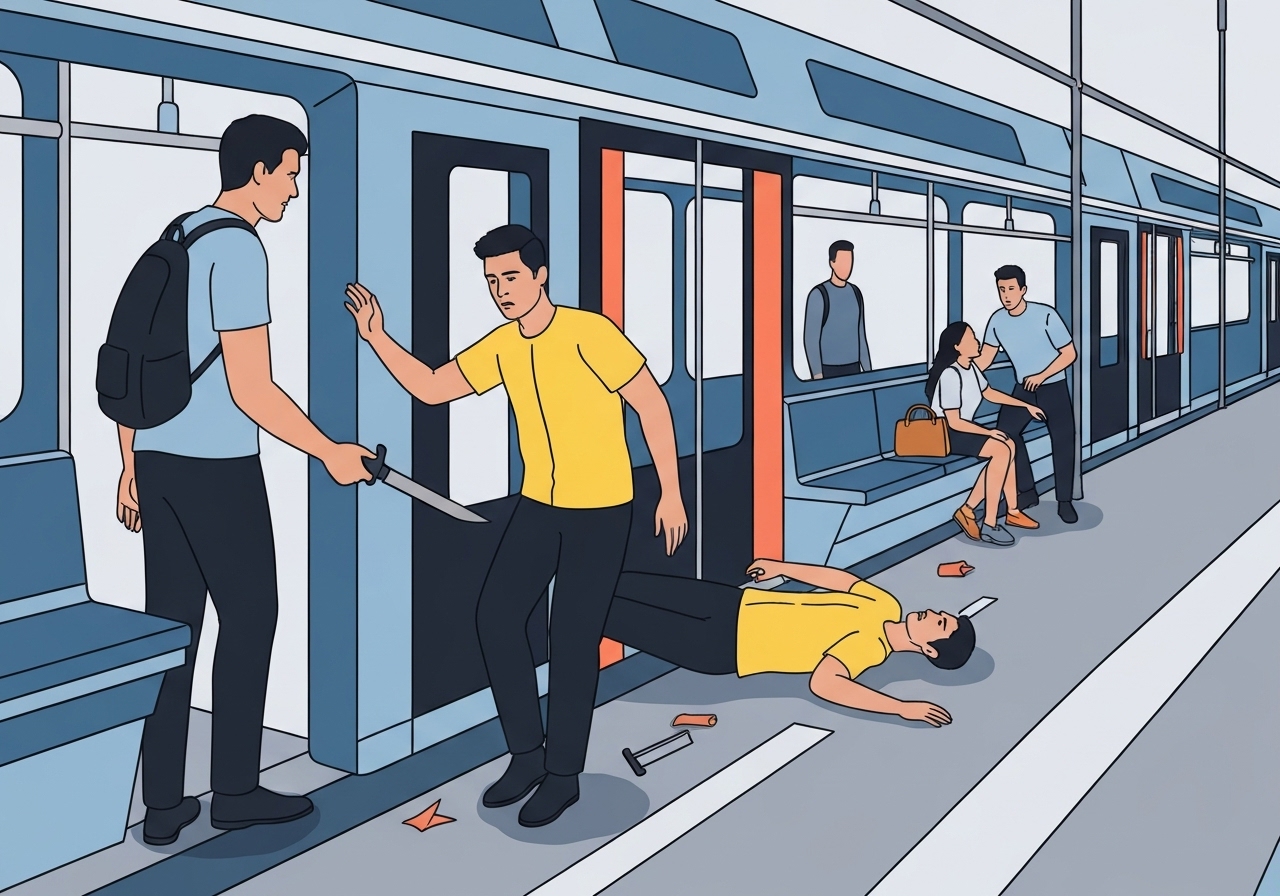
According to a police affidavit, video obtained by WCNC shows the train traveling for approximately four and a half minutes after Zarutska boards and sits near the suspect. The affidavit describes the suspect pulling a folding knife from his pocket, pausing, standing and then striking the victim three times; blood is visible in the footage and the victim becomes unresponsive soon after the attack. Emergency responders were called and the victim was later pronounced dead.
Police arrested Decarlos Brown at or near the scene; he received hospital treatment for a laceration before being charged with first-degree murder. Court records show a judge ordered a 60-day inpatient evaluation to determine competency to proceed; that evaluation is scheduled at a local hospital. Prosecutors have moved forward with the murder charge while the competency process runs its course.
Local outlets report Brown’s prior encounter history in Mecklenburg County: 14 previous court cases and a 2015 conviction that led to a six-year sentence for robbery with a dangerous weapon, breaking and entering, and larceny. Authorities say the footage shows no clear interaction between the victim and assailant before the assault; investigators continue to examine motive and other case details as part of their inquiry.
Analysis & Implications
The case raises three intertwined policy questions: how transit agencies and police prevent and respond to on-vehicle violence; how the criminal-justice system manages defendants with prior records; and how public officials balance transparency with respect for victims and families. Transit systems nationwide have limited policing resources, and incidents on trains often spur calls for increased patrols, private security or infrastructure changes such as better lighting and surveillance—each with trade-offs in cost and civil-liberty considerations.
Brown’s lengthy record, if confirmed in court filings, feeds arguments by critics who say repeat offenders are not sufficiently incapacitated. Advocates for criminal-justice reform counter that prior convictions alone do not explain individual acts of violence and stress the need for integrated mental-health, housing and reentry services. The 60-day competency evaluation adds complexity: it delays traditional prosecution timelines and raises questions about access to psychiatric care in correctional and medical settings.
Politically, the killing has been used by national figures to underscore a message about urban crime ahead of midterm and municipal campaigns. That dynamic can drive rapid policy responses—more officers, revised bail standards, added surveillance—but empirical evidence on which interventions reduce public-transport violence is mixed. City officials and transit authorities face pressure to show immediate action while building sustainable, evidence-based measures to prevent future attacks.
Comparison & Data
| Date | Event |
|---|---|
| Stabbing aboard Charlotte light rail shortly before 10:00 p.m.; victim later pronounced dead. | |
| Local reporting and law-enforcement activity related to arrest and investigation continue; media obtain video from transit agency. | |
| Charlotte mayor posts about the video and asks media/residents not to widely reshare it. | |
| Federal officials and White House advisors publicly criticize local leaders’ handling of the incident. |
The table above situates immediate public developments; long-term trend data on violent incidents in Charlotte transit or countywide homicide rates are maintained by local police and state statistical agencies and should be consulted for policymaking. Short-term spikes in media attention often outpace the slower work of policy analysis and evaluation.
Reactions & Quotes
City leaders, federal officials and community members offered swift, often divergent responses once the footage circulated.
I want to thank our media partners and community members who have chosen not to repost or share the footage out of respect for Iryna’s family.
Mayor Vi Lyles, City of Charlotte
Charlotte’s mayor doesn’t want the media to show you the ugly truth. Why? Because she and other public officials in her city bear responsibility.
U.S. Transportation Secretary Sean Duffy (posted on X)
She was always very helpful, very supportive — a sweetheart. It makes me sick to think that she’s gone.
Lonnie, family friend of victim (local media interview)
Unconfirmed
- Whether the attack was entirely unprovoked beyond what investigators observed on video remains under investigation; motive has not been publicly established.
- Any allegation that local officials’ prior decisions directly enabled this specific attack is unproven; political characterizations are under debate but not court-adjudicated.
- Details about the suspect’s mental-health history and whether that contributed to the incident have not been released publicly and remain subject to the competency evaluation and medical privacy rules.
Bottom Line
The killing of Iryna Zarutska on a Charlotte light rail car is a tragic, high-profile incident that combines a violent crime, the circulation of raw video, and rapid political responses. It underscores tensions between demands for immediate security measures and the slower, resource-intensive work of addressing underlying causes such as mental health needs, social instability and reintegration after incarceration.
For policymakers, the immediate tasks are straightforward: complete a thorough investigation, support the victim’s family, and communicate transparently about findings. Longer-term, city and transit leaders must weigh evidence-based safety interventions that protect riders while preserving civil liberties and addressing root causes that lead to repeated involvement with the criminal-justice system.