
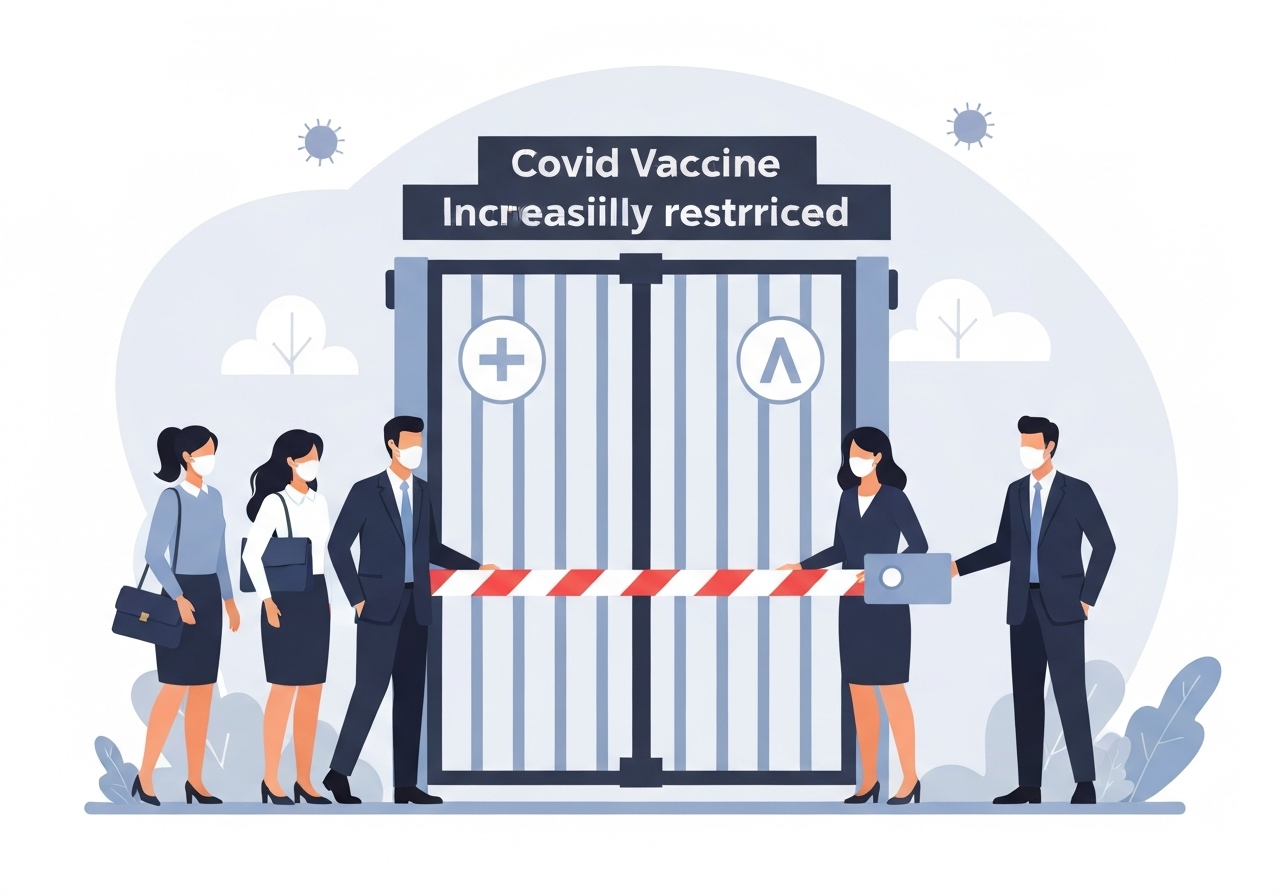
Lead: On 8 September 2025, the US Food and Drug Administration updated Covid-19 vaccine authorization to allow routine vaccination for people aged 65 and older, while younger adults are eligible only if they have specified underlying medical conditions. The move, announced as cases climb nationally, has left many Americans scrambling for appointments, insurance clarifications and alternative routes to protection. People caring for immunocompromised relatives and workers with high public contact say the change heightens anxiety about transmitting severe disease to loved ones. Public-health professionals warn the narrower eligibility could affect transmission dynamics this fall and winter.
Key Takeaways
- The FDA on 8 September 2025 authorized routine Covid-19 vaccination for people aged 65 and older; adults under 65 qualify only with certain underlying conditions.
Background
For four years the United States has managed Covid with a mix of broad vaccination campaigns, booster recommendations and targeted protection for high-risk groups. The federal government previously endorsed widespread seasonal boosting for many adults; that posture has shifted as regulators re-evaluate risk-benefit profiles and as public attention to Covid has waned. At the same time, new policy decisions have become entwined with political movements and high-profile appointees, producing heightened scrutiny of both the science and the process behind authorization.
Vaccination access in the US has long been shaped by a mix of federal guidance, insurance coverage rules and pharmacy distribution networks. When eligibility changes, practical access can lag: pharmacies must update protocols, insurers must clarify coverage, and supply and appointment systems must adjust. For people with immune suppression or elderly household members, these administrative frictions translate directly into perceived personal risk.
Main Event
On 8 September 2025 the FDA issued authorization narrowing routine Covid vaccine eligibility to those 65 and older while allowing younger people to be vaccinated only if they meet defined medical-eligibility criteria. The announcement—framed by federal officials as prioritizing those at highest risk of severe disease—prompted immediate questions about where and how younger eligible patients could obtain doses and how insurers would treat the shots.
Individuals seeking routine annual boosters describe unexpected obstacles. Some long-used retail pharmacies no longer list the vaccine for walk-in adults under 65, and insurers have said certain providers require prior approval or documentation of qualifying conditions. The result has been increased phone calls to insurers, visits to alternative providers and, in some cases, families planning to pay privately or seek vaccines abroad.
The policy change has also produced a wave of personal stories. Younger adults caring for vulnerable relatives report heightened anxiety about unknowingly transmitting infection. Healthcare workers, who continue to see severe Covid outcomes in hospitals, warn that limiting broad access may lead to more avoidable illness, particularly in communities with low baseline vaccination coverage.
Analysis & Implications
Short term, narrowing eligibility will likely concentrate federal distribution resources on older adults—those at highest risk of hospitalization and death—potentially improving protection in that cohort. But the policy risks creating gaps in community-level immunity if large subsets of younger adults remain unboosted. Transmission is often driven by social mixing among younger cohorts; leaving them less protected could sustain higher case counts and expose vulnerable household members.
Operationally, the decision increases administrative complexity. Pharmacies, insurers and clinicians must reconcile new eligibility lists with standing orders and electronic medical records. That will create friction for patients who previously accessed vaccines with minimal paperwork, and it could slow uptake even among eligible people if appointment systems become confused.
Politically, the change lands amid controversy. The role of Health Secretary Robert F. Kennedy Jr. and the MAHA movement in shaping recommendations has polarized opinion. Critics argue policy should be shaped principally by expert advisory committees and clear scientific evidence; supporters say prioritization is fiscally and clinically defensible. The debate may influence public trust in future guidance and vaccine campaigns.
Over the medium term, the most important variable will be whether targeted measures—household protections, targeted outreach to caregivers, and workplace policies—mitigate the narrower eligibility. If those supports are inconsistent, hospital systems could see higher caseloads, especially in areas with low booster coverage and high prevalence of comorbidities.
Comparison & Data
| Season | Routine adult eligibility | Notes |
|---|---|---|
| 2024–25 | Broad adult boosters recommended | Widespread pharmacy access and insurance coverage for many adults |
| 2025–26 (post-8 Sep) | Routine for 65+; under 65 only with qualifying conditions | More preauthorization, variable pharmacy availability, potential out-of-pocket costs |
The table shows the shift from broadly recommended adult vaccination to a targeted approach focused on older adults. That change alters supply prioritization and may change the public’s perception of personal need for boosters.
Reactions & Quotes
Frontline clinicians and affected residents expressed sharp concerns and personal alarm. The quotes below are representative of interviews with people navigating the new rules.
“I just want the vaccine so I don’t get sick on my wedding day — it’s suddenly much harder to secure,”
Madison Heckle, 33-year-old attorney
“I’m absolutely terrified I might bring Covid home and seriously hurt someone I love,”
Zeke Fraser-Plant, 18-year-old student
“Healthcare decisions should be guided by evidence, and I fear we’ll see preventable severe illness if access narrows,”
Roger, emergency physician
Unconfirmed
- Whether insurers nationwide will uniformly cover out-of-pocket vaccinations for younger adults without qualifying conditions remains unclear and varies by plan.
- Claims that the policy change will directly cause a measurable rise in deaths this season are not yet established; causal links require longitudinal data.
- Reports that household members of immunosuppressed patients will be automatically excluded from all vaccine programs need local verification, as some jurisdictions may adopt supplementary measures.
Bottom Line
The FDA’s 8 September 2025 authorization refocuses routine Covid vaccination on people aged 65 and older and narrows automatic access for younger adults. That alignment with higher individual risk may protect the most vulnerable, but it increases logistical and emotional burdens for many families and workers who previously relied on broad access.
Policy impact will depend on how quickly pharmacies, insurers and public-health agencies close administrative gaps and on whether targeted outreach reaches caregivers and household members of immunocompromised people. Until those systems adapt, many Americans will continue to report difficulty obtaining recommended protection and heightened concern about transmitting Covid to loved ones.