
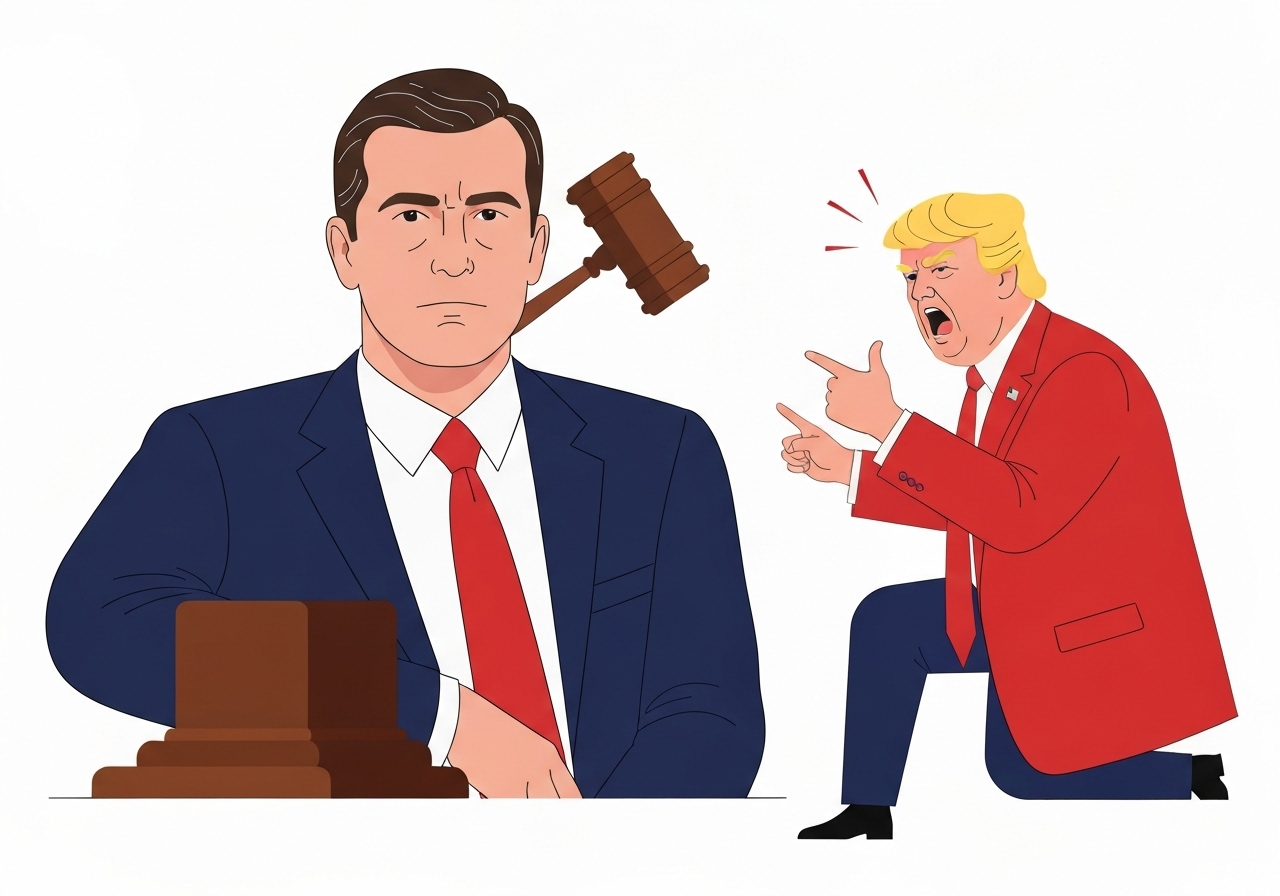
Lead: On Sept. 8, 2025, Citadel founder Ken Griffin publicly criticized President Donald Trump’s recent attempts to influence the Federal Reserve, warning that political pressure on the central bank could harm markets and businesses. In an opinion coauthored with economist Anil Kashyap and published in a national outlet, Griffin described the administration’s moves — including calls for lower rates and personnel changes at monetary and statistical agencies — as a risky gambit with potential economic costs. Treasury Secretary Scott Bessent has separately proposed narrowing the Fed’s remit, underscoring debate inside the administration and finance circles about central bank authority. Investors and many corporate leaders have largely remained muted, but Griffin’s statement marks a rare high-profile business rebuke of the president.
Key Takeaways
- Ken Griffin, CEO of Citadel, and University of Chicago economist Anil Kashyap published a joint opinion warning that political meddling with the Fed could be a “risky game” with “steep costs.”
- The critique was published on Sept. 8, 2025, after a week of high-profile tensions over the Fed’s independence, including public pressure to cut rates and personnel moves at economic agencies.
- Treasury Secretary Scott Bessent argued in a recent essay that the Fed’s scope has expanded into a “gain-of-function” operating model and urged a narrower mandate for the central bank.
- Economists and former Treasury secretaries have also raised alarms; corporate CEOs have mostly stayed silent publicly despite private concern.
- Griffin and Kashyap warned that undermining independence could lead to higher long-term interest rates and increased inflation pressure, which would hurt corporate profits and raise borrowing costs.
- The S&P 500 trading near record levels suggests markets have not yet priced in a full risk premium for political interference, leaving the path forward uncertain.
- Policy disputes have drawn broader attention to U.S. institutional credibility at a time when global partners are reassessing trade and monetary ties.
Background
Federal Reserve independence has been a central pillar of U.S. macroeconomic policy for decades. The institution’s ability to set interest rates and use monetary tools without direct political intervention is widely credited with stabilizing inflation expectations and underpinning confidence in Treasury securities. That credibility is, however, not immutable: international experience shows that repeated political pressure on central banks can erode market trust and raise borrowing costs.
Over recent weeks President Trump has stepped up public and private pressure on the Fed to lower rates, discussed personnel changes at the central bank, and criticized statistical agencies after weaker-than-expected jobs data. Those moves drew immediate scrutiny from economists and former policymakers who fear the U.S. might edge toward patterns more often seen in politicized emerging-market contexts. At the same time, some senior administration officials — including Treasury Secretary Scott Bessent — have defended independence while arguing for reforms to the Fed’s operational reach.
Main Event
On Sept. 8, 2025, Ken Griffin and Anil Kashyap published an opinion piece that directly challenged the administration’s approach to the Fed. They said the combination of public pressure for lower rates, threats to fire a governor, and the removal of officials at statistical agencies could damage institutional credibility. Their piece warned investors and policy makers that such steps could ultimately force markets to demand higher yields on long-term U.S. debt.
The administration’s stance unfolded amid a Senate confirmation hearing for Stephen Miran, a White House economic adviser nominated for a temporary Fed governor slot. Miran surprised some Democrats by saying he would take only a temporary leave from his White House role if confirmed, even as he pledged independence. That testimony intensified scrutiny of how political appointments might interact with central-bank decision making.
Separately, Treasury Secretary Scott Bessent published an essay calling Fed independence “fundamental to the economic success of the United States” while also arguing that the central bank has accumulated institutional bloat and operational creep. Bessent urged a narrower mandate, saying overuse of nonstandard policies risks distortionary effects on markets and the broader economy.
Analysis & Implications
First, if political pressure weakens perceptions of Fed independence, investors could demand higher term premia on U.S. Treasuries to compensate for greater policy risk. That shift would raise borrowing costs for governments and corporations and could subtract from corporate profitability. Griffin and Kashyap’s warning that such outcomes would undercut the administration’s own economic goals is therefore logically consistent: short-term rate gains for political narratives can translate into longer-term macroeconomic headwinds.
Second, debates about the Fed’s remit are likely to intensify. Bessent’s proposal to narrow the Fed’s role reflects broader unease about mission creep — the use of unconventional monetary tools and emergency facilities that expanded after the 2008 crisis and again during the pandemic. Recalibrating responsibilities would require legislation and carry trade-offs: reducing the Fed’s toolkit could limit moral-hazard concerns but might also hamper its ability to stabilize markets during crises.
Third, the corporate response matters. Many CEOs privately worry about institutional risk but have avoided public criticism, fearing political backlash or market misinterpretation. Griffin’s public stance could encourage other business leaders to speak out, but the S&P 500’s elevated levels so far indicate that investors have not yet incorporated a large political-risk premium. If business leaders begin coordinated public pressure, that could shape congressional and regulatory responses; if they remain silent, political dynamics will determine outcomes.
Comparison & Data
| Feature | U.S. (Traditional) | Politicized Example (emerging markets) |
|---|---|---|
| Perceived central-bank independence | High — credibility accumulated over decades | Low — frequent political intervention |
| Typical market response | Lower term premia, stable inflation expectations | Higher term premia, volatile inflation |
| Policy toolkit | Standard rates, selective unconventional tools | Frequent discretionary interventions |
The table summarizes broad patterns observed historically: where independence is maintained, long-term yields and inflation expectations tend to be steadier; where political influence is strong, markets price in greater risk. These are qualitative comparisons intended to show mechanisms rather than precise forecasting. Changes to the Fed’s remit or credibility would interact with fiscal policy, global capital flows, and investor sentiment to determine exact outcomes.
Reactions & Quotes
Below are representative statements and the context in which they were made.
“This is a risky game, and it carries steep costs,” the Citadel CEO and an academic warned about actions that could erode central-bank credibility.
Ken Griffin and Anil Kashyap (op-ed)
That line encapsulated the pair’s core argument: political meddling may yield short-term policy wins but could impose longer-term market penalties.
“Fundamental to the economic success of the United States,” Bessent wrote, while also calling the Fed’s operating model a “gain-of-function monetary policy experiment.”
Scott Bessent (essay)
Bessent’s statement frames a dual position: defending the principle of independence while advocating for structural reforms to limit what he views as overreach in practice.
Senators expressed concern during a confirmation hearing when a nominee indicated he might remain closely tied to the White House even if confirmed as a temporary Fed governor.
U.S. Senate hearing transcript (Sept. 2025)
Lawmakers of both parties probed how a nominee’s ties to the administration could affect independence, signaling continued congressional attention to the issue.
Unconfirmed
- It remains unclear whether a wider group of corporate CEOs will publicly join Griffin in criticizing the administration; many continue to voice concerns privately but avoid public remarks.
- Whether political pressure on the Fed will soon translate into materially higher long-term interest rates is uncertain; empirical timing and magnitude are projections, not established outcomes.
- The long-term impact of proposals to narrow the Fed’s remit, including legislative prospects and practical effects, is not yet settled.
Bottom Line
Ken Griffin’s public rebuke marks a rare and notable intervention by a major finance executive into the debate over central-bank independence. His argument, backed by an academic coauthor, frames political pressure as a policy miscalculation that risks raising long-term borrowing costs and inflationary pressures — outcomes that would harm investors, issuers and the broader economy.
Policy makers, corporate leaders and investors should monitor whether this episode prompts broader business pushback, congressional oversight, or formal proposals to redefine the Fed’s responsibilities. Absent clear rules or a political consensus, uncertainty over central-bank autonomy could become a persistent source of market volatility and a test of institutional resilience.
Sources
- The New York Times (news report summarizing events and statements)
- The Wall Street Journal (op-ed platform where Griffin and Kashyap published their piece; media/opinion)
- The International Economy Magazine (essay by Treasury Secretary Scott Bessent; policy journal)
- Bureau of Labor Statistics (official statistical agency referenced in debates; government)
- U.S. Senate (confirmation hearing records and transcripts; government)