
Lead
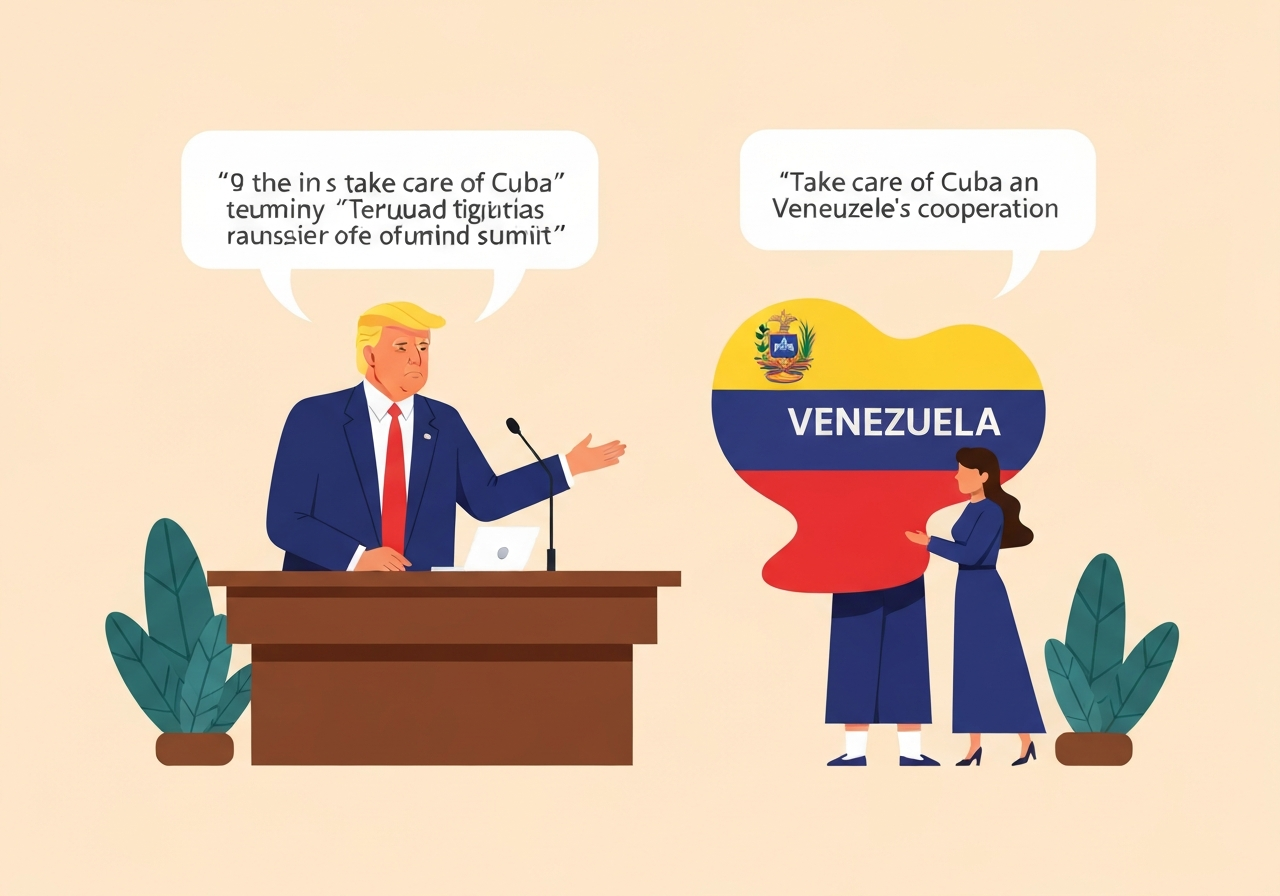
On March 7, 2026, President Donald Trump opened the Shield of the Americas Summit at his Trump National Doral resort in Doral, Florida, and pledged to “take care of Cuba” as the United States signals a more interventionist posture in the region. Trump also praised acting Venezuelan leader Delcy Rodríguez for cooperating with Washington after U.S. actions that have reshaped Venezuelan leadership since January. The gathering brought leaders from a dozen Latin American countries and focused on security, energy and illicit finance. The president framed recent U.S. policy moves—particularly changes to Venezuelan oil sales—as delivering tangible economic relief and a model for regime transition.
Key Takeaways
- President Trump launched the Shield of the Americas Summit on March 7, 2026, at Trump National Doral in Doral, Florida, and publicly promised to “take care of Cuba,” prompting applause from attendees.
- Leaders from Argentina, Bolivia, Chile, Costa Rica, the Dominican Republic, Ecuador, El Salvador, Guyana, Honduras, Panama, Paraguay and Trinidad and Tobago attended the summit, representing 12 countries.
- The administration has eased a blockade on Venezuelan oil to permit some private-sector sales to Cuba, a move the White House says has helped ease fuel shortages and blackouts in Cuba, which AP reports have affected millions.
- NPR reported that the U.S. captured and arrested Venezuela’s president, Nicolás Maduro, in January; that development has reshaped regional dynamics and is cited by some as precedent for Cuba policy (see Unconfirmed).
- Trump praised acting-President Delcy Rodríguez for cooperation with the U.S., saying her work with Washington has improved Venezuela’s outlook via oil exports and prospective gold and mineral trade.
- The president described Venezuela’s transition as a model for future regime changes, signaling a possible shift toward more direct U.S. involvement in Latin American political outcomes.
Background
The Shield of the Americas Summit convenes regional heads to discuss transnational crime, energy security and political stability in the Western Hemisphere. The 2026 meeting, hosted at Trump National Doral in Florida, came amid heightened U.S. activity in Latin America after abrupt changes in Venezuelan leadership earlier this year. Historically, U.S.-Latin America relations have oscillated between cooperation and friction over issues such as migration, trade and security cooperation; Cuba and Venezuela have been recurring flashpoints.
Cuban-American communities in the United States have long pressed for firmer U.S. policy toward Havana, and Cuba remains a central issue for many attendees. Venezuela’s economic collapse and repeated blackouts in recent years increased regional concern; Washington’s decision to allow certain oil transactions reflects an effort to leverage energy flows as a diplomatic tool. Regional stakeholders include democratically elected governments, leftist administrations, and countries wary of overt U.S. intervention—making consensus on forceful steps toward regime change difficult.
Main Event
At the opening session, President Trump addressed assembled leaders and framed Cuba as a problem the United States would “take care of,” repeating a phrase reportedly requested by several attendees. He said multiple leaders asked Washington to help with Cuba, and he accepted that charge to applause. The comment underscored the administration’s readiness to take a more assertive role in hemispheric politics.
Trump credited U.S. policy moves for recent shifts in Venezuela, pointing to resumed oil exports to allied networks and plans for gold and mineral trades that he said would improve Venezuela’s economy. He singled out acting-President Delcy Rodríguez and publicly commended her cooperation with U.S. officials, linking that cooperation to better economic indicators attributed to American assistance.
Summit discussions touched on coordinated efforts against cartel activity, energy logistics, and mechanisms to restrict illicit financial flows. Delegates discussed operational cooperation and legal frameworks to pursue transnational criminal groups. The administration framed the summit as both a security initiative and a diplomatic platform to reshape regional alliances.
Analysis & Implications
The president’s promise to “take care of Cuba” signals a rhetorical escalation that could have concrete policy consequences if paired with economic or covert measures. If Washington moves beyond sanctions and trade adjustments to more direct actions, it could provoke strong responses from Cuba’s diplomatic partners and complicate relations with countries that oppose external regime change. Any increased U.S. activity would also raise legal and human-rights questions under international norms.
Allowing private-sector Venezuelan oil sales to Cuba is significant because it uses energy policy as leverage; energy flows can have immediate humanitarian effects but also create dependencies that complicate long-term outcomes. For Cuba, short-term relief from fuel shortages and blackouts would reduce acute humanitarian strain, but critics argue such measures may entrench external influence or fail to produce political reform.
Regionally, the apparent arrest of Nicolás Maduro in January (reported by NPR) has already reshuffled power dynamics and emboldened actors seeking regime change in Havana. Whether other governments will align with a U.S.-led approach depends on domestic political calculations and concerns about sovereignty. Economically, shifting Venezuelan export channels and potential mineral deals could affect regional markets, corporate risk assessments and sanction regimes.
Comparison & Data
| Item | Detail |
|---|---|
| Summit attendees | 12 Latin American countries: Argentina, Bolivia, Chile, Costa Rica, Dominican Republic, Ecuador, El Salvador, Guyana, Honduras, Panama, Paraguay, Trinidad and Tobago |
| Location | Trump National Doral, Doral, Florida (host site) |
| U.S. policy change | Eased blockade on Venezuelan oil to permit some private-sector sales to Cuba (administration reported) |
| Noted regional crisis | Cuban fuel shortages and blackouts reported to have left millions without power (Associated Press) |
The table summarizes the immediate facts from the summit and related policy moves. While the attendees list and venue are fixed details, the longer-term economic and political impacts of eased oil restrictions and changed leadership arrangements remain contingent on implementation and partner responses.
Reactions & Quotes
“I was surprised, but four of you said, actually, ‘Could you do us a favor? Take care of Cuba.’ I’ll take care of it, ok?”
President Donald Trump
Trump used the anecdote to justify a proactive U.S. stance toward Cuba, framing the request as coming from allied leaders at the summit.
“She’s doing a great job because she’s working with us. If she wasn’t working with us, I would not say she’s doing a great job.”
President Donald Trump
The president explicitly linked praise for Delcy Rodríguez to her cooperation with U.S. officials and to recent economic shifts in Venezuela that he attributed to American assistance.
“Many Cuban-Americans are hoping for a change in regime for the communist nation,”
NPR reporting / Associated Press context
This reflects an ongoing domestic constituency in the United States that supports tougher measures on Havana and helps explain political incentives behind the administration’s rhetoric.
Unconfirmed
- The reported U.S. capture and arrest of Nicolás Maduro in January is presented in coverage but remains a major factual claim that requires independent confirmation from official sources and international observers.
- Any specific U.S. plan to orchestrate an ouster of Cuba’s Miguel Díaz‑Canel beyond verbal commitments at the summit has not been detailed publicly and remains unconfirmed.
- Details and timelines for the alleged forthcoming gold and mineral trades tied to Venezuela’s transition are described by administration officials but lack full public documentation at this time.
Bottom Line
President Trump’s remarks at the Shield of the Americas Summit mark a clear rhetorical shift toward a more interventionist U.S. posture in Latin America, with Cuba explicitly singled out for future action. The administration’s easing of restrictions on Venezuelan oil and public praise for cooperative Venezuelan leadership illustrate how energy policy is being used as diplomatic leverage.
Key questions going forward include whether rhetoric will translate into specific, verifiable actions toward Cuba, how regional partners will respond to any U.S.-led initiatives, and what the humanitarian and legal consequences of those moves will be. Independent verification of major claims—especially those listed under Unconfirmed—will be essential for assessing the real trajectory of U.S. policy in the hemisphere.