
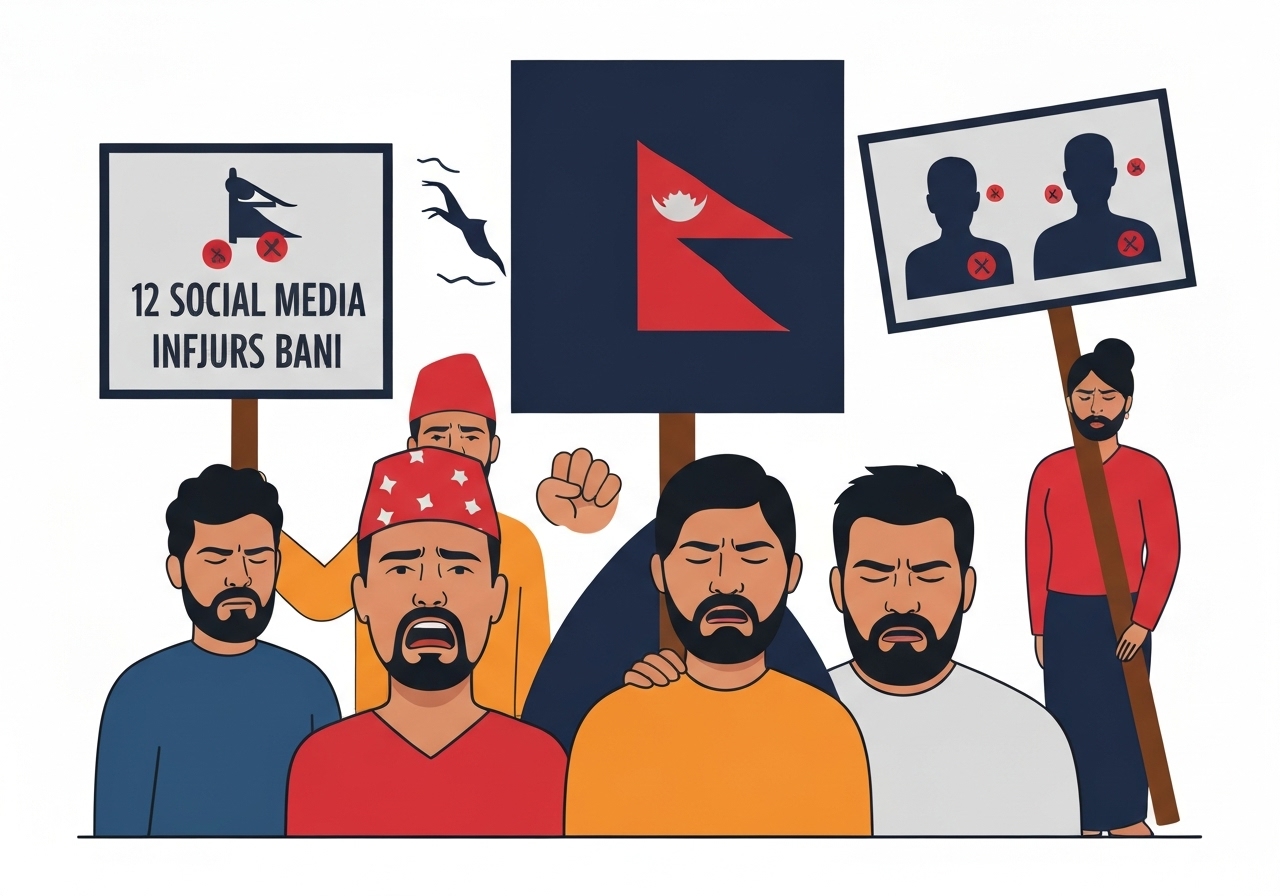
On Sept. 8, 2025, clashes in Kathmandu over a government ban on major social media platforms left at least 12 people dead and roughly 200 wounded, local medical officials and news outlets reported. Demonstrators — largely teenagers and young adults — surged toward the Parliament complex and briefly occupied a security building before police used rubber bullets and water cannons to disperse them. Authorities imposed a curfew around the legislature at 12:30 p.m. local time and deployed troops and paramilitary forces to restore order. The unrest came after the government said dozens of platforms, including Facebook, WhatsApp, Instagram and WeChat, failed to register under new rules.
Key Takeaways
- Casualties: At least 12 people killed in Kathmandu during Monday’s protests; local hospitals reported about 200 injured.
- Hospital reports: Seven died at the National Trauma Center, two at Kathmandu Medical College, and three at Civil Service Hospital, per hospital officials.
- Government action: Authorities imposed a midday curfew around Parliament at 12:30 p.m. and deployed troops and paramilitary units to the area.
- Trigger: The demonstrations followed a government ban on dozens of platforms, citing noncompliance with a new registration requirement.
- Demographics: Most protesters were teenagers and young adults, according to eyewitnesses and local reporting.
- Prior precedent: Nepal banned TikTok in November 2023 but lifted that ban after the company agreed to register nine months later.
Background
Nepal’s recent move to require social platforms to register with authorities marks a notable escalation in digital regulation. The government said platforms did not comply with the new registration rules and moved to block dozens of services, including global apps used widely for communication and organizing. The measure touched off anger among youth who rely on those platforms for social interaction, information and political discussion.
The country has a recent history of contentious digital policy: in November 2023 Kathmandu briefly banned TikTok on grounds it affected “social harmony,” before lifting that ban after the company agreed to register with regulators nine months later. Analysts say the registration requirement is part of a broader pattern in South Asia of tighter controls on online speech and platform governance, raising concerns among rights groups about free expression.
Main Event
On Monday, crowds gathered near the Parliament complex in Kathmandu and, according to witnesses, surged toward the building. Demonstrators occupied a security building for a short period before police moved in. Security forces used water cannons and rubber bullets to disperse the crowd; local reporting and hospital officials say the clashes resulted in dozens of injuries and multiple fatalities.
Medical officials provided the most detailed tally of fatalities: Dr. Dipendra Pandey at the National Trauma Center reported seven deaths there; Dr. Bibek Limbu at Kathmandu Medical College confirmed two deaths and 28 patients with injuries; and Dr. Mohan Chandra Regmi, executive director at Civil Service Hospital, said three people died after being brought in from the protests. Several patients remained in critical condition.
The government imposed a curfew at 12:30 p.m. in the area surrounding Parliament but unrest spread to other cities. Security forces — including troops and paramilitary units — were dispatched to contain the demonstrations while the prime minister’s office said an emergency cabinet meeting was expected later in the day.
Analysis & Implications
The deaths mark a severe escalation in a conflict that began as a policy dispute over online regulation and quickly turned into a nationwide political crisis. For Prime Minister K.P. Sharma Oli, the unrest compounds existing political pressure: critics have long accused his administration of moves that shrink civic space, and the fatalities could intensify domestic and international scrutiny of his government’s approach to dissent.
Policywise, the episode may deter some platforms from resisting registration requirements but could also accelerate users’ adoption of circumvention tools or alternate services. The prior case of TikTok — which was banned in November 2023 and restored after nine months following compliance — shows platforms can negotiate with Kathmandu, but the human cost of enforced shutdowns raises stakes for both companies and regulators.
Internationally, governments and rights groups that monitor free-expression trends are likely to press for transparent investigations into the use of force and for safeguards on emergency measures such as curfews and bans. Economically, prolonged restrictions on major messaging and social networks could disrupt commerce and communications, affecting small businesses and civic organizations that rely on those apps.
Comparison & Data
| Event | Date | Government Action | Reported Casualties |
|---|---|---|---|
| TikTok ban (lifted) | Nov 2023 (lifted ~Aug 2024) | TikTok blocked; later registered | 0 reported deaths linked to protests |
| Social media ban protests | Sept 8, 2025 | Dozens of platforms blocked; curfew, troop deployment | 12 dead, ~200 injured |
The table highlights a contrast: the 2023 TikTok dispute ended without reported fatalities, while the 2025 ban on multiple platforms coincided with lethal clashes. The broader scope of the 2025 restriction — affecting messaging apps as well as social networks — may have amplified both public anger and disruption to daily life.
Reactions & Quotes
“Our emergency ward is overloaded.”
Dr. Mohan Chandra Regmi, Civil Service Hospital executive director
Dr. Regmi’s brief statement conveyed the strain on medical facilities as multiple hospitals reported an influx of injured patients. Hospital officials provided the primary, near-real-time account of fatalities and severe injuries.
“The platforms did not comply with the new requirements to register with the government.”
Government officials (statement reported by local media)
The administration framed the block as an enforcement action tied to registration rules. That rationale has become a focal point for debate about the balance between regulation and free speech protections in Nepal.
Unconfirmed
- Attribution of specific deaths to particular crowd-control methods remains unclear; official forensic determinations have not been publicly released.
- Claims about the presence or role of organized political groups driving the clashes have not been independently verified.
- Final casualty and arrest counts may change as hospitals and authorities complete their tallies and publish official reports.
Bottom Line
The confrontation in Kathmandu turned a regulatory dispute into a deadly political flashpoint, leaving at least 12 people dead and hundreds injured on Sept. 8, 2025. The incident underscores the potential for digital-policy decisions to spark rapid, real-world escalation when they intersect with youth mobilization, political grievances and constrained civic space.
In the near term, expect intensified domestic pressure on Prime Minister K.P. Sharma Oli’s government, calls for independent investigations into the use of force, and renewed diplomatic attention to Nepal’s handling of free-expression rights. How the authorities, platforms and civil society respond in the days ahead will shape whether the crisis is defused through dialogue and accountability or deepens into a longer period of unrest.