
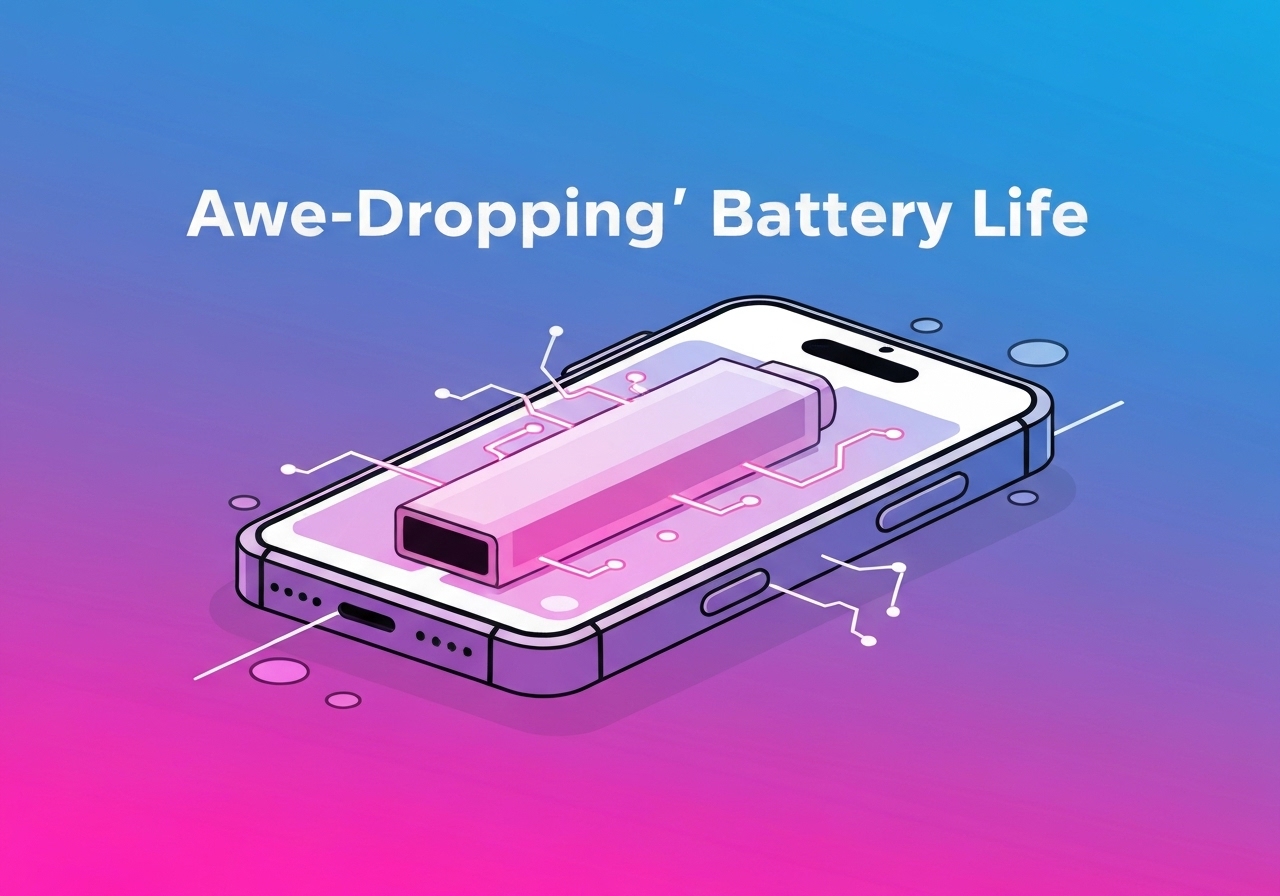
Lead: Apple’s iPhone 17 Pro is set to promise markedly longer battery life ahead of the company’s September 9, 2025 event after alleged capacities surfaced in a Chinese regulatory filing. The smallest Pro model — a 6.3-inch iPhone 17 Pro without a physical SIM tray — is reported to contain a 4,252 mAh cell, a roughly 18.7% increase over the iPhone 16 Pro’s 3,582 mAh battery. That change appears tied to Apple’s ongoing shift toward eSIM-only configurations in many markets and the company’s decision to use the space vacated by the SIM tray for larger batteries. If accurate, the combination of higher capacity and the new A19 Pro chip’s efficiency could deliver several hours of additional runtime compared with the iPhone 16 Pro.
Key Takeaways
- Alleged iPhone 17 Pro (6.3-inch, no SIM tray) battery: 4,252 mAh — an 18.7% increase over the iPhone 16 Pro’s 3,582 mAh.
- iPhone 16 Pro Max remains listed with 4,685 mAh, still larger than the reported 17 Pro cell but gap may narrow with A19 Pro efficiency gains.
- Reported capacity figures originate from a Chinese certification/regulatory database and were summarized by technology press on September 8, 2025.
- Apple’s marketing tagline for its September 9 event — “Awe dropping” — coincides with these battery claims and broader device improvements.
- Starting with iPhone 17, Apple appears to place larger batteries into SIM-tray–less units rather than filling the slot with plastic, a hardware change with capacity implications.
- iPhone 17 series is expected to be eSIM-only in the EU and several other regions; China will likely continue to get one or two physical SIM trays due to local regulation.
- Projected runtime gains depend both on raw capacity increases and on power efficiency delivered by the A19 Pro chip and iOS 26 power-management features.
Background
Apple began removing the physical SIM tray from U.S. iPhone sales with the iPhone 14 series, but until now the company kept internal battery capacities identical across regions by inserting a filler where the tray would have been. That approach left internal volume unused on SIM-less models. The reported iPhone 17 Pro capacity suggests Apple has shifted strategy: rather than a plastic filler, the empty space becomes usable for a larger battery in certain SKUs.
The move aligns with a broader industry trend toward eSIM adoption and tighter regulatory work in regions like the European Union, where eSIM-only devices are increasingly feasible. Conversely, China’s regulatory environment has historically required physical SIM support, which helps explain why units sold there may retain single or dual SIM trays and different internal layouts. The combination of evolving regulations and incremental silicon efficiency gains has shaped Apple’s design trade-offs for the 2025 lineup.
Main Event
The immediate source for the battery numbers is a Chinese certification or regulatory database, entries from which were reported by major Apple-focused outlets on September 8, 2025. The most notable figure is 4,252 mAh for the smaller iPhone 17 Pro model without a SIM tray. Compared with the iPhone 16 Pro’s 3,582 mAh, that is a near-20% capacity bump — a significant year-over-year increase for a “Pro” model that historically lagged the Pro Max in absolute battery size.
Apple’s internal marketing for the September 9 event uses the phrase “Awe dropping,” a tagline now being associated in coverage with the idea of substantial battery improvements in the iPhone 17 lineup. Apple is also widely expected to introduce the A19 Pro system-on-chip in the new phones; combined capacity and efficiency improvements are the most plausible mechanism for any multi-hour real-world gains Apple will claim in its keynote.
Operational differences between SKUs will likely persist. The iPhone 16 Pro Max’s listed 4,685 mAh cell still tops the alleged iPhone 17 Pro capacity, but the A19 Pro’s improvements in power-per-watt could shrink the perceived gap in normal usage, particularly for web browsing, video playback, and mixed workloads influenced by display brightness and thermal constraints.
Analysis & Implications
From a user perspective, a near-19% increase in cell capacity in the iPhone 17 Pro could translate into several additional hours of active screen time, assuming no major changes to display power draw or thermal throttling. Real-world gains will depend on a range of variables: the phone’s display brightness ceiling, average workloads, background tasks, and the effectiveness of iOS 26’s Adaptive Power Mode in tuning performance for longer endurance.
For Apple’s product lineup, shifting more battery capacity into the smaller Pro model narrows a long-standing differentiation between Pro and Pro Max hardware. That could change upgrade calculus for buyers who previously favored the Pro Max primarily for battery life. If Apple can offer near–Pro Max endurance in a smaller chassis, it strengthens the Pro model’s appeal and may affect Pro Max positioning in future cycles.
From an engineering and supply-chain standpoint, using the SIM-tray void for batteries increases parts complexity and may affect manufacturing tolerances and thermal management. Larger cells can raise device weight and influence heat dissipation when combined with higher-brightness displays and faster silicon. Apple’s thermal design and battery chemistry choices will determine whether gains are realized without trade-offs to thermals or device thickness.
Comparison & Data
| Model | Reported Battery (mAh) |
|---|---|
| iPhone 16 Pro (baseline) | 3,582 mAh |
| iPhone 16 Pro Max | 4,685 mAh |
| iPhone 17 Pro (6.3-inch, no SIM tray) — alleged | 4,252 mAh |
The table highlights the reported jump for the 17 Pro relative to the 16 Pro and the remaining lead held by the 16 Pro Max. Analysts will watch whether the 17 Pro’s higher cell plus A19 Pro power efficiency closes the real-world endurance gap with the current Pro Max. Any runtime comparisons announced at Apple’s event should be treated as manufacturer claims until independent lab results appear.
Reactions & Quotes
Apple’s marketing and tech-press reaction have framed the disclosures as part of a larger set of hardware and software changes coming at the September 9 event. Below are a sample of short responses pulled from the reporting and community reaction.
“Awe dropping”
Apple (event tagline)
Apple’s own event teaser uses the two-word phrase that coverage has linked to battery and other headline improvements for the iPhone 17 lineup.
“Nearly 20% more capacity for the smaller Pro would be a notable hardware shift.”
MacRumors (report)
The technology press emphasized the scale of the capacity increase and how it results from design changes tied to SIM-tray removal and eSIM adoption.
“Okay Apple. Time to work on the Apple Watch battery now!”
Community comment (MacRumors forum)
Early public reaction combines enthusiasm for longer phone runtime with reminders that other Apple products still face battery constraints.
Unconfirmed
- Exact real-world battery life improvements in hours are unconfirmed; Apple has not released independent runtime measurements for the iPhone 17 series yet.
- Regional SKUs and exact SIM configuration for China (single vs dual trays) remain subject to final regulatory filings and Apple’s production decisions.
- Precise thermal behavior and weight differences caused by a larger battery in the 17 Pro have not been confirmed and will require hands-on testing.
Bottom Line
Allegations that the 6.3-inch iPhone 17 Pro will include a 4,252 mAh battery point to one of the more consequential hardware changes for Apple’s 2025 iPhone lineup: reclaiming internal space from the removed SIM tray to boost endurance. Combined with the A19 Pro chip and iOS 26 power-management features, the hardware shift could produce meaningful, user-facing battery gains that narrow the gap between Pro and Pro Max models.
Readers should treat the capacity figures as credible but preliminary until Apple publishes official specifications at its September 9 keynote and independent reviewers can validate real-world performance. The wider implications — for product segmentation, manufacturing, and regional device variants — will become clearer after Apple’s announcement and the first rounds of hands-on testing.