
Lead
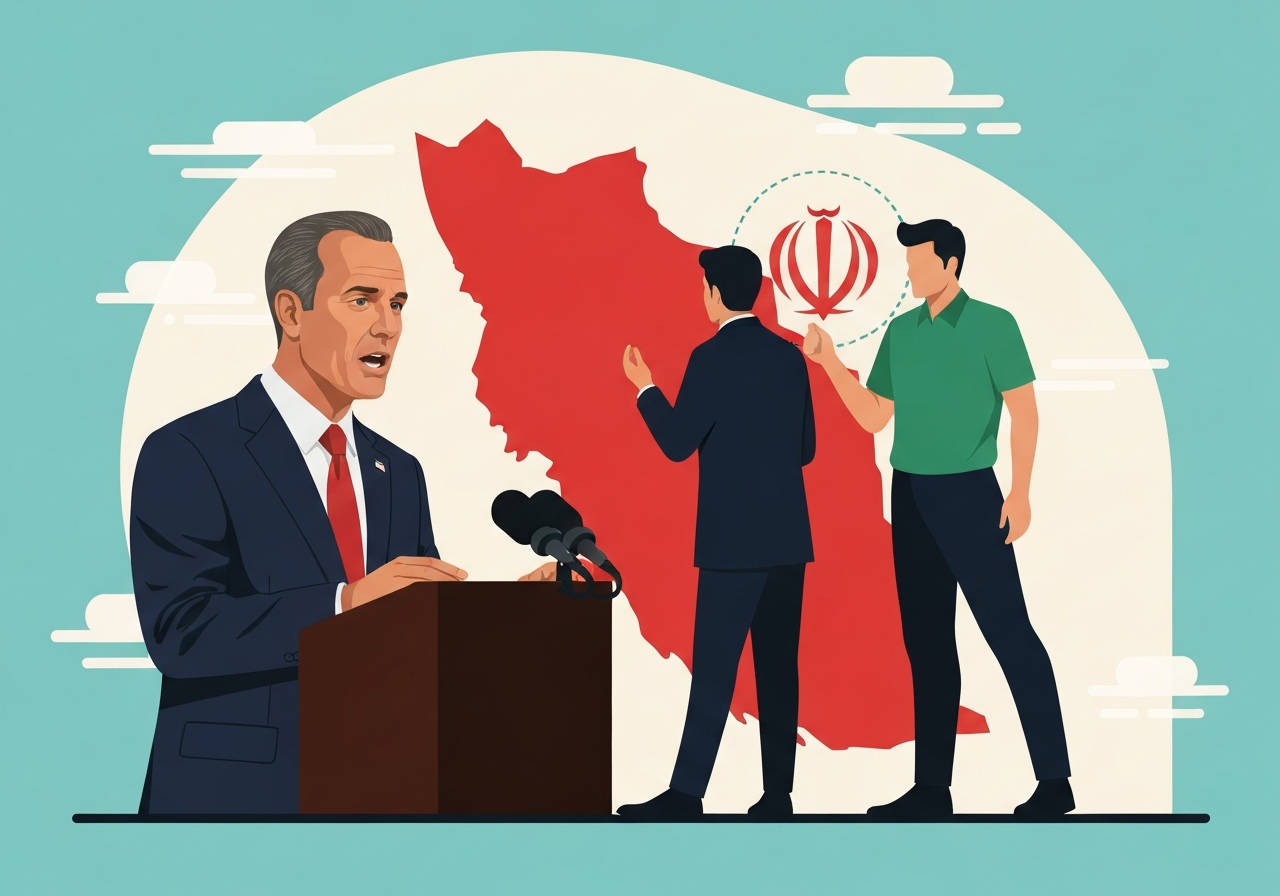
Defense Secretary Pete Hegseth told CBS News’ 60 Minutes on March 9, 2026, that President Trump’s demand for Iran’s “unconditional surrender” will be achieved even if Tehran does not formally acknowledge it. Hegseth said the United States has already struck roughly 3,000 targets inside Iran and will intensify operations until Iran can no longer resist. The remarks came amid a wider conflict that included U.S. and allied strikes, the March 1 death of Iran’s supreme leader Ali Khamenei, and Iranian attacks across the region. U.S. officials say the campaign aims to degrade Iran’s military and nuclear capabilities while limiting American ground involvement.
Key Takeaways
- The U.S. says it has struck about 3,000 targets inside Iran since the campaign escalated; Defense Secretary Pete Hegseth called this only “the beginning.”
- U.S. officials publicly announced the death of Iran’s supreme leader, Ali Khamenei, on March 1, 2026; Iran has since announced a successor from the leader’s family.
- At least six U.S. Army reservists were killed by an Iranian drone attack in Kuwait on March 1, and a seventh U.S. service member’s death was announced subsequently.
- Iranian sources and monitors report more than 1,600 Iranian fatalities, including 168 people killed at a school in southern Iran during a strike the U.S. says it is investigating.
- Strait of Hormuz traffic, which carries about 20% of global oil flows, has been disrupted; U.S. retail gasoline prices have risen by nearly $0.50 per gallon on average, per GasBuddy data.
- U.S. leaders assert they have not deployed ground forces in Iran so far but have not ruled out future options; Hegseth emphasized operational flexibility.
- CBS News reporting indicates Russia provided intelligence to Iran on some U.S. positions; U.S. leaders say they are tracking and responding to such activity.
Background
The confrontation accelerated after U.S. airstrikes in June 2025, named Operation Midnight Hammer, aimed at Iran’s nuclear infrastructure. U.S. officials, including President Trump, have framed those strikes as intended to halt Tehran’s nuclear advancements; the administration later said Iran’s enrichment facilities had been “completely and totally obliterated.” Independent monitors, however, estimate Iran still holds nearly 970 pounds of near–weapons‑grade uranium.
Longstanding tensions date back decades and involve regional proxies, ballistic missile programs, and periodic naval incidents in the Gulf. U.S. policymakers argue that Iran’s nuclear ambitions and support for militant groups pose a generational threat. Critics of the current administration say the U.S. was drawn into a wider war in ways that did not clearly prioritize American interests, while supporters counter that Washington controlled the timing and scale of escalation.
Main Event
In a March 9, 2026 interview broadcast on 60 Minutes, Hegseth reiterated the administration’s demand that Iran surrender unconditionally, saying Tehran will reach a point where it cannot continue fighting. He described U.S. and allied airpower as overwhelmingly superior and referred repeatedly to the scale of strikes already carried out against Iranian targets.
Hegseth declined to specify potential limits on future operations, stressing operational security. He also stated the U.S. has not committed ground forces inside Iran, though he would not rule out such options if commanders deemed them necessary to achieve objectives. He framed the campaign as calibrated to protect American lives and interests.
The conflict has produced civilian suffering inside Iran. Iranian human-rights monitoring groups reported more than 1,600 deaths, including 168 people—mostly children—killed at a southern school during a strike for which no party has publicly claimed responsibility. U.S. officials say investigations are ongoing and emphasize that U.S. doctrine does not target civilians.
Regionally, Iran has launched missiles and drones at nearly a dozen countries, including U.S. partners Qatar, Bahrain and Saudi Arabia. U.S. officials say allies are running low on interceptors and that Washington is prepared to supply or reallocate munitions if needed to defend bases and partners in the Gulf.
Analysis & Implications
The administration’s insistence on an unconditional surrender marks a strikingly uncompromising political objective for a major-power conflict. If pursued to its logical conclusion, such a demand increases the risk of prolonged operations, complex stabilization challenges, and governance vacuums inside Iran. Even without a formal occupation, the overthrow or collapse of national command structures could create fertile ground for militia fragmentation and wider regional instability.
Economically, disruptions to the Strait of Hormuz and damage to Iranian infrastructure have immediate global effects. With roughly one-fifth of seaborne oil transit routed through the strait, prolonged interruptions can elevate energy prices and strain markets. The near‑term rise in U.S. pump prices (about $0.50 per gallon) underscores the domestic political costs of sustained kinetic operations.
Militarily, the U.S. emphasis on airpower and long-range strikes reflects an attempt to limit American ground casualties while achieving decisive effects. Yet air campaigns face limits in controlling territory, securing nuclear materials, and preventing insurgent retaliation. The reported persistence of nearly 970 pounds of enriched uranium raises practical and legal questions about how the U.S. or the international community would secure and verify such materials inside a sovereign state amid active hostilities.
Finally, the reported involvement of third parties—most notably Russian intelligence support to Iran—complicates deconfliction and escalation control. Open-source reporting that Moscow shared targeting or movement information to Tehran, if verified, risks widening the conflict or prompting asymmetric responses against Russian assets or proxies.
Comparison & Data
| Metric | Before June 2025 | As of March 2026 |
|---|---|---|
| U.S. strikes reported inside Iran | Limited targeted strikes | ~3,000 targets struck (U.S. officials) |
| Reported Iranian fatalities | Periodic militia/proxy casualties | >1,600 (Human-rights monitors) |
| School strike deaths (southern Iran) | 0 | 168 (reported) |
| Near–weapons‑grade uranium | Pre‑strike accumulation | ~970 pounds (international monitors) |
| Strait of Hormuz oil flow | ~20% of seaborne oil | Traffic disrupted, exports stalled |
The table summarizes reported shifts in force employment, casualties and strategic resources since Operation Midnight Hammer in June 2025. These figures come from a mix of official statements and independent monitors; differences in methodology and access mean the numbers should be treated as the best available estimates rather than immutable totals.
Reactions & Quotes
Senior U.S. leaders defended the campaign as necessary to neutralize long-term threats. Hegseth framed the effort as deliberately asymmetrical and emphasized U.S. and allied air superiority.
“This is war. This is conflict. This is bringing your enemy to their knees,” Hegseth said, arguing Iran would be rendered incapable of fighting.
Pete Hegseth, U.S. Secretary of Defense (60 Minutes interview)
Iranian officials rejected the surrender demand and characterized U.S. objectives as unrealistic. Tehran’s political leaders signaled continued resistance and dismissed calls for unconditional capitulation.
“A demand for surrender is a dream they should take to their grave,” Iranian President Masoud Pezeshkian said, rejecting U.S. terms.
Masoud Pezeshkian, President of Iran (official statement)
Independent analysts cautioned that rhetoric about unconditional surrender raises risks for escalation and civilian harm. Human-rights monitors called for immediate, impartial investigations into reports of strikes that killed large numbers of civilians, including children.
“Civilians must be protected and allegations of mass civilian casualties require independent scrutiny,” a human-rights monitor said, urging access for investigators.
Human-rights monitoring group (public statement)
Unconfirmed
- No party has publicly claimed responsibility for the strike that killed 168 people at a southern Iranian school; attribution remains under investigation.
- Reports that Russia provided specific, actionable targeting intelligence to Iran are based on multiple sources but lack full public verification.
- The exact inventory and location of Iran’s remaining near‑weapons‑grade uranium (the ~970‑pound estimate) are subject to differing monitoring methodologies and limited site access.
Bottom Line
The administration’s strategy aims to impose decisive military costs on Iran while avoiding a large-scale ground invasion, but the declared goal of “unconditional surrender” raises the stakes politically and operationally. Even with overwhelming air superiority, air campaigns cannot alone resolve governance, nuclear security, or reconstruction challenges inside Iran.
For U.S. policymakers and allies, the immediate priorities will be limiting civilian harm, securing or accounting for nuclear‑related material, and managing third‑party involvement that could expand the conflict. For the public and markets, disruptions to the Strait of Hormuz and higher fuel prices are tangible near‑term consequences of the campaign.
Sources
- CBS News — Washington bureau reporting (news)
- 60 Minutes — Interview broadcast (television journalism)
- GasBuddy — US retail gasoline price data (industry tracker)
- Human Rights Activists in Iran (HRANA) — casualty reports (non‑governmental monitoring)
- International Atomic Energy Agency (IAEA) — nuclear monitoring (international organization)