
Lead
New research and expert commentary underscore that regularly challenging the mind across the lifespan is associated with better cognitive performance and a lower or delayed risk of Alzheimer’s disease. A recent Rush University study tracked nearly 2,000 dementia-free adults aged 53 to 100 over eight years and found that people with the highest lifetime engagement in intellectually stimulating activities developed Alzheimer’s about five years later than those with the least. Autopsies of 948 participants showed that more mentally active individuals retained stronger memory and thinking skills even when biologic signs of Alzheimer’s were present. Experts stress that a mix of meaningful, sustained activities plus good physical and vascular health appears most promising for slowing age-related decline.
Key Takeaways
- Rush University study of about 2,000 adults aged 53–100 tracked for eight years linked greater lifelong intellectual activity to a roughly five-year delay in Alzheimer’s diagnosis among those who developed the disease.
- Autopsies of 948 participants showed that higher lifetime cognitive engagement corresponded with better memory and slower decline despite Alzheimer’s pathology.
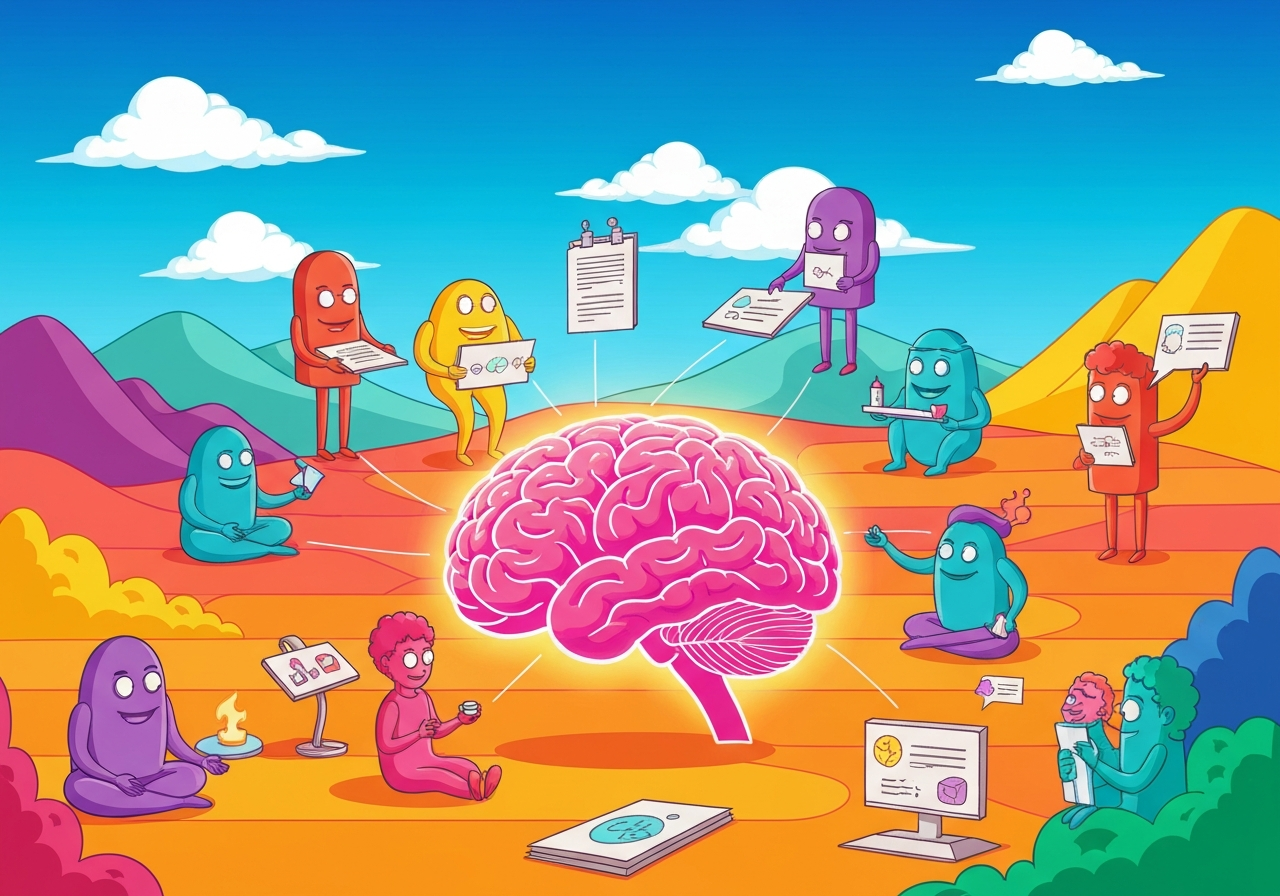
- “Cognitively enriching” activities include reading, writing, learning languages, music, puzzles, museum visits and social discussion; variety and sustained engagement matter more than single tasks like daily crosswords.
- Other research hints that musical training and targeted processing-speed training may improve specific cognitive skills, though evidence of long-term prevention remains under study.
- Physical and vascular health — exercise, blood-pressure control, diabetes management, sleep and even shingles vaccination — are important, complementary strategies for brain health.
- Current studies show association, not definitive causation; lifestyle changes may slow decline but are not a guaranteed prevention for dementia.
Background
The term cognitive reserve refers to the brain’s ability to tolerate age-related changes or pathologic damage by using alternative networks or strategies to maintain function. Researchers propose that mentally stimulating experiences across life strengthen diverse neural connections, creating reserve that helps compensate when disease-related changes accumulate. Past observational studies have linked higher education, complex occupations and rich leisure activities with lower dementia risk or later symptom onset, but the magnitude and durability of these effects vary by study design and population.
Public-health interest in cognitive reserve has grown as populations age and dementia prevalence rises. Clinicians emphasize that reserve is only one factor among many: vascular risk, genetics, infections and lifestyle behaviors all interact. Because most evidence to date is observational, scientists urge caution about simple prescriptions — e.g., doing crosswords daily — and instead recommend varied, meaningful pursuits combined with cardiovascular risk reduction.
Main Event
The Rush University team surveyed nearly 2,000 individuals aged 53 to 100 who began the study without dementia and followed them for eight years, using questionnaires about mentally stimulating activities across youth, middle age and later life plus standardized cognitive testing. Participants who reported the highest cumulative engagement in intellectually demanding activities developed Alzheimer’s about five years later than those reporting the least — a delay the authors interpret as clinically meaningful.
Crucially, autopsies of 948 participants who died during the follow-up period found that even when brains showed Alzheimer’s hallmarks, people with stronger lifetime engagement preserved better memory and thinking abilities and had a slower decline before death. Investigators said this pattern aligns with the cognitive reserve concept: the brain can often draw on strengthened or alternate networks to maintain performance despite underlying pathology.
Other lines of research add context. Studies linking musical training to cognitive benefits show improvements in attention and memory in some cohorts, while early trials of computerized processing-speed training have reported gains in specific tasks and everyday abilities like driving. Large-scale, long-term randomized evidence is still limited, and investigators emphasize that benefits likely depend on program duration, intensity and whether training transfers to everyday functioning.
Analysis & Implications
For clinicians and policymakers, the Rush study and related work suggest several actionable directions. First, promoting cognitively stimulating environments and lifelong learning could be integrated into education and community programs as a public-health complement to vascular risk control. Second, midlife appears to be an important window: many chronic conditions that harm the brain — hypertension, diabetes, obesity — emerge in middle age and are modifiable.
However, the evidence remains largely associative. Observational links could reflect reverse causation (people with healthier brains engage more) or confounding by socioeconomic status, education and access to stimulating opportunities. Randomized trials are needed to establish which activities, intensities and combinations produce durable protection against clinical dementia.
Economically, scalable interventions that combine social, cognitive and physical components — for example, community music programs, adult education with social discussion, or multimodal lifestyle clinics — may offer the best return if they reduce dementia incidence or delay onset. Clinicians should counsel patients that there is no single “magic” activity; the likely effective approach combines meaningful mental engagement and cardiovascular risk reduction.
Comparison & Data
| Intervention / Study | Sample or Design | Observed effect |
|---|---|---|
| Rush University lifelong learning analysis | ~2,000 adults aged 53–100, 8-year follow-up; 948 autopsies | Highest engagement: ~5-year later Alzheimer’s diagnosis; better cognition despite pathology |
| Processing-speed training (select trials) | Randomized trials, varied samples | Improved task speed and some everyday skills; long-term clinical benefit under study |
| Musical training studies | Observational and short trials | Links to better attention/memory in some cohorts; causal inference limited |
These comparisons highlight that effect sizes and levels of evidence differ by intervention. The Rush analysis provides population-level associations with neuropathologic correlation, strengthening the cognitive-reserve argument, while trials of training interventions show narrower, task-specific gains with uncertain long-term transfer.
Reactions & Quotes
Researchers and clinicians emphasize both promise and limits.
“They kind of stretch your brain and your thinking. You’re using your different cognitive systems.”
Andrea Zammit, neuropsychologist, Rush University Medical Center (study lead)
Context: Zammit framed lifelong engagement as building varied neural skills rather than mastering a single task.
“There’s no magic recipe, but lifestyle changes can slow the arc of deterioration.”
Dr. Ronald Petersen, Alzheimer’s specialist, Mayo Clinic
Context: Petersen cautioned that interventions offer risk reduction potential, not guaranteed prevention.
“Choose activities that make you think on your feet and bring social connection.”
Jessica Langbaum, Banner Alzheimer’s Institute (commentator)
Context: Langbaum suggested combining solo cognitive work with social engagement — for example, a book club — to leverage multiple protective factors.
Unconfirmed
- Whether specific programs of computerized brain training produce durable, long-term reductions in clinical dementia risk remains unproven.
- The exact dose, combination and timing of activities needed to build clinically meaningful cognitive reserve are not established.
- Mechanisms by which shingles vaccination might reduce dementia risk are not fully understood and require more causal research.
Bottom Line
The balance of observational evidence suggests that varied, sustained mentally stimulating activities across life are associated with slower cognitive decline and a delayed onset of Alzheimer’s symptoms for some people. Combining meaningful cognitive pursuits with proven vascular-health measures — exercise, blood-pressure and diabetes control, healthy weight and good sleep — represents the most evidence-aligned approach to protect brain health today.
Researchers urge realistic expectations: these strategies may slow decline or shift its timing but are not a guaranteed prevention. Policymakers and clinicians should focus on expanding access to lifelong learning and vascular-risk reduction in midlife, while the scientific community pursues randomized trials to identify which interventions produce the biggest, most durable benefits.
Sources
- The Associated Press — News report on brain exercise and dementia (news)
- Rush University Medical Center — Institutional site and study authors (academic/clinical)
- Neurology (journal) — peer-reviewed medical journal (academic)
- Mayo Clinic — Clinical expertise on Alzheimer’s disease (medical institution)
- Banner Alzheimer’s Institute — Research commentary on brain training (research institute)
- National Institutes of Health — funder of clinical research into cognitive interventions (federal research agency)