
Lead
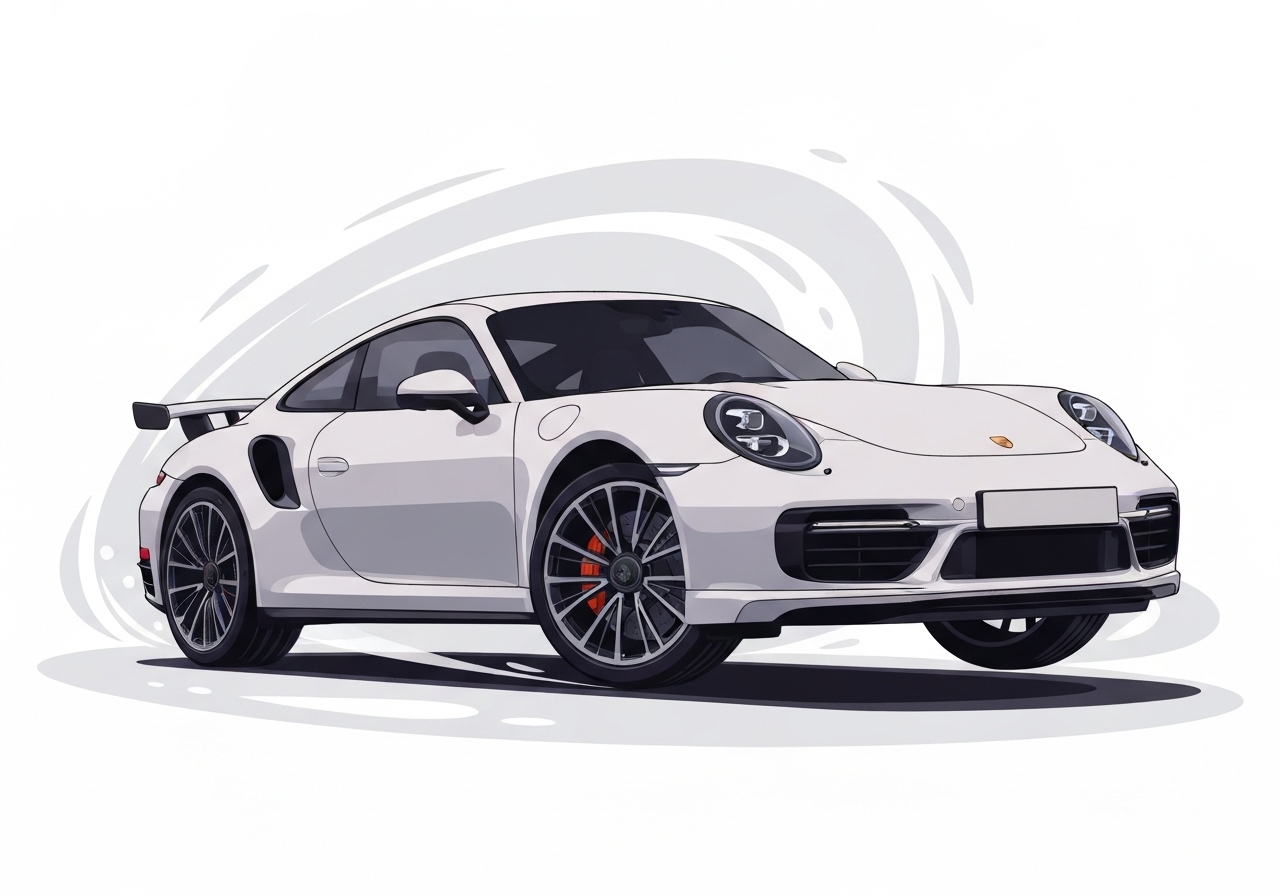
At the 2025 Munich Motor Show on September 7, Porsche unveiled the 2026 911 Turbo S, a hybrid 992.2 model that combines electric assistance with twin electric turbochargers to deliver unprecedented performance. The company rates the car at 701 horsepower, with a 0–60 mph time of 2.4 seconds and a Nürburgring lap of 7:03.92 — 14 seconds quicker than the outgoing Turbo S. Porsche says the package arrives with heavier curb weight but measurable aero and chassis upgrades aimed at keeping handling sharp.
Key Takeaways
- The 2026 Porsche 911 Turbo S uses a T‑Hybrid architecture with a 1.9 kWh, 400‑volt lithium‑ion battery in the trunk and an e‑motor between the flat‑six engine and the eight‑speed PDK transmission.
- Total system output is 701 hp (peak between 6,750–7,000 rpm) and 590 lb‑ft of torque (available from 2,300–6,000 rpm), making it the most powerful road‑going 911 to date.
- Performance figures include 0–60 mph in 2.4 seconds and a Nürburgring Nordschleife lap of 7:03.92, 14 seconds faster than the previous Turbo S.
- The Turbo S gains roughly 180 lb of mass versus its predecessor to a curb weight of 3,829 lb, reflecting hybrid hardware and additional systems.
- New twin electric turbochargers spool almost instantly, remove the need for a conventional wastegate and can harvest energy back to the battery or traction motor.
- Aero and chassis updates — active grille shutters, an active front diffuser, deployable splitter and rear wing plus PDCC and 400‑volt‑driven adjustable anti‑roll bars — reduce drag up to 10% in the most efficient setting.
- Standard high‑end hardware includes carbon‑ceramic brakes (16.5‑inch front, 16.1‑inch rear), wider 325/30R21 rear tires, Turbonite trim accents and a titanium sports exhaust.
- U.S. starting prices are $272,650 for the coupe and $286,650 for the Cabriolet, roughly $30,000 above the outgoing Turbo S and subject to further tariff impacts.
Background
Porsche began introducing electrified technology across the 911 range to lift performance while addressing emissions and efficiency targets. The Carrera GTS introduced a T‑Hybrid layout with a single electric turbocharger; engineers have now adapted and expanded that architecture for the Turbo lineage. The hybrid approach places a small high‑voltage battery in the trunk and an e‑machine between the engine and transmission to provide instant torque and enable electric turbo actuation.
The Turbo name has historically signified Porsche’s most tractable and fastest street 911s, balancing daily usability with outright pace. Earlier flagship variants such as the GT2 RS pushed peak output into the high 600s; the new Turbo S’s 701 hp surpasses those figures while staying true to Turbo’s all‑wheel‑drive stability. The shift to hybrid forced tradeoffs: more hardware and packaging complexity, but also new opportunities for energy recovery and faster boost response.
Main Event
Porsche presented the 992.2 Turbo S with twin electric turbochargers that carry small motors on the shaft connecting turbine and compressor wheels. Those motors spool the turbos without typical lag, apply braking torque that negates a separate wastegate, and reclaim energy that can either recharge the 1.9 kWh battery or feed the traction motor. Porsche says the turbine and compressor wheels for the Turbo S are slightly smaller than the GTS’s, tuned for quicker transient response under high load.
The driveline yields 701 hp and 590 lb‑ft of torque, with the horsepower plateauing between 6,750 and 7,000 rpm and torque spread from 2,300 to 6,000 rpm. Porsche highlights a 0–60 mph sprint in 2.4 seconds and a Nürburgring Nordschleife time of 7:03.92 — improvements it attributes to the hybrid boost, refined aero and upgraded chassis controls.
Chassis and stopping systems are updated for the higher output and altered weight distribution. The car features Porsche Dynamic Chassis Control (PDCC) with 400‑volt driven adjustable anti‑roll bars, and carbon‑ceramic brakes with 16.5‑inch rotors up front and 16.1‑inch rotors at the rear. Tire stagger increases rear width to 325/30R21 from 315/30R21 to handle greater rear bias and torque, while the fronts remain 255/30R20.
Exterior changes are evolutionary: active grille shutters, an active front diffuser working with a deployable splitter and a rear wing, and widened rear fenders consistent with Turbo tradition. Porsche claims aerodynamic refinements yield up to a 10% reduction in drag coefficient when set to the most efficient mode. Inside and out, Turbonite brown/gray accents and new center‑lock wheels distinguish the model, and options include carbon‑fiber wiper arms and an available titanium sports exhaust as standard equipment.
Analysis & Implications
Technically, the Turbo S demonstrates how hybridization can be used not just for emissions but to unlock new performance envelopes. The electric turbo concept short‑circuits classic turbo lag and allows energy that would otherwise be lost to be redeployed for propulsion or storage. That creates a power delivery profile combining electric immediacy with high‑revving combustion output — a template likely to appear across high‑performance powertrains.
Weight remains the principal downside. The Turbo S’s curb weight of 3,829 lb is about 180 lb heavier than its predecessor, eroding some handling and efficiency gains. Porsche argues the chassis and aero upgrades offset the penalty, which the Nürburgring time tends to support, but real‑world balance and tire wear in repeated high‑load use will be a key test for owners and track operators.
Commercially, the price jump to $272,650 (coupe) and $286,650 (Cabriolet) places the model deeper into supercar territory, narrowing the gap to mid‑engine performance cars while keeping the 911’s usable daily character. Tariffs and supply chain factors — Porsche does not build core 911 models in the U.S. — could push final customer prices higher, which may affect demand elasticity among traditional Turbo buyers.
Strategically, the Turbo S signals Porsche’s path forward: extract extra performance from hybrid systems while preserving the 911’s identity. Expect this approach to inform future high‑end variants and possibly filter down into lesser 911 trims as hybrid hardware becomes lighter and more integrated.
Comparison & Data
| Model | Peak Power | 0–60 mph | Nürburgring | Curb Weight (lb) |
|---|---|---|---|---|
| 2026 911 Turbo S (992.2) | 701 hp | 2.4 s | 7:03.92 | 3,829 |
| Outgoing 911 Turbo S | 640 hp | — | 7:17.92 (approx.) | 3,649 |
| 911 GT2 RS (previous high‑power benchmark) | 691 hp | — | — | — |
The table isolates core numbers to show where gains came: a 61‑hp increase over the previous Turbo S and a significant Nürburgring improvement believed to result from combined powertrain, aero and chassis changes. Weight numbers reflect a hybrid penalty of approximately 180 lb; Porsche emphasizes lap time improvements despite that penalty.
Reactions & Quotes
Early official messaging framed the car as a technological leap for the 911 range, focusing on performance and drivetrain innovation.
“The twin electric turbochargers deliver immediate boost and allow us to reclaim energy that used to be wasted, while keeping the 911 character intact,”
Porsche (official statement)
Independent industry observers noted both the performance upside and the tradeoffs involved.
“This is a bold step: massive power and quicker lap times, but the weight penalty will be a key variable for buyers who track their cars regularly,”
Independent automotive analyst (industry)
Enthusiasts and forum users highlighted price and customization as central to purchasing decisions.
“It’s the most powerful 911, but buyers will weigh the added cost against what they want from a daily‑driven Turbo,”
Porsche enthusiast community (public reaction)
Unconfirmed
- Long‑term real‑world fuel economy and charging behavior for the small 1.9 kWh battery have not been independently verified beyond factory claims.
- Exact U.S. on‑road prices after regional tariffs and dealer add‑ons remain subject to change and were not finalized at launch.
- Durability and long‑term maintenance costs for the twin electric turbo hardware under heavy track use are not yet documented by independent testing.
Bottom Line
The 2026 Porsche 911 Turbo S is a decisive engineering statement: hybridization and electric turbocharging combine to produce the most powerful road‑going 911 in Porsche’s history. Measurable gains in straight‑line speed and lap performance demonstrate the potential of the approach, even as added mass and higher price introduce tradeoffs for some buyers.
For enthusiasts seeking peak 911 performance with modern electrified technology, the Turbo S is a compelling but costly proposition; for Porsche, it sets a technical direction that will influence future performance models. Observers should watch for independent long‑term testing on reliability, fuel economy, and track repeatability as the car reaches customers.
Sources
- Porsche (official press material) — official press release and technical brief from manufacturer
- Motor1 (media) — contemporary coverage and hands‑on reporting
- Nürburgring (official) — track timing and circuit information