
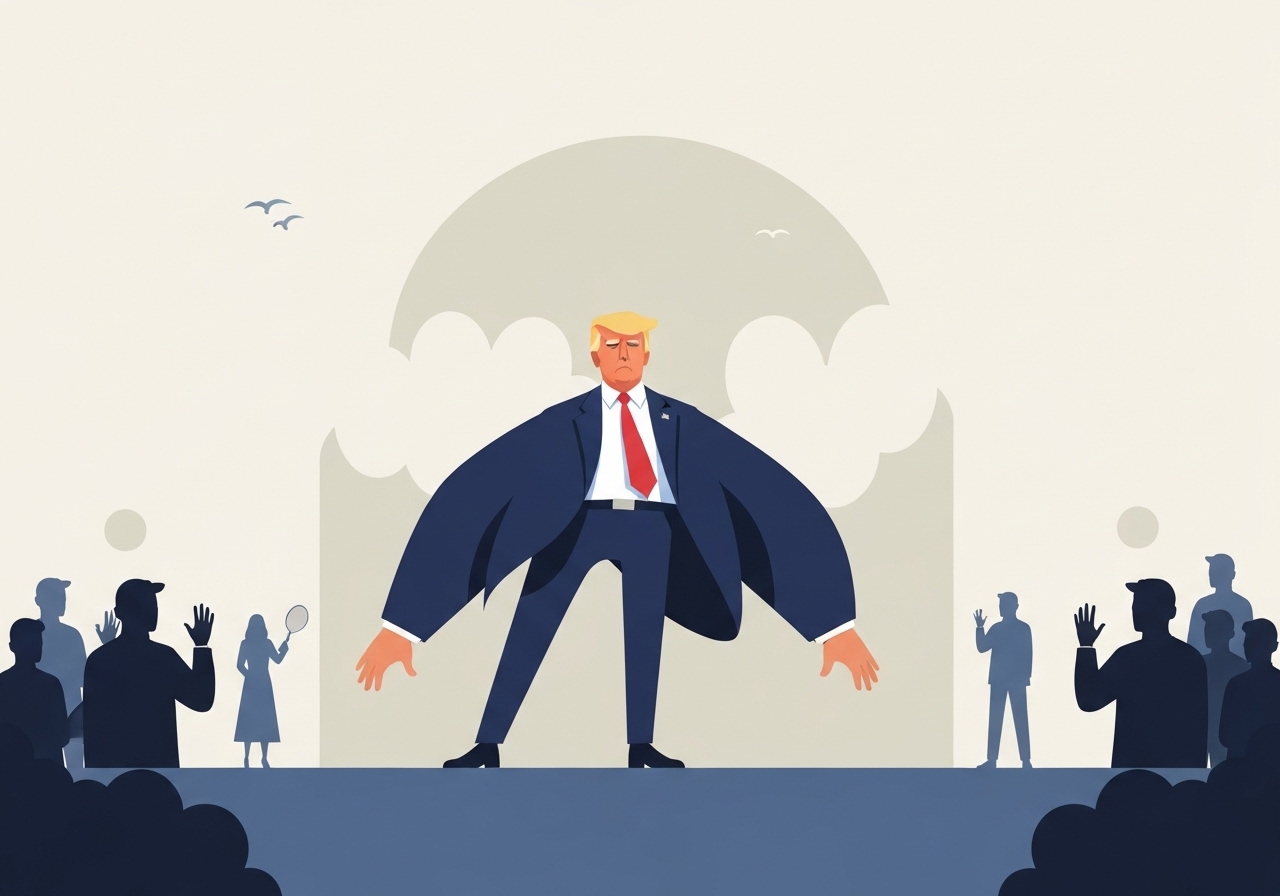
Donald Trump returned to the US Open on 8 September 2025, attending the men’s final at Arthur Ashe Stadium in Flushing Meadows. His on-screen salute and presence drew a loud mix of boos and cheers from a crowd sheltering under a closed roof as rain fell, and he left the venue shortly after match point. Organisers’ pre-match instructions to broadcasters and an enlarged security footprint shaped the atmosphere; spectators and commentators interpreted the scene as both spectacle and political theater. The episode has been read variously as a calculated bid for optics, an instance of political protest in a sport that prizes tradition, and a test of how public institutions handle high-profile presidential appearances.
Key takeaways
- Donald Trump attended the US Open men’s final on 8 September 2025 at Arthur Ashe Stadium; Jannik Sinner faced Carlos Alcaraz in the match that night.
- The crowd booed Trump repeatedly when he appeared on the stadium’s large screens; the Ashe roof had been closed for rain, amplifying the sound.
- The USTA reportedly issued a memo to broadcasters urging minimisation of visible dissent; the organisation later released a brief statement described in coverage as an 11-word reply.
- Alcaraz was presented the men’s trophy; Trump left the stadium within minutes of match point, according to pool reports cited by reporters.
- Past presidential appearances at the Open — notably Bill Clinton’s visits in 2000 and 2009 and the Obamas’ attendance in 2022 — were lower-key and typically framed around supporting American players.
- Security measures tied to the president’s visit produced long lines and delays for some fans, and organisers’ handling of camera coverage and trophy presentation influenced public reaction.
Background
The US Open has long attracted political and celebrity figures; presidents and former presidents have attended in ways that typically focused on sport and national players. Bill Clinton’s 2000 attendance at Pete Sampras’s semi-final and his 2009 participation in Arthur Ashe commemorations are examples where the visit was integrated into tournament traditions. The Obamas’ presence at high-profile matches, including in 2022, was similarly framed around support for US competitors rather than spectacle.
Donald Trump has a history with the tournament and with New York events more broadly. He last attended the Open in 2015, the year he launched his presidential campaign, and had been met with boos during earlier appearances. That pattern of mixed reception has informed organisers’ sensitivity to his return this year, and it shaped planning for broadcasting, security and guest seating ahead of the final.
Main event
On 8 September 2025, as the men’s final progressed between Jannik Sinner and Carlos Alcaraz, the stadium screens showed Trump standing for the anthem. The visual — a large, isolated figure on the jumbotron — drew a brisk chorus of boos that seemed to swell when the roof was closed. Observers noted his brief smirk during the reaction and, later, the crowd’s extended disapproval when cameras cut to his box during set changeovers.
Reports said the USTA had circulated guidance to broadcasters about avoiding shots that emphasised dissent, a move covered widely by the press. When Trump was shown again in the second-set changeover, the crowd’s reaction was longer and more sustained. Organisers also placed a men’s trophy near the VIP area earlier in the day; some accounts describe a last-minute adjustment to the presentation routine that resulted in the player receiving the trophy from a different part of the court.
The match concluded with Alcaraz lifting the trophy, preserving the custom of the champion moving into the crowd to celebrate with team and family — a moment during which Trump remained in his box and then departed soon after the final point, according to White House pool coverage cited by reporters. Large security formations that accompanied him arrived and dispersed with his movement through the grounds, affecting fan flow and access before and after the match.
Analysis & implications
Public events such as Grand Slam finals are raw material for political imagery: the scale of the venue, the televised audience and the ceremonial elements (anthem, trophy presentation) offer powerful optics. In that sense, a presidential appearance can be read as an attempt to harness soft power. For Trump, the combination of large screens and dramatic, visible posture aligns with a long-running emphasis on strongman-style imagery.
But the reception matters. In a multicultural, densely attended east-coast crowd accustomed to conspicuous wealth and celebrity, visible disapproval sent a clear signal that many fans were not receptive to the spectacle. That disconnect can erode the intended message of authority or popularity, turning a planned photo-op into evidence of dissent. The boos, amplified by the closed roof and broadcast shots, created a counter-image that undercut the intended effect.
The USTA’s management choices — from media guidance to camera framing — reveal the dilemmas sports federations face when national politicians attend marquee events. Organisations must balance security requirements, sponsor relationships and broadcast obligations while attempting to stay neutral. Attempts to suppress or minimise visible protest can backfire, raising questions about fairness, editorial control and the boundary between hospitality and partisan favouritism.
Comparison & data
| Year | President/Visitor | Notable detail |
|---|---|---|
| 2000 | Bill Clinton | Attended Sampras–Hewitt semi; joined commentary; engaged with players |
| 2009 | Bill Clinton | Keynote speech for Arthur Ashe induction |
| 2015 | Donald Trump | Campiagn-era attendance; mixed fan reaction |
| 2025 | Donald Trump | Men’s final appearance; repeated boos; left soon after match point |
The table highlights how presidential presence has varied: earlier visits tended to emphasise celebration of players and tournament history, while the 2025 appearance was read by many as more performative and politically charged. Limited quantitative data is publicly available about noise levels or the exact duration of boos; reporting instead focuses on sequence, optics and immediate audience reaction.
Reactions & quotes
Players, officials and spectators offered different interpretations of the moments surrounding the anthem and the trophy ceremony. The stadium’s mix of support for the sport and visible political protest underscored how national politics and major sporting events increasingly intersect.
“For me, playing in front of him, I don’t want myself to be nervous,”
Carlos Alcaraz, player
“He wants to be the bride at every wedding, the corpse at every funeral, and the baby at every christening.”
Alice Roosevelt Longworth (historical quip often cited by commentators)
Unconfirmed
- Whether the USTA intentionally staged the trophy placement or camera sequences to embarrass or neutralise the president is not confirmed by an internal, attributable document.
- The president’s personal motive for attending — whether to divert attention from other political issues — remains an interpretation offered by commentators rather than a declared aim.
- Specific operational decisions by Rolex executives or other suite hosts regarding invitations or seating requests have been reported but not independently corroborated through official disclosures.
Bottom line
The US Open appearance underlined how presidential visibility at high-profile sports events can produce unpredictable political theatre: organisers and broadcasters face competing pressures to manage safety, sponsor expectations and public sentiment. In this case, the crowd’s sustained boos flipped the intended narrative for many observers, turning a staged posture into evidence of public pushback.
For sports federations, the episode is a reminder that attempts to engineer optics can trigger stronger reactions than anticipated. For political actors, stadium moments remain tempting because of their symbolic reach — but the response in Flushing Meadows shows that symbolism can be resisted in real time by a vocal public and by the constraints of live sport.