
Lead
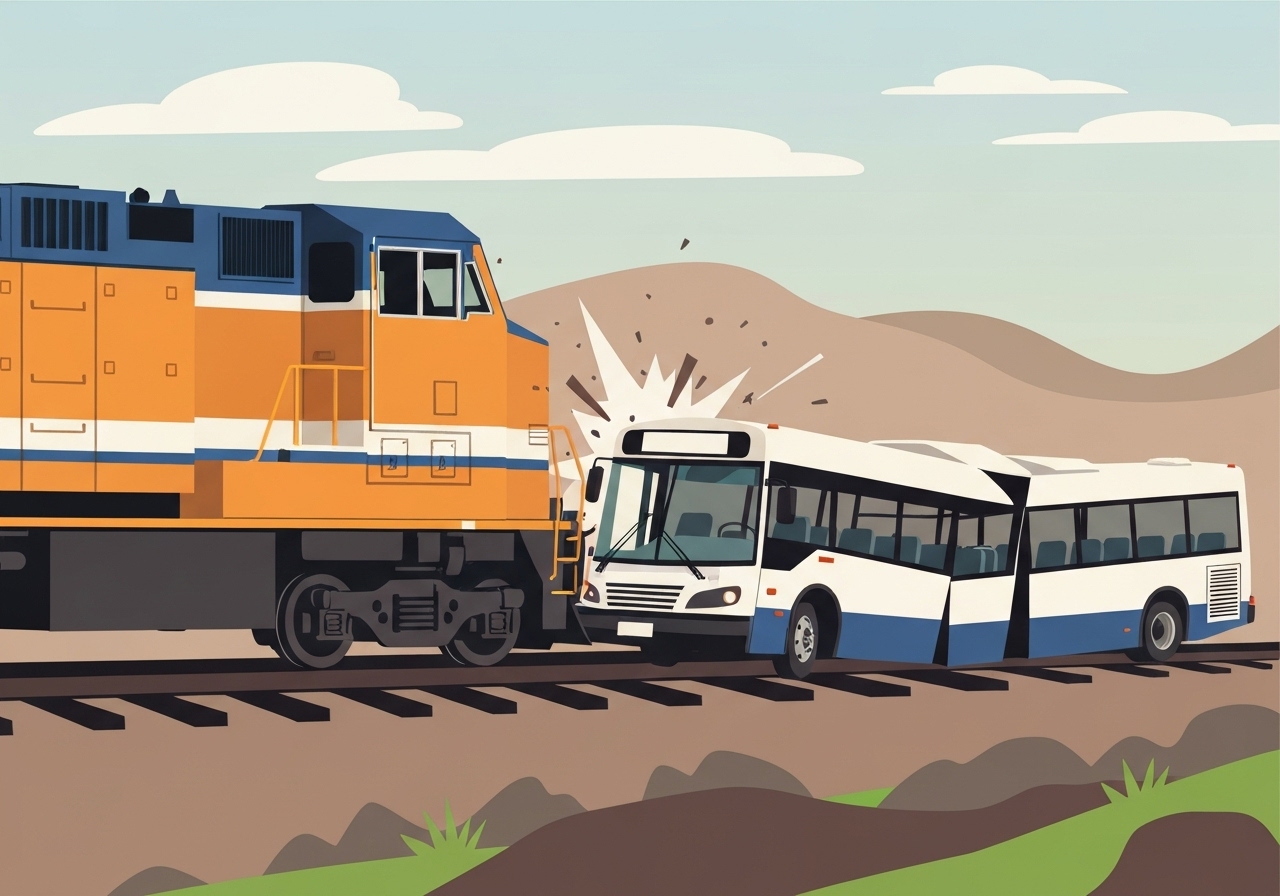
On Monday, Sept. 8, 2025, a freight train struck a double-deck bus in the industrial town of Atlacomulco, about 80 miles (130 kilometres) northwest of Mexico City, killing at least eight people and injuring 45. Emergency crews, soldiers and company personnel worked at the scene through the afternoon as investigators began documenting damage and collecting witness accounts. The bus belonged to the Herradura de Plata line; Canadian Pacific Kansas City (CPKC) confirmed the collision and said its staff were cooperating with authorities. Video circulating on social platforms shows the bus crossing tracks in heavy traffic before a fast-moving train hit it at midsection.
Key Takeaways
- Fatalities and injuries: At least 8 people were killed and 45 were injured in the crash on Sept. 8, 2025, in Atlacomulco, State of Mexico.
- Location and setting: The collision occurred in an industrial area of warehouses and factories about 80 miles (130 km) northwest of Mexico City.
- Vehicles involved: A double-deck passenger bus from Herradura de Plata was struck by a CPKC-operated freight train and heavily damaged; eyewitness footage shows the bus roof torn away.
- Signals and infrastructure: Video reviewed by reporters shows no visible crossing gates or active warning signals at the immediate crossing prior to impact.
- Response: State civil defense, local emergency services, soldiers and CPKC personnel responded; searches and casualty removals continued into the afternoon.
- Evidence: Multiple short videos circulated on social platforms showing the bus in traffic crossing the tracks seconds before the train arrived.
- Operator statement: Canadian Pacific Kansas City confirmed the accident, expressed condolences and said its employees were assisting authorities at the site.
Background
Rail-road intersections remain a safety challenge in many parts of Mexico, where freight corridors cross secondary roads and industrial zones. Grade-separated crossings, gates and active warning systems reduce collision risk but are unevenly distributed; smaller towns and industrial estates often rely on passive signs or limited controls. Bus operators commonly route passengers along arterial roads that intersect rail rights-of-way, increasing exposure to potential conflicts when traffic is congested.
Previous high-profile collisions involving road vehicles and trains in Mexico have prompted short-term investigations and occasional infrastructure investments, but long-term upgrades require coordination among federal, state and municipal authorities plus rail companies. Freight traffic on major north–south and east–west corridors has grown in recent years, driven by cross-border logistics, increasing the volume and speed of trains that share territory near towns and industrial parks.
Main Event
According to civil defense and eyewitness video, the bus moved slowly across the rail line amid heavy road traffic when a freight train suddenly emerged and struck the bus in its midsection. The force of the impact carried the bus down the track and tore off large portions of the upper structure; in some shots the bus roof is missing and people are visible on the top level as rescuers arrive.
Authorities on scene confirmed casualty removals and triage operations. Local ambulances and military personnel assisted rescue teams; municipal and state civil protection units posted updates on social platforms that investigators were still securing the area and cataloguing victims. Hospital sources reported multiple patients arriving with trauma consistent with a high-energy collision.
CPKC issued a brief confirmation that its train was involved, expressed condolences to families and said company personnel were cooperating with investigators at the scene. The Herradura de Plata company had not issued an immediate public comment on passenger lists or operational details early in the response phase.
Analysis & Implications
The immediate tragedy will prompt both criminal and civil inquiries: investigators will examine whether crossing controls met regulatory standards, whether the bus driver had clear sightlines, whether traffic control or signalling was functioning, and whether train crew actions complied with operating procedures. In collisions between heavy freight trains and buses, investigators often focus on three interacting elements: infrastructure (gates, lights, sightlines), vehicle operation (speed and driver decision-making) and traffic conditions (congestion, driver behavior, other road users).
For the local community of Atlacomulco and for regional transport planners, the crash exposes systemic gaps in how industrial zones interface with freight rail. Upgrading crossings—installing active gates, lights, or grade separation—requires funding and intergovernmental coordination; short-term fixes such as improved signage and enforcement are faster but less protective. If investigations show inadequate controls, authorities may pursue emergency safety orders or litigation to compel upgrades along the corridor.
Economically, collisions that disrupt freight corridors create ripple effects in supply chains, especially where single-track segments carry frequent, long trains. For the bus operator, the immediate legal and reputational exposures are substantial: passenger manifest accuracy, driver qualifications and route permissions will be scrutinized. Politically, high-casualty transport accidents can accelerate regulatory changes if they draw sustained media and public attention.
Comparison & Data
| Item | Value |
|---|---|
| Date | Sept. 8, 2025 |
| Location | Atlacomulco, State of Mexico (≈80 miles /130 km NW of Mexico City) |
| Fatalities | At least 8 |
| Injuries | 45 |
| Bus operator | Herradura de Plata (double-deck) |
| Train operator | Canadian Pacific Kansas City (CPKC) |
The table above summarizes the confirmed core facts released by authorities and the train company in the first hours after the crash. Detailed forensic analysis (braking marks, black box/signal logs, witness timelines) will be needed to determine precise sequence and contributing causes. Historical accident data show that multi-fatality collisions at level crossings frequently involve combinations of limited visibility, absent or nonfunctional gates, and high vehicle exposure.
Reactions & Quotes
“We regret this accident and extend our condolences to the families of those affected. Our personnel are assisting local authorities at the site,”
Canadian Pacific Kansas City (company statement)
“Emergency teams and soldiers continue search and rescue and casualty removal operations; the scene remains active as evidence is collected,”
State of Mexico Civil Defense (official update)
“Collisions at crossings are rarely the result of one factor—improvements must address infrastructure, operations and local traffic patterns to reduce future risk,”
Independent transport safety researcher
Unconfirmed
- Whether the crossing had an officially installed gate or active warning system; video shows no visible gates but official confirmation is pending.
- The train’s speed at the moment of impact has not been publicly released and remains under investigation.
- The exact number of passengers aboard the bus and final casualty list beyond the early count of 8 dead and 45 injured are still being verified.
- Whether roadway congestion or a traffic signal cycle contributed to the bus entering the crossing is not yet established.
Bottom Line
The collision in Atlacomulco underscores persistent risks where growing freight rail activity intersects with local road traffic. In the short term, families and local hospitals will cope with trauma and loss while authorities secure the scene and identify victims. Investigations over the coming days will determine whether infrastructure shortcomings, operational error, or other factors were decisive.
Longer term, the event may accelerate calls for targeted investments—gates, signals or grade separation—on vulnerable crossings, and it will raise questions about enforcement and routing of passenger buses through high-risk corridors. Policymakers, rail operators and municipal authorities will face pressure to translate this tragedy into concrete safety improvements to prevent recurrence.
Sources
- AP News — news report (AP)
- Canadian Pacific Kansas City (CPKC) — company (official statement)