
Lead
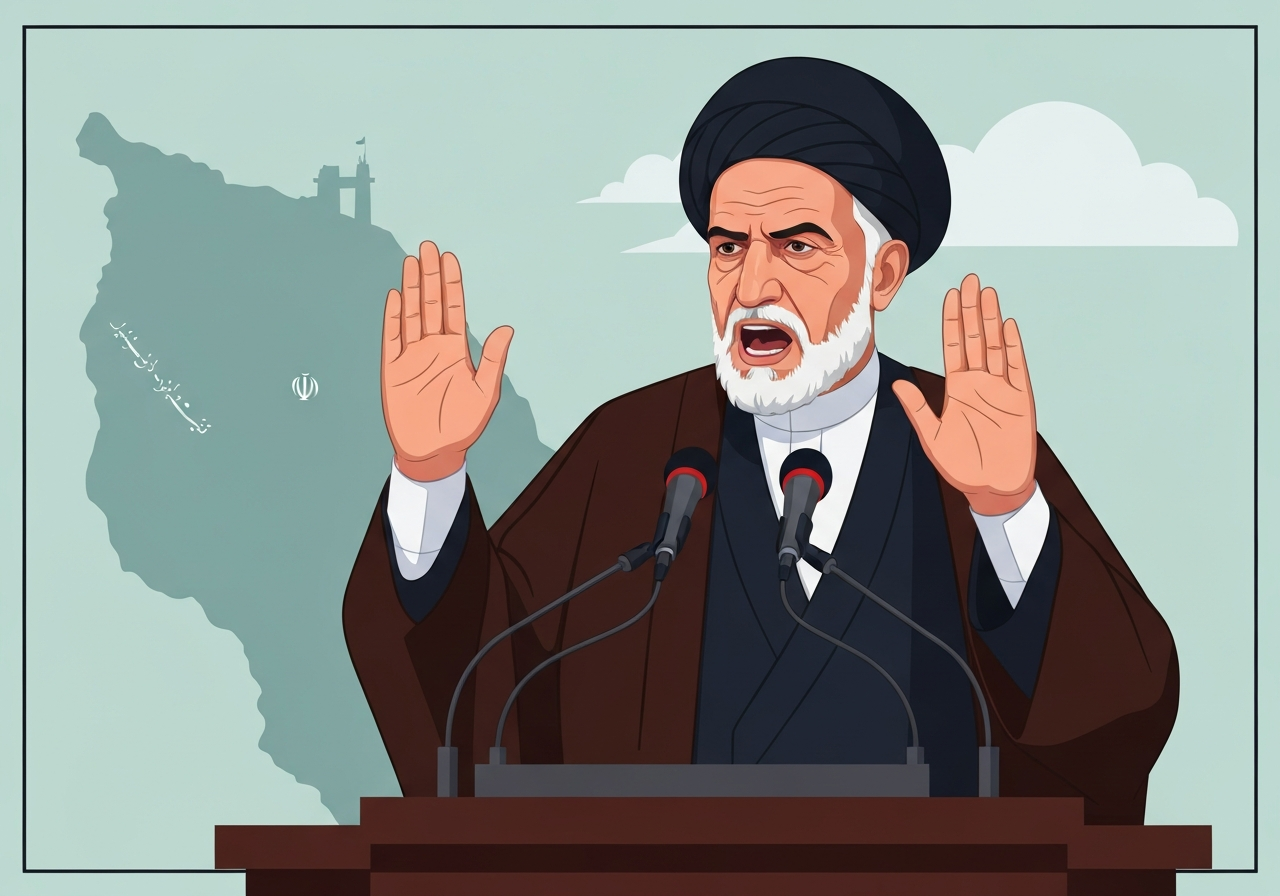
In a brief statement broadcast on state television on March 12, 2026, Ayatollah Mojtaba Khamenei—identified by Iranian authorities as the country’s new supreme leader—said the Strait of Hormuz will remain effectively closed as a “tool of pressure.” The message, read on his behalf, is the first purported public communication since his appointment; Mojtaba Khamenei has not been seen in video or audio. The announcement comes as Iranian forces have attacked ships in the Persian Gulf and the International Energy Agency warned of the largest supply disruption in the history of the global oil market. The declaration deepens market uncertainty and raises the prospect of wider regional escalation.
Key Takeaways
- The statement attributed to Mojtaba Khamenei was broadcast on March 12, 2026; he has not appeared in person on video or audio since his appointment.
- The International Energy Agency said the conflict may be causing the “largest supply disruption in the history of the global oil market,” while Brent crude hovered near $100 a barrel on Thursday.
- Iran has attacked multiple commercial vessels; Greenpeace mapped 85 large tankers trapped in the region holding roughly 21 billion liters of oil, raising spill and ecological risks.
- About one-fifth of global oil and LNG normally transit the Strait of Hormuz; alternative pipelines add an estimated 3.7–5.7 million barrels per day (BPD) of spare capacity, according to the IEA.
- Lebanon faces mounting humanitarian strain: more than 800,000 displaced and nearly 700 reported killed by Israeli strikes, per Lebanese authorities and the UN; mass evacuations continue.
- US officials say some European air defenses were repositioned to the Middle East; US Energy Secretary Chris Wright said the US Navy is not yet ready to escort commercial vessels through the strait.
- Domestic US energy policy moves are under consideration, including a possible temporary Jones Act waiver to ease coastal flows and blunt gasoline price increases.
Background
The current crisis followed a major escalation on February 28, 2026, when Iranian officials said their then-supreme leader, Ayatollah Ali Khamenei, was killed in a joint US-Israeli strike on his Tehran compound. Iran’s state institutions subsequently named Mojtaba Khamenei as supreme leader. Officials and analysts note this succession has been fast-tracked amid active conflict, with state media elevating Mojtaba’s clerical rank to bolster religious legitimacy.
Since the outbreak of hostilities, Iran has limited internet and communications nationwide, according to NetBlocks, constraining independent reporting and complicating verification of events inside Iran. The tight information environment has amplified contradictory reports—ranging from casualty counts to the condition of senior figures—and slowed external assessments of the regime’s cohesion.
Main Event
The purported message attributed to Mojtaba Khamenei, read on state television on March 12, declared the Strait of Hormuz would remain essentially closed as a “tool of pressure.” State media framed the move as a response to US military basing in neighboring countries and to the strikes that killed Ali Khamenei. Iranian forces have continued attacks on commercial shipping in the Persian Gulf and adjacent waters.
International responses have been immediate. The International Energy Agency (IEA) signaled severe market disruption, and global benchmark crude prices rose toward $100 a barrel. US Energy Secretary Chris Wright said the US Navy is not yet prepared to escort commercial vessels through the strait, and the White House is considering temporary domestic measures to ease fuel delivery, including a possible Jones Act waiver.
On the ground in the Levant, Israel stepped up operations against Hezbollah in Lebanon: the IDF reported new strikes in Beirut, evacuation orders expanded, and UN and IOM officials warned displacement could top one million people within days. Humanitarian agencies highlighted urgent shelter, water and medical needs as urban damage and internal displacement rose rapidly.
Analysis & Implications
The closure of the Strait of Hormuz—through attacks on tankers or effective denial of transit—directly threatens roughly one-fifth of the world’s ordinary crude and LNG shipments. That choke-point status means even partial disruption creates outsized price and supply volatility. The IEA’s assessment that this is the largest supply shock on record underscores how concentrated flows through Hormuz magnify risk.
Physical alternatives are limited. IEA estimates of spare pipeline capacity across the Gulf range 3.7–5.7 million BPD, a fraction of the roughly 20 million BPD that normally passes the strait. Saudi Arabia’s East–West (Petroline) capacity was reported increased to 7 million BPD in March 2025, but actual tested flows remain far lower and port-loading constraints (Yanbu) limit how fast additional crude can reach market.
Beyond markets, the closure raises strategic dilemmas for external actors. A decision to escort commercial traffic would increase US and allied military exposure; withdrawing or remaining passive would prolong economic pain for consuming countries. Domestically, US leaders face pressure to protect supply and mitigate gasoline price inflation—already noted in weekly retail averages—while avoiding steps that could further escalate hostilities.
Comparison & Data
| Route | Typical flow (BPD) | Reported spare capacity (BPD) |
|---|---|---|
| Strait of Hormuz (sea transit) | ~20,000,000 | — |
| Saudi East–West pipeline (Yanbu) | ~2,000,000 currently | 3,000,000–5,000,000 (capacity claimed 7,000,000) |
| UAE Fujairah–Habshan pipeline | smaller flows | ~700,000 |
These figures illustrate why rerouting cannot fully replace Hormuz throughput. Even optimistic spare pipeline figures would cover only a portion of disrupted seaborne exports, leaving a substantial supply gap that has pushed benchmark prices upward and increased incentive for strategic stock releases.
Reactions & Quotes
US lawmakers and former officials reacted sharply. Senator Chris Murphy called the campaign against Iran “incoherent” and warned of political and economic costs at home; his comments reflect widening congressional concern about strategy and civilian harm.
This is the most incompetent, incoherent war America has fought in the last 100 years…there is no viable war plan.
Sen. Chris Murphy (D)
Former Secretary of State John Kerry emphasized the economic fallout and long-term energy implications, urging a renewed focus on reducing dependency on external suppliers.
No one should underestimate Iran’s capacity to conduct asymmetrical warfare; this energy shock could get even more out of control.
John Kerry, former US Secretary of State
Iranian officials framed their campaign as retaliation and deterrence. Top security official Ali Larijani dismissed expectations of a quick US victory and framed continued attacks as a response to perceived US actions.
Trump says he is looking for a speedy victory…while starting a war is easy, it cannot be won with a few tweets.
Ali Larijani, Iran top security official
Unconfirmed
- There is no independent, verified video or audio of Mojtaba Khamenei speaking; the statement was read on his behalf and his physical status remains publicly unverified.
- Conflicting Iranian reports exist about the condition of Mansoureh Khojasteh Bagherzadeh (the late leader’s wife); state-linked outlets later denied earlier claims of her death, and CNN could not independently verify her status.
- Some reports that Russia is providing real-time targeting assistance to Iran have appeared in media briefings; full details and scope of any such support remain unconfirmed in open-source public records.
Bottom Line
The purported statement from Mojtaba Khamenei signaling an ongoing closure of the Strait of Hormuz ratchets up both economic and military risk. Even limited or temporary denial of passage drives immediate price volatility and heightens the chance of broader naval or air engagements as outside powers weigh protective or retaliatory options.
Near term, markets and consumers will watch whether pipeline throughput and strategic releases (including US SPR adjustments) can blunt supply shocks. Politically, the episode intensifies scrutiny of policy choices—from escort operations and coalition building to domestic fiscal and energy measures—that will determine whether the crisis compounds or stabilizes.