
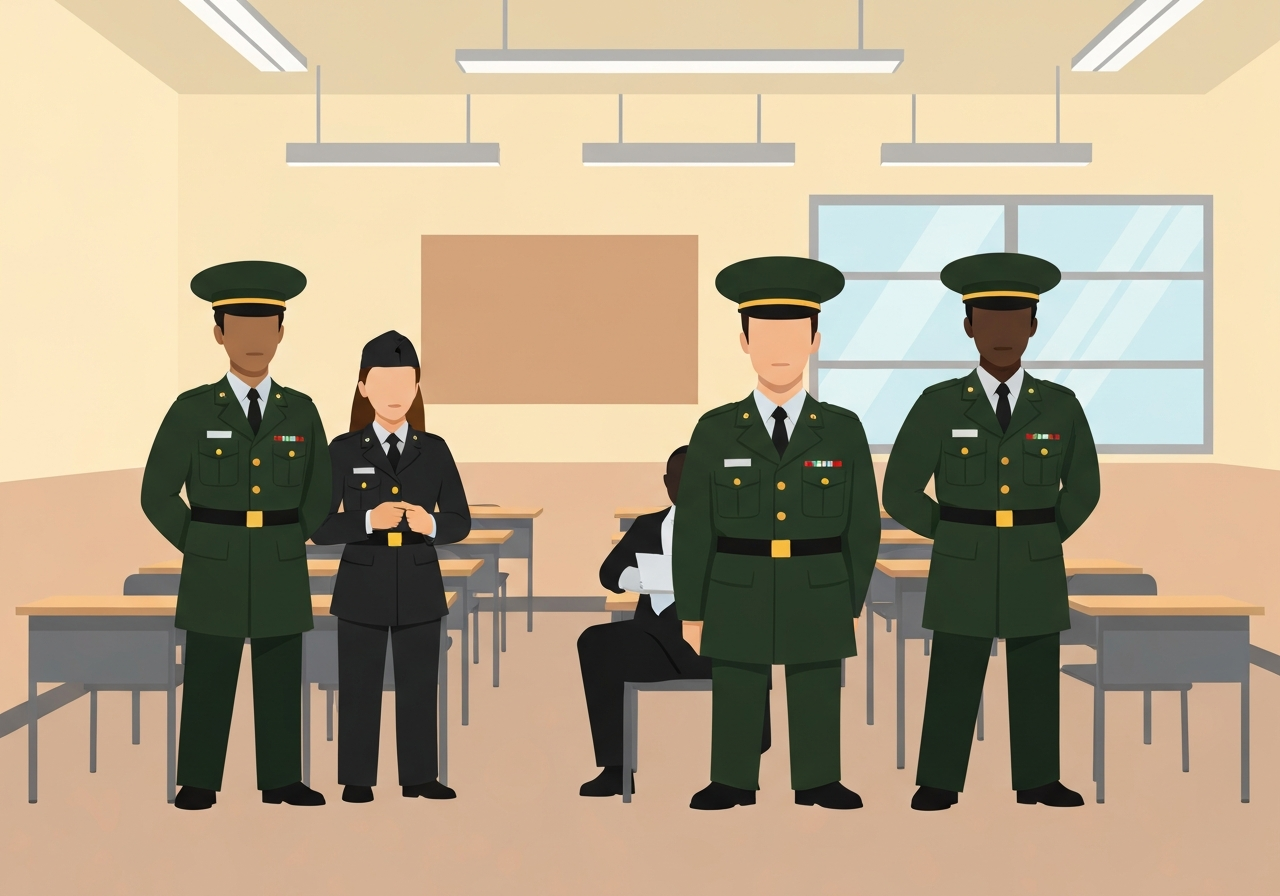
— ROTC students on the Old Dominion University campus in Norfolk, Virginia, interrupted a classroom shooting that left the course instructor dead and two others wounded. The suspect, identified by the FBI as 36-year-old Mohamed Bailor Jalloh, was rendered deceased during the confrontation; investigators are treating the incident as an act of terrorism. Authorities say the gunman entered a College of Business classroom, asked whether it was an ROTC session, then opened fire. Local and federal agencies continue to investigate motive and the sequence of events that followed the attack.
Key Takeaways
- Incident date and place: March 12, 2026, College of Business, Old Dominion University, Norfolk, Virginia.
- Fatality and injuries: The classroom instructor, identified as Lt. Col. Brandon Shah, was killed; two other people were injured, one listed in critical condition and the other treated and released.
- Suspect identity and background: The FBI identified the suspect as 36-year-old Mohamed Bailor Jalloh, a former Virginia National Guardsman who pleaded guilty in October 2016 to attempting to provide material support to ISIS and was sentenced to 11 years in 2017.
- Custody outcome: Students subdued the attacker; federal agents said the suspect was rendered deceased during the confrontation and was not reported to have been shot by law enforcement.
- Weapons and explosives: Investigators reported a single weapon in the classroom and found no explosives or additional weaponry in the suspect’s vehicle or other locations.
- Terrorism investigation: The FBI has characterized the shooting as terrorism; agents noted the suspect had been a subject of a prior FBI investigation into material-support allegations.
- Reported utterance: Authorities say the suspect shouted the phrase ‘Allahu Akbar’ before committing the attack; investigators have not found evidence tying the act to battlefield events in the Middle East.
Background
ROTC programs operate on many U.S. campuses and provide officer training alongside standard university courses. Instructors like Lt. Col. Brandon Shah combine military leadership and academic instruction; the presence of uniformed ROTC activities on campus can make those classrooms distinct targets in some violent incidents. Campus shootings remain comparatively rare but highly consequential because they occur in enclosed academic settings where students and faculty are unprepared for sudden attacks.
Mohamed Bailor Jalloh served in the Virginia National Guard from April 30, 2009, to April 29, 2015, holding the rank of specialist in the 276th Engineer Battalion, 91st Troop Command, according to Virginia National Guard statements. He pleaded guilty in October 2016 to attempting to provide material support to ISIS; a federal court sentenced him to 11 years in 2017, and records indicate he was released in December 2024. Those elements — prior service and a terrorism-related conviction — shape both the investigative focus and public scrutiny on how previously convicted individuals are monitored after release.
Main Event
According to law enforcement briefings, the suspect entered the College of Business classroom and asked whether the session was an ROTC class. When attendees confirmed it was, the suspect opened fire, killing the instructor and wounding two others. Students in the room confronted the attacker; federal officials stated the assailant was rendered deceased during that intervention. Local police and FBI agents arrived rapidly and secured the scene while beginning an evidence-gathering operation across campus and nearby locations.
FBI Special Agent in Charge Dominique Evans described the students’ actions as pivotal to ending the threat, saying they “rendered him no longer alive” and emphasizing that law enforcement response also helped limit further harm. Investigators reported finding only a single weapon associated with the suspect and no explosives in the vehicle or at additional sites. At the time of the briefing, no evidence had been uncovered linking the attack to battlefield events in the Middle East, though investigators noted the suspect had been a subject of earlier federal inquiries.
State officials and university leadership moved quickly to identify the deceased instructor. Virginia Governor Abigail Spanberger named Lt. Col. Brandon Shah and praised his service and impact on students. Hospital sources confirmed two other people were wounded; one remained in critical condition in initial reports and the other was discharged after treatment. The university canceled classes and activated campus support services while investigators continued their work on and off campus.
Analysis & Implications
The immediate implication is a renewed focus on campus safety and the specific vulnerabilities of ROTC classrooms. Institutions may reassess physical access controls, emergency communications, and instructor-protection measures; the episode underscores the value of preparedness training for both students and faculty. The decisive role played by students in this case will likely prompt debate about the balance between encouraging civilian intervention and promoting safer avoidance and escape tactics during active assailant events.
The suspect’s prior terrorism-related conviction and early release in December 2024 raise questions about supervision, risk assessment, and reentry monitoring for individuals with convictions tied to extremist support. Policymakers and law enforcement officials face competing priorities: protecting public safety, upholding legal limits on surveillance and civil liberties, and deploying resources—such as parole oversight or countering violent extremism programs—most effectively.
At a broader level, the FBI’s classification of the shooting as terrorism will shape investigative scope, evidence collection, and interagency coordination. If investigators establish a politically or ideologically motivated intent, federal prosecutorial priorities and intelligence reviews could follow. Conversely, if motive remains personal or idiosyncratic, responses may concentrate on local prevention, mental-health interventions, and campus security investments.
Comparison & Data
| Item | Detail |
|---|---|
| Date | March 12, 2026 |
| Location | Old Dominion University, College of Business, Norfolk, VA |
| Suspect | Mohamed Bailor Jalloh, 36 |
| Criminal history | Plead guilty Oct 2016; sentenced 2017 to 11 years; released Dec 2024 |
| Fatalities | 1 (instructor Lt. Col. Brandon Shah) |
| Injuries | 2 (one critical, one treated and released) |
The table above compiles the core factual data released by law enforcement and public records. These items frame the ongoing inquiry into motive, timeline and any potential lapses in oversight. Institutional review boards and campus safety offices will likely compare these data points to other campus incidents to identify practical changes in protocols.
Reactions & Quotes
The brave ROTC members in that room subdued him, and if not for them, I’m not sure, you know, what else he may have done.
Dominique Evans, Special Agent in Charge, FBI Norfolk
Evans used the FBI briefing to emphasize both the students’ actions and the agency’s terrorism investigation. Her remarks framed the students’ intervention as central to stopping further violence while also noting federal investigative resources were engaged.
The shooter is now deceased thanks to a group of brave students who stepped in and subdued him — actions that undoubtedly saved lives along with the quick response of law enforcement.
Kash Patel, FBI Director (social media)
FBI Director Kash Patel posted praise for the students and first responders on social media, an affirmation that circulated widely and was echoed by state officials. Such public statements are likely to influence immediate public sentiment and campus morale.
A devoted ROTC instructor, Lt. Col. Shah didn’t just lead a life of service to our country, he taught and led others to follow that path.
Gov. Abigail Spanberger (social media)
Gov. Spanberger publicly named the slain instructor and offered condolences, highlighting Shah’s military and instructional service. State leaders signaled support for the family, the ROTC program and campus responders as investigations proceed.
Unconfirmed
- The report that a single student killed the gunman with a knife was reported by media sources but has not been independently corroborated by federal officials at the time of the latest briefings.
- Whether the suspect acted entirely alone or had contact with others who may have influenced or aided him remains under investigation.
- While the suspect reportedly shouted ‘Allahu Akbar,’ investigators have not confirmed a specific operational link to foreign conflicts or to an organized terrorist cell.
Bottom Line
On March 12, 2026, decisive intervention by ROTC students halted a classroom attack at Old Dominion University that claimed the life of an instructor and wounded two others. Federal authorities have identified the suspect, cited his prior terrorism-related conviction and are treating the event as a terrorism investigation while continuing to gather evidence about motive and any external connections.
The case raises immediate policy and operational questions: how campuses protect instructors and students, how supervision and monitoring are handled after release from prison for terrorism-related offenses, and how to balance community safety with civil liberties. In the near term, university and law-enforcement reviews, along with continued public reporting, should clarify unanswered questions and guide any changes to training, access control, and interagency information-sharing.
Sources
- CBS News — news reporting and on-scene coverage (media)
- Federal Bureau of Investigation — field office statements and federal investigative authority (official)
- Federal Bureau of Prisons — inmate records and sentencing data (official)
- Office of the Governor of Virginia — official statements from the governor’s office (official)