
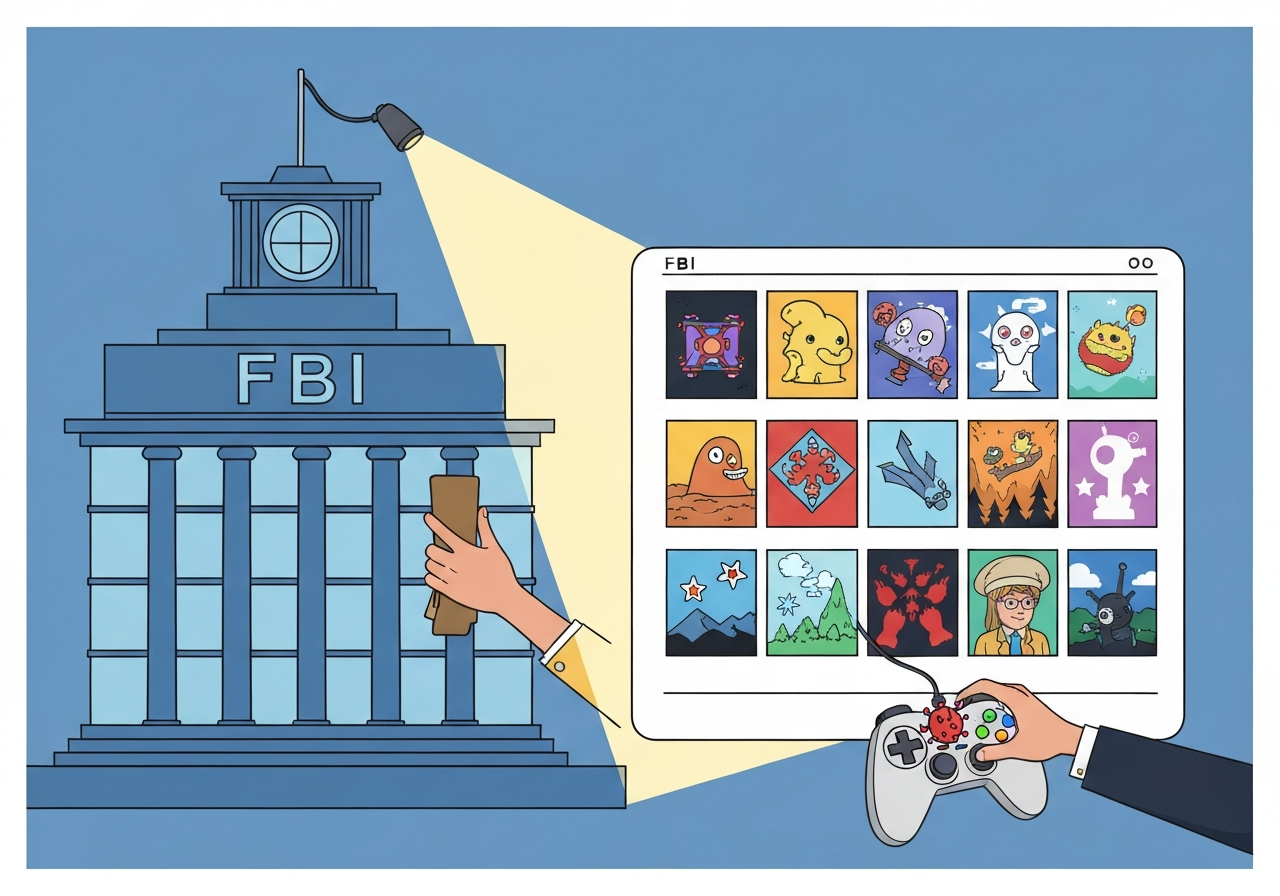
Lead: The U.S. Federal Bureau of Investigation on March 11 publicly opened a probe into a series of indie games distributed on Steam that were reportedly embedded with malware. The FBI’s Seattle Division says the campaign primarily targeted users between May 2024 and January 2026 and is asking possible victims to come forward. Seven titles are named in the alert, and at least one case involved a streamer who lost $32,000 during a Twitch fundraiser. Authorities say affected users may qualify for services, restitution, or legal rights under federal or state law.
Key Takeaways
- The FBI issued a public alert on March 11, 2026, about games on Steam containing malware and seeks voluntary reports from victims.
- The agency states the intrusion window ran from May 2024 through January 2026 and identifies seven specific titles under investigation.
- The seven named games are BlockBlasters, Chemia, Dashverse/DashFPS, Lampy, Lunara, PirateFi, and Tokenova.
- At least one documented loss linked to BlockBlasters involved $32,000 stolen from streamer Raivo Plavnieks (RastalandTV) during a charity Twitch stream.
- The FBI’s bulletin refers to a singular “threat actor,” suggesting investigators believe one individual or group is responsible for the cluster of infected games.
- The bureau says potential victims “may be eligible for certain services, restitution, and rights under federal and/or state law.”
- Investigators are encouraging victims to report incidents to the Seattle Division so those cases can be assessed and resources offered.
Background
Malware distributed through seemingly legitimate software has long been a vector for financial and data theft. Game storefronts and third-party installers can be abused to deliver Trojan-style code that executes after installation, giving operators access to credentials, crypto wallets, or system resources. Valve’s Steam platform hosts user-submitted and developer-published titles, and while platform safeguards exist, threat actors have historically exploited gaps in review and distribution to push malicious packages.
Indie games are an attractive cover because they often receive attention from niche communities and streamers, creating quick uptake with minimal scrutiny. In the last five years, security researchers documented multiple campaigns that paired social engineering with supply-chain or installer-level compromises. The FBI’s decision to centralize reports through its Seattle office reflects the geographic distribution of victims and the role of digital marketplaces in cross-jurisdictional fraud.
Main Event
On March 11, 2026, the FBI posted an alert titled the “Steam Malware Investigation,” naming seven games it believes contained embedded malware. The notice asks anyone who installed those titles between May 2024 and January 2026 to contact the Seattle Division. The bulletin underscores the potential for financial loss and legal remedies while seeking leads to identify and locate victims and perpetrators.
BlockBlasters has emerged as the most prominent instance cited by reporting; that title is linked to a widely publicized incident in which a Twitch streamer lost $32,000 during a cancer fundraising stream. Following that event, members of online communities traced conversations and infrastructure tied to the game’s operators, which accelerated public scrutiny. The FBI’s language—referring to a single “threat actor”—indicates investigators may already have intelligence suggesting centralized responsibility for multiple titles.
While the bureau’s bulletin lists all seven games, operational details such as the method of infection, exact payload behavior, and whether the malware exfiltrated specific data sets are not fully disclosed in the public alert. The FBI has framed the outreach as both investigative and victim-service oriented, urging affected users to register their incidents so authorities can determine eligibility for assistance and potential restitution pathways.
Analysis & Implications
The FBI’s characterization of a primary threat actor implies a coordinated campaign rather than a series of opportunistic, independent uploads. If investigators establish a single group is responsible, it may simplify attribution and prosecution but also could expose a wider network of infrastructure spanning hosting providers, payment processors, and communication platforms. A consolidated operator typically leaves more cross-linked traces—transaction records, account reuse, or centralized messaging—that investigators can follow.
For the gaming and streaming communities, this incident highlights the asymmetric risk when high-reach personalities interact with unvetted content. Streamers can drive rapid distribution and monetization for small titles, and that amplification can be weaponized: malicious actors can target large-audience streams to harvest donations, wallet keys, or credential re-use. Platforms such as Twitch and Steam face increased pressure to tighten publisher verification and monitor installation artifacts tied to publicized events.
Economically, direct theft—like the $32,000 loss in the cited BlockBlasters case—represents immediate harm, but secondary impacts may include lost trust, increased compliance costs for platforms, and potential civil litigation. Regulators may seek stronger marketplace obligations for digital storefronts, including mandatory security attestations, uploader identity verification, and faster takedown protocols for reported malware.
Comparison & Data
| Game | Reported Window | Notable Loss |
|---|---|---|
| BlockBlasters | May 2024–Jan 2026 | $32,000 (Twitch fundraising theft) |
| Chemia | May 2024–Jan 2026 | Under investigation |
| Dashverse / DashFPS | May 2024–Jan 2026 | Under investigation |
| Lampy | May 2024–Jan 2026 | Under investigation |
| Lunara | May 2024–Jan 2026 | Under investigation |
| PirateFi | May 2024–Jan 2026 | Under investigation |
| Tokenova | May 2024–Jan 2026 | Under investigation |
The table consolidates the seven titles named in the FBI bulletin and the campaign window stated by investigators. Aside from BlockBlasters, public reporting has not identified confirmed dollar losses tied to the other named titles; those cases remain part of the bureau’s active inquiry. The lack of publicly disclosed loss figures for the six remaining games suggests either lower-profile victimization or ongoing evidence collection.
Reactions & Quotes
FBI officials framed the notice as both investigatory and service-oriented, urging affected individuals to report their experiences so they can be assessed for assistance.
“The FBI’s Seattle Division is seeking to identify potential victims installing Steam games embedded with malware.”
FBI (public alert)
Community reporting and investigative posting after the high-profile theft traced private conversations among the game’s operators; those logs were circulated publicly and fueled calls for enforcement.
“[Scammers] said RastalandTV would simply ‘make it back in a few hours.'”
Kotaku (reporting on community findings)
Security observers advising platforms emphasized the need for improved publisher vetting and faster takedown routines to limit the reach of malicious uploads.
“Marketplaces must tighten onboarding and accelerate takedowns to reduce harm from weaponized uploads.”
Cybersecurity analyst (industry comment)
Unconfirmed
- Attribution to a single Telegram-based crypto-scam group is not confirmed in public filings; community posts have suggested ties but formal attribution has not been published by authorities.
- Precise technical details about the malware payloads (exfiltrated data types, persistence mechanisms) have not been disclosed in the FBI’s public alert.
- Monetary losses beyond the $32,000 BlockBlasters incident have not been publicly verified for the other six titles named in the bulletin.
Bottom Line
The FBI’s public alert signals a significant investigation into coordinated malware distribution via Steam and underscores the vulnerability of digital marketplaces to financially motivated abuse. The naming of seven titles and the reference to a single primary threat actor suggest investigators have linked multiple incidents to a shared operator or group, which may aid legal action but still leaves many technical and victimization details unresolved.
Victims who installed the listed games between May 2024 and January 2026 should contact the FBI’s Seattle Division to report incidents and determine possible eligibility for services or restitution. At the same time, platforms, streamers, and consumers should treat small or newly published titles with heightened scrutiny and adopt security best practices to reduce the chance of exploitation in future campaigns.