
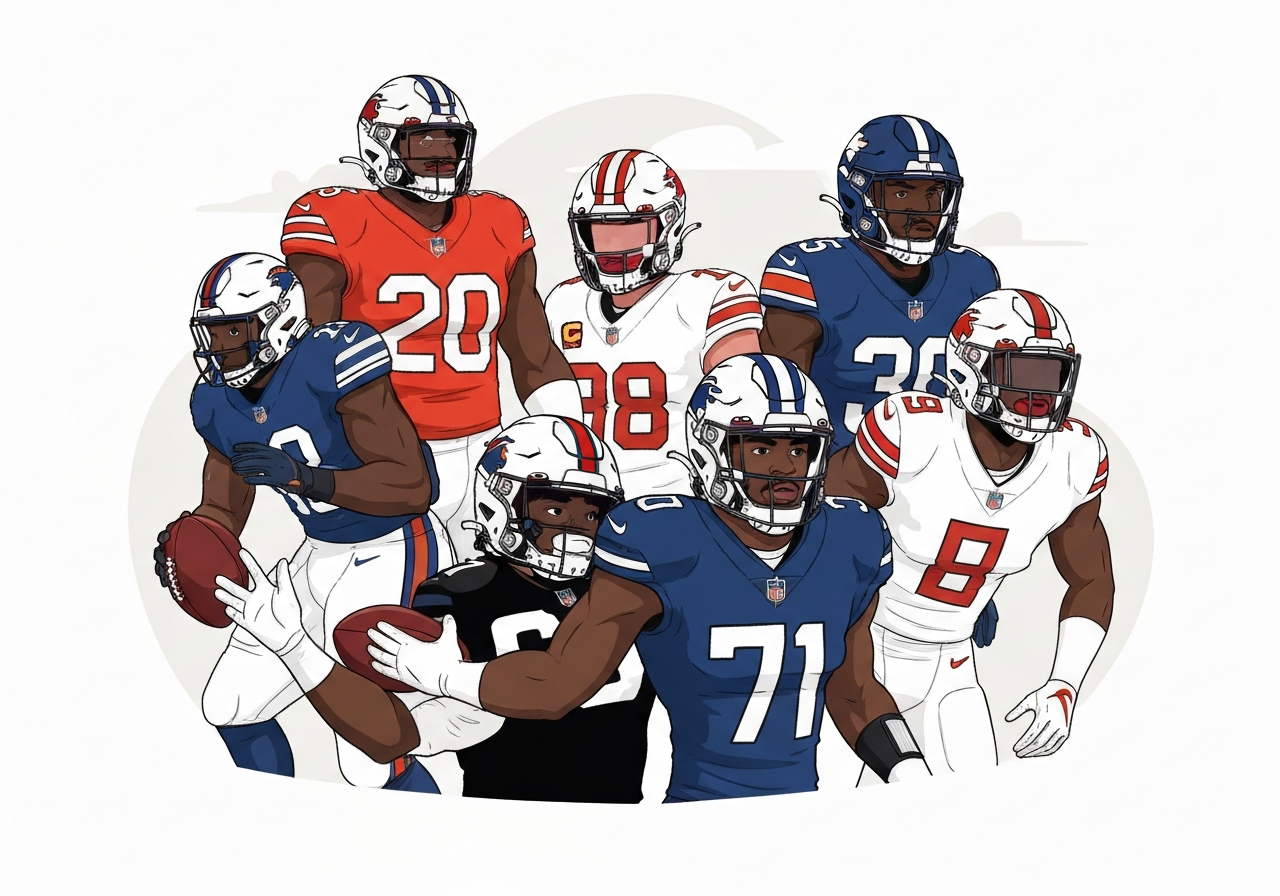
Lead: The opening wave of 2026 free agency has been noisy, but several low-profile additions deserve closer attention. Between March 13 and the days that followed, teams quietly added role players whose skill sets match clear roster needs. These seven signings include veteran blockers, versatile defenders and position-stabilizers whose contracts are modest but whose impact could be outsized. If usage and health align, each could shift a team’s outlook for the 2026 NFL season.
Key takeaways
- Pat Ricard signed a two-year deal worth $7.63 million (max $8.5M); his lead-blocking could accelerate the Giants’ transition to a power-running attack with Cam Skattebo as the featured back.
- Blankenship agreed to three years, $24.75 million (with $16.5M guaranteed) and projects as a middle-of-field playmaker to pair with Dereck Stingley Jr. and Kamari Lassiter in the Texans’ secondary.
- Tight end Kolar inked a three-year, $24.3 million contract (with $17M guaranteed); his route craft and blocking make him an ideal second tight end in 12-personnel for an offense aiming to boost efficiency.
- Safety Gardner-Johnson signed a one-year, $6 million deal; despite a down 2025, his ballhawk reputation and aggressiveness can inject urgency into a Bills defense under coordinator Jim Leonhard.
- Edge rusher Muhammad took a one-year deal (max $6M) after a career-best 11-sack season for Detroit in 2025; the Bucs view him as a situational weapon to improve a pass-rush that had 37 sacks in 2025.
- Cornerback Wright’s one-year pact (max $5.5M) addresses a team that recorded zero interceptions last season; his 6-4 frame and five passes defended in 2025 add contested-catching ability downfield.
- A 2022 sixth-round center (three years, $25M) landed a contract after 12 sturdy starts in 2025; per PFF, he hasn’t allowed a sack in his last 21 starts, offering long-sought pivot stability for his new club.
Background
Each offseason brings headline-grabbing signings and quieter additions that do not command immediate attention but fit schematic needs. Teams balancing cap space and depth often target veterans who can be high-reward, low-risk fits: specialists, versatile defenders and experienced linemen who can step into defined roles. NFL roster construction increasingly values players who excel in narrow, repeatable tasks—lead blocking, slot route precision, middle-of-field coverage or situational pass-rush—because those skills compound within a playbook.
Recent champions have shown the value of targeted role players: complementary blockers and savvy defenders can sustain a top unit even when stars miss time. Front offices that scout scheme fit rather than name recognition often find bargains in the second wave of signings. The seven players highlighted here were signed on modest-to-moderate deals (ranging from one-year, $5.5M max to three years, $25M) and represent that philosophy: immediate utility at manageable cost.
Main event
Pat Ricard’s two-year, $7.63 million contract (up to $8.5M) reunites a bruising fullback with a staff that values downhill rushing. Over nine seasons he built a reputation as a dominant lead blocker in Baltimore’s run schemes; in New York he’s expected to clear lanes for Cam Skattebo as the Giants pivot toward a heavier ground game. Ricard’s background as a former defensive tackle-turned-fullback gives him unique power and leverage at the point of attack.
Blankenship’s three-year, $24.75M deal ($16.5M guaranteed) fills a cerebral safety/centerfield role for the Texans. Coming from a team that won Super Bowl LIX, his instincts and coverage recognition allowed the Eagles to deploy umbrella and hybrid looks that isolated elite cornerbacks on islands. In Houston, pairing him with perimeter talents Dereck Stingley Jr. and Kamari Lassiter gives defensive coordinator DeMeco Ryans more schematic flexibility against AFC offenses.
Tight end Kolar’s three-year, $24.3M contract (with $17M guaranteed) is a bet on scheme fit over previous counting stats: 30 catches, 409 yards and four touchdowns to date. His route precision and unusual combination of size and blocking ability make him a natural complement in 12 personnel to Oronde Gadsden II, especially in Mike McDaniel’s offense that seeks to create seams between the hashes for intermediate throws and play-action targets.
Gardner-Johnson signed a one-year, $6M deal intended to inject aggressiveness and turnover-minded play into the Bills’ defense. Despite a down year in 2025—released by the Texans and limited in production with the Bears—his 20 interceptions across 87 games (18 in the previous five seasons) underline his ball-hawking track record. The Bills also acquired veterans such as Bradley Chubb and Dee Alford to reshape coordinator Jim Leonhard’s defensive identity under head coach Joe Brady.
The Buccaneers’ one-year, up-to-$6M addition of Muhammad follows an 11-sack 2025 campaign in Detroit. At nearly 31, his violent hand usage and sustained motor helped him terrorize tackles last season; Bowles’ staff plans to deploy him from multiple alignments to generate pressure and mask schematic weaknesses behind a unit that recorded 37 sacks in 2025. His veteran savvy and recent peak production make him a low-cost swing at upgrading the pass rush.
Cornerback Wright’s one-year, up-to-$5.5M deal addresses a team that had no interceptions in 2025. At 6-4 and 199 pounds, his length reduces target windows and his five pass breakups in 2025 highlight playmaking ability despite less-than-elite straight-line speed. He profiles as a physical bump-and-run starter who can also operate in a two-deep scheme, giving the Jets (according to the original reporting) a clearer chance to create turnovers.
The final signing—a three-year, $25M contract for a 2022 sixth-round center who started 12 games in 2025—aims to shore up a perennial weakness at the pivot. In emergency duty he protected Bryce Young’s pocket and opened lanes for Chuba Hubbard and Rico Dowdle, and per Pro Football Focus he hadn’t allowed a sack in his last 21 starts (including playoffs). That kind of immediate reliability at center can stabilize both pass protection and run-game coordination.
Analysis & implications
These signings matter because they prioritize role fit and schematic clarity. A fullback like Ricard is not a stat-sheet star but can unlock a rushing identity when a team commits to inside and power schemes; his addition could change play-calling tendencies and third-down efficiency. Similarly, a high-IQ safety such as Blankenship enables more aggressive cornerback play on the edges by reducing single-high exposure, which can materially alter an opponent’s passing-plan breakdowns.
Personnel investments in experienced depth also have economic logic. One-year deals for veterans like Gardner-Johnson, Muhammad and Wright minimize long-term cap risk while offering immediate upgrade potential. If any of these players recapture or continue peak form, teams could obtain favorable surplus value relative to contract cost. Conversely, these deals carry downside: short-term contracts require rapid performance returns or else the team must re-enter the market.
Tactically, Kolar’s dual-threat as a blocker and seam target fits offenses aiming to pair a dynamic tight end with an every-down Y. In McDaniel’s system, Kolar can free up explosive plays by occupying linebackers and creating high-percentage passing lanes. The center signing addresses a chronic pain point for franchises that underinvested at the pivot; a dependable center improves offensive-line communication and can lower sack and pressure rates across an entire offense.
On a league level, these moves reflect a broader trend: teams are supplementing star acquisitions with pragmatic additions that solve specific schematic problems. While headline signings draw media cycles, the accumulation of correct role players often determines depth across a full 17-game slate and postseason grind. Expect analysts and front offices to track snap rates, usage in key formations and situational performance to measure true return on investment.
Comparison & data
| Player | Contract | Primary role | 2025 notable stat |
|---|---|---|---|
| Pat Ricard | 2 yrs, $7.63M (max $8.5M) | Lead fullback / blocker | Key run-game blocker (9 seasons) |
| Blankenship | 3 yrs, $24.75M ($16.5M guaranteed) | Middle safety / centerfield | Starter on Super Bowl LIX team |
| Kolar | 3 yrs, $24.3M ($17M guaranteed) | Second TE / slot seam target | 30 rec., 409 yds, 4 TDs (career) |
| Gardner-Johnson | 1 yr, $6M | Aggressive safety / enforcer | 20 INTs in 87 games |
| Muhammad | 1 yr (max $6M) | Situational edge rusher | 11 sacks in 2025 |
| Wright | 1 yr (max $5.5M) | Press/coverage corner | 5 passes defended in 2025 |
| 2022 sixth-round center | 3 yrs, $25M | Starting center | No sacks allowed in last 21 starts (PFF) |
Context: The table condenses contract size, role and a relevant 2025 or career snapshot. These players differ from marquee signings in that their immediate value depends heavily on scheme usage, health and surrounding talent. Teams that deploy them in clear, repeatable roles stand to gain the most measurable impact.
Reactions & quotes
Team spokespeople and analysts framed these signings as low-risk, role-specific upgrades rather than splash moves. Below are representative comments and their context.
“He’s a rug‑pulling blocker who changes what we can do in short-yardage and early-downs.”
Team offensive coach (comment on Pat Ricard fit)
The coach’s remark underscores why a fullback’s impact goes beyond box score metrics: improved run-game efficiency and third‑down conversion rates.
“Bringing in a center who can process and anchor the pocket lets our line operate with more consistency.”
Offensive line analyst
That assessment explains why a center with a strong streak of pass-protection performance—21 starts without allowing a sack per PFF—can shift an offense’s baseline protection strategy.
“We expect him to create turnovers and set a tone; his presence changes how quarterbacks attack us.”
Defensive coordinator (on Gardner-Johnson)
The coordinator’s comment reflects the hope that a veteran, aggressive safety can elevate a secondary’s ball‑hawking and attitude, even after a middling previous season.
Unconfirmed
- The identity and long-term health status of the 2022 sixth-round center as a long-term solution remain unverified beyond the referenced 12 starts in 2025.
- Projected snap shares and exact roles (e.g., percentage of 12-personnel snaps for Kolar) are estimates and depend on coaching decisions during training camp.
- Reports that the Giants are fully committing to a power-running identity with Cam Skattebo as the feature back are based on early indications and should be treated as team direction rather than finalized strategy.
Bottom line
These seven additions illustrate a deliberate approach: buy schematic fits on manageable contracts rather than overpay uncertain stars. If the players remain healthy and are used as intended, teams could see clear returns in situational performance—short-yardage efficiency, turnover creation, pass‑rush productivity and line consistency. That compounded value often separates playoff teams from also-rans.
For analysts and fans, the early metric to watch is not headline numbers but role-specific indicators: run-block win rate (for Ricard), interception and diagnostic metrics (for Blankenship and Gardner-Johnson), tight-end seam-target success (for Kolar), situational pass‑rush wins (for Muhammad) and allowed pressures/sacks (for the new center). Those measures will determine whether these under-the-radar signings become season-defining additions.
Sources
- NFL.com (Media report; primary article)
- Pro Football Focus (Analytics site cited for pressure/sack tracking)