
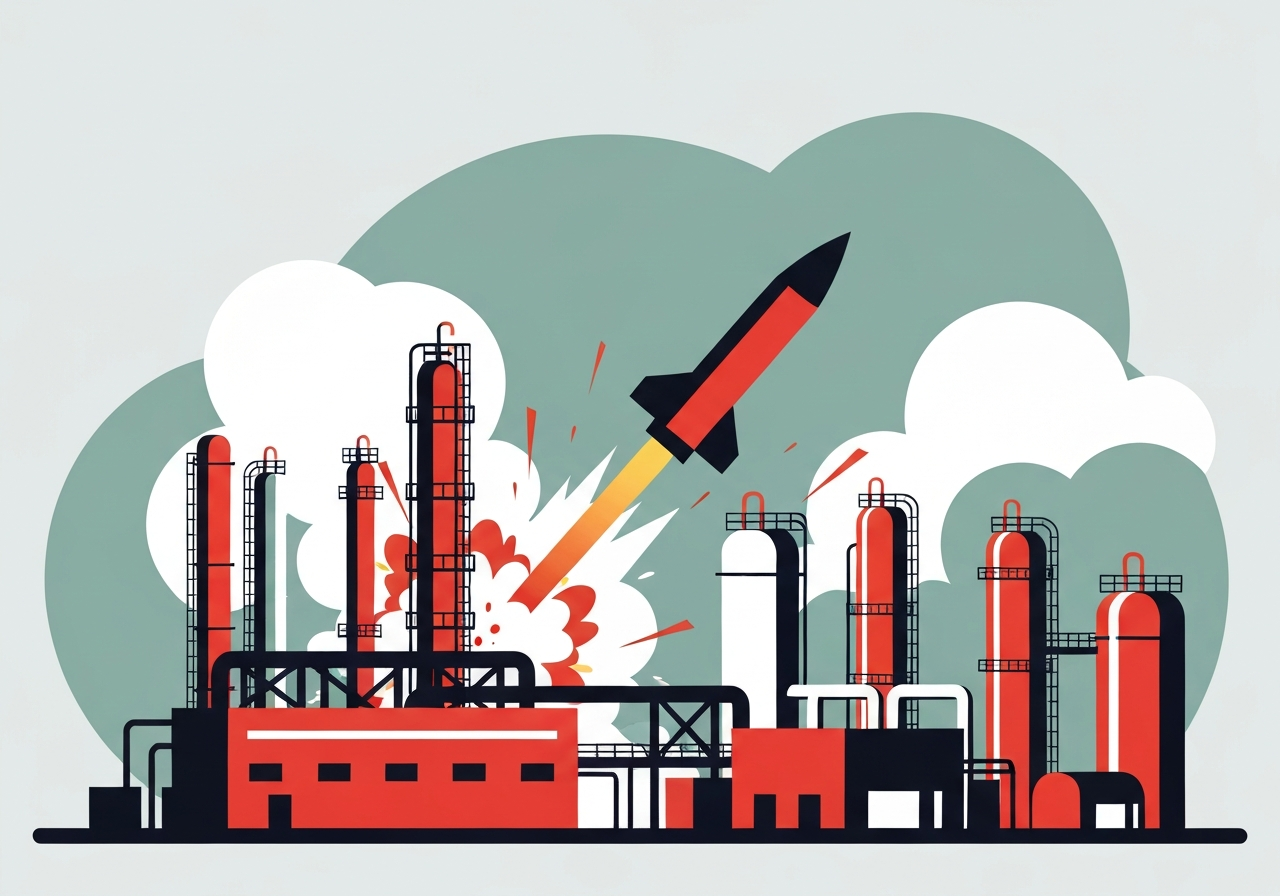
Late Friday night, U.S. forces struck military positions on Kharg Island, Iran’s principal oil-export terminal, as the conflict in the Middle East entered its third week. Iran-backed militias reported an attack on the U.S. Embassy compound in Baghdad the same day, while Tehran and its allies continued missile and drone strikes into Israel and the Gulf. The strikes came amid rapidly rising energy prices and mounting civilian tolls: more than 2,000 people have been killed across the region and millions displaced, according to international and national tallies. The U.S. said it targeted military sites and avoided oil infrastructure, but Iran signaled it will keep the Strait of Hormuz closed to ships it deems hostile.
Key takeaways
- The United States bombed military installations on Kharg Island late Friday; U.S. officials say oil-export facilities were not deliberately targeted.
- Kataib Hezbollah claimed it struck the U.S. Embassy in Baghdad; U.S. and Iraqi authorities had not immediately confirmed full details of damage or casualties.
- Casualties and displacement: more than 2,000 killed across the conflict zone; Iran reported 1,348 civilian deaths and Lebanon nearly 800; over 830,000 displaced in Lebanon alone.
- Energy impact: global oil prices have climbed roughly 40 percent since the war began; U.S. average gasoline rose to $3.68 per gallon (AAA), up 23.5 percent since the outbreak of hostilities.
- Force posture: roughly 2,500 Marines aboard up to three warships are en route to the region, joining about 50,000 U.S. personnel already deployed.
- Kharg Island handles about 90 percent of Iran’s crude oil exports pre-war; disruption there would carry major economic consequences for Iran and the global market.
Background
The broader conflict accelerated after U.S. and Israeli strikes against Iranian targets, prompting Iran and allied militias to launch widespread retaliatory attacks across the region. The Strait of Hormuz, a chokepoint through which about one-fifth of global seaborne oil transits, has been intermittently blocked by Iranian actions, disrupting tanker movements and spiking energy prices worldwide. Iran has repeatedly warned that any attempt to move perceived adversary vessels through the strait will be targeted, and its Revolutionary Guards have publicly asserted naval control over the waterway.
Kharg Island, a small but strategically vital terminal in the northern Persian Gulf, has been central to Iran’s export system since the 1960s. Before the war, the terminal processed an estimated 90 percent of Iran’s seaborne crude oil, with capacity to load multiple supertankers simultaneously. Historically the island has been attacked — most notably in the Iran–Iraq War — and its facilities have been rebuilt after earlier damage; today it remains a linchpin of Iran’s fiscal stability and external trade.
Main event
According to U.S. officials, precision strikes late Friday targeted missile storage sites and areas used to emplace naval mines on Kharg Island. The Pentagon said the operation focused on military infrastructure while seeking to spare storage tanks and export pipelines; Iran’s oil ministry described the assault as massive and said personnel reported prolonged explosions. U.S. Central Command released footage it described as showing multiple precision impacts on island infrastructure labeled as military.
Simultaneously, the Iran-backed militia Kataib Hezbollah claimed it fired on the U.S. Embassy in Baghdad, releasing a short video that shows flames within the compound; two Iraqi security officials independently acknowledged an incident but gave limited detail. U.S. military and embassy spokespeople did not immediately respond with confirmed casualty or damage assessments. The claim represents the second reported attack on the mission in recent weeks and underscores the widening risk to diplomatic facilities.
Across the Levant, Israeli forces intensified strikes on Lebanese territory, including areas beyond established Hezbollah strongholds. Hezbollah continued launching rockets and drones into northern Israel; most Iranian ballistic missiles and many projectiles were intercepted, though some strikes caused injuries. In Tehran and other Iranian cities, residents describe empty daytime streets, nighttime security deployments and frequent explosions, a sign of the conflict’s deep penetration into civilian life.
Analysis & implications
The strike on Kharg Island alters the strategic and economic calculus for multiple actors. Militarily, the U.S. sought to degrade assets used to impede maritime traffic without directly destroying the terminals that underpin Iran’s export revenue. Economically, any loss or prolonged closure of Kharg’s export capacity would sharply reduce Iran’s oil shipments and intensify global supply tightness, keeping prices elevated and sustaining revenue flows to other producers including Russia.
Politically, the strikes complicate the Trump administration’s effort to justify the campaign domestically. High gasoline prices and visible economic impacts have intensified public skepticism in the U.S., forcing policy makers to weigh military objectives against immediate economic pain at home. The decision to dispatch additional Marines and warships signals escalation preparedness but also injects uncertainty about the risk of broader regional confrontation.
Regionally, Iran’s repeated declarations of control over the Strait of Hormuz and threats to strike commercial or allied infrastructure raise the prospect that neutral states — particularly in Asia and Europe — will respond either by arming convoys, rerouting shipments, or accelerating diplomatic pressure. The partial easing of U.S. restrictions on Russian oil has already shifted market flows, creating geopolitical winners and losers as buyers seek alternative supplies.
Comparison & data
| Indicator | Pre-war / Baseline | Current reported | Change |
|---|---|---|---|
| Global oil price (Brent) | ~$73/ barrel (pre-conflict baseline) | $103.14 / barrel (Friday) | ~+40% |
| U.S. gasoline (national avg, AAA) | ~$2.98 / gallon | $3.68 / gallon | +23.5% |
| Reported killed (region) | — | More than 2,000 | — |
| Displaced in Lebanon | — | ~830,000 | — |
| Kharg Island export share | ~90% of Iran’s seaborne crude | Operational status contested | High systemic risk |
The table summarizes key cost and humanitarian metrics tied to the conflict’s escalation. Energy markets show the clearest early signal: crude prices climbed sharply and gasoline followed with a lag, reflecting supply fears and logistical disruptions through the Strait of Hormuz. Casualty figures and displacement numbers are evolving and vary by reporting source; humanitarian needs, particularly in Lebanon, have risen rapidly and prompted an urgent U.N. appeal.
Reactions & quotes
U.N. Secretary-General António Guterres visited Beirut and called for an immediate halt to attacks on civilians and peacekeepers, framing the conflict as a humanitarian catastrophe that cannot be solved militarily. His remarks followed reports of injured UN peacekeepers and heavy exchanges along the Lebanon–Israel border.
“Stop the fighting. Stop the bombing. There is no military solution — only diplomacy and full implementation of international obligations.”
António Guterres, U.N. Secretary‑General
Iran’s Revolutionary Guards reiterated control over the Strait of Hormuz and issued warnings about transit, framing the waterway’s closure as a sovereign security measure. The statement elevated the risk calculation for ships and regional ports and underscored Tehran’s willingness to use force to shape maritime movements.
“Passage by aggressor commercial ships remains prohibited; any attempt to move or transit will be targeted.”
Islamic Revolutionary Guards Corps
The U.S. administration described the Kharg strikes as targeted actions against military sites used to interdict shipping while asserting restraint toward oil infrastructure. Senior U.S. officials signaled further deployments to protect maritime routes and allied interests, even as they defended the effort as narrowly focused to limit broader economic damage.
“The strikes were aimed at military storage sites and equipment used to threaten international navigation.”
U.S. defense official (statement)
Unconfirmed
- Kataib Hezbollah’s full claim of having disabled a C‑RAM system inside the U.S. Embassy compound in Baghdad remains unverified by U.S. officials or independent inspection.
- The Iranian oil ministry’s public count of damaged cultural sites (56 buildings) has not yet been independently confirmed by UNESCO for each listed site.
- Precise damage to Kharg Island’s oil export infrastructure and a definitive assessment of whether storage tanks were spared have not been independently verified; U.S. and Iranian accounts differ on scope.
Bottom line
The U.S. strikes on Kharg Island and the widening pattern of missile, drone and rocket exchanges have pushed the crisis beyond a bilateral fight into a regional confrontation with immediate humanitarian and economic repercussions. Energy markets reacted quickly, and the disruption to shipping through the Strait of Hormuz has already elevated costs at the pump for consumers and tightened global crude availability. The arrival of additional U.S. Marines and warships signals an intention to protect maritime routes and deter further escalation, but also increases the risk of miscalculation.
Diplomatic pressure and humanitarian relief will be essential to prevent further civilian suffering and to reopen avenues for negotiation. In the near term, markets, national leaders and relief agencies will be watching Kharg Island’s operational status, Iranian declarations on the Gulf, and the next rounds of militia strikes — any of which could determine whether the conflict subsides or broadens into a protracted regional war.
Sources
- The New York Times — U.S. national newspaper (live dispatch used for reporting baseline chronology)
- United Nations — International organization (Secretary-General statements and humanitarian appeals)
- AAA — Automobile association (national gasoline price averages)
- U.S. Central Command — U.S. military command (statements and operational imagery)
- UNHCR — United Nations refugee agency (displacement context and regional impact)