
Lead
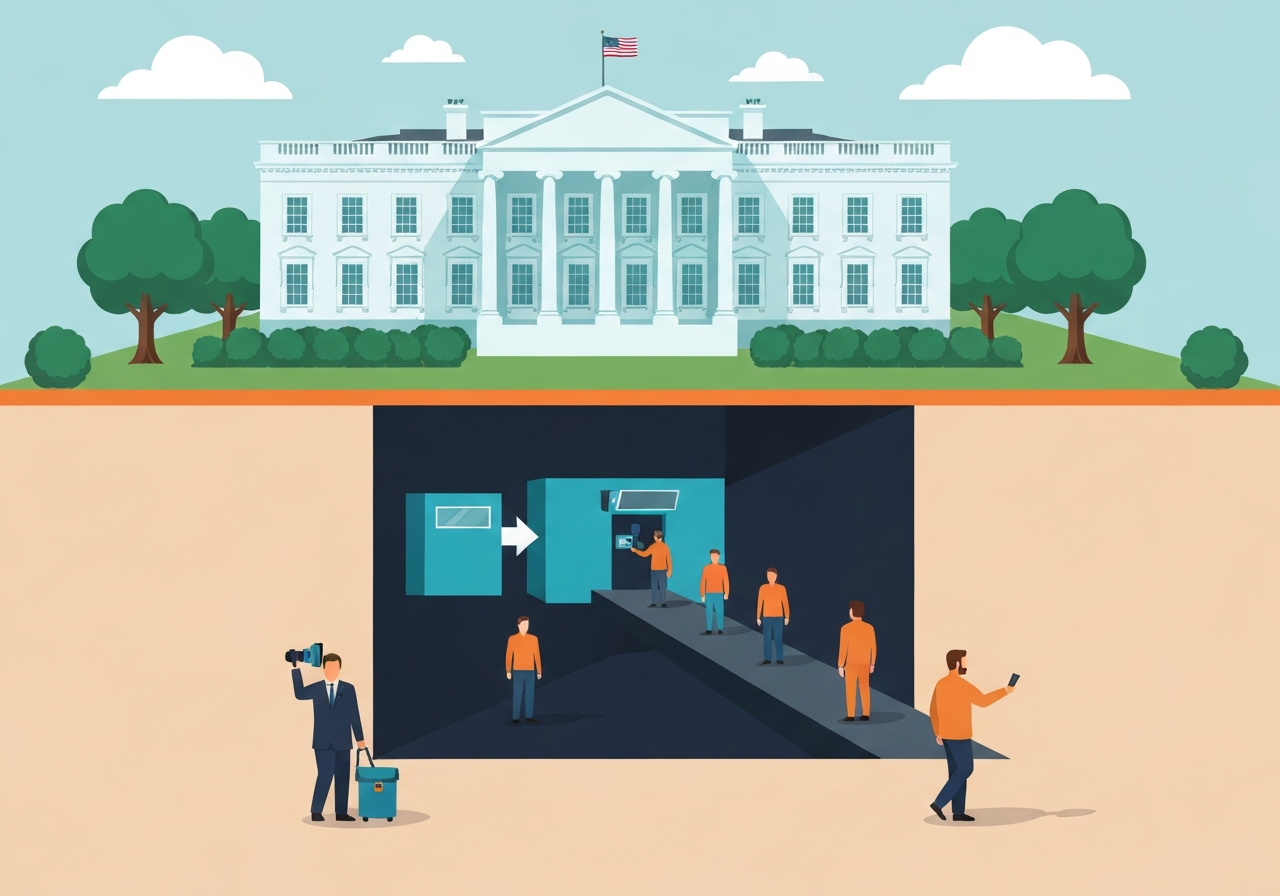
President Donald Trump’s White House has submitted plans for a 33,000-square-foot underground visitor screening facility and a separate 90,000-square-foot ballroom as part of a broader campus renovation. The proposal, which would route visitors through a seven-lane subterranean entrance beneath a nearby park, was filed with the National Capital Planning Commission and is slated for discussion at the NCPC meeting on April 2, 2026. Officials say the facility is intended to improve security and the visitor experience, with a target opening in July 2028. The plan follows last fall’s removal of the East Wing, where public tours previously began.
Key Takeaways
- The proposed screening complex would cover roughly 33,000 square feet and include a seven-lane entrance that routes visitors under a park into a 5,000-square-foot sunken plaza to reduce queuing.
- The ballroom proposal is sized at about 90,000 square feet; project cost estimates for the ballroom have risen from $200 million to $300 million and now to $400 million.
- The NCPC is scheduled to review and potentially vote on both the screening facility and ballroom at its April 2, 2026 meeting.
- The new screening site would occupy the footprint of the former East Wing, which was demolished in the previous fall to make way for the projects.
- Past efforts to build an underground White House screening complex date to studies begun after September 11, 2001, but were repeatedly blocked by funding and approval issues.
- The White House projects an opening by July 2028, six months before the scheduled end of a second presidential term in January 2029.
- Public reaction has been intense: more than 32,000 public comments were submitted on the ballroom, reportedly mostly opposing the construction.
Background
Debate over an underground visitor screening complex at the White House is not new. The National Park Service began examining such options after the September 11, 2001 attacks as part of broader efforts to protect the presidential campus while maintaining public access. Similar subterranean security infrastructure exists at the U.S. Capitol, but attempts to replicate that model at the White House have repeatedly faltered for financial and procedural reasons.
The East Wing previously housed the visitor entrance and the tour office, where visitors entered through a wood-paneled lobby and followed the East Colonnade. That wing was demolished last fall to clear space for a large ballroom that the administration frames as a legacy project. The change moved visitor queues across Pennsylvania Avenue near Lafayette Park and introduced temporary, trailer-like checkpoints as the interim access point.
Main Event
Plans filed with the National Capital Planning Commission describe a largely underground, seven-lane screening complex sited beneath a nearby park. Visitors would be directed to a ticket-and-ID check point southeast of the White House, then descend a ramp into a proposed 5,000-square-foot sunken plaza intended to limit surface congestion and lengthy lines. The Civil War general William Tecumseh Sherman statue at the park’s center would reportedly be “protected in place” in the design.
The application to the NCPC arrived with a request to be placed on the commission’s April 2 agenda for review and possible approval. Will Scharf, who chairs the NCPC, also serves as the White House staff secretary; his dual roles are noted in the commission materials. Officials expect the facility to be substantially below grade, with programmatic functions and security infrastructure concealed beneath the park and adjacent grounds.
The same filing includes the proposed 90,000-square-foot ballroom. The White House has said privately raised funds will cover the ballroom’s construction, but that stated funding plan has not quelled public opposition or questions about transparency. More than 32,000 public comments were submitted on the ballroom proposal, and NCPC postponed a vote after receiving overwhelming critical feedback.
Agency and congressional caution has historically constrained similar projects. Sources familiar with past efforts say Washington decision-makers, including Congress and certain federal agencies, previously balked at the expense and process, leaving temporary above-ground screening solutions in place for decades.
Analysis & Implications
The proposal signals a substantial shift in how the administration seeks to manage access to the White House grounds. Moving screening underground could reduce visible security footprints and improve circulation for large groups and events, but it concentrates major security infrastructure in a single, high-cost structure. That concentration raises questions about construction complexity, lifecycle costs, and long-term maintenance tied to subterranean systems in a sensitive urban setting.
Budgetary strain is a central issue. The ballroom’s estimated price tag has climbed to $400 million, a figure that will invite scrutiny given competing federal priorities and past congressional reluctance to fund large White House campus projects. Even if ballroom construction is claimed to be privately financed, associated site work, security upgrades, and infrastructure integration typically involve public oversight and potential public expense.
Political optics will matter. The project combines security justification with a highly visible legacy element; opponents argue the ballroom changes the public realm and historic character around Lafayette Park. Supporters counter that improved screening and visitor flow enhance public access and reduce street-level disruption. How agencies balance those perspectives at the NCPC meeting will shape both the project’s approval odds and public reaction.
Comparison & Data
| Item | Square Feet | Reported Cost |
|---|---|---|
| Proposed underground screening facility | 33,000 | Not separately itemized |
| Proposed ballroom | 90,000 | $400 million (latest estimate) |
| Sunken visitor plaza | 5,000 | Included in screening footprint |
The table highlights scale and cost contrasts between the screening complex and ballroom. The ballroom represents the larger single-space program and the primary driver of the high-dollar figure reported publicly; the screening facility is smaller by area but includes specialized security systems that can be costly per square foot. Historically, subterranean construction in urban historic districts tends to exceed above-ground cost benchmarks because of excavation, waterproofing, and utility relocation.
Reactions & Quotes
White House materials accompanying the submission framed the screening facility as both a security enhancement and a visitor amenity, language intended to bridge safety and public access priorities.
The permanent facility will strengthen campus security and enhance the overall visitor experience.
White House plan
Those who worked on earlier proposals said funding and interagency approval had been persistent obstacles. Former attempts to push a similar White House underground complex were repeatedly halted amid opposition and logistical challenges.
“Can’t afford it, nobody would work on it, Department of Interior wouldn’t approve it,”
Anonymous source familiar with past efforts (to CNN)
The president has defended the ballroom as privately financed, a claim used to deflect some budgetary criticism, though critics question the practical boundaries between private fundraising and public oversight on federal land.
The ballroom project will be fully funded by private donations.
President Donald Trump (statement)
Unconfirmed
- Precise line-item cost breakdowns for the screening facility have not been released; the public figures to date focus on the ballroom.
- Specific private donors pledged for the ballroom were not listed in the filing available publicly at the time of reporting.
- Detailed engineering assessments and environmental reviews required for below-grade work had not been posted with the NCPC packet that was publicly accessible at filing.
Bottom Line
The administration’s proposal to build a 33,000-square-foot underground screening center and a 90,000-square-foot ballroom represents a high-stakes combination of security upgrades and legacy construction. The NCPC’s April 2 review will be a key procedural moment: approval would move the projects toward design and construction, while a rejection or further postponement would leave current temporary access arrangements in place.
Beyond approvals, the most consequential debates will concern cost, oversight, and the preservation of public space around the White House. Even if the ballroom is privately financed, the visible transformations to Lafayette Park and the long-term implications for public access will shape legal, political, and community responses for years to come.
Sources
- CNN (news organization) — original reporting on the White House submission and NCPC agenda.
- National Capital Planning Commission (federal advisory commission) — responsible for federal land approvals and agenda postings.
- Associated Press (news organization) — reported on administration renovation plans referenced in filings.
- National Park Service (federal agency) — conducted post-9/11 studies related to visitor screening options.