
Lead
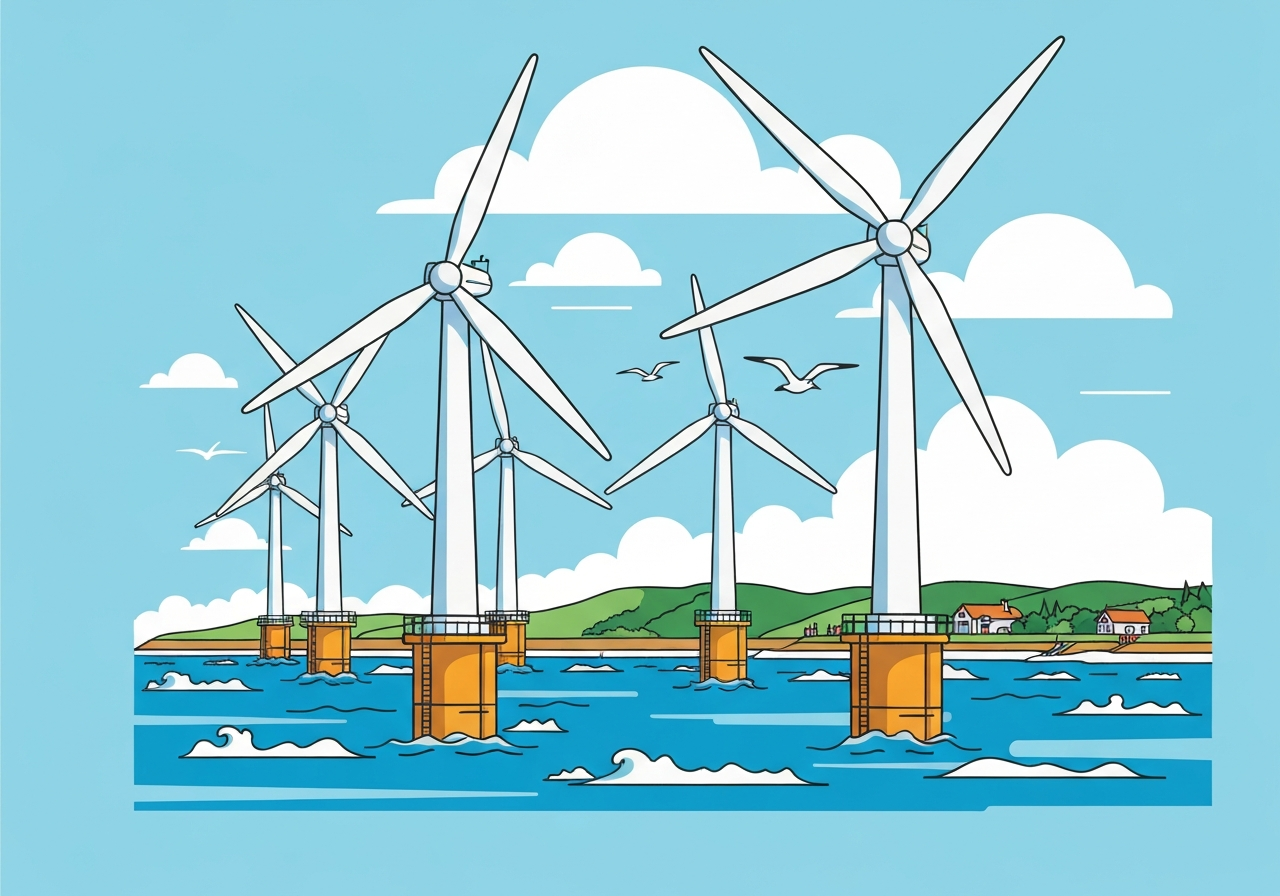
Workers installed the final blades on the last turbine Friday evening, marking the end of construction for Vineyard Wind, the United States’ first large-scale offshore wind project off the coast of Massachusetts. The 62-turbine array will still require several weeks of commissioning before it can supply steady power to the New England grid. The $4.5 billion project reached this milestone after years of regulatory delays, equipment setbacks and a recent stop-work order. Officials say the wind farm, once fully operational, will supply 800 megawatts — roughly enough for 400,000 homes — and deliver savings to Massachusetts ratepayers.
Key takeaways
- Construction complete: Final turbine blades were installed Friday evening, finishing the physical build of the 62-turbine Vineyard Wind project.
- Capacity and reach: At full output Vineyard Wind will provide 800 megawatts, enough electricity for about 400,000 homes in New England.
- Timeline to operating: Developers expect several weeks of commissioning; 52 of 62 turbines have been authorized for operation by a co-developer, and 44 were reported operational in late January court filings.
- Cost and jobs: The project cost about $4.5 billion and employed roughly 3,500 people, many union workers, with major staging at New Bedford’s $150 million Marine Commerce Terminal.
- Economic impact: Massachusetts officials estimate $1.4 billion in savings to ratepayers over the first 20 years of operation.
- Industry context: Vineyard Wind is the first to navigate the lengthy federal permitting process and finished amid a broader pause on most offshore projects imposed during the current administration.
- Recent setbacks: Construction was delayed multiple times since 2019, including a snapped turbine blade in 2024 that washed debris ashore and a stop-work order issued three months ago when the project was about 95% complete.
Background
Vineyard Wind was designed as the first large-scale commercial offshore wind farm in the U.S., intended to jump-start a domestic industry that advocates say can supply clean power and create coastal jobs. The project is a joint development involving Avangrid and other partners, with co-developers including firms owned by Iberdrola. Planning and permitting began years ago and encountered complex federal reviews because this was the first major project to proceed under the modern U.S. offshore leasing and review framework.
Construction has been repeatedly delayed. Work first slowed during the 2019–2020 period, and in 2024 a broken blade and debris that washed up on Nantucket shores forced months of remediation and review. Regulatory friction intensified after a stop-work order from the Department of the Interior late in the build phase; developers later challenged that action in court. Those regulatory and technical setbacks added cost, time and scrutiny to a project that supporters hoped would prove the commercial viability of U.S. offshore wind.
Main event
On Friday evening crews completed the last blade installations aboard specialized installation vessels after a favorable weather window offshore. The Sea-Installer and similar vessels staged the heavy lifts that set nacelles and blades atop monopile or jacket foundations. Project managers then began the final alignment and testing steps that precede grid connection, a phase known as commissioning.
Commissioning will take several weeks. In a recent earnings call, Iberdrola — the parent of Avangrid — said 52 of the 62 turbines had been authorized for operation, while Vineyard Wind’s own court filings in late January reported 44 turbines were operational then. Company spokespeople declined to provide an exact current count publicly as commissioning continues.
Local infrastructure played a central role: New Bedford’s Marine Commerce Terminal served as the staging and assembly hub for the massive components, enabling sequential shipment and installation at sea. The project’s onshore and offshore work employed about 3,500 people, including many union trades, from dock assembly to at-sea crews.
Analysis & implications
Vineyard Wind’s completion is both symbolic and practical. Symbolically, it proves a large U.S. offshore wind project can clear federal permitting and reach mechanical completion. Practically, 800 megawatts of offshore wind increases winter-season generation capacity in a region that frequently faces cold-weather supply stress. Advocates note the resource often performs well on cold, windy winter days when demand peaks.
However, the broader industry faces uncertainty. Most new projects were paused during the current administration; a blanket construction freeze and other stop-work directives halted progress on many developments. Although developers have won some court battles and resumed work, legal appeals and additional federal reviews could slow pipeline growth, affecting supply chain investments and port upgrades across the Northeast.
Economically, the project offers immediate local gains — jobs, port activity and supplier demand — and projected consumer savings. Massachusetts officials estimate $1.4 billion in ratepayer savings over the first 20 years, a figure that depends on dispatch patterns, capacity factors and future market prices for competing fuels like natural gas. If the farm reaches its expected performance, it could lower peak winter prices and reduce reliance on fossil-fired generation.
Comparison & data
| Project | Capacity (MW) | Estimated homes powered |
|---|---|---|
| Vineyard Wind | 800 | ~400,000 |
| Revolution Wind | — (partial online) | up to 350,000 (at completion) |
| South Fork Wind | ~132 | — (operational since 2024) |
The table contextualizes Vineyard Wind against nearby projects: Revolution Wind reported first power deliveries from some turbines as Vineyard Wind wrapped construction, and South Fork Wind has been fully operational since 2024. Vineyard Wind’s 800 MW is several times the size of early East Coast projects and represents a materially larger infusion of renewable capacity to the New England grid.
Reactions & quotes
State and local officials framed the milestone as both an environmental and economic win. Governor Maura Healey highlighted consumer savings and local benefits, while the mayor of New Bedford emphasized the port’s role in hosting the industry.
“I’m thrilled to learn construction is complete. The affordable, homegrown power it delivers to Massachusetts residents and businesses will bring costs down,”
Governor Maura Healey (statement)
The mayor of New Bedford framed the project as validation of the city’s role in the offshore wind supply chain.
“This represents the closing argument of the case we have been making for years: that New Bedford is well-suited to be a center of the offshore wind industry,”
Mayor Jon Mitchell, City of New Bedford
Industry figures signaled guarded optimism about future projects despite federal pauses and litigation.
“Time’s passing. The industry will come back if we’re smart about it and set the stage,”
State Senator Michael Barrett (email)
Unconfirmed
- The exact number of turbines actively generating power today is not publicly confirmed; company spokespeople declined to provide a current tally beyond prior filings and statements.
- The timing and outcome of any remaining legal appeals by the federal government on stop-work orders remain uncertain and could affect other projects in the development pipeline.
- Projected $1.4 billion ratepayer savings depend on future market prices and operational performance and are therefore estimates rather than guaranteed outcomes.
Bottom line
Vineyard Wind’s construction completion is a milestone for the U.S. offshore wind sector: it shows a large project can move from leasing and permitting to full mechanical completion despite multiple delays and regulatory hurdles. The 800 MW project will add meaningful winter-generation capacity for New England and is expected to produce local economic benefits through jobs and port activity centered in New Bedford.
Still, the larger trajectory of U.S. offshore wind remains unresolved. Legal challenges, federal policy decisions and supply-chain investment choices will determine whether Vineyard Wind becomes the first of many large projects or an isolated success. For now, the industry has a working demonstration that large-scale offshore wind can be built and connected — the longer-term test will be steady operation, cost performance and the pace at which new projects move forward.
Sources
- WBUR (regional public radio reporting)
- Iberdrola – Investor relations and company statements (company/official)
- U.S. Department of the Interior (federal agency)