
Lead
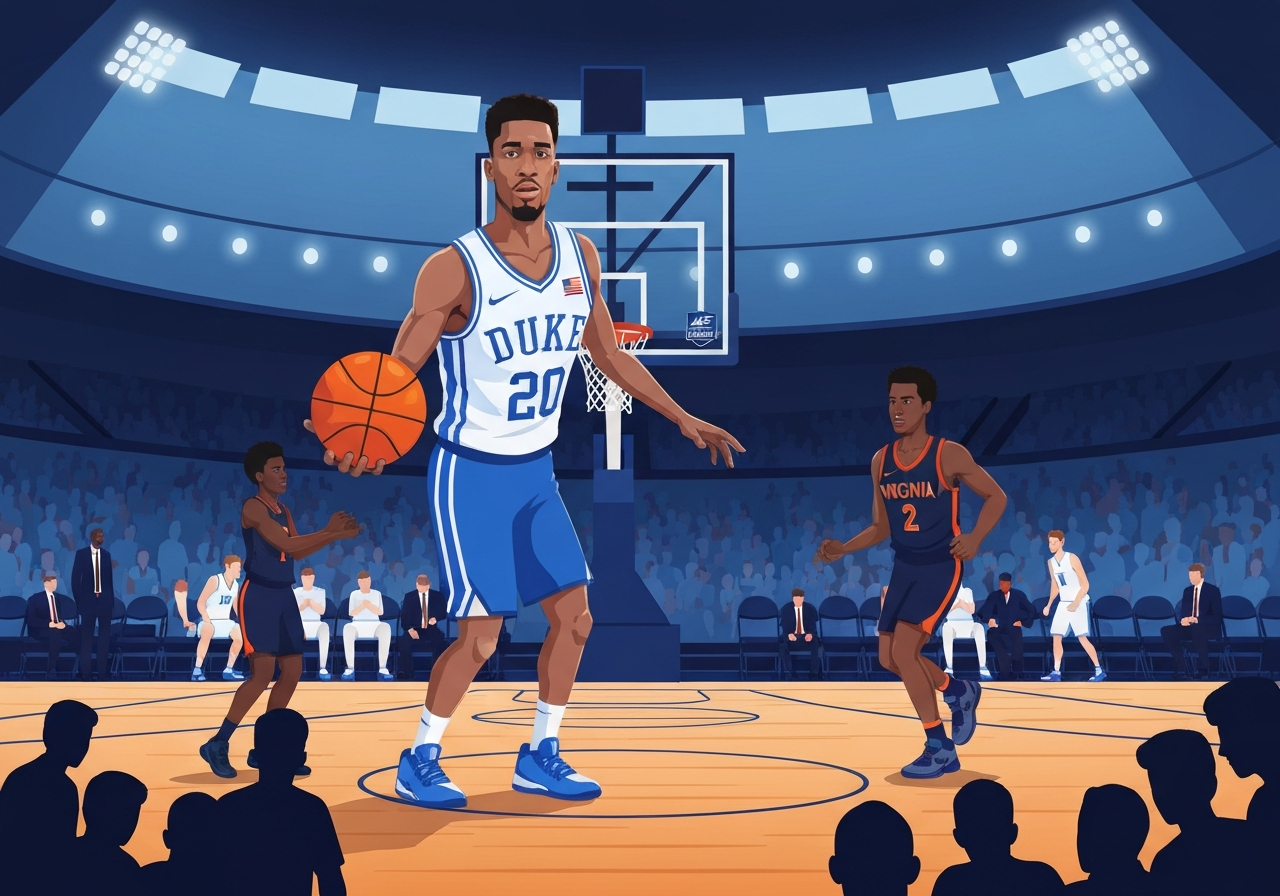
On March 14, 2026 in Charlotte, No. 1 seed Duke defeated No. 2 seed Virginia 74-70 to claim the ACC Tournament championship. Isaiah Evans led Duke with 20 points, while Ugonna Onyenso set an ACC title-game record with nine blocks for Virginia. The win keeps Duke atop CBS Sports Bracketology as a strong candidate for the No. 1 overall seed in the 2026 NCAA Tournament. The contest featured 16 lead changes and showcased both teams’ contrasting strengths: interior protection for Virginia and depth-driven offense for Duke.
Key Takeaways
- Duke beat Virginia 74-70 on March 14, 2026 in the ACC Tournament final, a game that could secure Duke the No. 1 overall seed on Selection Sunday.
- Isaiah Evans paced the Blue Devils with 20 points, 13 of which came in the second half, while Cayden Boozer added 16 points, five rebounds and four assists.
- Virginia center Ugonna Onyenso set an ACC title-game record with nine blocked shots, disrupting Cameron Boozer, who finished with 13 points on 3-of-17 shooting.
- The game saw 16 lead changes; Duke generated 18 offensive rebounds that led to 12 extra field-goal attempts compared with Virginia.
- Duke entered the weekend managing injuries: Caleb Foster is out after right-foot surgery and Patrick Ngongba II missed the tournament with foot soreness.
- CBS Sports Bracketology projects Virginia to remain around a No. 3 seed, while Michigan and Arizona remain close rivals for the top overall seed.
Background
Both programs came into the ACC final with high expectations after lengthy runs through the regular season. Duke won the ACC regular-season crown and had been in a weeks-long debate with Arizona and Michigan for placement atop the national seed list. Virginia, under first-year coach Ryan Odom, rebuilt its profile around perimeter shooting and elite rim protection—traits that re-emerged across the conference tournament.
The teams met twice this season: Duke routed Virginia 26 points on Feb. 28, but the Cavaliers used the rematch to show a markedly different defensive posture. Selection Sunday implications elevated the stakes; conference tournament outcomes can shift marginal seeding distinctions when multiple teams enter the final week with near-identical records.
Main Event
The ACC final was tight from opening tip to final whistle. Duke leaned on bench depth and offensive rebounds to stay competitive when Cam Boozer struggled against Onyenso’s size. Isaiah Evans’ late surge—13 second-half points—was decisive in the closing stretch, while Cayden Boozer logged all 40 minutes to help steady the lineup.
Virginia’s interior defense repeatedly altered Duke’s shots. Onyenso’s nine blocks created repeated shot-clock and rhythm challenges for Duke, and the Cavaliers’ guards—led by Malik Thomas (18 points) and Sam Lewis (17)—kept the game within reach with timely threes. The lead exchanged hands 16 times, underlining how neither team could build a decisive margin for long.
Down the stretch, Duke converted crucial offensive rebounds and free-throw opportunities to preserve a narrow lead. Cameron Boozer impacted the game as a facilitator—he finished with seven assists—but his 3-of-17 shooting night limited Duke’s usual interior scoring. Virginia pushed late but could not overcome Duke’s second-half composure.
Analysis & Implications
Duke’s victory strengthens its case for the No. 1 overall seed in the NCAA bracket. With Arizona and Michigan still viable contenders, tournament committee decisions will hinge on fine-grain comparisons—head-to-head neutral-site wins, strength of schedule, and late-season performance. Duke’s Feb. 21 neutral-site win over Michigan may prove a meaningful tiebreaker in an otherwise razor-thin trio of candidates.
Injury status will be evaluated closely by the committee. Caleb Foster’s right-foot fracture and subsequent surgery removes Duke’s starting point guard from the immediate picture; Patrick Ngongba II also missed the ACC Tournament with foot soreness but could be available for the NCAA Tournament. The committee often considers health trends and available rotations when finalizing seed lines.
For Virginia, the game reinforced both its upside and limits. Onyenso’s rim protection makes the Cavaliers a matchup problem for teams that rely on interior finishes, while their perimeter shooting gives them upside as a tournament seed capable of upsets. However, defensive reliance on shot-blocking can be neutralized by teams that sustain offensive rebounding and patience—areas Duke exploited.
Comparison & Data
| Player | Team | Points | Rebounds | Blocks | Minutes |
|---|---|---|---|---|---|
| Isaiah Evans | Duke | 20 | — | — | — |
| Cayden Boozer | Duke | 16 | 5 | — | 40 |
| Cameron Boozer | Duke | 13 | — | — | — |
| Ugonna Onyenso | Virginia | — | — | 9 | — |
| Malik Thomas | Virginia | 18 | — | — | — |
| Sam Lewis | Virginia | 17 | — | — | — |
The table highlights core box-score elements from the final: Evans’ scoring surge, Cayden Boozer’s full-game workload, Onyenso’s shot-blocking outburst and Virginia scorers’ contributions. Duke’s edge on the offensive glass (18 offensive rebounds) was a critical statistical lever that narrowed Virginia’s interior advantage.
Reactions & Quotes
Coaches and pundits framed the result through both team performance and seeding implications. Duke staff emphasized resilience and roster depth in postgame remarks; Virginia’s coach focused on defensive pride despite the loss.
“Caleb is out for the foreseeable future,”
Jon Scheyer, Duke coach (postgame confirmation)
Scheyer’s confirmation of Foster’s status contextualized Duke’s rotation choices during the tournament and underscored Cayden Boozer’s expanded role. He also highlighted the team’s internal adjustments to preserve tournament positioning.
“Our defense gave us a chance tonight,”
Ryan Odom, Virginia coach
Odom credited Onyenso and his frontcourt for keeping Virginia competitive, noting that the team’s shot-blocking and perimeter shooting are a complementary mix heading into the NCAA bracket.
“This win should keep Duke right at the top of the bracket conversation,”
CBS Bracketology analyst
Analysts noted that Duke’s neutral-site victory over Michigan earlier in February and the ACC title together make a compelling resume case for the committee to place the Blue Devils as the top overall seed.
Unconfirmed
- Whether Duke will be the official No. 1 overall seed on Selection Sunday remains unresolved until the committee finalizes brackets.
- Patrick Ngongba II’s availability for the NCAA Tournament is currently listed as hopeful by Duke staff but is not officially confirmed.
- Descriptions that Caleb Foster’s injury will be season-ending are speculative; the team reported he is out for the “foreseeable” future pending recovery updates.
Bottom Line
Duke’s 74-70 ACC title-game victory over Virginia both secured conference hardware and improved the Blue Devils’ standing in the race for the No. 1 overall seed. The performance underlines Duke’s depth and ability to absorb personnel losses while still winning tight games against elite conference rivals.
Virginia leaves the tournament with renewed credibility as a defensive and perimeter threat; Onyenso’s rim protection and the Cavaliers’ shooting make them a dangerous draw in the NCAA field. The final seed placements will crystallize on Selection Sunday, but this result positions Duke as the team to beat entering March Madness.