
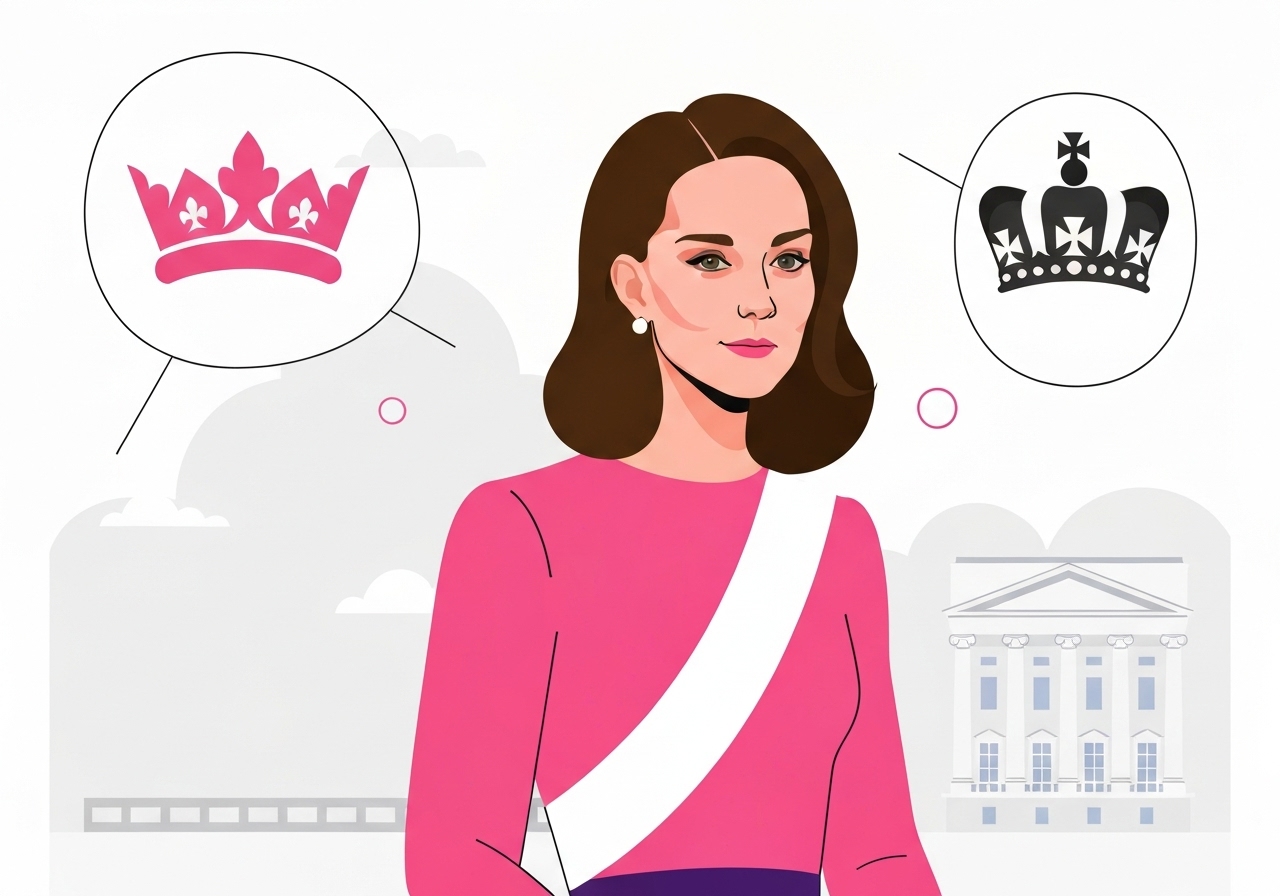
Lead: On Monday, 8 September 2025, Catherine, Princess of Wales, attended a National Federation of Women’s Institutes ceremony marking the third anniversary of Queen Elizabeth II’s death alongside Prince William. Photographs from the event show the princess wearing a brown hair color with warm honey highlights after a summer in which she was seen with noticeably blonder tones. The switch has prompted conversation online about personal choice and the scrutiny public figures face after visible hair or style changes. The appearance came less than a year after she completed chemotherapy in 2024, a context that shaped some public reactions.
Key Takeaways
- The appearance took place on 8 September 2025 at an NFUWI event commemorating the third anniversary of Queen Elizabeth II’s passing.
- Photographs show Catherine’s hair now appearing brown with honey highlights, reversing from a blonde look first noticed on 24 August 2025.
- Her lighter color was shown publicly at London’s Natural History Museum during a visit in late August 2025.
- Speculation about wigs and chemotherapy prompted public disagreement and defense from hairstylist Sam McKnight on Instagram.
- The shift illustrates how even small style changes by senior royals attract intense media and public attention.
- No official statement from Buckingham Palace on the hair changes was published as of 8 September 2025.
Background
Members of the British royal family have long had their personal appearance scrutinized by the press and public, with hairstyles frequently portrayed as signals of mood, role or reinvention. Catherine, Princess of Wales, has been a central figure in that dynamic: her wardrobe and hair choices routinely generate news coverage, trend analysis and commentary across fashion and mainstream outlets. The context of her 2024 chemotherapy treatment added sensitivity to any visible changes, prompting some commentators to caution against speculation.
On 24 August 2025, images seen through a car window and later a public appearance at the Natural History Museum showed the princess with a blonder tone than her widely recognized brunette. Social media and tabloid columns quickly responded, mixing admiration, critique and unfounded conjecture about wigs or hairpieces. High-profile stylists and some media voices intervened to defend the princess from what they described as unnecessary or cruel commentary.
Main Event
On 8 September 2025 Catherine and Prince William visited a National Federation of Women’s Institutes (NFUWI) event in London to mark the third anniversary of Queen Elizabeth II’s death. Photographers captured the princess greeting attendees and speaking briefly to members; in those images her hair reads as a return to her customary brown with warm, honeyed highlights. The visit followed a series of late‑August appearances in which her hair had a clearly lighter, more blonde tone.
At the NFUWI event the couple observed moments of remembrance and met volunteers and group leaders; coverage focused primarily on the commemorative aspects of the visit and, in parallel, the visual change to Catherine’s hair. Attendees described the encounter as cordial and focused on the organization’s community work rather than style details. There was no palace press release about the hair color itself.
Public response to the look-change spanned supportive messages and speculation. Some commentators framed the return to brown as a simple personal styling choice; others noted how quickly online discussion veered into conjecture about health-related reasons for hairpieces. The debate underscored the broader tension between public curiosity about figures of high profile and the privacy such figures still require.
Analysis & Implications
For senior royals, a change in hairstyle is rarely neutral: it is read as a signal by fashion media, monarchists and the general public. In Catherine’s case, the shift back to brown after a brief period of blonde highlights will likely be interpreted through multiple lenses—personal preference, seasonal styling, or a deliberate return to a long-established public image. That multiplicity of readings illustrates how visual cues are over-interpreted in public discourse.
The intersection of recent medical history and visible appearance raises ethical questions about public commentary. Catherine completed chemotherapy in 2024, and that fact has, in some quarters, prompted sympathy and caution; in others it has been used to fuel baseless speculation. Public conversation about a woman’s hair after cancer treatment can easily stray from curiosity into intrusive or hurtful territory, which explains why some industry professionals spoke out in her defense.
Media attention on style choices also has commercial and cultural effects. When a high-profile figure appears to change color, hair brands, salons and fashion commentators often respond with increased coverage and product interest. That commercial ripple can accelerate trend cycles but also commodify personal appearance, a dynamic that benefits fashion platforms while complicating the subject’s right to private experimentation.
Looking ahead, the short-term impact is likely limited: hair trends change, and royal styling tends to settle into familiar patterns over months. But the episode offers a recurring lesson about the limits of public entitlement: small personal choices by public figures repeatedly become public property, which alters how those choices are discussed and understood.
Comparison & Data
| Date | Appearance | Context |
|---|---|---|
| 24 August 2025 | Blonde tone (spotted via car window) | Private movement; first public noticing |
| Late August 2025 | Blonde (Natural History Museum) | Public visit; official photos published |
| 8 September 2025 | Brown with honey highlights | NFUWI commemoration event |
The short timeline above places the visible color changes within a two-week span. Such rapid variation is common with temporary color techniques (e.g., balayage, glossing) and with lighting differences in photos. The pattern—an initial lighter appearance followed by a return to brown—suggests stylistic experimentation rather than a permanent change in base color.
Reactions & Quotes
Public and professional reactions arrived quickly. A well-known stylist criticized negative online responses and urged empathy given Catherine’s recent health history.
“I was disgusted by all the nasty comments”
Sam McKnight (stylist, Instagram)
Industry observers noted that color shifts are normal tools for public figures refreshing their image or matching seasonal palettes. Many commentators also emphasized caution about assuming medical causes for any particular look.
“Colour changes are often part of a broader styling process; draw conclusions cautiously.”
Fashion commentator (public commentary)
On social platforms, responses ranged from supportive well-wishes to speculative threads; the diversity of reactions highlights how a simple aesthetic choice can become a subject of intense public debate.
“Supportive comments outnumbered the negative ones in many threads, but the negative posts drew louder attention.”
Social media analysis (aggregated commentary)
Unconfirmed
- No official confirmation was issued that the princess wore a wig; social-media speculation about wigs remains unverified.
- There is no public palace statement linking the hair color change to medical reasons; suggestions to that effect are not confirmed.
- Reports that the change was ordered for a specific engagement or campaign have not been substantiated by the princess’s office or her stylist.
Bottom Line
The appearance of Catherine, Princess of Wales, with brown hair on 8 September 2025 is best read as a personal styling choice rather than a message with political or institutional weight. Given the short period between visible blonde and brunette looks, the most likely explanation is experimentation with tone and technique rather than a permanent transformation.
The episode underscores perennial issues in celebrity and royal coverage: the pressure to interpret every visual detail, the speed at which speculation spreads online, and the need for restraint when private medical histories are adjacent to public aesthetics. Observers should distinguish confirmed facts from assumptions and respect the subject’s space to try different looks without intrusive commentary.